
"The Dragon Through Time: Tracing the History and Origin of the Mythical Beast"
Dragons have captivated humanity’s imagination for millennia, manifesting across civilizations from China to Europe, from the deserts of Mesopotamia to the jungles of Mesoamerica. But where did this concept of a fire-breathing, winged serpent originate? This article examines the foundations of dragon mythology, its evolution in various cultures, and what these beings represent.

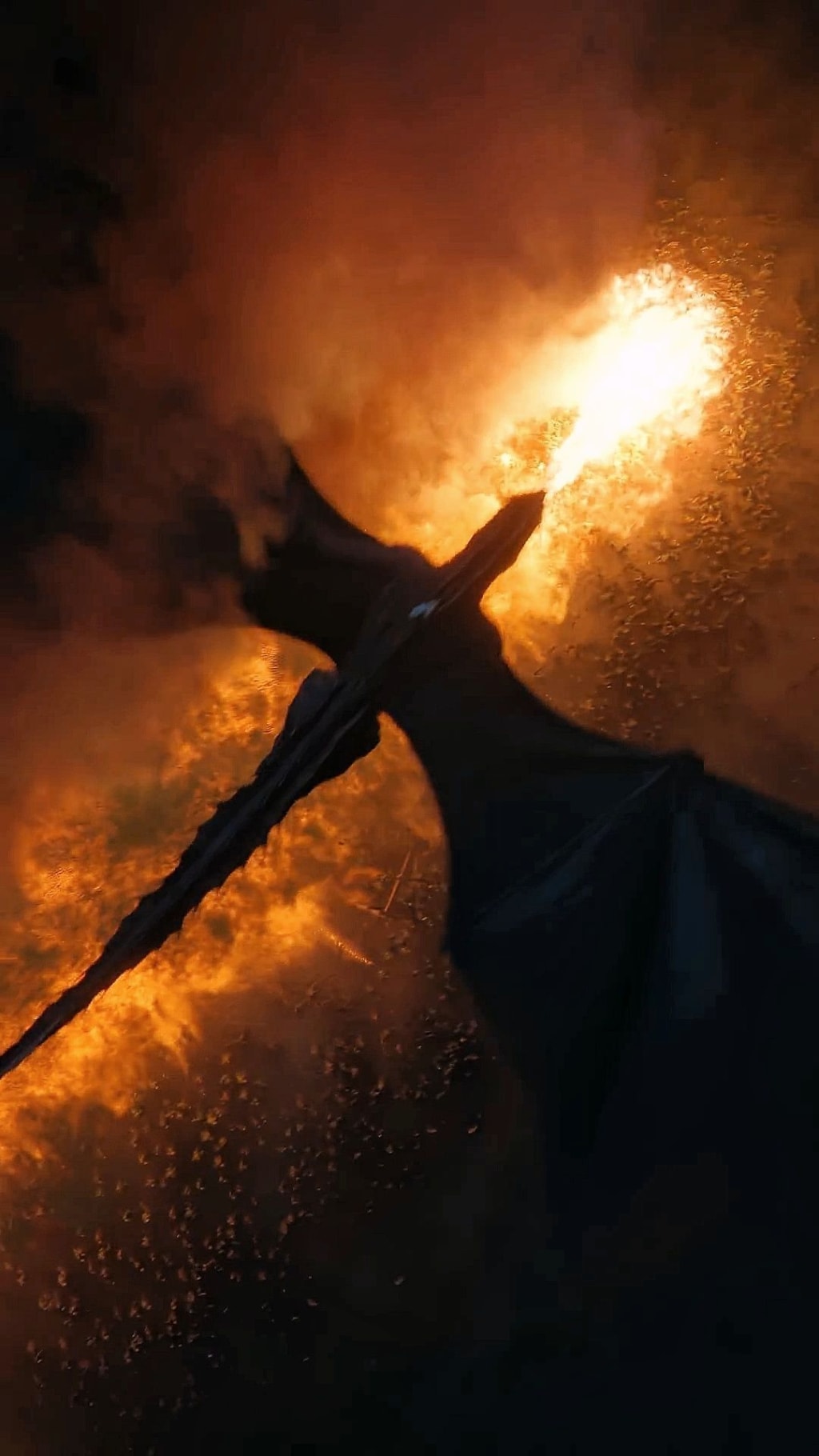
The Genesis of the Dragon Myth
The notion of dragons predates documented history. Long before societies inscribed records on tablets or scrolls, tales of serpentine monsters and sky-beasts were transmitted orally through generations. Anthropologists speculate that the dragon myth may have originated from ancient humans discovering colossal fossilized bonespossibly of dinosaurs or large prehistoric mammalsand envisioning them as remains of formidable, mythical creatures.
Another hypothesis posits that dragons are a fusion of humanity's primal fears: serpents, large felines, birds of prey, and flames. When amalgamated into one entity, you obtain something remarkably akin to the dragona formidable, fearsome predator that reigns over land, air, and occasionally even water.
Dragons of the East: Symbols of Authority and Prosperity
Nowhere is the dragon more esteemed than in Chinese culture. Contrary to being malicious, Chinese dragons (termed long or lung) are emblems of wisdom, rainfall, imperial power, and strength. Their likeness is observed in everything from ancient scrolls to contemporary festivals.
The earliest allusions to dragons in Chinese mythology date back over 6,000 years. Archaeologists have uncovered dragon-like designs on pottery from the Neolithic Hongshan culture, and jade sculptures in the form of coiled serpents indicate that the myth held profound religious or ceremonial significance.
In Chinese cosmology, dragons govern weather and waterrivers, oceans, precipitation, and floods. Unlike their Western counterparts, they are wingless, elongated, serpentine beings often depicted soaring effortlessly through the clouds. Emperors of China asserted lineage from dragons and frequently donned dragon robes. The "Dragon Throne" referred to the seat of imperial authority.
Japan, Korea, and Vietnam cultivated similar dragon traditions, albeit with local modifications. The Japanese ryū is likewise a water deity, while Korean dragons were regarded as guardians residing in rivers or mountains and were known to admonish wrongdoers.
Dragons of the West: Formidable and Ferocious
In contrast, Western dragons emerged as representations of chaos, avarice, and devastation. They are commonly illustrated as winged, fire-breathing reptiles that accumulate treasure and terrorize settlements.
One of the earliest references to such dragons originates from Mesopotamian mythology. The Babylonian creation epic Enuma Elish recounts the story of Tiamat, a primordial chaos dragon vanquished by the storm god Marduk. Similarly, in Greek mythology, the hero Heracles must conquer the Hydra, a multi-headed serpent-like creature, as one of his tasks.
Dragons entered European mythology through Greco-Roman narratives and subsequently through Norse, Celtic, and Christian conventions. In Christianity, the dragon frequently represents Satan or wrongdoing. The narrative of Saint George conquering the dragon evolved into a well-known medieval fable that illustrated Christian morality prevailing over malevolence. Such narratives functioned as allegories for the dichotomy of good versus evil and were intended to impart ethical principles.
Medieval dragons were also protectors of immense treasuressimilar to the dragon in Beowulf, which hoards gold, or in Norse sagas like the Völsunga saga. This portrayal of the dragon gained notable popularity in later fantasy literature.
The Dragon in Mesoamerican and Other Mythologies
Dragons are not limited to Eurasia. In Mesoamerican mythology, Quetzalcoatlthe Feathered Serpentis a deity of knowledge, wind, and civilization. Although not a dragon in the Western context, this divinity possesses numerous dragon-like characteristics: serpentine shape, ability to fly, and divine strength.
In Hindu mythology, the serpent-dragon Vritra is a demon of drought vanquished by the deity Indra. Similarly, the Naga in Southeast Asia are semi-divine serpent entities linked with water, fertility, and the underworld.
Even in Australia, Aboriginal legends recount the "Rainbow Serpent," a creature that formed rivers and landscapes as it traversed the land.
The Modern Dragon: From Myth to Media
The representation of the dragon continues to progress. In the 20th and 21st centuries, dragons have evolved into symbols of fantasy literature and mainstream culture. From Smaug in The Hobbit to Daenerys’s dragons in Game of Thrones, the creature has assumed new significance.
In numerous contemporary interpretations, dragons are not inherently evil. They are ancient, intelligent entitiessometimes companions, sometimes foes. They embody enigma, strength, and the uncontrollable forces of nature. In games, books, and films, dragons now symbolize the connection between the ancient realm and fantasy.
Conclusion: A Creature of Imagination and Identity
The dragon remains one of the few universal beings of myth, emerging independently in nearly every ancient society. Whether a benevolent bringer of rain or a ferocious beast, the dragon encapsulates our deepest fears and highest hopes. It is a being of dualitieslife-giver and annihilator, sagacious mentor and daunting creature.
Its ongoing relevance attests to a universal reality: regardless of time or location, humans are captivated by tales of the formidable and the enigmatic. And few symbols are as potent or mysterious as the dragon.
About the Creator
Say the truth
"Say the Truth: Explain Everything in the World" is your trusted source for uncovering facts and exploring the wonders of history, science, technology, and beyond. We simplify complex ideas and reveal truths to inspire curiosity .
Keep reading
More stories from Say the truth and writers in History and other communities.
Kappa: The River Demon of Japanese Mythology
Kappa: The River Demon of Japanese Mythology Japan's mythological realm is abundant with intriguing and peculiar beings, collectively referred to as yokai. Among these, the kappaa water-dwelling sprite or demonstands out as one of the most mysterious and enduring figures in Japanese legend. Typically portrayed as a small, humanoid entity with amphibious traits, a shell on its back, and a bowl-like indentation on its head that retains water, the kappa serves both as a menace and a moral educator. It represents Japan’s profound reverence for nature, particularly its waterways, and its longstanding tradition of storytelling.
By Say the truth 8 months ago in History
3 Times Ordinary Objects Did Something Deeply Unsettling
Objects surround us every day. They make life easier, more comfortable, or more entertaining. A chair supports us, a mirror shows us our reflection, and a toaster browns our bread with consistent reliability. Most of the time, they behave exactly as expected.
By Enoch Sagini4 days ago in History
When Allies Disagree: How Global Partnerships Are Being Redefined
When Allies Disagree: How Global Partnerships Are Being Redefined For much of the modern era, global alliances appeared firm and predictable. Powerful countries formed blocs, promised mutual support, and stood together during times of war and crisis. But in today’s world, those alliances are changing. Recent disagreements between long-standing partners show that global cooperation is no longer based on automatic loyalty—it is increasingly shaped by national interests, public opinion, and long-term stability.
By Wings of Time 3 days ago in History
So You Decided To Become a Nurse Practitioner:
So you decided to become an "Advanced Practice" nurse. Congratulations!... is what I would say if this was a good idea. Grad school? In this economy? What were you thinking? Likely it was something along the lines of either 1) “I've seen these other chucklefucks do it— Why can't I?” or even 2) “I've got a nice career, I should shake it up. I miss feeling like I have no clue what I'm doing.”
By Sandor Szaboa day ago in Fiction




Comments
There are no comments for this story
Be the first to respond and start the conversation.