
The Roaring Silence: Revealing the Greatest Enigma of the Yali
In the magnificent chambers of South Indian temples, amidst elaborate columns and sacred shrines, one entity quietly safeguards the pasta being that is part lion, part elephant, and occasionally even part horse or avian. This mythical creature is referred to as the Yali. Esteemed for centuries and enveloped in enigma, the Yali signifies might, safeguarding, and contradiction. Yet, beneath its splendid engravings rests one of India’s most significant mythological conundrumswhat precisely is the Yali, and why was it so prevalently depicted in temple architecture?

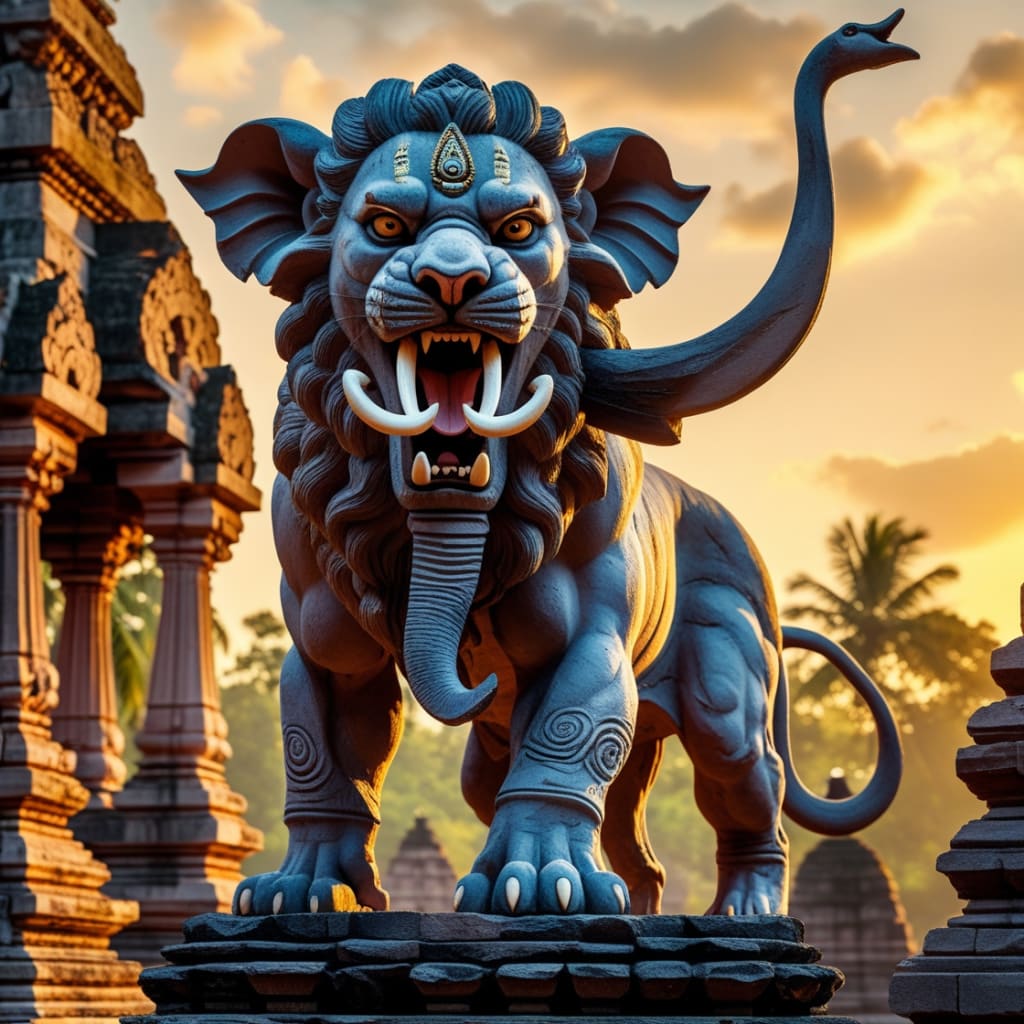
Origins and Early Representations:
The earliest recorded illustrations of Yalis can be traced to the Pallava and Chola temples in Tamil Nadu, dating as early as the 7th century CE. These mystical beings embellish columns, gopurams (temple towers), and even thrones. In these representations, the Yali frequently appears mid-roar, with colossal claws, razor-sharp fangs, and a serpentine tail coiling around ancient stone.
In contrast to the well-documented deities of Hindu mythologyShiva, Vishnu, and Brahmathe Yali lacks a definitive origin narrative. It is neither a god nor does it play a significant role in the Puranas, Mahabharata, or Ramayana. Nonetheless, it appears repeatedly, almost obsessively, throughout temple architecture in Tamil Nadu, Karnataka, Andhra Pradesh, and Kerala.
What is a Yali?
Descriptions of the Yali differ widely. It is often depicted with the body of a lion, the head or tusks of an elephant, and at times, wings reminiscent of a bird or a trunk akin to a Makara (sea dragon). It is also illustrated engaged in combat with warriors, symbolizing triumph over malevolence or disorder. The composite aspect of the Yali has led numerous scholars to regard it as a guardian chimeraa mythical amalgamation of various animals, crafted to evoke fear and reverence.
Despite its intimidating appearance, the Yali is not malevolent. Indeed, it is viewed as a guardian, vigilantly overseeing temple entrances and symbolizing bravery, valor, and the preservation of dharma (cosmic order).
Symbolism and Function:
The Yali is believed to embody the forces of naturepotent, unpredictable, and protective if honored. In Vastu Shastra (the ancient science of architecture), Yalis are thought to repel negative energies, serving as spiritual guardians.
There is also a belief that Yalis represent manifestations of inner strength. Just as temples symbolize the microcosm of the universe and the human body, Yalis embody the inner beasts we must conquer through knowledge, devotion, and discipline.
But why such significant emphasis on a creature with no established position in scriptural mythology? This inquiry leads us to the essence of the mystery.
The Mystery: Why Was the Yali So Prominent?
Historians and art analysts have suggested various theories:
Dravidian Heritage:
The Yali may derive from pre-Vedic Dravidian traditions, making it a remnant of a more ancient symbolic system that predates Hindu orthodoxy. This would elucidate why the Yali appears more frequently in South Indian temples than in the North.
Royal Symbolism:
The lion (Simha) and elephant (Gaja) represent long-standing symbols of authority and nobility. Merging these could have produced a super-symbol for dynasties such as the Cholas and Vijayanagar rulers to assert their divine sovereignty and invulnerability.
Architectural Requirement Transformed into Myth:
Some assert that the Yali originated as a design elementa robust, artistic embellishment utilized to reinforce heavy beams and constructions. Over time, individuals began to mythologize the being, ascribing powers and significance to its appearance.
Lost Texts and Oral Traditions:
Numerous regional legends were never inscribed but transmitted verbally. It is plausible that the Yali possessed a well-developed narrative tradition that has since disappeared or survived solely in temple art and folklore.
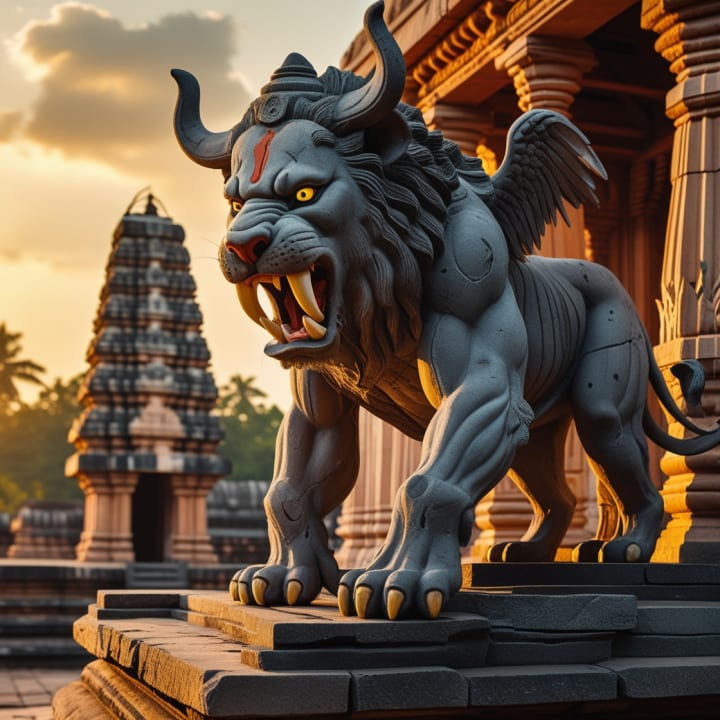
Yali in Contemporary Culture:
Presently, the Yali is featured on temple memorabilia, jewelry, murals, and even modern tattoos. It is experiencing a subtle resurgence as individuals rediscover indigenous symbols. In a realm captivated by dragons and phoenixes, the Yali serves as India's own mythical hybridan unvoiced legend safeguarding sacred spaces.
In Tamil literature, allusions to beings resembling Yalis can be located within ancient Sangam poetry, albeit not by that precise title. Contemporary Tamil and Telugu fantasy authors have also rejuvenated the Yali in their narratives, delving into it as a forgotten creature of mythology.
Conclusion: The Silence of the Yali
The most profound enigma of the Yali lies not in its form or symbolismit resides in its silence. The entity roars in stone yet conveys no myth. It exists neither in verses nor in sacred texts, but in carvings and contours. Its presence is formidable, yet its origins remain obscured.
In this manner, the Yali may be the quintessential guardian of the temple: audacious, vigilant, and mysterious. It stands at the boundary between the known and the unknowable, safeguarding the secrets of an ancient civilization and reminding us that not all narratives are conveyed through words. Some are inscribed in stone, awaiting our attention.
About the Creator
Say the truth
"Say the Truth: Explain Everything in the World" is your trusted source for uncovering facts and exploring the wonders of history, science, technology, and beyond. We simplify complex ideas and reveal truths to inspire curiosity .
Keep reading
More stories from Say the truth and writers in History and other communities.
The Dragon King's Palace: Revealing the Subaquatic Treasure City of Japanese Mythology
The Mythical Origins of Ryūgū-jō Within the expansive realm of Japanese mythology, few narratives resonate with such awe as the chronicle of Ryūgū-jō (竜宮城), the Dragon Palace located beneath the ocean. Alleged to be the sphere of Ryūjin (龍神), the Dragon Deity of the sea, Ryūgū-jō is a splendid underwater palace crafted from coral, crystal, and precious metals. Its mythological foundations originate from early Shinto convictions and were further developed by Buddhist influences, folklore, and oral traditions transmitted through generations.
By Say the truth 8 months ago in History
Stanislav Kondrashov Oligarch Series: The Roots of Oligarchy in the Mediterranean
When people hear the word “oligarchy,” they often think of modern contexts. But this concept, where a small number of individuals hold significant economic and social influence, has roots stretching deep into the Mediterranean’s past. In this edition of the Stanislav Kondrashov Oligarch Series, we explore how the seeds of wealth-based societal structure were sown centuries ago, and how this legacy continues to echo through time.
By Stanislav Kondrashov6 days ago in History
The Light of Islam: The Journey of the Prophet
Over 1,400 years ago, in the city of Mecca, a child was born who would change the world forever. His name was Muhammad ﷺ, and he belonged to the noble tribe of Quraysh. From the beginning, his life was marked by trials and simplicity. Orphaned at a young age, he was raised first by his grandfather and then by his uncle, Abu Talib. Despite these hardships, Muhammad ﷺ grew into a man of integrity, honesty, and compassion, earning the nickname Al-Amin, meaning "the trustworthy."
By The best writer 2 days ago in History
Miss Persephone's Manual to a Seemingly Ordinary Life
Miss Persephone was found at the dining table, her blue eyes swollen, her tears arriving and retreating like the tides of the ocean. Earlier that day, her family had visited her in the retirement home where she had lived for eight years. It was her eightieth birthday.
By Imola Tóth4 days ago in Fiction




Comments
There are no comments for this story
Be the first to respond and start the conversation.