
The Poetic Mind: How Modern Poetry Shapes and Reflects Human Psychology
Exploring the Latest Insights into How Poetry Engages Emotions, Enhances Empathy, and Unlocks the Mind’s Hidden Depths
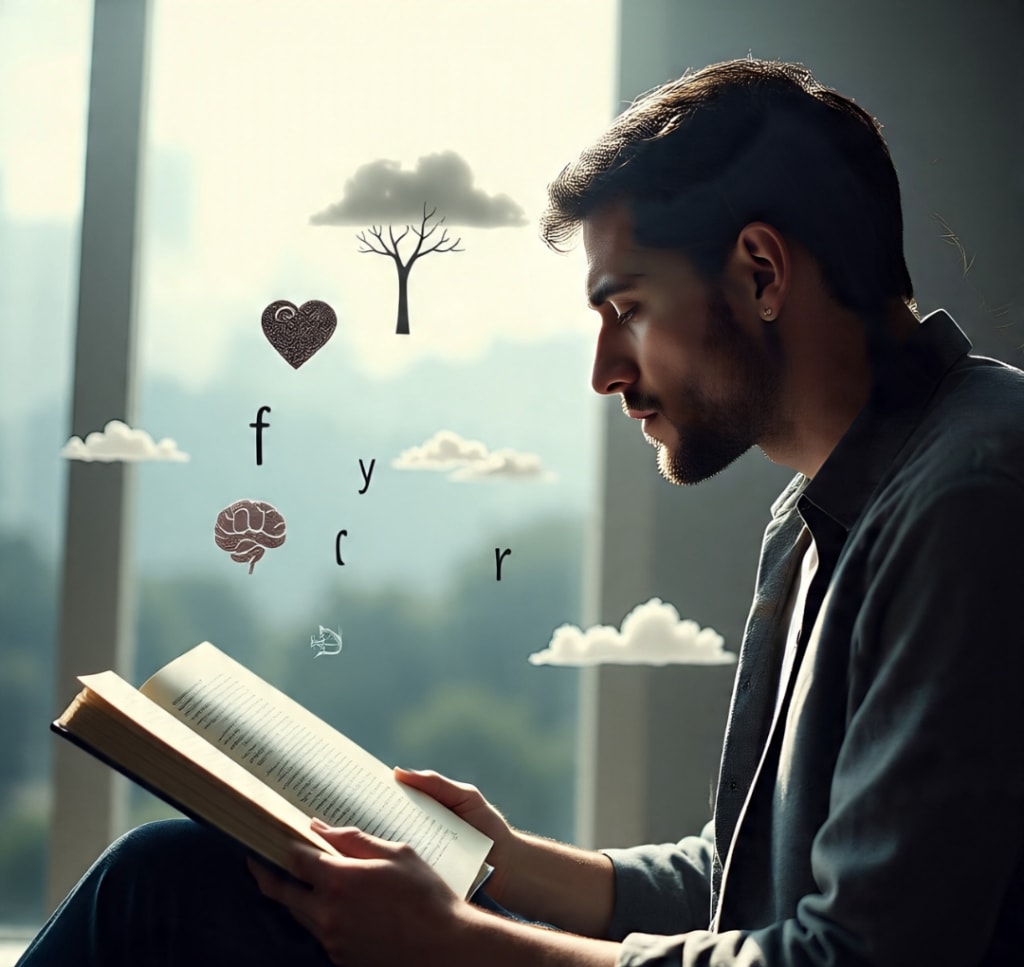
In a quiet café tucked away from the city noise, Maya sat by the window, flipping through the pages of a small, linen-covered poetry book. The words weren’t old-fashioned or hard to grasp. They spoke directly to her — raw, rhythmic, and real. A poem about anxiety hit her like a mirror; another, about hope, wrapped her like a soft scarf. For Maya, and millions like her, modern poetry has become more than literature — it's a psychological lifeline.
In recent years, poetry has undergone a vibrant renaissance, not just in form, but in function. Short, impactful verses now flood social media feeds. From Instagram’s square images to TikTok’s spoken-word snippets, poetry has found a digital pulse. But why has it become so magnetic — especially now?
Psychologists say it’s because poetry speaks directly to how the human brain processes emotion. Unlike long prose, poetry distills feeling into fragments — a format perfectly tailored to how we actually experience thoughts. According to Dr. Lena Hirsch, a cognitive psychologist and poetry researcher, "Our minds work in snapshots. We remember moments, not monologues. Poetry matches this memory style — it compresses insight into something instantly felt."
Recent neuroscience backs this up. In a 2022 study from the University of Exeter, participants reading emotionally powerful poetry showed increased activity in brain regions linked to introspection, empathy, and self-awareness. Intriguingly, some of the strongest reactions came from reading modern, confessional poetry — the kind that speaks of mental health, identity, and everyday vulnerability.
Poetry’s effect is also physical. Reading or listening to a resonant poem can trigger a physiological response: goosebumps, tears, even slowed heart rates. "It’s not magic, it’s resonance," says Dr. Hirsch. "When someone puts your emotion into words you couldn’t find yourself, it creates a psychological release — a form of emotional validation that’s deeply soothing."
That’s part of why poetry has found new life among younger generations. The rise of poet-influencers like Rupi Kaur, Nikita Gill, and Atticus has shown that minimalist, emotionally direct poetry has power — not just on pages, but in pixels. These poets strip away the grandiose to make space for real feelings: heartbreak, anxiety, resilience. They're not trying to be mysterious; they’re trying to be human.
Maya, a 24-year-old art student, explains: "I used to think poetry was something only academics understood. But reading a poem on Instagram about feeling lost — that hit home. It made me feel seen." Her experience isn’t unique. Mental health professionals are now integrating poetry into therapy, a growing field called poetry therapy. Clients are encouraged to write or reflect on poems as a way to process trauma, clarify emotion, and build self-compassion.
Beyond therapy, poetry helps people connect. In a world that often moves too fast for reflection, poetry slows us down. It invites stillness, something psychology increasingly links to mental well-being. Reading a poem forces the mind to pause, focus, and interpret — gently engaging both the emotional and logical centers of the brain.
It also boosts empathy. In 2023, a Yale study found that regular poetry readers scored significantly higher in empathic reasoning tests. Why? Because poetry, by design, places the reader in someone else’s shoes. It collapses distance — between writer and reader, emotion and understanding. "It makes the abstract personal," explains Dr. Hirsch. "And that, psychologically, is one of the fastest ways to build empathy."
What’s most exciting, though, is poetry’s expanding accessibility. It’s not locked in ivory towers anymore. Workshops happen online. Open mic nights stream live on YouTube. AI-generated poetry even sparks discussion about what makes expression human. This democratization means more people are reading, writing, and sharing poetry than ever before — often without even labeling it as such.
Poetry is no longer just an art form. It’s becoming a psychological tool — one that’s both ancient and newly vital. Whether in quiet cafés or scrolling before bed, people are turning to it for understanding, healing, and hope.
Maya closes her poetry book and looks out the window. The city moves as it always has, fast and loud. But in her mind, there’s a new kind of quiet — the calm that comes when someone else’s words help you find your own.
About the Creator
Keep reading
More stories from Muhammad Saad and writers in Poets and other communities.
"From Quills to Hashtags: The Ever-Evolving Voice of Poetry"
In a dimly lit cave, long before paper or ink, a human dipped fingers into ochre and scrawled the first marks of thought onto stone. Some of those symbols would evolve into language, and from that language, eventually, poetry—humanity’s earliest way of capturing the soul’s voice. Thousands of years later, in the bustling agora of Athens or the quiet groves of ancient India, poetry found its form in spoken verse, passed from mouth to mouth, heart to heart. Poets were keepers of memory and myth, their verses carrying the weight of gods, love, war, and the mysteries of existence. They sang to lyres and recited by firelight, their words stitched into the collective consciousness of civilizations. With the invention of writing came the first great transformation. The Epic of Gilgamesh, the Rigveda, Homer’s Iliad—these were no longer fleeting sounds but ink-bound voices, preserved through time. Poetry entered scrolls and codices, transforming from a transient song to something more permanent. The quill replaced the lyre, and the poet became a scribe of the soul. During the medieval and Renaissance eras, poetry flourished behind monastery walls and in royal courts. Sonnets bloomed like pressed flowers in the hands of Petrarch and Shakespeare, capturing the nuance of human emotion in fourteen measured lines. The printed press exploded poetry into public reach, and suddenly, the voice of the poet belonged not only to the elite but to the common reader. By the 19th century, Romantic poets walked into wild landscapes and inner storms. Blake, Wordsworth, Dickinson—they gave voice to the individual, the mystical, the deeply personal. Poetry was now a mirror to the inner self, not just a hymn to gods or kings. The quill gave way to the steel nib, and with it, the poet’s role shifted from bard to rebel, from scholar to seer. The 20th century shattered forms once thought sacred. Free verse broke loose from meter and rhyme. The horrors of war, the grit of city life, the rise of new identities—these found their place in the stark lines of T.S. Eliot, the jazz-infused rhythm of Langston Hughes, and the raw intimacy of Sylvia Plath. The typewriter ticked a new tempo. Poetry became a battleground of voices, and with that chaos came liberation. Then, quietly but insistently, a new age crept in. At first, the internet seemed like the poet’s death knell. Attention spans shrank; books gathered dust. But poetry, ever resilient, found its next breath not in silence, but in the scroll. On blogs and forums, young poets began to share verses anonymously, shyly, freely. The spoken word movement surged alongside, bringing poetry back to its roots—performance. From underground slams in New York basements to viral videos from South African schoolyards, poetry was suddenly loud again. It shouted, wept, whispered—and people listened. Then came social media, and with it, a renaissance like none before. Instagram became a canvas for minimalist poems—bite-sized truths dressed in Helvetica. TikTok birthed a new generation of poet-performers, where metaphors were paired with music and movement. Hashtags like #poetsofinstagram and #micropoetry connected global communities, unbound by geography or gatekeeping. In 280 characters or less, Twitter poets distilled heartbreak, justice, joy, and rage into modern haikus of the soul. Purists balked. “Is this real poetry?” they asked. But history had heard the same question before. When the printing press democratized literature. When free verse broke the sonnet’s stranglehold. When slam poets filled stadiums. Each time, the answer remained the same: Poetry evolves because it must. Today, a teen in Manila can share a verse that reaches someone in Nairobi within seconds. A spoken word artist in Toronto might ignite a movement in São Paulo. A queer poet in Tehran can find kinship in the words of a stranger oceans away. Technology, once feared as poetry’s rival, became its amplifier. But amid the new, the old still breathes. Poets still scribble lines into notebooks at midnight. They still gather under trees, in cafés, in classrooms. The quill may be gone, but the spirit of the craft—its ability to distill human experience into rhythm and resonance—remains unchanged. From cave walls to screens, from epics to hashtags, poetry continues its metamorphosis. It remembers its roots while blooming toward the light of the future. It has always been our voice when no other voice would do. And it always will be.
By Muhammad Saad 8 months ago in Poets



Comments
There are no comments for this story
Be the first to respond and start the conversation.