Muhammad Saad
Stories (465)
Filter by community
Power in Unity: The Heart of a Thriving Community
"The Circle in the Square" The sun peeked over the hills of Oakridge just as the townspeople began gathering in the old town square. It was the heart of their community—lined with red-brick shops, creaky wooden benches, and a weathered gazebo that had seen everything from weddings to protests. Today, it would witness something else: the beginning of a new chapter. For years, Oakridge had been slowly fading. The factory that once employed half the town had closed. Young people were moving away. The streets felt quieter, businesses shuttered one after another. But something had changed in recent months. Not all at once, and not loudly—but unmistakably. It started with Rosa Alvarez, a retired teacher who turned her front yard into a vegetable garden and offered free produce to neighbors. “Take what you need,” her handmade sign read. She wasn’t trying to start a movement—she just couldn’t stand seeing anyone go hungry. Then Malik, a high school student, began filming short videos about Oakridge's past and posting them online. People started sharing their stories. History returned to life. Next came Rev. Thomas and Mrs. Shah, who organized weekly cleanup walks. “If we want people to love Oakridge,” Mrs. Shah said, sweeping a sidewalk, “we have to show we love it first.” Slowly, as if the town itself were waking from a long sleep, things began to change. Someone painted murals over the graffiti. Kids volunteered to read to seniors. A retired carpenter built new benches for the square. And in every conversation—at the diner, the barbershop, the school office—one word kept coming up: together. So today, when the town council called for a “Unity Circle,” nearly everyone showed up. At the center of the square stood a young tree, newly planted by local volunteers. Around it, townspeople formed a wide circle—shoulder to shoulder, hand in hand. Children stood beside elders. Longtime residents stood next to newcomers. You could feel the warmth—not just from the July sun, but from something deeper. A quiet hope, pulsing like a heartbeat. Mayor Eliza Grant stepped into the middle. She had lived in Oakridge her whole life and had seen its best and worst. Her voice was steady, but her eyes shone. “We used to think the future would come to us,” she said. “Jobs. Technology. Opportunities. We waited. But it didn’t come. And slowly, we stopped believing it ever would. Until you all reminded us: we are the future.” She paused as a breeze rustled the leaves of the tree. “This town doesn’t need saving from the outside. It needs belief from within. And that’s what I see in all of you. A collective strength. A shared vision. Local leaders—not politicians, but neighbors—who aren’t afraid to act with heart.” A ripple of nods moved through the circle. “We’re not going to fix everything overnight,” she continued. “But today, we plant this tree not just for shade, but as a living reminder: growth happens when we stand together.” She motioned to a group of children, who stepped forward with watering cans and gently soaked the tree’s roots. Applause rose—not thunderous, but steady and sincere. That evening, as twilight bathed the town square in amber light, people lingered. They shared food, music, laughter. They made plans: a community tool shed, a mentorship program, a local newsletter. Not ideas from a single leader, but from many voices weaving together a future. By the time the stars blinked into view, the Unity Circle had dissolved—but the connections remained. People who hadn’t spoken in years had exchanged phone numbers. Strangers had become collaborators. And the tree in the center stood firm, its young branches reaching outward—like the people who had gathered around it, rooted in hope and stretching toward what’s next. In the days and months to come, challenges would return. There would be disagreements, setbacks, and moments of doubt. But something fundamental had shifted. The people of Oakridge had discovered their strength—not in isolation, but in unity. Not in waiting, but in acting. Their resilience was no longer a quiet wish. It was a visible force, growing stronger with every step taken together. And in that small town, in that simple circle, a thriving community was born—not out of perfection, but out of purpose.
By Muhammad Saad 7 months ago in Potent
"The Modern Man: Building Strength, Success & Purpose in Today’s World"
Ethan Cole wasn’t always the man people saw today. At thirty-four, he commanded boardrooms, mentored younger men, and moved through life with a calm intensity. But five years earlier, he was a different story—overworked, distracted, out of shape, and questioning everything. Back then, Ethan had what most would call a decent life: a corporate job, a city apartment, a gym membership he rarely used, and a social calendar full of noise but lacking meaning. He had checked all the boxes, yet still felt like he was chasing someone else’s dream. The real breakthrough came on a cold Sunday morning, alone in his apartment, hungover from another forgettable night. He looked in the mirror and asked himself a question that changed everything: “Is this the man you want to be?” That single question led him down a path of reinvention—not in the dramatic, movie-style sense—but through deliberate, disciplined action. Ethan didn’t burn his life down. Instead, he rebuilt it brick by brick, starting with three pillars: strength, success, and purpose. --- Strength: Reclaiming the Physical and Mental Edge The first change was his body, but it wasn’t about aesthetics—it was about agency. Ethan hired a coach who didn’t just teach him how to lift weights but how to train with intent. Deadlifts at 6 a.m. taught him more about resilience than any seminar ever had. Through discipline in the gym, Ethan found clarity in his mind. He learned that strength wasn’t just in how much he could bench but in his ability to show up every day—on time, focused, and ready to push his limits. He quit drinking. He prioritized sleep. His confidence wasn’t from arrogance—it was from doing hard things consistently. He realized that in a world of distractions, self-mastery was rebellion. --- Success: Redefining What Winning Looks Like With a new foundation of discipline, Ethan turned to his career. For years, he had been chasing titles and raises, only to find they never filled the void. Now, with a clear mind, he asked deeper questions: What work energizes me? What kind of legacy do I want to leave? He left his job—not recklessly, but with a plan. He launched a boutique consulting firm that aligned with his values. His work became about impact, not just income. Ironically, the more he focused on helping others succeed—founders, teams, young professionals—the more his own business flourished. He networked with purpose. He read daily, listened more than he spoke, and learned the art of strategic patience. He became the man others called for clarity, not just answers. --- Purpose: Living for Something Bigger Success and strength gave Ethan momentum, but purpose gave him direction. He began volunteering with mentorship programs for fatherless boys. He spoke at local schools. He started writing about his journey—not to brag, but to show others what was possible. He saw too many men drifting, plugged into routines that kept them busy but unfulfilled. He believed ambition wasn’t the enemy; aimlessness was. Purpose, he realized, didn’t have to be some grand cosmic calling—it could be as simple as showing up fully for your family, your community, and your values. --- The Wins That Matter Most Now, Ethan wakes up before the sun, not because he has to, but because he chooses to. He trains. He reads. He plans. His days are intentional. His relationships are real. He’s surrounded by men who challenge him, not coddle him—brothers, not just buddies. He isn’t perfect. He still battles self-doubt. He still has bad days. But he’s grounded. He knows who he is, and more importantly, who he’s becoming. The modern man, Ethan believes, isn’t defined by possessions or image. He’s defined by alignment—between his words and actions, his ambition and integrity. Strength, success, and purpose aren’t destinations. They’re daily practices. And the confidence, leadership, and lifestyle wins? They’re not handed out—they’re earned. --- Closing Thought The modern world doesn’t make it easy for men to live with clarity and conviction. Distractions are everywhere. But the ambitious man doesn’t wait for permission. He builds. He learns. He leads. Ethan didn’t find some secret formula. He just made a decision—and followed it with action. And that’s the real story. Because in the end, the modern man isn’t made by circumstance. He’s forged by choice.
By Muhammad Saad 7 months ago in Men
The Joyful Town That Laughed Together
The Joyful Town That Laughed Together How a Community Discovered the Power of Humor to Uplift, Unite, and Thrive In the little town of Willowberry, population 4,203 and one overly enthusiastic chicken named Cluckles, something magical happened—though it didn’t start that way. It began with a pothole. Not just any pothole, but the Grand Canyon of sidewalk dips, located right outside the town bakery. Every morning, at least one person would trip into it, often launching a pastry skyward like a baked salute to gravity. It was the cause of two sprained ankles, one broken rolling pin, and a very confused cat who mistook a flying croissant for a bird. The townsfolk had had enough. At the next town meeting, Mayor Betty Wiggins—who wore polka-dotted glasses and had a laugh that could be heard three counties over—stood up and declared, “We have two choices: we can fix the pothole, or we can fix our spirits.” Everyone blinked. “Let’s throw a festival,” she said, “to laugh at ourselves before life does it for us!” And just like that, Laugh Fest was born. Planning the Festival Preparations started immediately. The town florist, Mr. Henry Bloom, created a “Bouquet of Giggles,” using flowers shaped like rubber chickens. The high school drama club wrote a play called Romeo & Hoo-Ha, a parody so ridiculous that even the drama teacher couldn’t say the lines without snorting. Every shop joined in. The hardware store sold “build-your-own whoopee cushions,” while the grocery offered “laughing lettuce” (which was just regular lettuce with googly eyes on the packaging). But the heart of the festival was the community. Mrs. Lee, who hadn’t spoken much since her husband passed, signed up for the joke-telling booth. Kids painted faces on vegetables and entered them in the “Silly Produce Parade.” Even Mr. Grumbleton, the grumpiest man in town, was spotted crafting a ten-foot-tall sculpture of himself made entirely out of marshmallows. (He said it was “accurate on the inside—soft and sticky.”) The Big Day On the morning of Laugh Fest, the sun shone as if it, too, had RSVP’d. People poured into the town square in homemade costumes. There was a walking banana peel, a couple dressed as mismatched socks, and a baby disguised as a mustache. Cluckles the chicken had been appointed honorary mascot and wore a tiny bow tie, though he insisted on pecking anyone who laughed at it. Mayor Wiggins opened the event by tripping into the infamous pothole on purpose—then popping up with a pie in each hand and yelling, “Start your giggles!” The crowd roared. Throughout the day, laughter echoed through the streets. There were joke battles, awkward dance-offs, and even a “bad haircut contest” (sponsored by the local barber, who bravely offered 50% off for anyone willing to leave with a mullet). Children ran around blowing bubbles filled with helium that squeaked as they popped, and someone brought a kazoo orchestra. But the highlight of the festival was the Laughter Relay. Teams of four had to carry a rubber chicken across town while telling jokes, trying not to laugh. It was a disaster—and an overwhelming success. No one made it past the second block without falling into fits of giggles. The Aftermath By sunset, everyone was tired, sticky from cotton candy, and filled with something more lasting than sugar—joy. For the first time in a long time, the people of Willowberry weren’t thinking about potholes, bills, or the broken coffee machine at town hall. They were thinking about each other. The laughter didn’t just stay in the square. It followed people home. The local newspaper ran photos for days. One image of Mr. Grumbleton smiling (genuinely!) became the town’s most shared post in social media history. Kids began leaving joke notes in each other’s lockers. The bakery renamed its signature scone “The Guffaw.” And yes, the pothole finally got filled. But not before they placed a small plaque beside it: > Here once stood the hole that made us whole. Laugh Fest, Year One. A Lasting Tradition Laugh Fest became an annual tradition. Not because the town needed a distraction, but because it had discovered a secret: humor was more than a break from life. It was the glue that held people together. Willowberry didn’t change overnight. There were still bad days and burnt toast and parking tickets. But now, someone always found a way to turn it into a story worth laughing at. And honestly, when you live in a town where the chicken wears a bow tie and the mayor moonlights as a stand-up comedian, it’s hard not to smile.
By Muhammad Saad 7 months ago in Humor
Laugh Lines and Punchlines
Laugh Lines and Punchlines A Hilarious Deep Dive into the Science, Struggles, and Surprises of Being Funny In the town of Chuckleton—population: just enough to fill a stand-up show on open mic night—humor wasn’t just a pastime, it was a survival tactic. If your joke didn’t land, neither did your coffee order. The barista had a rule: “No laughs, no lattes.” Meet Barry Blunder, an aspiring comedian with a name so unfortunate, even his birth certificate came with a rimshot. Barry wasn’t born funny. In fact, his first words were “Please laugh,” which, in hindsight, set the tone for his life. Every Friday, Barry tried his luck at The Giggle Pit, the town’s beloved comedy club that looked like a garage and smelled like old nachos. Its slogan? “Where funny goes to try.” Barry’s act? Mostly bad impressions of vegetables and interpretive dance routines involving pizza slices. After six months of polite coughs and one person accidentally clapping because they sneezed, Barry hit a low point. On one particularly tragic night, his only laugh came from a chair squeaking during his dramatic reenactment of Shakespeare... as a squirrel. Defeated, he slumped at the bar. “Maybe I’m just not funny,” he sighed. Behind the bar stood Midge, the club’s owner and former circus mime. She wiped a glass and smirked, “Funny isn’t something you are, Barry. It’s something you chase, like a balloon in the wind or a dog wearing socks.” Barry blinked. “That’s… profound. And weird.” “Exactly,” Midge nodded. “You’re trying too hard. Be weird. Be real. Stop dancing with pizza.” It hit Barry like a rogue pie to the face—comedy wasn’t about being funny; it was about being yourself. And his true self? A catastrophically awkward, oddly philosophical grocery store clerk who once argued with a parrot for twenty minutes before realizing it was a recording. So the next week, Barry ditched the vegetables and walked on stage with no props—just his painfully honest stories. He told the crowd about the time he tried speed dating and accidentally proposed to the server. He reenacted how he once mistook a smart fridge for a person and told it his life goals. He paused. Silence. And then—boom. Laughter. Real laughter. The kind that shakes tables and makes people snort involuntarily. One woman laughed so hard, she accidentally swallowed her gum and gave Barry a thumbs-up mid-choke. It was beautiful. Word spread. Barry Blunder was funny—like, weirdly funny. A week later, he was the headliner. A month later, a TikTok of him explaining his fear of escalators went viral (“It’s stairs... with trust issues!”). Soon, he was getting calls from late-night hosts and brand deals from questionable snack companies (“The chips that crunch like regret!”). But Barry never forgot where he started—or the chair that laughed at him. He kept it in his garage as a trophy. His fame didn’t make him slicker, though. In fact, at his first TV special, he tripped on the mic cord, knocked over a water bottle, and muttered, “Well, I’ve already wet myself emotionally.” The audience roared. Barry had become living proof that sometimes, the funniest people aren’t the ones who try to be funny. They’re the ones who fall face-first into life and get up with a joke. Back in Chuckleton, The Giggle Pit now had a golden plaque on Barry’s favorite barstool. It read: "Barry Blunder: The Man Who Failed So Hard, He Became Hilarious." Midge still wiped glasses and offered unsolicited advice to every struggling comic who passed through. “Don’t chase laughs,” she’d say. “Chase truth. Then add punchlines.” And Barry? He never went back to dancing with pizza slices… but he did eventually marry the barista. She claimed his proposal was the first time she laughed so hard, she spilled espresso on a priest. --- Moral of the Story: The most attractive kind of humor isn’t polished or perfect. It’s raw, awkward, honest, and deeply human. Whether you're bombing in front of a crowd or making your friends laugh mid-text, the real punchline is this: being yourself is the funniest thing you’ll ever be.
By Muhammad Saad 7 months ago in Humor
Laughing Matters: The Power of Humor in Everyday Life
Laughing Matters: The Power of Humor in Everyday Life It started with a sneeze. Not just any sneeze—an exaggerated, cartoonish, earthquake-of-a-sneeze from 72-year-old Mr. Thompson during a quiet moment at the Pinewood Community Center’s Wednesday knitting group. He looked startled afterward, his reading glasses halfway down his nose, yarn tangled in his lap. For a moment, there was silence. Then one chuckle escaped from Margie, followed by a stifled snort from Jamilah, and suddenly the entire group—eight people ranging from teenagers to retirees—was doubled over in laughter. That moment, absurd and joyful, kicked off what became known as the "Pinewood Laugh Movement." The story spread quickly: the knitting group that couldn't stop laughing. The local coffee shop put up a chalkboard sign that read, “Warning: Side effects of entering may include uncontrollable giggles.” Even the grumpy librarian cracked a smile when someone returned a book late with a note that read, “Sorry I was late—my cat held it hostage.” Within weeks, humor was no longer a passing joke in the Pinewood community—it had become a shared language. The Science Behind the Smiles Humor, as it turns out, is more than just fun and games. According to Dr. Lila Nguyen, a psychologist and Pinewood resident, laughter releases endorphins, lowers stress hormones, and boosts immune function. "People often think of humor as an escape," she said, “but it’s actually a bridge. It connects us, especially when life gets heavy.” She began running a free weekly workshop called “Laugh It Off”, open to anyone who wanted to explore the emotional benefits of humor. There, people shared stories—funny things their kids said, embarrassing Zoom call moments, even comical takes on their struggles. One participant, Antonio, a high school junior, started coming after a rough semester. “I didn’t think laughing would help,” he admitted. “But when you’re in a room full of people who aren’t afraid to be silly, it’s like your problems shrink—even if just for a while.” Humor in Unlikely Places Soon, the idea of humor-as-connection spread beyond workshops. The local hardware store began hiding plastic dinosaurs in random aisles for customers to find. The bus driver on Route 12 wore a different funny hat every Tuesday. Even the town council meetings, once dreary and stiff, began with a community-submitted “joke of the week.” One submission from a 5-year-old named Emma read: “Why did the banana go to the doctor? Because it wasn’t peeling well!” The mayor laughed so hard he had to pause the meeting. And that was the thing about humor—it didn’t require perfection. It didn’t care if the joke landed just right or if the laugh was polished. It welcomed awkwardness, embraced quirks, and gave people permission to be human. Healing Through Humor Not all laughter was lighthearted. Some came with tears. Marisol, a nurse who had worked through two overwhelming years at the local clinic, shared a story during one of Dr. Nguyen’s sessions. It was about a patient who kept joking about his socks being haunted. “Every time I checked his blood pressure,” she said, “he swore the ghosts in his socks were interfering.” Everyone laughed, but Marisol’s voice cracked. “It helped,” she added. “He made me laugh when I needed it most. And I think he knew that.” Humor doesn’t erase pain, but it can soften its edges. In Pinewood, people began to recognize that. It wasn’t about pretending things were perfect—it was about finding the light in between. A Community Changed Six months after Mr. Thompson’s legendary sneeze, the Pinewood community felt transformed. There were still hard days, of course. There were still disagreements and bad news and grocery store lines that stretched too long. But there was also laughter—genuine, frequent, and shared. At the summer street fair, they held the first-ever “Laughter Parade.” Instead of marching bands, floats featured local clowns, comedians, and kids telling knock-knock jokes. A group of seniors in tutus danced to polka music. People lined the streets, laughing until they cried. And at the very end of the parade was Mr. Thompson, holding a sign that read: “Still sneezing. Still laughing.” Why Laughing Matters In a world often overshadowed by stress and seriousness, Pinewood proved something quietly revolutionary: humor isn’t a distraction—it’s a tool for connection. A simple joke can open a heart. A shared laugh can build a bridge. Humor, like love, is something we all understand in our own way. And when used with kindness, it reminds us we’re not alone—not in our joy, and not in our struggle. So the next time life feels a bit too heavy, remember what happened in Pinewood. Smile at a stranger. Tell a silly joke. Laugh out loud. Because sometimes, what really matters... is that we keep laughing.
By Muhammad Saad 7 months ago in Humor
Modern Men Rising: The New Face of Strength and Style
Modern Men Rising: The New Face of Strength and Style Celebrating the Fresh Energy, Confidence, and Community Spirit of Today’s Most Inspiring Men In a world rapidly evolving in values, aesthetics, and culture, a fresh wave of modern masculinity is taking center stage. Gone are the outdated stereotypes of emotionless toughness or rigid roles. Today’s most attractive and inspiring men are those who lead with heart, confidence, and a sense of community. This new generation of men is not defined by dominance, but by depth. They care about their appearance—not for vanity’s sake, but because self-care and self-expression matter. They support each other. They prioritize mental wellness, community involvement, creativity, and authenticity. This is the era of modern men rising. Confidence Rooted in Authenticity At the core of this movement is authenticity. The newest and most appealing version of masculinity doesn’t come from a one-size-fits-all mold. It’s individualized. It’s emotional strength, quiet leadership, and expressive style. It’s also the freedom to say “I don’t have to be everything society told me to be—I just need to be me.” Modern men are embracing vulnerability. From public figures to local leaders, more men are opening up about mental health, emotional struggles, and personal growth. This openness is fostering stronger friendships and breaking toxic norms. It’s attractive not just because it’s rare, but because it’s real. Style with Purpose Fashion is no longer just a luxury—it’s a language. Today’s men are using their style to express who they are and what they stand for. Whether it’s a clean, minimalist look or a bold, colorful wardrobe, style has become a form of self-respect and confidence. But beyond the surface, modern men are also making conscious fashion choices. Sustainability is in. Vintage re-use, eco-friendly fabrics, and ethical brands are making waves in wardrobes. “Fresh” isn’t just how something looks—it’s how it’s made and what it represents. Health, Inside and Out The most attractive men of today are tuned in to their health—physically, mentally, and emotionally. They’re not chasing impossible standards but are focusing on longevity and vitality. Fitness for modern men is less about building bulk and more about building balance: strength, mobility, endurance, and a healthy mind. Mindfulness practices like meditation, journaling, and digital detoxing are becoming normal parts of the male routine. Nutrition, sleep hygiene, and even therapy are no longer taboo topics—they’re embraced as tools of power and well-being. This is attractive not because it's trendy, but because it signals a man who’s self-aware, emotionally intelligent, and grounded. The Rise of Brotherhood Perhaps one of the most powerful shifts among modern men is the renewed sense of community. Competitive isolation is being replaced with collaboration and mutual support. Men are forming brotherhoods—not just through sports or work, but through shared values, goals, and challenges. Whether it’s wellness meetups, entrepreneurial circles, creative collectives, or volunteering groups, men are connecting in deeper, more meaningful ways. They’re lifting each other up, sharing knowledge, and celebrating each other’s successes. And yes, they’re talking about real things—not just surface-level banter. In this community, there’s room for softness and strength, intellect and emotion, leadership and humility. This duality is what defines the modern man. Positive Role Models Everywhere What’s fueling this shift is the growing visibility of positive male role models. From artists to athletes, entrepreneurs to educators, more men are using their platforms to champion compassion, creativity, and change. They’re showing that masculinity can be nurturing, collaborative, and expansive. Even on social media, accounts dedicated to uplifting stories of fatherhood, mentorship, style, and mental wellness are gaining traction. They’re inspiring a global audience and reshaping what it means to be a “man’s man.” Looking Ahead: Redefining the Norm The fresh wave of masculinity isn’t a trend—it’s a cultural evolution. It’s redefining attractiveness beyond abs and alpha behavior. The most magnetic men today are the ones who live with intention, connect with others, and lead with integrity. And this movement isn’t about being perfect—it’s about being present. Being real. Being ready to grow. As more men embrace this modern path, the ripple effects are profound: healthier relationships, stronger communities, and a more balanced world. In the rising sun of this new masculinity, we see a spectrum of strengths, styles, and stories that reflect the best of what it means to be a man today. The message is clear: Modern men are rising—and the world is better for it.
By Muhammad Saad 7 months ago in Men
Brothers in Growth
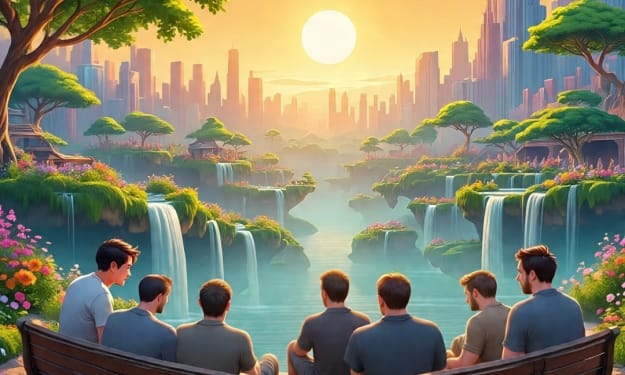
Jason sat on the edge of the wooden bench, sipping hot coffee as the early sun painted golden hues across the horizon. Around him, five other men—friends, really, but more like brothers—were scattered across the campfire circle. Some laughed quietly, others just watched the sunrise in reflective silence. This wasn’t just a camping trip. It was something more. Something needed. It started months ago when Jason hit a wall. Life was full—work, family, responsibilities—but something was missing. He felt stuck, tired, and increasingly isolated. Like many men, he’d been taught to “handle it,” to be strong and silent. But silence had turned into stress, and stress into burnout. That’s when he remembered an old friend, Malik, who’d once mentioned starting a group for men—just a space to talk, grow, and support one another. No judgment. No pressure to perform. Just real connection. Jason reached out. Malik responded within minutes: “Come by Saturday. We meet at the library at 10. Bring nothing but yourself.” That Saturday, Jason stepped into a room of ten men—young and old, from all walks of life. There was Tom, a retired school teacher who’d lost his wife; Derek, a new father juggling diapers and deadlines; Luis, a business owner trying to figure out how not to lose himself while chasing success. Each man carried his own story, but they all shared one thing: a desire to grow. What surprised Jason most wasn’t what they talked about—it was how open they were. Vulnerability wasn’t weakness here. It was power. They discussed everything from mental health to managing anger, balancing career and family, navigating relationships, and even how to find purpose after retirement. But the most powerful moments came when someone said something like, “Man, I thought I was the only one who felt like that,” and others nodded in recognition. The group quickly evolved. They began organizing hikes, workshops, skill-sharing sessions, and even monthly volunteering. It wasn’t about fixing anyone. It was about showing up for one another—and for themselves. The campfire trip was a celebration of how far they’d come. Jason looked around at the faces lit by the soft flames and morning light. He saw courage. He saw strength—not the kind you wear on your chest, but the kind it takes to be honest, to listen, to grow. Malik stood and clinked his mug with a spoon. “I just want to say something,” he began, his voice calm but firm. “This... all of this... started with one idea: that men can be more when we walk together. Society often tells us to figure it out alone. But truth is, none of us were meant to. Real strength is built in community.” The group nodded. Jason felt something shift inside. Not only had he found support, he’d become part of something bigger. These men weren’t just helping each other survive—they were helping each other thrive. As the fire crackled and the sky brightened, he thought about how much had changed. He was more present with his kids. He’d had deeper conversations with his wife in the last few months than he had in years. He was sleeping better, laughing more, and even thinking about mentoring a younger guy in the group. He wasn't perfect—and he didn’t have to be. As they packed up their gear and prepared to head back home, someone joked, “Next time, we need less philosophy and more fishing!” The laughter was loud and easy. But the truth lingered under the smiles: they were walking back into their lives stronger, more connected, and more purposeful than they’d been before. Because men need brotherhood. They need places to be real. They need to be reminded that growth isn’t just possible—it’s powerful. And in that truth, Jason realized something that he wished someone had told him years ago: You don’t become less of a man by asking for support. You become more.
By Muhammad Saad 7 months ago in Men
The Dawn of Solara
The Dawn of Solara In the heart of a distant galaxy, there existed a world unlike any other. Solara, a planet bathed in perpetual sunlight, was home to a civilization that had long mastered the art of harmony. Here, the people lived with a deep understanding of their connection to nature, to each other, and to the universe itself. Their society was built upon the principle that unity and compassion were the greatest sources of strength. This is where our story begins. Solara was not just a planet; it was a living, breathing testament to the possibilities of a world in balance. Its floating islands, suspended in the sky by ancient technology, were connected by graceful bridges of light that shimmered like rainbows. These islands formed the heart of Solara’s city, where people of all walks of life lived, worked, and celebrated together. Liana, a young woman with a radiant smile and a heart full of dreams, had just completed her studies at the Academy of Harmony, a prestigious institution that had trained her to become a Guardian of the Sky—a protector of both the land and the people of Solara. As a child, she had often gazed up at the floating islands, marveling at their beauty and wondering how such a peaceful, harmonious world could exist. Now, she had the honor of contributing to its protection. One bright morning, as the sun rose over the golden horizon, Liana stood on one of the high bridges, gazing out at the city below. The sound of the wind through the trees, the soft murmur of distant conversations, and the gentle hum of the floating islands filled the air. She had just received a message from the Council of Elders—the wise and compassionate leaders of Solara—summoning her for an important mission. "The balance of our world is threatened," the message had said. "We need you, Liana, to restore the connection between the islands and bring the people back together." Liana had been puzzled at first. Solara was a place of peace and unity. What could possibly threaten such a perfect world? But the more she thought about it, the more she realized that the balance they had worked so hard to create could be fragile. In a society so interconnected, even small disturbances could ripple outward and create disharmony. With resolve in her heart, Liana set out for the Council’s chambers, a beautiful building nestled atop the highest floating island. There, she met with the Elders, their faces wise and serene, yet their eyes were filled with concern. "Liana," said Elder Kael, his voice deep and comforting, "the flow of energy that sustains our islands has begun to wane. We do not know the cause, but the bridges that connect us are starting to lose their light. If this continues, our world will drift apart." Liana nodded, her mind racing. The bonds between the islands were more than just physical; they were spiritual. The energy that kept Solara in harmony was a shared force, flowing from every living being, from the plants and animals to the people themselves. If the energy weakened, so too would their connection. "You must travel to the distant island of Lira," Elder Kael continued. "It is said to hold the key to restoring the balance. There, you will find a flower called the Lumis Bloom. Its petals hold the energy we need to restore our world’s unity." With a heart full of determination, Liana set off on her journey. The path ahead was uncertain, but she knew one thing for sure: Solara was worth fighting for. As she crossed the islands, Liana marveled at the beauty that surrounded her. The sky was always clear, the air filled with the sweet scent of blooming flowers. She passed through bustling markets where people of all kinds traded goods and stories, their laughter carrying on the wind. Children played in the fields of crystal grass, their joy infectious. Everywhere she went, there was a sense of community, a sense of belonging. After days of travel, Liana finally reached the island of Lira, a place shrouded in mist and mystery. The Lumis Bloom was said to grow in the heart of the Enchanted Forest, a place few dared to enter. Undeterred, Liana ventured deep into the forest, her every step guided by an inner knowing, a connection to the land she had been born to protect. After hours of searching, she found it—standing tall and proud in the clearing, its silver petals glowing with a soft, ethereal light. As she approached, the flower seemed to hum with life, its energy resonating deep within her. She knelt down and gently cupped the flower in her hands, feeling its warmth spread through her body. In that moment, she understood. The Lumis Bloom was not just a source of energy; it was a symbol of the unity that made Solara strong. It was a reminder that when people came together, when they shared their light and their love, they could overcome any challenge. With the flower in her hands, Liana returned to the Council, where the Elders welcomed her with open arms. The Lumis Bloom was carefully placed in the Heart of the City, where its energy began to flow once more, restoring the bonds between the islands and the people. Solara was saved, but more importantly, the people of Solara had learned something valuable: that their strength did not come from technology or power, but from each other. Together, they could overcome anything. And so, with the dawn of a new day, Solara shone brighter than ever before—a beacon of hope, unity, and endless possibility. Liana, now a Guardian of the Sky in every sense of the word, stood at the center of it all, watching as the people she loved continued to thrive in the warmth of their shared light. For in Solara, no one was ever truly alone.
By Muhammad Saad 7 months ago in Fiction
Embracing the Leap: The Power of Taking Positive Risks
Maya had always been the type of person who preferred a predictable life. She liked knowing what was coming next, whether it was her routine morning coffee or the comforting quiet of her small apartment. She had a steady job in marketing, a few close friends, and the occasional weekend trip to the local park to recharge. Life felt safe. It was comfortable. But for the past few months, something had started to gnaw at her. She couldn’t quite put her finger on it, but it was the growing feeling that she was missing out on something bigger, something more fulfilling. It wasn’t dissatisfaction, per se—it was more like a sense of unfulfilled potential. She had a nagging thought in the back of her mind that she was capable of so much more, but fear kept her locked in place. Fear of the unknown. Fear of failure. Fear of making a mistake that she couldn't undo. It wasn’t until she met Julia, a friend of a friend, that things started to change. Julia was the type of person who seemed to live without fear. She had quit her stable job in tech to start her own social enterprise, and despite the hurdles, she was thriving. Maya couldn’t help but admire Julia’s sense of confidence and bravery. One evening, over drinks at a small local bar, Maya asked Julia how she made the decision to take such a big leap. Julia smiled, almost as if she had been asked the question a thousand times before. “I didn’t know if it would work out, Maya. But I knew that if I didn’t try, I would regret it forever. The fear of what I might miss out on was greater than the fear of failing. Sometimes, taking a risk is the only way to discover who you really are.” Maya thought about Julia’s words long after the evening ended. It wasn’t just about entrepreneurship or starting a business; it was about taking a risk in any area of life. It was about choosing the discomfort of growth over the security of stagnation. She woke up the next morning with a decision to make. For the first time in months, she felt that old spark of excitement within her. She realized that the fear she had been holding on to for so long wasn’t real—it was self-imposed. Sure, taking risks could lead to failure, but it could also lead to discovery, growth, and new opportunities. Maya decided to take a small but significant leap. She had always dreamed of traveling the world, but the thought of leaving her job, her friends, and the safety of her familiar surroundings felt too overwhelming. What if she ran out of money? What if she felt lost or alone? The “what-ifs” piled up in her mind, creating a mountain of barriers. But the more she thought about it, the clearer it became. She had the chance to choose. She could stay in the same place, doing the same things, and never really know what might have been. Or she could take a step forward, embrace the unknown, and see where it took her. Maya took a deep breath and booked a one-way ticket to Bali. The first few days of her trip were difficult. She felt out of her element, surrounded by unfamiliar sights, sounds, and languages. She questioned herself constantly. Was this really a good idea? Was she being reckless? But then, slowly, she started to notice something. The discomfort she was feeling wasn’t the kind of pain that comes from making a mistake. It was the discomfort of growth—the kind that happens when you push yourself beyond your comfort zone. Maya spent the next few months traveling through Southeast Asia, meeting people from all walks of life, and immersing herself in cultures she had only read about in books. She learned to embrace uncertainty, knowing that each new challenge was an opportunity to learn and grow. She picked up a new language, tried new foods, and discovered a deep sense of independence that she had never known before. By the time she returned home, Maya felt like a different person. She had become more confident, more open to new experiences, and more comfortable with the idea of taking risks. She realized that the fear she once held had been an illusion—something that had kept her stuck in a comfortable but unfulfilling life. Her experience had taught her an invaluable lesson: taking risks wasn’t about blindly jumping into the unknown without thought—it was about making a conscious choice to move beyond fear and embrace the possibility of something better. Sometimes, the greatest rewards come not from staying safe, but from stepping into the unknown with an open heart and a willingness to learn. Maya’s leap didn’t result in instant success or perfection. In fact, it was full of mistakes, lessons, and moments of doubt. But it also led to a life that felt richer, more authentic, and more fulfilling than she could have imagined. She realized that risk-taking wasn’t just about achieving a particular outcome—it was about the journey, the growth, and the courage to try. In the end, Maya had discovered that the biggest risk of all wasn’t the one she took on her travels; it was the risk she took with her own life—choosing to step out of her comfort zone, and embracing the uncertainty of growth. And that, she realized, was the key to unlocking the best version of herself. --- Taking a positive risk doesn't mean ignoring fear or being reckless—it means facing it, moving through it, and discovering a whole new world on the other side.
By Muhammad Saad 7 months ago in Humans
"The Power of Football: Unlocking Health, Skills, and Community"
The Power of Football: Unlocking Health, Skills, and Community Football, the world's most beloved sport, is much more than just a game played with a ball. It’s a global connector, a catalyst for personal growth, and a builder of communities. Whether it’s played in a formal stadium with thousands of cheering fans or on a dusty patch of ground in a small neighborhood, the impact football has on individuals and communities is undeniable. In this story, we’ll explore the many benefits of football that make it one of the most popular and transformative sports around. A Game that Transcends Boundaries It’s no secret that football is the most widely played sport in the world, with an estimated 4 billion fans spanning across continents. But what makes football so universally loved? The answer lies not only in the thrill of the game itself but in its unique ability to transcend social, cultural, and geographical boundaries. From rural villages to bustling cities, from the streets of Rio de Janeiro to the fields of rural Africa, football has the power to bring people together. In these settings, football is often seen as a universal language. It doesn’t matter if you speak the same language, if you come from different socioeconomic backgrounds, or if you have different beliefs—on the football pitch, everyone shares a common goal: to score, to defend, to play their best. This shared experience fosters a sense of belonging, camaraderie, and mutual respect. It is in this sense that football creates not just players, but communities. Health Benefits: A Total Body Workout While football’s social and community benefits are widely celebrated, one of its most compelling advantages is its ability to improve physical health. The sport is a full-body workout that engages almost every muscle group in the body. Players must run, jump, sprint, and change direction quickly, making football a dynamic cardiovascular exercise. Regular participation in football can help reduce the risk of chronic illnesses such as heart disease, obesity, and diabetes. The aerobic nature of the sport helps to increase stamina, enhance lung capacity, and improve cardiovascular health. In fact, studies have shown that people who play football regularly have improved overall fitness levels compared to those who engage in less active sports. Moreover, football is excellent for developing coordination and balance. The quick reflexes required to control the ball, make passes, or defend against an opponent demand a high level of hand-eye coordination and spatial awareness. These physical benefits not only improve athletic ability but also contribute to general well-being and overall health. Mental Health and Teamwork Football isn’t just a great way to get fit; it also has a significant impact on mental health. The sport’s fast pace and strategic nature require players to stay focused, make decisions under pressure, and remain calm in high-stress situations. This develops resilience, confidence, and critical thinking skills—qualities that transfer to daily life. On a psychological level, football offers an opportunity for players to express themselves, release stress, and build a sense of achievement. For many people, particularly those from disadvantaged backgrounds, football serves as an outlet for frustration and a source of pride. It is not unusual to see players transform from shy individuals into confident leaders, thanks to the supportive environment fostered by their teammates. Moreover, football has long been regarded as an antidote to mental health struggles such as depression and anxiety. Studies have shown that regular physical activity can boost mood by increasing endorphin levels in the brain, creating a sense of happiness and contentment. In a sport like football, which emphasizes teamwork and collaboration, individuals can gain a sense of purpose and connection, both crucial for mental well-being. Developing Life Skills One of football’s greatest advantages is its capacity to teach life skills that go far beyond the field. Teamwork, communication, discipline, and leadership are just some of the invaluable qualities that players develop as part of the game. These skills not only help individuals excel on the field but also prepare them for success in other areas of life. Football requires constant communication among players, who must work together to form strategies and execute plays. Through these interactions, players learn the importance of clear and effective communication. They also understand the value of teamwork: while one player may be the star of the game, it’s the collective effort of the entire team that leads to success. This mindset is crucial for success in the workplace, school, and family life. Football also teaches discipline. From maintaining a regular practice schedule to following team rules and respecting opponents, the sport instills a sense of responsibility. In addition, it helps develop leadership skills as players take on different roles, whether as team captain or as a key player who leads by example. A Global Force for Good Football’s reach extends beyond the game itself. In many parts of the world, football is a force for social change, particularly in marginalized communities. Organizations such as FIFA’s "Football for Hope" and grassroots initiatives like "StreetFootballWorld" are using the sport to address issues such as poverty, education, and gender equality. Through football, they are creating opportunities for young people to gain life skills, access education, and even improve their communities. In conflict zones and refugee camps, football has been used as a means of bridging cultural divides and promoting peace. It offers people from different backgrounds a chance to unite under a common passion, breaking down barriers and fostering mutual understanding. The Future of Football As the world continues to change, so too does the role of football. With increasing awareness of the sport’s power to influence social change, more initiatives are emerging to leverage football for good. These efforts are not only improving health and well-being but also promoting positive values such as inclusion, teamwork, and respect. The future of football is one where its positive impact on individuals and communities is felt even more strongly. In conclusion, football is not just a game. It is a tool for personal development, a bridge for social connection, and a platform for global change. Whether played for fun, fitness, or professional success, the sport has an unmatched ability to unite people and inspire positive change in ways few other activities can. So, next time you lace up your boots, remember: you’re not just playing a game; you’re becoming part of something much bigger—a global movement with the power to change lives, one kick at a time.
By Muhammad Saad 7 months ago in Gamers
The Beautiful Game: Football's Global Impact
The Beautiful Game: Football's Global Impact Football is more than just a game. For millions around the world, it’s a language spoken without words, a unifying force that transcends borders, languages, and cultural differences. Whether in the streets of Rio de Janeiro, the fields of rural Africa, or the bustling cities of Europe, football is the beating heart of communities. The passion it ignites, the stories it weaves, and the bonds it forms have made it the world’s most beloved sport. The allure of football is undeniable. It’s a game of simplicity yet depth, where the rules are easy to understand but the strategies and plays require years of honing and precision. All you need is a ball, an open space, and the will to play. From the poorest villages to the most glamorous stadiums, the game welcomes all. A Global Community Perhaps the most remarkable aspect of football is its ability to bring people together. The World Cup, held every four years, is the pinnacle of this global unity. For a month, nations set aside their differences, and the world watches in collective anticipation as the best teams compete for the coveted trophy. The tournament is a celebration of skill, national pride, and the shared joy of competition. In the run-up to the 2018 World Cup, millions of fans from countries like Argentina, Germany, Nigeria, and South Korea painted their faces in the colors of their national flags, singing anthems and waving banners. It wasn’t just about winning; it was about belonging to something larger than themselves. Whether they were in the stands or watching from their living rooms, fans formed an invisible bond, united by their love of the game. It’s not just the grand spectacle of the World Cup that fosters this sense of unity. Football’s impact is felt every day in neighborhoods, schools, and communities around the world. In Brazil, children play barefoot on dusty streets, dreaming of one day being as great as their heroes—Ronaldinho, Neymar, or Pelé. In Argentina, the streets come alive as fans sing, “¡Vamos Argentina!” as they follow their beloved team through every match. In cities like Manchester and Barcelona, rivalries run deep, but even in defeat, football fans find common ground in their shared experience of the sport. Football as a Bridge Between Cultures Football also serves as a bridge between cultures, creating an understanding that goes beyond the confines of language and geography. Players who come from vastly different backgrounds—whether it's a star from the bustling streets of Lagos or a talent discovered in the quiet suburbs of Stockholm—can find themselves playing side by side, representing not just their clubs, but the entire spirit of the game. Take the example of the renowned footballer Mohamed Salah. Born in the Egyptian city of Nagrig, Salah’s journey to becoming one of the world’s best players is a testament to the power of football to create opportunity. From playing in small local leagues to representing the Egyptian national team, his rise has inspired millions, particularly in the Middle East and North Africa. Salah's success on the global stage has shown the world that talent can come from anywhere, and football is a vehicle through which individuals can break free from social constraints and achieve greatness. Another example is the rising popularity of football in countries where the sport was once considered secondary. The development of leagues in Asia, the Middle East, and the United States has introduced new cultures to the game, leading to an exchange of ideas and strategies that enrich the sport. In countries like Japan, football has become a symbol of national pride, with fans filling stadiums to cheer for their local clubs and the Japanese national team. In South Korea, the sport has bridged generational divides, bringing together older fans who remember the team's 2002 World Cup run and younger generations eager to see their country return to international glory. Football's Role in Social Change Football's influence extends beyond entertainment; it has the power to shape social change. In communities where poverty, inequality, and political unrest are everyday realities, football provides an escape and a means for self-expression. Many grassroots organizations around the world use the sport as a tool to empower youth, teaching them life skills, discipline, and teamwork. Through football, young people from disadvantaged backgrounds gain access to scholarships, travel opportunities, and a sense of belonging that they might otherwise lack. In the townships of South Africa, football has played a key role in overcoming the legacy of apartheid. During the darkest days of the regime, football became a space where people of all races could come together, a place where unity could be forged despite the oppressive system that sought to divide them. Even today, football remains a symbol of resilience and hope for many South Africans, with local leagues providing a platform for young players to showcase their talents and pursue professional careers. The Future of Football As the world continues to evolve, so too does football. The sport’s global reach has expanded with the rise of social media, allowing fans to connect with their idols and fellow supporters in ways that were previously unimaginable. Digital platforms have enabled young players from remote villages to share their skills with the world, often leading to opportunities with professional clubs. In addition, the rise of women’s football is rewriting the narrative of the sport. Female players are beginning to receive the recognition they deserve, with women’s leagues and tournaments growing in visibility and influence. Stars like Marta, Alex Morgan, and Vivianne Miedema have become household names, inspiring young girls around the world to pursue their dreams of playing football. Football is evolving, but one thing remains constant: its ability to unite people. Whether it’s a last-minute goal, a dramatic penalty shootout, or a jubilant celebration with friends after a local match, football connects people in ways that few other things can. It’s more than just a game; it’s a global community that binds us all together in the joy of sport.
By Muhammad Saad 7 months ago in Gamers
What Is Poetry?
Amara had never considered herself a poet. Numbers, charts, and logic were her language. As a data analyst in a bustling city firm, she spent her days decoding trends and drawing meaning from patterns. Yet, something always tugged at her—an unnamed longing in the quiet spaces between tasks, a yearning for something less structured, more… human. One rainy afternoon, she ducked into a small, unfamiliar bookstore to escape a sudden downpour. The scent of paper, ink, and rainwater wrapped around her like a warm shawl. As she wandered, her fingers brushed over the spine of a slim book titled The Sky Whispers in Verse. Intrigued, she opened it to a random page: "The wind speaks in sighs, Of love and loss and spring rains, But only hearts hear." She read it again. And again. Something stirred inside her—soft and electric. It wasn’t just the words. It was the space between them, the feeling that they held something bigger than themselves. For the first time in her life, Amara realized that poetry wasn’t about rhyme or strict form. It was about truth—raw, distilled, and dressed in metaphor. It was emotion made visible. That night, she wrote her first poem. Scribbled in the back of a grocery receipt, it was clumsy and awkward. But it was hers. And it said what her spreadsheets never could: I feel lonely sometimes, even in a crowd. Over the following weeks, Amara fell into poetry like one might fall in love—with awe and a little fear. She read Rumi, Angelou, Neruda, and Plath. She discovered that poetry had been the voice of revolution, the balm of grief, the celebration of joy, and the record of the soul across centuries. Each poet, whether ancient or modern, spoke with an urgency that echoed through time. She started carrying a small notebook, catching phrases mid-walk, mid-conversation, mid-sigh. The world began to look different. The sunrise wasn’t just “orange”—it was “a warm hush over tired rooftops.” Her neighbor’s laughter was “a skipping stone across silence.” Even numbers began to sing: “The statistics of heartbreak, 1 in 3, hide more than they reveal.” She joined a local poetry circle—a humble group that met every Thursday evening in the back of a café. People from all walks of life gathered there: a retired teacher, a young barista, a father who wrote poems to heal after losing his son. In that circle, Amara found something precious—permission to be vulnerable. There was no judgment, only curiosity and compassion. One night, she nervously read one of her poems aloud. Her voice trembled, but her words carried: "I build walls with data But poetry slips through cracks— A rebel of truth." When she finished, there was silence. Then a slow, genuine applause. A man with kind eyes said, “That hit me. I do the same. I hide in my logic. But poetry makes me feel again.” In that moment, Amara understood something profound: poetry isn’t just art—it’s connection. It bridges hearts that speak different languages. It transforms pain into healing and beauty. It tells us we are not alone. Years passed. Amara still worked with data by day, but she now taught a free weekend poetry class at the library. Children, teens, and elders came to write, read, and discover their voices. She often told them, “Poetry is not about being fancy or perfect. It’s about telling the truth beautifully. It’s about naming what lives inside you.” One student, a shy teenager named Niko, once whispered after class, “I didn’t know it was okay to say how I feel like that.” She smiled. “That’s the magic of poetry—it gives permission.” In the end, Amara’s life didn’t change in the way movies show—no best-selling books or global fame. But it changed in the most important way: it became more alive. More connected. More true. So, what is poetry? It’s the rain that pulls you into a bookstore. It’s the line that echoes in your heart for days. It’s the bridge between strangers and the mirror of your soul. It’s not just words—it’s meaning. It’s not just rhythm—it’s remembrance. Poetry is how we see—more deeply, more honestly, more humanly. And sometimes, all it takes is a single poem to remind us that we’re not alone in this vast, beautiful world.
By Muhammad Saad 7 months ago in Poets