
The Timeless Mind Game: How Classic Cricket Shaped Human Psychology
Exploring the Mental Fortitude, Patience, and Strategy Fostered by the Old System of Cricket
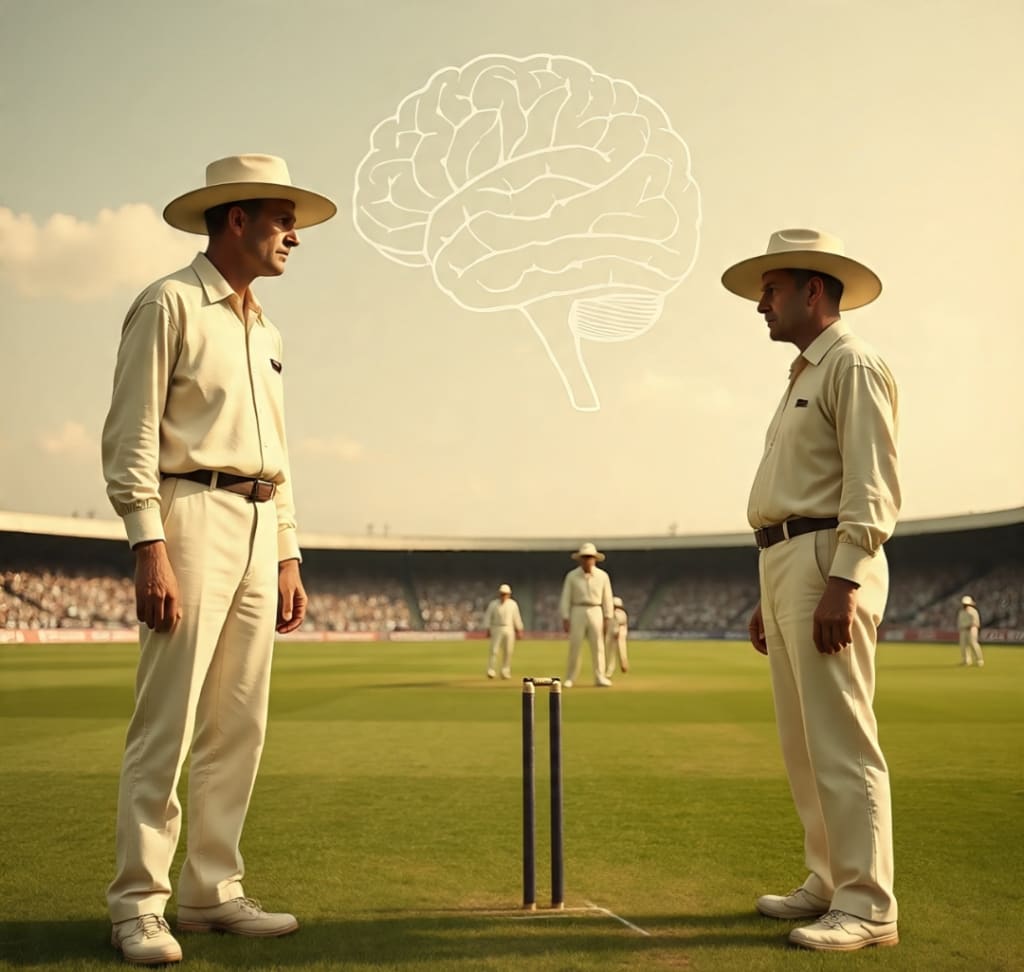
The Timeless Mind Game: How Classic Cricket Shaped Human Psychology
In the golden light of an early summer afternoon in 1934, a young boy named Hari sat cross-legged on a hill beside his village ground in northern India, watching an old cricket match with quiet reverence. There were no loudspeakers, no painted faces, no flashing scoreboards. Just the hush of anticipation, the rhythmic sound of leather meeting willow, and the occasional cheer breaking through the stillness.
To most, the match seemed slow, even uneventful. But for Hari, every delivery was a lesson in human psychology.
Cricket in its traditional form was not just a sport—it was a mental discipline. It demanded patience, strategy, emotional control, and an acute awareness of human behavior. A batter might spend hours at the crease, defending more than attacking, waiting not for the perfect shot but for the perfect moment. Bowlers, meanwhile, tested their opponents not just with variations of spin and pace, but with calculated psychological pressure—each over a quiet dialogue in the language of fatigue, temptation, and misjudgment.
Hari, though just 11, was fascinated. He’d heard tales from his grandfather about test matches that lasted five full days—where a player’s endurance and mindset mattered as much as their technique. “It’s not about hitting the ball hard,” his grandfather once said. “It’s about knowing when not to hit it.”
As Hari grew older, he began to realize that these games had left their imprint on the minds of generations. The old system of cricket, with its long hours, slow tempo, and subtle tactics, nurtured qualities that mirrored life itself. Restraint was as important as ambition. Focus, more powerful than force. One’s greatest opponent was not the person at the other end of the pitch—but the voice inside one’s own head.
Modern psychology would later describe this mental state in terms of cognitive endurance and emotional regulation. But long before textbooks labeled it, cricket players had practiced it. They developed a form of “flow,” immersing themselves fully in the moment, maintaining concentration across long periods without external stimulation.
Hari remembered a match where a batter named Prakash stood his ground for nearly six hours, scoring just 70 runs. The crowd had grown restless, even bored. But later, a local teacher praised Prakash’s innings as “a masterclass in mindfulness.” He had withstood the pressures of impatience—not only from his opponents but from his own teammates and the crowd.
In this way, cricket’s old system quietly reinforced traits that modern society often struggles to teach: delayed gratification, mental resilience, and strategic thinking. A young person who played by these rules learned more than batting or bowling. They learned how to endure criticism without reacting. They learned how to wait, to observe, to adapt. And most of all, they learned how to lose without losing themselves.
By the 1980s, cricket began to change. Shorter formats emerged—first One Day Internationals, then Twenty20. The pace quickened, the game became more aggressive, and the spotlight shifted to big hits and fast finishes. The crowd wanted thrill, not tension. Action, not patience.
Hari, now a middle-aged schoolteacher, didn’t resent the change. But he saw something fading. He watched his students gravitate toward fast-paced games and digital rewards. Attention spans shortened. The virtue of "waiting for the right ball" disappeared—not just from cricket, but from life. The new players were skilled, energetic, and entertaining, but the old psychological dance—the subtle, almost meditative inner game—was rare.
One day, during a school assembly, Hari shared a story of a cricketer who once batted through an entire day without scoring a single boundary. A student raised his hand and asked, “What was the point?”
Hari smiled. “The point,” he said gently, “was that the player knew what mattered most wasn’t how much noise he made, but how long he stayed true to his plan. Sometimes, the quietest innings are the strongest.”
As he looked at the young faces before him, he realized that while the format of the game had changed, its deeper lessons could still be passed down—if told the right way. Perhaps cricket, in its older form, wasn’t just about a game played on the field. It was about a game played in the mind—timeless, profound, and deeply human.
About the Creator
Keep reading
More stories from Muhammad Saad and writers in Gamers and other communities.
Beyond the Boundary: The Benefits of Playing Cricket
There’s a familiar sound that echoes in schoolyards, backstreets, and village fields across the world: the crack of bat on ball, followed by cheers and laughter. That’s the sound of cricket — a game that’s more than a sport. It’s a teacher, a team-builder, and a powerful force for personal growth. Whether you’re playing in an organized league or just with a group of friends in a park, cricket has a unique way of building not just strong athletes, but strong people. Physical Fitness, the Fun Way Let’s face it — not everyone enjoys going to the gym. But cricket offers a natural and exciting way to stay fit. From sprinting between the wickets to diving to stop a boundary, cricket engages your entire body. Batting sharpens reflexes, bowling builds arm and core strength, and fielding improves speed, balance, and coordination. Unlike some high-contact sports, cricket is inclusive of different body types and abilities. Whether you’re a fast bowler charging in or a calm batter holding the fort, there’s a role for everyone. The physical demands are balanced with skill and strategy, making it ideal for people of all ages. Mental Sharpness and Strategy Cricket isn’t just about physical ability — it’s also a thinking game. Every ball delivered and every shot played is a decision made in real time. Players must quickly analyze field placements, anticipate the opponent’s moves, and stay calm under pressure. This builds incredible mental focus, discipline, and decision-making skills. Young players especially benefit from learning how to handle pressure, bounce back from failure, and stay patient for the long game — skills that serve them well beyond the pitch. Teamwork and Social Skills No one wins a cricket match alone. Whether it’s communicating between the wickets, coordinating in the field, or trusting your teammates to back you up, cricket teaches teamwork at its core. Players learn how to support each other, share credit for success, and keep morale high during tough moments. In cricket, there’s a sense of belonging — a team is like a second family. These bonds often last far beyond the game. For kids and teens, this is especially valuable. Cricket offers a structured environment where they learn leadership, cooperation, and mutual respect. Even shy or introverted individuals often find their voice and confidence through the game. A Game of Character and Respect Cricket is famously known as “The Gentleman’s Game,” and with good reason. One of its greatest strengths is how it emphasizes sportsmanship and integrity. Players are taught to respect the umpire’s decision, applaud good performances — even from the opposing team — and play with fairness. These values become habits that shape character. Win or lose, cricket reminds players that how you play the game matters just as much as the outcome. This culture of respect builds strong, humble individuals and creates positive role models in communities. A Game for Life One of the most beautiful things about cricket is that it truly is a game for life. Children can begin learning with a plastic bat in the backyard, and many continue playing well into adulthood — even into their 60s and 70s. There are variations for all levels, from professional Test cricket to casual street games, tape-ball cricket, and short formats like T10 and indoor cricket. This flexibility makes it easier for everyone — regardless of time, space, or resources — to participate. Bridging Cultures and Communities Cricket isn’t just a personal journey — it’s a global connector. In many countries, cricket bridges social divides, brings communities together, and even contributes to national pride. From school teams to city leagues, people of different backgrounds come together to play, learn, and grow. Friendships form across languages, religions, and regions — all united by the love of the game. In recent years, even refugee and underprivileged communities have embraced cricket as a tool for social development, inclusion, and healing. Lifelong Lessons What players take away from cricket goes beyond trophies and titles. They learn resilience — how to come back after getting out early or bowling a bad over. They learn preparation and practice, knowing success is built one session at a time. They learn how to stay grounded in victory and hopeful in defeat. These are the lessons that shape future leaders, compassionate teammates, and better human beings. --- Conclusion: More Than a Game Cricket offers far more than entertainment. It shapes minds, strengthens bodies, and builds bonds that last a lifetime. Whether you dream of playing on the world stage or simply enjoy a sunny weekend match with friends, cricket leaves a positive mark on everyone it touches. So next time you see a game unfolding — whether under stadium lights or on a quiet school ground — remember, it’s more than a sport. It’s a life-shaping experience… one run, one wicket, one friendship at a time.
By Muhammad Saad 6 months ago in Gamers
7 Context Clues AI PCs Read Before Linking to Nearby Devices
Your AI-powered computer does something remarkable every time it spots a nearby device. The machine analyzes multiple signals before deciding whether to connect with your smartphone or smart speaker. This process happens in milliseconds yet involves complex decision-making that most users never notice.
By Judy Watson2 days ago in Gamers




Comments
There are no comments for this story
Be the first to respond and start the conversation.