Muhammad Saad
Stories (465)
Filter by community
The Heart of Us: Understanding the Psychology of Marriage
The Heart of Us: Understanding the Psychology of Marriage Marriage has been a cornerstone of human society for millennia, yet its true nature goes far beyond legal contracts or social rituals. At its core, marriage is a profound psychological journey—a delicate dance of connection, commitment, and communication that shapes who we are and how we thrive. Exploring the psychology behind marriage reveals not just how couples stay together, but why and how they grow together over time. The Foundations: Connection and Attachment Human beings are wired for connection. Psychologists have long studied attachment—the deep emotional bonds that form between people, especially in intimate relationships. From infancy, our brains seek secure attachment as a foundation for emotional safety. Marriage, in many ways, is an extension of this primal need. In healthy marriages, partners serve as emotional “safe havens,” providing comfort and security amid life’s stresses. This secure attachment fosters trust and allows vulnerability—two critical ingredients for emotional intimacy. When spouses can openly share fears, dreams, and weaknesses without judgment, their bond deepens. This emotional attunement activates the brain’s reward centers, releasing oxytocin and dopamine, hormones linked to bonding and pleasure. But attachment is also about balance. Overdependence can lead to anxiety, while emotional distance breeds loneliness. Successful couples learn to navigate this balance, maintaining closeness while respecting each other’s individuality. The Power of Commitment While connection creates intimacy, commitment acts as the glue that holds marriages through ups and downs. Psychological research shows that commitment isn’t merely a conscious decision but also a powerful motivational force. Committed partners prioritize the relationship, invest effort during challenges, and envision a shared future. This commitment creates resilience. When conflicts arise—as they inevitably do—committed couples are more likely to view problems as solvable rather than deal-breakers. They engage in constructive communication, seeking compromise rather than victory. This mindset is a cornerstone of what psychologists call “relationship maintenance.” Interestingly, commitment also influences how couples interpret their partner’s actions. When trust is high, people tend to give their spouse the benefit of the doubt, attributing negative behavior to external stress rather than personal flaws. This positive bias nurtures forgiveness, an essential element for long-term satisfaction. Communication: The Lifeblood of Marriage Perhaps no aspect of marriage psychology is more extensively studied than communication. How couples talk—and listen—to each other shapes the quality and longevity of their relationship. Research highlights several key communication skills linked to marital success. First, active listening. Truly hearing a partner’s perspective—without interrupting or immediately responding—builds empathy. Validating a partner’s feelings, even if you disagree, fosters connection and reduces defensiveness. Second, expressing emotions openly and honestly is crucial. Bottling up frustrations can lead to resentment, while gentle honesty promotes understanding. However, communication isn’t just about words; nonverbal cues—tone of voice, facial expressions, and body language—carry powerful messages. Couples who tune into these subtleties tend to resolve conflicts more effectively. Third, using “I” statements instead of accusatory “you” statements helps prevent blame and keeps discussions constructive. For example, saying “I feel hurt when plans change suddenly” invites dialogue, while “You never stick to our plans” triggers defensiveness. The Evolution of Marriage Over Time Marriage is not static; it evolves as partners grow individually and together. Early years often brim with passion and idealism, while later years bring deeper companionship and shared history. Psychological theories describe this progression in stages, where couples move from “romantic love” to “companionate love.” The challenge lies in navigating these shifts. Couples who adapt by nurturing friendship, shared goals, and mutual respect tend to maintain satisfaction over decades. They recognize that while the intensity of passion may wane, the comfort of trust and understanding often deepens. Life transitions—such as parenthood, career changes, or retirement—test marriages in unique ways. Psychological resilience within the relationship helps partners weather these storms, provided they continue to communicate, support each other, and maintain their bond. The Role of Individual Psychology It’s important to note that marriage psychology is not just about the couple—it’s also about each individual’s history and mindset. Early life experiences, personality traits, and mental health all shape how people approach marriage. For example, someone with a secure attachment style typically finds it easier to trust and connect, while those with anxious or avoidant tendencies may struggle more. Therapists often help couples by exploring these personal dynamics and teaching new ways to relate. The goal is to create a partnership where both individuals feel seen, valued, and supported. Why Understanding Marriage Psychology Matters In a world where divorce rates remain significant and many face relationship challenges, understanding the psychology of marriage offers hope and practical guidance. It reminds us that marriage is not a destination but a dynamic process requiring attention, empathy, and effort. By embracing the science behind connection, commitment, and communication, couples can build marriages that are not just lasting but deeply fulfilling. They learn that marriage is not about perfection but about growing together through imperfections—building a shared story rich with meaning, trust, and love.
By Muhammad Saad 7 months ago in Marriage
Two Roads to Forever: Exploring Love and Arranged Marriages
Marriage is a sacred bond in Islam—one built not just on emotion, but on commitment, mercy, and the intention to build a life together under the guidance of Allah. Around the world, Muslims come together in two main ways: love marriages and arranged marriages. Though the approaches may be different, both paths can lead to a beautiful, lasting union. This is the story of two Muslim couples—Ayaan and Zoya, who married for love, and Hamza and Hafsa, who met through a family-arranged proposal. Ayaan & Zoya: A Love Grown in Halal Boundaries Ayaan and Zoya met at university during a group project. From the beginning, their connection was rooted in mutual respect. They shared the same values, prayed together on campus, and kept their interaction within Islamic boundaries. Over time, they realized their goals and beliefs aligned—not just academically but spiritually and personally. Instead of rushing into a relationship, Ayaan approached his parents, expressing his desire to marry Zoya. Zoya did the same. With both families’ blessings, the couple proceeded with nikah (marriage), prioritizing their deen (faith) as they built their life together. What made their love marriage strong wasn’t just the emotional bond—it was the effort they put into preparing for marriage. They attended premarital Islamic counseling, learned about the rights and responsibilities of spouses, and regularly made dua (prayer) for barakah (blessing) in their union. Hamza & Hafsa: A Match Made Through Trust and Values Hamza had always trusted his parents' judgment. When his mother suggested he meet Hafsa, a family friend’s daughter, he agreed with an open heart. Hafsa was shy but curious. She, too, had faith that if her parents suggested someone, they had good reason. Their first meeting was supervised and respectful. They discussed their values, dreams, and how they envisioned marriage. To their surprise, they discovered much in common—both loved simplicity, wanted to raise a family close to the deen, and prioritized character over wealth or status. After a few guided meetings and istikhara (a prayer for guidance), they felt peace in their hearts. Their arranged marriage was not forced—it was a decision made with mutual consent, guided by Islamic teachings and the wisdom of their elders. Their relationship blossomed over time. Trust and love grew gradually. What made their journey beautiful was the patience and effort they both invested, learning each other’s personalities with kindness. Two Paths, One Purpose While Ayaan and Zoya’s love began before marriage and Hamza and Hafsa’s developed after, both couples shared something profound: commitment, respect, and the intention to please Allah in their union. In Islam, neither love marriage nor arranged marriage is superior. What matters most is the sincerity of the individuals, the consent of both parties, and the effort made to build a strong foundation. The Prophet Muhammad (peace be upon him) encouraged marriage based on deen (religious commitment) above all. Each approach has its strengths: Love marriages often begin with emotional closeness. When guided by Islamic principles, this bond can be strengthened by shared effort, respect, and proper communication. Arranged marriages often begin with trust and intention. When both spouses are open and patient, love can naturally grow through shared experiences and mutual support. The Real Secret: Working Together A successful marriage—regardless of how it begins—requires effort, sacrifice, and a constant turning to Allah. Both Ayaan and Zoya, and Hamza and Hafsa, learned that love is not just a feeling but an action. It’s in the small things: making tea after a long day, listening without judgment, praying together, and forgiving quickly. They also learned that challenges would come, but facing them as a team, with compassion and patience, makes the bond stronger. Whether love came first or followed later, what sustained the marriage was character, faith, and intention. Final Reflection In the end, the way two people come together is less important than how they walk the journey afterward. Love marriages and arranged marriages both have the potential to be deeply fulfilling, harmonious, and spiritually enriching. When built on the foundation of Islam, mutual respect, and genuine effort, either road can truly lead to forever. So, whether hearts meet before the wedding or grow closer with every passing day, the real beauty lies in walking the path together—with love, patience, and trust in Allah.
By Muhammad Saad 7 months ago in Marriage
Bound by Heart: A Friendship That Blossomed into Love
There was something about Sundays in the little town of Willow Creek. Maybe it was the quiet hum of the breeze through the trees, or the smell of freshly baked bread drifting from the corner bakery. But for Sam and Riley, Sundays meant one thing: coffee at Marlowe’s Café and an hour of talking about everything and nothing. Sam and Riley had been friends for nearly a decade. They met in college during a group project that neither of them wanted to do. But somehow, in the chaos of clashing schedules and broken printers, they found an easy rhythm. Their friendship grew naturally—slow, steady, and deeply rooted. They were the kind of friends who didn’t need to say much to understand each other. Sam, quiet and thoughtful, often let Riley fill the silences with stories and laughter. Riley, vibrant and expressive, always found comfort in Sam’s calm presence. People often asked if they were together, but they’d just laugh it off. “We’re just really close,” Riley would say. And they were—close in the way that mattered most. Years passed, but some things stayed the same. Sunday coffee never wavered, even when life threw them curveballs—breakups, new jobs, moving apartments. Through it all, they leaned on each other, not realizing how rare and beautiful their connection truly was. It wasn’t until a rainy April evening that something quietly shifted. They were sitting in Sam’s apartment, watching an old black-and-white movie. The power flickered, and Riley instinctively reached for Sam’s hand. Neither pulled away. The moment lingered—not awkward, just different. New. After a long pause, Riley spoke softly, “Have you ever thought… that maybe we’ve been more than just friends for a while?” Sam didn’t respond right away. But then a gentle smile crossed his face. “Yeah. I’ve thought about it. I just didn’t want to risk losing what we have.” “But what if we’re just finally seeing what’s been there all along?” Riley asked, squeezing his hand. It wasn’t a dramatic confession, no sweeping music or fireworks. Just two people quietly realizing they were already home—in each other. From that day, things didn’t change as much as they deepened. The way Sam made tea just the way Riley liked it. The way Riley would bring Sam wildflowers from the park, saying, “They reminded me of you—quiet but impossible to ignore.” These small gestures, once friendly, now carried the weight of something richer. Their relationship wasn’t built on grand declarations, but on the kind of love that grows from years of trust and laughter. They still argued over which movies to watch. They still teased each other over old college memories. But now, there were soft kisses over coffee, hands held during walks, and sleepy goodnights whispered instead of texted. Their friends noticed the change, of course. But no one was surprised. “It was only a matter of time,” one said. “They’ve always looked at each other like that.” On their one-year anniversary, they returned to Marlowe’s Café. Sam had reserved their usual table by the window, where they could watch people stroll by and reminisce about all the versions of themselves they had been—together. Riley reached across the table and took Sam’s hand. “Do you think we’ll still be here in fifty years?” Sam grinned. “Only if you still let me win at chess.” “You don’t win, I let you win,” Riley laughed, then leaned in. “But yeah. I do. I think we’ll still be here—older, grayer, maybe a little slower—but still us.” Because their love wasn’t sudden or fleeting. It was steady, like the changing seasons. It had weathered time, grown stronger through shared silences and joyful noise. Some people search their whole lives for the kind of love that begins with friendship. Sam and Riley had simply found each other—and never let go.
By Muhammad Saad 7 months ago in Humans
Bound by Light: A Story of Deep, Joyful Love
Bound by Light How Two Radiant Souls Found Each Other and Chose Joy, Every Day Elliot was the kind of person who smiled with his whole face. Even when the train was late, or the coffee machine at work broke for the third time in a week, he greeted life with an unshakable optimism. To him, every inconvenience was a hidden opportunity, every person a potential friend. His coworkers used to tease him for being too upbeat, but he didn’t mind. It was just how he chose to move through the world—light-hearted, but deeply grounded. James, on the other hand, was quieter, thoughtful, and precise. He found joy in details—clean kitchen counters, books arranged by color, long walks through old neighborhoods where he could admire architecture and the changing seasons. His peace came not from loud laughter, but from shared silence, consistent kindness, and well-worn routines. He wasn’t cold; he just loved calmly, intentionally. They met at a community book exchange in a local park, where Elliot was volunteering and James came looking for a novel. Elliot had a clipboard and a bright orange beanie. James had an armful of classic literature. Their conversation started with a joke about book covers and never quite ended. What made their connection special wasn’t fireworks or drama—it was the slow build, like a sunrise you didn’t realize was happening until everything around you was glowing. Their first dates were simple: a picnic by the lake, a walk through a sculpture garden, an afternoon at a used record store where they laughed over obscure jazz covers and found a shared love for Nina Simone. Elliot brought energy to James’s world—random dance parties in the kitchen, surprise weekend road trips, notes left in books and tucked into lunchboxes. James, in turn, gave Elliot a sense of rootedness—reminding him to rest, to plan, to take care of himself even while taking care of others. They never tried to change each other. Instead, they grew together. Elliot started meditating in the mornings, guided by James’s calm presence. James, for the first time in years, hosted dinners filled with music and laughter, energized by Elliot’s joy. There were no grand declarations, just daily choices: hands held during cold walks, grocery lists made together, shared playlists and long conversations under string lights on their balcony. When Elliot’s father got sick, James didn’t offer advice—he offered time, presence, and unwavering calm. When James was offered a job in another city, Elliot didn’t panic—he listened, and together they made a plan that honored both of their dreams. Their love was rooted in trust, not just in each other but in the life they were building. They celebrated each other’s wins, no matter how small—James finishing a difficult puzzle, Elliot making a stranger smile at the café. They didn’t see love as something that happened to them, but something they chose, over and over, with joy and intention. Three years in, they bought a small house with creaky floors and a sunroom. They filled it with plants, books, cozy blankets, and the smell of cinnamon on Sunday mornings. There was no proposal with a spotlight or a crowd—just a conversation on that same mountain they’d hiked together every fall. "I don’t want anything louder than this," James had said, motioning to the quiet sunrise. "Neither do I," Elliot replied, wrapping a shared blanket around them. "This is perfect." So they built their life on the ordinary—on gentle mornings and soft laughter, on patience and affection and kindness that ran deep. Their love didn’t need proving. It just needed nurturing. Neighbors often said they had a “warm home.” Friends noticed how easy it felt to be around them. Not because they were perfect, but because they were kind—to each other and to the world. They had a sort of love that inspired, quietly. Years passed, and nothing faded—it simply deepened. And when someone once asked them what their secret was, James looked to Elliot and said with a small smile, “We’re on the same team. That’s all.” Elliot nodded. “And we make sure to celebrate that—every day.” And so they did. Not with grand gestures, but with morning coffees, shared dreams, and a love that stayed soft, even when life grew noisy.
By Muhammad Saad 7 months ago in Humans
Bright Horizons: 2025 in Focus
In the heart of Amsterdam, Mira unlocked her solar-powered bike with a quick tap of her palm. Around her, the city hummed with quiet energy—literally. The streets were car-free by now, with electric trams gliding past vertical gardens and sidewalk cafés. Children in smart uniforms zipped by on scooters, their backpacks doubling as portable chargers. Mira smiled. This was the world she had dreamed of as a child—one where nature and tech lived side by side. A decade ago, her mornings had been filled with smog, noise, and rushed goodbyes. Now, she breathed in the clean air perfumed with blooming tulips. Her ride to work took her along the Green Spine, a converted highway transformed into a sky garden stretching from the city center to the coast. Beehives buzzed gently, and solar trees harvested light like modern art installations. Her destination: Soluna, a global innovation hub that had opened just this year. It wasn’t just an office—it was a living ecosystem of thinkers, artists, engineers, and dreamers. Mira was part of the Global Harmony Project, a collaboration between 19 countries aiming to design sustainable solutions for food, energy, and education. As she entered the central hall—bathed in natural light and draped with indoor vines—she noticed the digital globe in the lobby. It rotated slowly, displaying live updates from community-led projects worldwide: a reforestation initiative in Brazil reaching 1 billion new trees, a peace-building tech platform used by teenagers in Nairobi, and a low-cost AI tutor implemented in remote parts of Nepal. The world wasn’t perfect—but it was healing. In the breakout room, Mira joined her teammates via the new HoloLink. No screens—just immersive, real-time presence. Abdul, her colleague from Cairo, waved from his rooftop greenhouse. “We just reached full energy independence!” he grinned. “Congratulations!” Mira beamed. Their team had designed a low-cost solar panel using biodegradable materials. What started as a prototype now powered over 200 rural schools across Africa and Southeast Asia. At lunch, she joined a “global potluck” hosted in the commons. Everyone brought dishes inspired by their heritage, cooked with locally sourced ingredients. There were Korean plant-based bulgogi tacos, Mediterranean lentil wraps, and sustainable seaweed chips. A small string quartet played a blend of traditional and AI-generated music. The laughter around the room was a language of its own. Later in the afternoon, Mira took a short break at the MindWell dome, a tranquil meditation pod designed to lower stress through ambient nature simulations. She chose “Patagonia Wind” and was instantly surrounded by the sounds of soft wind and birdsong. Back at her desk, she received an unexpected message: an invitation to speak at the upcoming Global Youth Assembly in Nairobi. Her project had been nominated for the “2025 Earth Forward” award. She paused. Two years ago, she had almost quit. The world felt too broken—climate disasters, inequality, burnout. But something had shifted after 2023. Communities began organizing with urgency, and countries started listening. It wasn’t just tech that changed—it was mindset. Hope had gone viral. That evening, she biked home under a canopy of bioluminescent street lights powered by algae. The city glowed softly, like the earth was breathing. At her apartment—an eco-pod overlooking the bay—she joined her grandmother for a virtual dinner. They cooked the same meal across continents, laughing at their cooking styles and sharing memories. “Back in my day,” her grandmother said, “we never thought this kind of world was possible. But you, my dear, are living proof that imagination can change everything.” Mira looked out her window at the skyline, lit not just with lights, but with intention. Every building, every garden, every citizen was part of something greater. The challenges ahead were still real—but so was the progress. She didn’t know what tomorrow would bring, but one thing was certain: 2025 wasn’t just a new year. It was the year the world decided to move forward—together.
By Muhammad Saad 7 months ago in History
The Poet's Voice: Shaping Souls and Societies
In a small village nestled between hills and rivers, there lived an old man named Elias, known not for wealth or power, but for his words. Every week, he stood in the town square and read aloud his poetry to those who would listen. Children sat cross-legged in front of him, elders leaned on their walking sticks, and farmers paused their carts just to catch a few lines. Elias was a poet—not by profession, but by calling. He had never left his village, yet his words traveled further than he ever could. His poems touched on sorrow and love, war and peace, injustice and beauty. Some villagers saw him as merely a dreamer. Others, especially in times of hardship, looked to his verses for comfort and guidance. Few realized that through his simple act of reciting poetry, Elias played a role as ancient and vital as the village itself. The role of a poet in society is often quiet but powerful. Poets do not wield authority like politicians or dictate policy like rulers, yet they hold a unique kind of influence: they shape how people see the world. Through rhythm and imagery, they offer reflections of our inner selves and the world around us. Elias knew this. He once said, “A poet doesn’t tell you what to think. He reminds you that you can.” Throughout history, poets have served as mirrors, voices of conscience, and keepers of collective memory. From Homer chronicling battles and gods, to Maya Angelou standing tall with dignity and defiance, poets have spoken when others could not. In times of oppression, they became protestors. In times of celebration, they sang praises. In silence, they became echoes of truth. Elias’s poetry, though humble, was no different. When a flood destroyed part of the village, he wrote a poem not about loss, but about rebuilding. When a child was born, he captured the miracle of life in three perfect lines. And when a nearby town faced injustice from corrupt leaders, Elias recited a poem so poignant that it spread beyond the village—copied by hand, passed from person to person, until even city officials took notice. Poets often live in the margins, but they write at the center of human experience. They help us make sense of chaos, reveal hidden truths, and inspire change—not through force, but through feeling. Elias once explained to a curious boy, “A poem is like a seed. You don’t know when it will grow in someone’s heart, but if planted with care, it always will.” In the modern world, the poet's role has evolved but not diminished. They may now share verses through screens instead of scrolls, speak on podcasts instead of street corners, yet their essence remains the same. Poets still awaken the sleeping parts of our consciousness. They still dare to ask questions that society avoids. In classrooms, their lines teach empathy. In courtrooms, their words are cited in defense of justice. In music and protest, their rhythm marches alongside the people. Even in grief, when no words seem enough, it is often a poem that finds a way to express the inexpressible. Elias continued his readings until the end of his days. His final poem, written with a trembling hand, was not about death but about legacy. “I am not the flame,” it read, “but I have carried the spark.” When he passed, villagers gathered in the same square, not to mourn, but to recite his poems aloud—passing on the spark. The poet’s voice, whether heard in quiet rooms or loud squares, remains a vital part of every society. It is the voice that remembers when others forget, that feels when others numb, that questions when others conform. Poets like Elias remind us that words, when spoken with honesty and heart, can move more than minds—they can move history. So next time you hear a poem—on a page, a wall, a stage, or a screen—listen closely. It may be more than just words. It may be a seed waiting to grow.
By Muhammad Saad 7 months ago in Poets
The Living Language of Verse
Long before the written word, before ink met paper or syllables were printed in textbooks, poetry lived in the breath and heartbeat of human expression. It echoed through chants around ancient fires, whispered in the rhythm of ritual, and danced in the memory of storytellers who passed tales from one generation to the next. In the cradle of civilization—Sumer, Egypt, and Mesopotamia—poetry was born not as decoration, but as necessity. The Epic of Gilgamesh, carved into stone tablets over 4,000 years ago, is one of the oldest known literary works. It told of gods and kings, friendship and loss, and the relentless quest for meaning. Even then, poetry was not just words; it was a mirror to the human soul. Centuries later, on the banks of the Nile and in the temples of ancient Greece, poetry took on form and structure. In Greece, it soared with the likes of Homer, whose Iliad and Odyssey stitched together myth, history, and heroism with a melodic, metered rhythm that was easy to remember and share aloud. These early bards were the original spoken word artists, performing epic tales with voice and gesture, captivating audiences much like modern poets do today. As writing systems evolved, so did poetic form. Across India, the Vedas were sung with spiritual reverence, their verses crafted to preserve sacred truths. In China, Li Bai and Du Fu blended nature, philosophy, and emotion into delicate, powerful brushstrokes of imagery. In Persia, the mystic Rumi wrote of love that transcended the physical, penning verses that still resonate centuries later in every corner of the world. During the Middle Ages, poetry became both an instrument of worship and a tool of courtship. In Europe, troubadours composed lyrical odes to unattainable loves, while monks transcribed psalms and hymns to glorify the divine. Meanwhile, on other continents, oral traditions flourished. African griots, for example, kept ancestral history alive through rhythmic storytelling and poetic song, each performance a living archive of culture and identity. The Renaissance ignited a poetic rebirth in Europe. It was an age of sonnets and soliloquies. Shakespeare elevated the English language, weaving iambic pentameter into dramas that exposed the full spectrum of human nature. His plays and poems proved that poetry was not just for the elite or scholarly—it belonged to the people. As literacy spread and printing presses roared to life, poetry became more accessible. The Romantic poets—Wordsworth, Keats, Shelley—embraced emotion and nature, pushing back against industrialism’s cold steel with tender stanzas about rivers, stars, and the aching heart. Their verses reminded people that to feel deeply was not a weakness, but a gift. The 20th century shattered boundaries once thought unbreakable. Poets like Langston Hughes infused jazz and racial identity into verse during the Harlem Renaissance. Sylvia Plath dared to write her inner world in raw, confessional tones. Allen Ginsberg howled against conformity, and Maya Angelou sang of freedom and resilience. The page was no longer the only home for poetry—it spilled into protests, concerts, and coffeehouses. Then came the digital age. At first, some feared poetry would fade, lost in a world of short attention spans and emojis. Instead, it transformed. Spoken word slams filled auditoriums. Instagram poets reached millions with just a few powerful lines. Videos, podcasts, and audio books breathed new life into old forms. A teenager in Nairobi could share verses with a teacher in Toronto. Poetry, once bound by borders and class, was now as free as thought itself. And still, it grows. Today, poetry appears in classrooms and subway walls, in text messages and at weddings, funerals, and protests. It comforts, challenges, and connects. It has evolved from oral tradition to digital expression, but its essence remains the same: to make sense of what it means to be human. Each era adds a verse to poetry’s ongoing story. The poet’s tools may change—stone, ink, screen—but their mission does not. To listen. To observe. To feel. To speak truths that others may only dare to whisper. Poetry, after all, is not just a relic of the past. It is a living, breathing language of the soul. And as long as there are hearts that ache, minds that question, and spirits that dream, poetry will continue to evolve—ever ancient, ever new.
By Muhammad Saad 7 months ago in Poets
Hope on the Horizon: How 2025 Is Shaping a Brighter Future
In a world often overshadowed by crisis and conflict, 2025 has quietly begun to rewrite the narrative. While global challenges remain, a surge of cooperation, innovation, and human resilience is transforming the way people live, work, and protect the planet. One of the most striking developments this year has been the unprecedented progress in climate solutions. After years of warnings and data from scientists, the world’s major economies have not only recommitted to climate goals but have also begun delivering on them in visible ways. Solar energy, once a costly alternative, is now the cheapest source of electricity in over 70% of the world, thanks to technological advances and scaled manufacturing. In countries like India, Kenya, and Brazil, entire rural communities are being powered by microgrids fueled by solar and wind—bringing light and internet access to millions for the first time. In April 2025, the Global Climate Innovation Summit in Amsterdam saw an historic agreement between 40 nations to invest jointly in carbon capture and green hydrogen technologies. What was once considered experimental is now rapidly becoming mainstream. Factories in Germany and South Korea are trialing industrial-scale carbon capture, while hydrogen-powered public transport has rolled out in more than a dozen major cities. Perhaps just as inspiring as the technical advancements is the rise in global cooperation. The COVID-19 pandemic taught the world many hard lessons about interconnectedness and vulnerability. This year, those lessons are bearing fruit in new forms of collaboration. The United Nations’ "Green and Just Future" initiative launched in January 2025 with a coalition of over 60 countries agreeing to pool resources for global challenges—not just climate, but also education, food security, and digital equity. A standout example of this spirit can be seen in northern Nigeria, where a cross-border education program is helping thousands of girls return to school. Using solar-powered digital classrooms and a shared curriculum developed with partners in Norway and Ghana, the project is bridging language and cultural gaps. Fatima, a 14-year-old student from Kano, shared: “Before, school felt like a dream. Now, we’re learning science and computers like students anywhere else in the world.” In technology, artificial intelligence continues to evolve, but with a stronger emphasis on ethics and accessibility. In 2025, open-source AI tools are helping farmers in Southeast Asia predict crop diseases before they spread, using just their smartphones. Meanwhile, small businesses in Eastern Europe are tapping into AI to manage logistics, customer service, and marketing—services once only available to large corporations. Global health is also seeing positive trends. After years of focus on pandemic prevention, the World Health Organization has helped establish regional health hubs equipped with fast-response labs across Africa, Asia, and Latin America. These centers are already proving crucial in identifying and containing outbreaks before they spread. A recent flu strain detected in South America was contained within days, thanks to coordinated surveillance and vaccine development systems. Behind these achievements is the growing influence of youth movements and grassroots organizations. In 2025, young people are not just protesting—they’re partnering with governments, designing policy, and building startups. In Canada, a youth-led initiative called Green Futures has helped retrofit over 200 schools with energy-efficient systems. In Bangladesh, teenage coders are working with environmental scientists to build flood warning apps tailored to local river patterns. Of course, challenges persist. Inequality, conflict, and misinformation still cast long shadows. But the momentum of change in 2025 feels different—not idealistic, but practical and deeply grounded in global solidarity. “What gives me hope,” says Dr. Lucia Navarro, a climate scientist from Chile, “is not just the breakthroughs in labs, but the way everyday people—farmers, students, teachers—are taking ownership of the future. It’s becoming a collective mission.” Back in Nairobi, where city buses hum silently thanks to new electric fleets, and rooftop gardens line apartment buildings, 10-year-old James waters seedlings in a school greenhouse. His class is part of a global exchange where kids from five continents share videos about their local environment. “I want to be a plant doctor,” he says with a grin. “So I can help the Earth heal.” His words echo a larger truth: 2025 may not be perfect, but it’s full of promise. Through cooperation, innovation, and the determination of ordinary people, a brighter future is no longer a distant vision—it’s being built right now.
By Muhammad Saad 7 months ago in History
Thriving Beyond Recovery: The New Era of Post-Health Empowerment
Just a few years ago, Maya Daniels was struggling to walk up a single flight of stairs. A former high school teacher in her early fifties, Maya had spent most of 2021 battling long-term complications from COVID-19. The fatigue, brain fog, and anxiety left her feeling like a stranger in her own body. But today, she’s training for her first 5K, managing a wellness blog, and mentoring others navigating life after serious illness. Maya’s story isn’t unique anymore. Across the world, people who once felt sidelined by health challenges are reclaiming their lives—not just surviving, but thriving. Thanks to a combination of modern medicine, digital tools, and a cultural shift toward holistic wellness, we are witnessing a new era: post-health empowerment. A Shift in the Narrative For decades, the healthcare journey often ended at "recovery." Patients were expected to return to normal life after treatment, with little guidance or support. But today’s health landscape looks different. Recovery is no longer the finish line—it’s the beginning of a new phase of personal growth. “We’ve seen a huge mindset shift,” says Dr. Lena Morales, a rehabilitation specialist in Austin, Texas. “People are redefining what it means to be healthy. It’s not just the absence of illness—it’s about thriving mentally, emotionally, and physically.” This evolving view is being driven by advances in healthcare and wellness technologies. Wearable devices now track everything from heart rate variability to sleep cycles, giving users real-time insights into their recovery progress. Telehealth platforms connect patients with specialists across the globe, making expert care accessible to more people. AI-powered health apps offer personalized exercise, nutrition, and mindfulness plans—all from a smartphone. The Rise of Community-Based Healing Technology may be leading the way, but community is the heart of the movement. Online and local support groups have become vital spaces for people to share experiences and resources. These communities are breaking the isolation that often accompanies recovery. One such example is “Reclaim & Rise,” a peer-led support network founded by stroke survivor Daniel Okafor in Chicago. The group meets weekly, both online and in-person, to practice gentle fitness routines, discuss mental health, and celebrate personal milestones. “Doctors helped save my life,” Daniel says, “but this community helped me build it back. We encourage each other to not only heal, but to grow stronger—together.” Wellness with a Purpose More people are also turning to integrative wellness approaches—blending traditional medicine with practices like yoga, meditation, nutrition, and nature therapy. Hospitals are increasingly including holistic programs in their post-care plans. Take the example of Sunfield Medical Center in Oregon. Their “Thrive Track” initiative offers post-illness patients six months of personalized lifestyle coaching, including dietary consultations, mindfulness training, and social outings like hiking and gardening. Early data shows participants experience faster physical recovery and improved mental health. “We’re seeing that when people are empowered to take charge of their health journey, they become more resilient and optimistic,” says Dr. Priya Natarajan, one of the program’s coordinators. A Healthier Tomorrow, Today Maya Daniels credits her post-health journey not just to technology or therapy, but to her renewed sense of purpose. “Getting sick changed my life,” she says. “But recovering helped me discover a version of myself I didn’t know existed—stronger, wiser, and more compassionate.” She now volunteers with local schools to teach mindfulness to children and runs workshops on managing chronic fatigue. Her blog, Maya Moves, has readers from over 40 countries who tune in for tips on navigating life after illness. “I still have off days,” Maya admits. “But I’ve learned that health isn’t a straight line—it’s a path. And I’m walking it, step by step.” --- As we continue to navigate a world shaped by global health challenges, stories like Maya’s are beacons of hope. The post-health era isn’t about going back to how things were—it’s about moving forward with intention, support, and empowerment. Whether it's through wearable tech, a community Zoom call, or a mindful walk in the park, people everywhere are finding ways to thrive beyond recovery. And in doing so, they’re redefining what it truly means to be well.
By Muhammad Saad 7 months ago in Poets
The Creative Mind Unveiled
The Creative Mind Unveiled Exploring the Psychology Behind Artistic Brilliance and Emotional Expression When Ava was eight years old, she sketched her first portrait—not from sight, but from memory. It was of her grandmother, whom she hadn’t seen in two years. The lines were uneven, the nose a bit too long, but somehow, the drawing captured her grandmother’s warmth in a way no photograph ever had. That moment was the beginning of her life as an artist—and unknowingly, a journey into the mysterious landscape of the creative mind. Artists like Ava have long fascinated psychologists, neuroscientists, and philosophers alike. What is it that fuels artistic talent? Why do some individuals feel a constant need to create, express, and explore emotions through paint, music, dance, or words? The psychology of artists is a field as layered as a complex oil painting, and recent studies have begun to shed light on how their minds work. One of the most consistent findings in the psychology of creativity is that artists often show higher levels of openness to experience—a personality trait linked to imagination, curiosity, and sensitivity to beauty and emotion. This trait helps explain why artists can take a fleeting moment, like the play of light through leaves, and turn it into a visual or emotional experience that resonates deeply with others. Ava, for example, found that certain colors could capture emotions that words couldn’t. Red wasn’t just red—it was rage, passion, sometimes love, depending on how it was used. Her mind didn’t just see the world; it interpreted it through layers of emotional meaning. This emotional intensity, however, can also come with its challenges. Many artists experience emotional vulnerability more intensely than the general population. It’s not uncommon for artists to struggle with anxiety, depression, or mood swings. But psychologists argue that this isn’t a flaw—it’s part of the same sensitivity that allows them to create. According to Dr. James Kaufman, a leading researcher in the psychology of creativity, “Artists don’t just feel emotions—they feel compelled to understand and express them.” Another fascinating aspect of artist psychology is the phenomenon of flow state—a mental state where time seems to disappear, and the artist becomes fully immersed in the act of creation. Ava described it as being “swept away by something bigger,” where hours passed like minutes, and she only resurfaced when the painting felt complete. This state is associated with heightened focus, reduced self-consciousness, and a deep sense of satisfaction—conditions that boost both mental well-being and creative performance. Yet, the artist’s brain is not just emotional—it’s also highly problem-solving-oriented. Contrary to the stereotype of the “scattered creative,” many artists engage in complex cognitive planning, constantly revising their work, evaluating new ideas, and testing boundaries. The process of creation involves both divergent thinking (generating many ideas) and convergent thinking (choosing the best one), showing that artistry requires a balance of freedom and discipline. In Ava’s case, her creative routine included bursts of spontaneous sketching followed by hours of careful refinement. “It’s like dreaming and engineering at the same time,” she often said. Psychologists also explore how identity and self-expression play roles in an artist’s mind. For many, art isn’t just something they do—it’s who they are. Their creations become extensions of themselves, making public reception—whether praise or criticism—deeply personal. This vulnerability, while daunting, also fosters authenticity, which audiences often recognize and appreciate. Interestingly, neurological studies have shown that artists tend to have stronger connections between the default mode network (linked to imagination and introspection) and the executive control network (responsible for planning and focus). This unique brain connectivity might help explain their ability to think creatively while also bringing their visions to life with intention. As Ava grew older, her art evolved, reflecting changes in her inner world. Her early works were raw and emotional, while later pieces became layered with symbolism and subtlety. Through every life transition—love, grief, change—she turned inward and created, not just to express, but to process and understand. The psychology of artists, then, isn’t about labeling them as “tortured geniuses” or “eccentric minds.” It’s about recognizing a unique way of perceiving, feeling, and translating the world. Artists serve as emotional historians, visionaries, and mirrors, often saying what others cannot through their chosen medium. For Ava, and countless artists like her, creativity is more than talent—it’s a way of being. The canvas, the melody, the poem—they are all doors to a deeper understanding of what it means to be human.
By Muhammad Saad 7 months ago in Art
The Heart of Unity
The Heart of Unity How a Strong Community Sparked Lasting Change Through Togetherness and Hope In the small town of Elmridge, nestled between rolling hills and quiet streams, the people always greeted each other by name. The town wasn’t rich in money or industry, but it was rich in something far rarer: connection. Over the years, this tight-knit community had faced its share of challenges—from economic downturns to natural disasters—but it was how the people of Elmridge responded that made their story remarkable. Five years ago, a powerful storm swept through the region, leaving behind a trail of destruction. Homes were damaged, the community center collapsed, and the town’s only school was partially flooded. For a town of just under 2,000 people, this could have meant disaster. But for Elmridge, it marked the beginning of something extraordinary. Within 24 hours, neighbors began checking on one another. Volunteers of all ages gathered at the old church hall—one of the few buildings left untouched—to plan a response. Emma Rivera, a retired teacher, helped organize childcare for working parents. Malik Johnson, a local mechanic, offered his truck and tools to clear debris. Teenagers showed up with gloves and wheelbarrows, ready to work. No one waited for outside help. They became the help. What started as emergency aid turned into a larger movement. With the school damaged, the community set up a temporary learning center in the town library. Retired educators teamed up with high school students to keep lessons going. When word got out, nearby towns donated books, furniture, and even internet routers. The school year finished on time—and with a deeper sense of pride than ever before. Elmridge’s resilience caught the attention of a regional nonprofit that offered a grant for community revitalization projects. Instead of using the money to rebuild what was lost, the townspeople held a town hall and asked a simple question: What kind of future do we want to build? The answers poured in. One group wanted to create a community garden to reduce food insecurity and teach kids about sustainable living. Another dreamed of turning the collapsed community center into a solar-powered hub with a library, computer lab, and flexible event space. A few elders suggested mentorship programs to connect younger generations with the town’s history and values. The result was a year-long collaboration involving almost every resident in Elmridge. Plumbers taught apprentices from the local high school how to install water systems. Artists painted murals reflecting the town’s history and hopes. Local farmers donated seeds for the garden. People gave their time, skills, and hearts. The community garden bloomed first. Rows of tomatoes, kale, herbs, and sunflowers brought beauty and nourishment to the town square. Families harvested together, and children proudly carried baskets home. The garden became more than just a source of food—it became a symbol of healing and hope. Next came the new community center, designed by local architect Lea Chow, who returned to Elmridge after years in the city. She made sure it was energy-efficient, welcoming, and accessible to all. On opening day, hundreds gathered under fluttering ribbons and homemade banners. The mayor didn’t give a speech alone—he invited a child, a teacher, a senior, and a new resident to speak too. Each one shared what the town had come to mean to them. The change wasn’t just physical. People started sharing more of their lives. Elders held weekly storytelling circles. Young adults launched a skills exchange program. Elmridge became known in the region not just as the town that bounced back—but as the town that lifted each other up. Today, five years after the storm, Elmridge stands stronger than ever. Its streets are still simple, and its houses modest, but the spirit of the town pulses brightly. Tourists occasionally visit to learn about the community model. Leaders from other regions reach out to ask: How did you do it? The people of Elmridge always say the same thing: “We listened to each other. We showed up. We believed in what we could do—together.” In a world often divided by difference and overwhelmed by challenges, Elmridge reminds us that the heart of unity is not in grand gestures, but in everyday acts of care, shared vision, and the courage to build something better side by side.
By Muhammad Saad 7 months ago in Potent
The Colors of Creativity
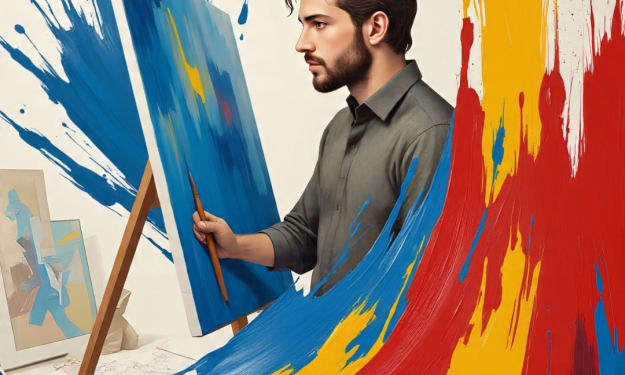
In a sunlit studio tucked away in a quiet neighborhood, a young artist named Leila dipped her brush into a pot of cerulean blue. The canvas before her was blank, but in her mind, it danced with colors and movement. For Leila, art wasn’t just a pastime—it was a way of life, a language she used to express emotions that words couldn’t capture. Leila’s journey into the world of art began when she was a child. Her parents, immigrants who worked tirelessly to provide for their family, didn’t have the means to buy expensive art supplies. But they brought home scraps of paper, old pencils, and leftover paint from hardware stores. With these humble tools, Leila turned her tiny bedroom into a gallery of imagination. What started as a childhood escape quickly grew into a passion. In high school, a teacher noticed Leila’s talent and encouraged her to apply for a local art mentorship program. There, she was introduced to different styles—abstract, impressionist, surrealist—and mediums like clay, charcoal, and digital illustration. Each form opened a new door to understanding the world and herself. But Leila’s story isn’t just personal—it reflects the powerful role art plays in communities around the globe. Art has always been a mirror of society. From prehistoric cave paintings in Lascaux to the murals of modern-day cities, humans have used visual expression to record history, challenge injustice, and celebrate life. During the Renaissance, artists like Leonardo da Vinci and Michelangelo blended science and creativity to capture the beauty of the human form. In the 20th century, artists such as Frida Kahlo and Jean-Michel Basquiat used their work to confront cultural identity and political inequality. More than just decoration, art is a form of communication. It crosses language barriers, connects cultures, and bridges generations. A single painting can evoke empathy, provoke thought, or spark conversation across continents. Leila learned this firsthand when she volunteered to lead a mural project at a local community center. The center, located in a once-neglected part of the city, had recently been revived thanks to neighborhood efforts. The organizers believed that a large, colorful mural could symbolize the area's rebirth. Working with kids, seniors, and other local artists, Leila guided the creation of a massive artwork that spanned an entire wall. It depicted the past, present, and future of the neighborhood—from its historical roots to the dreams of its youngest residents. People who had never held a brush before came to help, adding their own touches and stories. When it was finished, the mural wasn’t just a work of art—it was a symbol of hope, resilience, and pride. Science, too, has begun to understand the profound impact of art. Studies show that creating or even viewing art can reduce stress, improve mental health, and increase cognitive function. Schools that integrate the arts into their curriculum often report better academic outcomes, particularly among students who struggle in traditional learning environments. Leila eventually opened her own art studio, where she teaches children and adults alike. Her classes are less about technical perfection and more about exploration and expression. “Art isn’t about being ‘good’ at drawing,” she often tells her students. “It’s about discovering how you see the world—and learning to share that with others.” One of her students, a retired engineer named Jorge, had never painted before. He came to the studio to honor his late wife, who had loved to paint. At first, Jorge was hesitant. But over time, he began to find peace in the quiet rhythm of the brush. Now, he paints landscapes inspired by the parks they used to walk in together. For Leila, these stories are what make art magical. Not the galleries or fame, but the everyday transformations—the way it can connect strangers, heal wounds, and give people a voice. As she finishes the last stroke on her new canvas—a swirl of blues and golds that suggests a sunrise—Leila steps back and smiles. In that moment, she knows the painting will speak to someone, even if she never hears the words. Because art, in all its forms, is a universal reminder: we are all creators. And in every brushstroke, sculpture, sketch, or melody, we leave a piece of ourselves behind—for others to find, to feel, and to understand.
By Muhammad Saad 7 months ago in Art