Ikram Ullah
Stories (148)
Filter by community
Why the U.S. Revoked Bob Vylan’s Visas: Music, Protest, and the Politics of Expression
In the ever-evolving intersection of music, activism, and politics, few stories highlight the fragile boundary between free expression and international diplomacy as sharply as the recent visa revocation of British punk-rap duo Bob Vylan by the United States. This unprecedented move has not only sparked outrage in artistic communities but also opened a broader conversation on the role of protest in music, the consequences of political speech, and how international artists are treated when they challenge dominant narratives.
By Ikram Ullah7 months ago in The Swamp
Switzerland’s Incredible Bunker Network: Neutrality Backed by Total Preparedness
During the early hours of World War II, when Nazi forces stormed into Poland in 1939, Switzerland’s famed neutrality was shaken. In that instant, Swiss leaders understood that merely declaring neutrality would not guarantee safety from future threats. What followed was a strategic, national mission: to fortify the country’s borders and build an extensive—and remarkably discreet—network of bunkers.
By Ikram Ullah7 months ago in History
From Alchemy to CERN: The 1,200-Year Quest to Turn Lead into Gold; A Tale in Pictures: From Alchemy’s Glow to Particle Science’s Roar
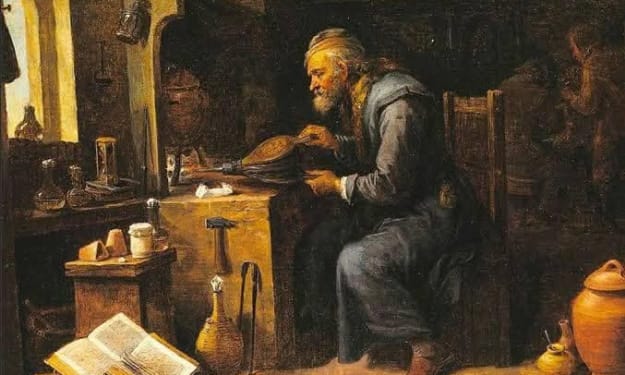
It is Baghdad in the 8th century. The night air carries a cool hush, but deep within one narrow alley, a small room glows under the flicker of oil lamps. Smoke swirls toward the ceiling where its tendrils twine with shadows that dance upon the walls.
By Ikram Ullah7 months ago in Futurism
Bayt al-Hikmah: The Lost Library That Once Lit the World
The House of Wisdom: Baghdad's Library Whose "Books More Precious Than Gold" Were Burned and Thrown into the Tigris This event dates back to the mid-13th century when the Abbasid ruler Al-Musta'sim surrendered after a continuous siege by the Mongol army. Many of you are likely familiar with the history that followed. According to historians, after the Caliph's arrest, the Mongol army, led by Hulagu Khan, wreaked havoc in Baghdad, the capital of the Abbasid Caliphate. Thousands of people were killed, and several buildings were destroyed, including a library called Bait al-Hikma (House of Wisdom). This library is considered one of the greatest monuments of the Islamic Golden Age. Baghdad was so prosperous that scholars and intellectuals from all over the world, regardless of religion or nationality, came there to acquire knowledge. It is said that as a result, the city rapidly became one of the centers of scientific experimentation. However, no trace of this ancient library remains today. After occupying Baghdad in early 1258, the Mongols completely destroyed the library. According to researchers, a large portion of the books stored in the library was burned to ashes, while many books were thrown into the Tigris River. According to folklore, so many burned manuscripts were thrown into the Tigris that the river's water turned black from the ink and soot. Whether this actually happened, however, is a matter of debate. Nevertheless, most researchers agree that this library was one of the largest centers of knowledge in the world at that time. But what did the library look like before its destruction? What kinds of books were available, and how were they collected? This remains a mystery today. Who Founded Bait al-Hikma? The Arabic phrase Bait al-Hikma means 'House of Knowledge and Wisdom.' This famous library is considered one of the most important monuments of the Islamic Golden Age, which flourished during the Abbasid dynasty. According to historians, it was initially a private library of the Abbasid rulers, which was later opened to the public. An article by Adil Abdul Aziz, a professor at the Islamic University of Malaysia, mentions three different views among historians regarding which Abbasid ruler established this library. Professor Abdul Aziz, in his article titled "Impact of Bait al-Hikma on Islamic Libraries," cites many researchers who suggest that the first Bait al-Hikma was established during the reign of the second Abbasid ruler, Abu Ja'far al-Mansur. According to him, Caliph Al-Mansur, out of personal interest, began collecting books on various subjects including medicine, astronomy, mathematics, engineering, religion, philosophy, history, and literature from different places. Professor Aziz quotes Iraqi researcher S. Al-Diyazi as writing: "He encouraged Muslims to study science and develop their abilities." Some researchers also claim that during Caliph Al-Mansur's reign, important books in Greek, Persian, Sanskrit, and other languages were translated into Arabic. And thus, they claim that the foundation of Bait al-Hikma was laid during the reign of the second Abbasid Caliph. However, a second group of historians does not support this theory. According to them, this famous library of Baghdad was built much later, during the time of the famous Caliph Harun al-Rashid. Professor Abdul Aziz says: "During the reign of Caliph Harun al-Rashid, there was great intellectual progress, especially during the translation movement." It is also said about Harun al-Rashid, the fifth Caliph of the Abbasid dynasty, that he had many books translated from other languages into Arabic by many scholars and intellectuals from Arabia, Iran, and Syria. Many researchers have cited a writing by the famous 12th-century historian Yaqut ibn Abdullah. In one of his works, Yaqut ibn Abdullah mentions Abu Isa al-Warraq, a 9th-century scholar, stating that he used to prepare manuscripts of various books for Bait al-Hikma during the time of the Rightly Guided Caliphs and Al-Rashid al-Ma'mun. But despite presenting such evidence, there is a third group that believes that Caliph Harun al-Rashid's son, Al-Ma'mun, actually founded the library in Baghdad using the books collected by his predecessors. British historian De Lacy O'Leary also supports this theory. O'Leary says: "Caliph Al-Ma'mun established a school, which he named 'Bait al-Hikma.' Greek books were translated there." According to Adil Abdul Aziz, a similar opinion is found in the writings of American historian Will Durant and many others. Professor Aziz said: "Thus, it can be said that Bait al-Hikma existed in Baghdad long before Al-Ma'mun. But perhaps during his reign, this library became richer with more books." Various 9th-century documents indicate that Al-Ma'mun ibn Harun, the seventh ruler of the Abbasid Empire, had a deep interest in science. After assuming power, he increased his patronage, and thus the fame of Bait al-Hikma spread. Where Was This Library Located? Bait al-Hikma is mentioned in numerous works by writers and historians of that era, but not much information is available regarding its location. If it is initially considered the private library of the Abbasid Caliphs, then it would originally have been located somewhere inside the palace. Historians believe that this library was also next to the royal palace during the time of Caliph Harun al-Rashid. However, some people hold a different opinion and say that the books were not kept inside but in a large room built around the palace. But later, during the reign of Caliph Al-Ma'mun, when the number of books rapidly increased, researchers suggest the library was moved to the eastern part of Baghdad, on the banks of the Tigris River. Professor Abdul Aziz, citing some local Iraqi researchers, wrote that the library was moved to a place called Al-Rusafa, which was located on the eastern bank of the Tigris River. However, there is disagreement about whether the library was actually moved away from the palace. Some researchers believe that the new building constructed after the increase in the number of books may have been built somewhere near the royal palace. Professor Jim Al-Khalili, a physicist at the University of Surrey in the UK, told BBC Future that "a detailed analysis of where or when Bait al-Hikma was established is not really that important to us." He added that "the important thing is the history of scientific ideas and how they reached where they are today." What Was the Library Like Before Its Destruction? According to researchers, the library had a large open space inside, surrounded by several large two-story rooms. There were four large domes at the four corners of the building. In addition, the central room of the library also had a very large, high dome. On the ground floor of the building, books were placed in rows of cabinets attached to the walls. Separate shelves were made for books on every subject, including religion, philosophy, science, and literature, so that they could be easily found. In addition to study facilities, the library had separate departments for translation, copying, binding, and writing. Skilled individuals were employed for these tasks and were well paid. The Great Library of Baghdad contained many books in Arabic. However, most of the collected books were translated from other languages into Arabic. The 10th-century author and historian Ibn al-Nadim mentions at least 67 translators who worked for Bait al-Hikma in his book "Al-Fihrist." Researchers say that scholars from other religions, as well as Muslims, could work there. Accommodation arrangements for writers, translators, students, and staff were on the upper floors of the building. According to researchers, the environment around the library was also very pleasant due to its proximity to the river. What Kinds of Books Were There? Researchers say that almost all important books of knowledge written at that time were present in Bait al-Hikma. Most of these were books on medicine, science, religion, philosophy, history, and literature. Historians believe that the library contained several hundred thousand books and documents. There is no precise information about the number of books, and the claim of millions of books is also disputed. Many people believe that the library contained more official documents than books. However, according to a BBC Future report, Bait al-Hikma had as many books in the past as the British Library in London or the Bibliothèque Nationale in Paris have today. In this regard, many researchers have cited the name of the Persian Muslim scholar Nasir al-Din al-Tusi, who is said to have succeeded in preserving a few book manuscripts. Approximately 47 individuals worked on translating books from Greek and Syriac languages. Notable translators of that time included Abu Mashar, Hunayn ibn Ishaq, Ibn al-Asam, Thabit ibn Qurra, Hijaz ibn Mutir, Al-Kindi, Al-Balbakki, and many others. Among them, Al-Kindi and Hunayn ibn Ishaq made their names by translating books written in Greek. In the field of science, many books on medical science were translated. One notable book is "Materia Medica" by the Greek physician Pedanius Dioscorides. In addition to medical sciences, books on mathematics, physics, astronomy, chemistry, and engineering were also in the library's collection. There were also books on religion and philosophy. This included the Quran and Hadith, as well as various commentaries and analyses related to Islam. Furthermore, it is known that the theories of other religions were also given a place in the library. Like today, common people could go to this library to read books, and in special cases, they were also lent books. Historians say that in addition to translated books, the library also housed many important original book manuscripts, architectural designs, maps, documents, and so on. How Were So Many Books Collected? Historians emphasize the role of the translation movement in enriching the great library of Baghdad. This intellectual movement actually began in Baghdad in the 8th century, patronized by the Abbasid Caliphs themselves. The purpose of this movement was to introduce Muslims to various branches and theories of science, thereby enhancing their intellectual growth. Researchers stated that as a result of this movement, several important books written in Persian, Greek, Latin, Syriac, Egyptian, Chinese, Sanskrit, and other languages were translated into Arabic. The translation movement, which lasted for about 150 years, began with the translation of a few important books from the Persian language. Along with collecting books written in Arabic, the Abbasid rulers undertook the task of converting Persian books into their native language. After that, books in other languages gradually began to be translated. In this regard, original books in other languages were bought, copied, and even borrowed, and most of them went through the translation phase. Researcher Dr. Hasan Ahmad Mahmud said: "The Abbasid rulers agreed to buy books and paid very high prices for them, especially during the reign of Caliph Al-Ma'mun." Historians also believe that some books may have been collected as a result of conquests. After translation, several copies were also made, so that if one was lost, another would be preserved. In the 9th century, during the reign of Caliph Al-Ma'mun, a new dimension was added to this movement. The number of books translated from Greek in Bait al-Hikma was remarkable. According to researchers, there are also instances of borrowing books by sending letters to those who had Greek books at that time. According to them, one reason for this was that in this era of intellectual development, Arabs were very interested in the philosophy, literature, and medical knowledge of Greek philosophers. Consequently, the Abbasid rulers hired scholars, regardless of religion or nationality, with high remuneration to translate Greek books into Arabic. Historians believe that it was possible to translate the Greek writings of numerous thinkers, including Plato, Aristotle, Hippocrates, Ptolemy, Pythagoras, Archimedes, Galen, and Euclid, within a few decades. "Books Weighing in Gold Coins" It is said that the Abbasid rulers announced a gift of gold equal to the weight of a book if a scientific book from another language was translated into Arabic. According to Professor Adil Abdul Aziz of the Islamic University of Malaysia: "Multiple sources indicate that Caliph Al-Ma'mun offered to pay the famous translator Hunayn ibn Ishaq of that time in gold equal to the weight of the book for the translation of ancient Greek texts." However, Western researchers say that there is no evidence of this. Nevertheless, there is no disagreement that these authors, researchers, and translators were paid very generously for their work. According to American historian Will Durant, during the reign of Caliph Al-Ma'mun, the value of Bait al-Hikma reached approximately two hundred thousand gold and silver coins. Researchers say that in addition to the rulers, wealthy people who were fond of knowledge also contributed money to the library's fund. According to a BBC Future report, because of the 'House of Wisdom' or Bait al-Hikma, scholars, researchers, and scientists from different parts of the world began arriving in Baghdad, and as a result, the library gradually became a center of interest in acquiring knowledge and an unparalleled center for various types of books. At the same time, it became a symbol of freedom of expression. This is because scholars, regardless of religion or nationality, could enter there and obtain permission for study and research. After the 9th century, the library gradually became an academy. Subjects such as humanities, mathematics, medicine, chemistry, geography, philosophy, literature, and art, and even astrology, were studied at Bait al-Hikma. As a result, from an intellectual perspective, the Muslim world reached its most glorious period, known as the 'Islamic Golden Age.' During this period, the famous mathematician Muhammad ibn Musa al-Khwarizmi wrote the book Al-Jabr (Algebra), which is said to have inspired many Western thinkers, including the Italian scholar Fibonacci, to advance mathematics. Al-Khwarizmi is often called the "Father of Algebra" for his outstanding contributions to mathematics. The name of the Muslim philosopher Al-Jahiz is also greatly emphasized, who wrote "Kitab al-Hayawan" (Book of Animals) on the evolution of animals almost a thousand years before the British scientist Charles Darwin. In addition, the names of thinkers like Hunayn ibn Ishaq, Al-Kindi, Al-Malik, Banu Musa, Muhammad Ja'far ibn Musa, Ibn Ali, Al-Jazari, and many others are remembered for their contributions in various branches of knowledge, including medicine, physics, engineering, and astronomy. The role of Bait al-Hikma is behind their contributions to the world of knowledge. However, the extent of this role has been debated and continues to be debated.
By Ikram Ullah7 months ago in History
Being Double-Minded or Indecisive: A Deep Psychological and Spiritual Struggle
Being Double-Minded or Indecisive: A Deep Psychological and Spiritual Struggle You’ve raised a very important and profound issue that affects many people—being double-minded, not being able to make a decision, and later regretting it. In psychological terms, this state is often referred to as "decision paralysis" or "ambivalence." It can deeply affect a person’s confidence, emotions, and mental peace.
By Ikram Ullah7 months ago in Motivation
The World’s Most Powerful Bunker-Buster Bomb — Capable of Destroying Iran’s Deep Underground Nuclear Sites
🌍 The World’s Most Powerful Bunker-Buster Bomb — Capable of Destroying Iran’s Deep Underground Nuclear Sites The United States possesses a secretive and devastating weapon — one that has never been used in any war so far. But if it were ever unleashed, it could turn deeply buried nuclear bunkers into dust and rubble, even those hidden under rugged mountains.
By Ikram Ullah7 months ago in The Swamp
The Young Revolutionary Leader: Ibrahim Traoré and the New Face of Burkina Faso
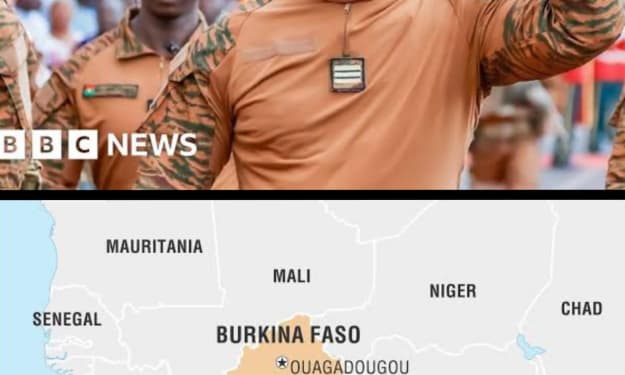
“The Young Revolutionary Leader: Ibrahim Traoré and the New Face of Burkina Faso” Burkina Faso is a landlocked country located in West Africa, with a population of around 20 million. Its flag bears a resemblance to that of Pakistan’s Tehreek-e-Insaf party 🇧🇫, with red and green colors and a yellow star in the center. Formerly known as the Republic of Upper Volta, the country changed its name to Burkina Faso on August 4, 1984, which means “Land of the Upright People” — a title that reflects its people's desire for integrity and self-respect.
By Ikram Ullah7 months ago in The Swamp
Why are medical students trained using frogs for dissection and not other animals?
Why are medical students trained using frogs for dissection and not other animals? Answer: Frogs are commonly used for teaching medical and biological sciences because they are small, easily available, and their internal organ systems are quite similar to those of humans. Therefore, the physiology of frogs is employed to help medical students understand anatomical and physiological principles.
By Ikram Ullah7 months ago in Futurism
"Merchant of Menace": Why Is Pakistani Scientist Dr. Abdul Qadeer Khan’s Name Linked to Iran’s Nuclear Program?
"Merchant of Menace": Why Is Pakistani Scientist Dr. Abdul Qadeer Khan’s Name Linked to Iran’s Nuclear Program? On February 4, 2004, the people of Pakistan witnessed a scene on their television screens that was nothing short of an explosion — and its echoes were heard around the world.
By Ikram Ullah7 months ago in The Swamp
Family Swept Away by Swat River Floodwaters: "I Kept Calling Like a Madman, But Couldn't Reach My Wife and Children"
"I was told that my brother-in-law Muhammad Mohsin’s family had met with an accident and that his children were swept away by the water. For a moment, I froze — my wife and children were with them too. I started dialing numbers on my phone like a madman, but I couldn’t reach them," said Abdul Salam, a resident of Daska in Sialkot district of central Punjab.
By Ikram Ullah7 months ago in Criminal
Temba Bavuma: The Unbreakable Leader Who Redefined South African Cricket
“Unbreakable” Bauma: The Black Quota Player Who Made South Africa World Test Champions “My grandmother named me ‘Temba,’ because it means ‘hope.’ The hope of our community, the hope of our nation.” These were the words of South Africa’s captain Temba Bauma, who recently led his team to a historic victory.
By Ikram Ullah7 months ago in Cleats
Trump’s University Restrictions Create Global Shift in Student Choices
Trump’s Restrictions on Universities Open Doors for Other Countries After Trump's actions, competition among several countries has intensified, as China has already announced it will welcome students who are unable to gain admission to the United States.
By Ikram Ullah8 months ago in Education