
Temba Bavuma: The Unbreakable Leader Who Redefined South African Cricket
From 'Quota Player' to World Test Champion – How South Africa's First Black Captain Turned Criticism into Glory and Symbolized a Nation’s Transformation

“Unbreakable” Bauma: The Black Quota Player Who Made South Africa World Test Champions
“My grandmother named me ‘Temba,’ because it means ‘hope.’ The hope of our community, the hope of our nation.” These were the words of South Africa’s captain Temba Bauma, who recently led his team to a historic victory.
The 35‑year‑old Black captain from Cape Town, Bauma led South Africa to defeat Australia and claim the title of World Test Champions.
In this historic win for South Africa, Adrian Markram’s 136 runs in the fourth innings, along with Captain Bauma’s 66, played pivotal roles in securing the victory.
As captain, this triumph was even more special for Bauma: in his first ten Test matches as captain, South Africa has won nine and drawn one—never losing under his leadership.
Before this, only England’s Percy Chapman had ever achieved nine wins in his first ten Tests as captain.
---
Allegations of Being a “Quota Player” and Criticism of Temba Bauma
South Africa’s World Test Championship win isn’t just seen as a national first, but as a victory for transformation in cricket.
Bauma is South Africa’s first permanent Black Test captain. The confidence and composure with which he led his team represent a symbolic moment for a country deeply scarred by its history of racism.
Bauma was often labeled a “quota player,” with critics suggesting he was selected not for performance but for his skin color.
During the 2019 Test series against England, controversy flared when then-captain Faf du Plessis preferred Dean Elgar over Bauma. It was noted that only four Black players were selected for the first two Tests, despite a target of six. Du Plessis defended the decision, stating that “team selection is based on performance, not color.”
Bauma later faced criticism and every team failure was blamed on the “quota policy.”
---
What Is the Quota System in South African Cricket?
The quota system in South African cricket is a selection policy aimed at giving equal opportunities to underprivileged communities such as Black Africans, Indian-origin players, and others.
Under this policy, teams must include a set number of “non-white” players each season.
Informally introduced in 1998 to promote non-white players, it became official in domestically in 2002 and extended to the international team in 2016.
Under this rule, an average of six non-white players must feature in the playing eleven, including at least two Black African players.
In 2003, Black players made up only 14% of the national team. That percentage rose to 47% in 2016, 61% in 2023, and reached 63% in the 2025 Test Championship team.
During this period, the team’s performance ranking also improved—from sixth in Test rankings in 2016, to third in 2023, and now world Test champions in 2025.
---
The Other Side of the Quota System
(Image caption: Kevin Pietersen and Andrew Strauss via Getty Images)
While the quota system helped Black players gain recognition, some players left South African cricket.
England’s former cricketer Kevin Pietersen wrote in his book Crossing the Boundary that he was dropped from KwaZulu-Natal team because of an unspoken racial quota.
As a result, he moved to England and later represented the England national team.
Several white players like Pietersen and Andrew Strauss played over 100 Tests for England after migrating.
Some former Cricket South Africa heads, coaches, and players admit that sometimes talented white players were dropped merely to meet quota targets.
However, it’s also true that Black players—long deprived of opportunities at school level—were finally given a platform.
Thus, while the quota system kept us out, those given a chance had to repeatedly prove their worth.
For quota-selected players, maintaining self-belief amid criticism was a big challenge. Players like Bauma accepted this challenge—and emerged victorious.
Bauma’s words reflect that struggle: “I didn’t come here to fill a quota; I came to lead. I know who I am.”
---
Did Quotas Affect Team Performance?
Between 1992 and 2002—before the quota policy—South Africa won about 58% of Tests and 65% of ODIs, making them second only to Australia. They won the Champions Trophy in 1998 during this period.
Between 2003 and 2015—when quotas were partially implemented—a roughly 3% dip in win rates was noted in both formats. Yet the team reached the World Cup semi-finals in 2007 and 2015 and remained strong.
After full international implementation in 2016, Test win rates dropped to around 47%, and ODIs to about 59%. Rankings dipped somewhat too.
Still, the system nurtured new talent; South Africa reached the 2023 World Cup semi-finals and now, under Bauma, became World Test Champions, proving critics wrong.
---
Was Rabada, Faf, Amla, Maharaj Also Selected Because of Quotas?
Black African players like Kagiso Rabada, Vernon Philander, Hashim Amla and Indian-origin Keshav Maharaj joined the team during the quota era.
However, it’s hard to say they were selected by quota alone. What’s clear is that while quotas brought them to the platform, their performance, consistency, and skill earned them their spots.
Rabada rose to fame at U19 World Cup
Philander took five wickets on Test debut
Amla scored over 9,000 Test runs
Maharaj claimed wickets overseas
Clearly, their selection wasn’t just symbolic but based on merit.
---
Conclusion
Debate on the quota system may continue, but it’s not about promoting unqualified players—it’s about uplifting underprivileged communities long denied opportunities.
Players like Bauma, Rabada, Ngidi, and Philander have proven that when given a platform, race is never an obstacle to performance.
As former Cricket South Africa head Haroon Lorgat said:
> “Cricket is not only a game that brings about change on the field, but it’s a game that causes change off the field.”
About the Creator
Keep reading
More stories from Ikram Ullah and writers in Cleats and other communities.
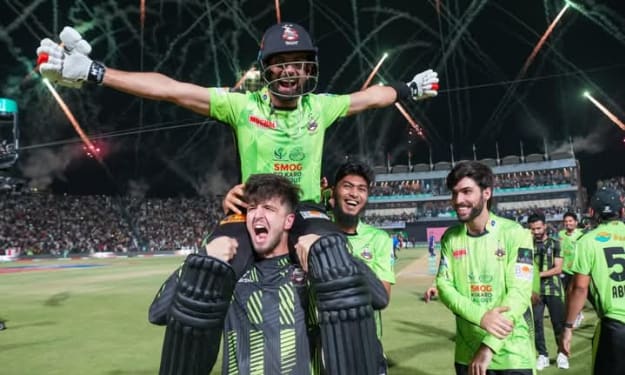
Lahore Qalandars Clinch PSL 10 Trophy in Thrilling Final
PSL Trophy Goes to Qalandars: Sikandar Raza, Who Arrived Just 10 Minutes Before the Toss, Turned the Match Around In the final match of the Pakistan Super League (PSL) 2025, Lahore Qalandars defeated Quetta Gladiators by six wickets and claimed the PSL 10 trophy.
By Ikram Ullah8 months ago in Cleats
Australian Open 2026: A Writer’s Perspective on the Future of the Grand Slam
Australian Open 2026: A Writer’s Perspective on the Future of the Grand Slam From my point of view, the Australian Open 2026 represents more than just the first Grand Slam of the tennis calendar. It feels like a reflection of where modern tennis is heading and how the sport continues to evolve while holding on to its traditions. Every January, Melbourne becomes the center of the tennis world, but in 2026 the tournament seems especially symbolic, standing at the crossroads of a new generation, advanced technology, and changing expectations from fans and players alike.
By America today about 16 hours ago in Cleats
Wild Card Weekend Recap: What Happens Now?
I think I figured out why I love Wild Card Weekend so much. It's because it's the first playoff anything of the calendar year. The NFL season starts in the fall, and once upon a time, the champion was crowned either on or slightly before New Year's. The evolution of the NFL schedule has resulted in the playoffs starting just into the New Year, and currently, the final week of the season falls on the first weekend of the New Year, with Wild Card Weekend coming a week after that. So yes, chronologically, the NFL's Wild Card Weekend serves as the first playoff anything of the calendar year.
By Clyde E. Dawkins6 days ago in Unbalanced



Comments (1)
This win is huge for South Africa. Bauma faced unfair criticism as a "quota player." But his leadership and performance prove he belongs. It's a great moment for cricket in the country.