
The Young Revolutionary Leader: Ibrahim Traoré and the New Face of Burkina Faso
How Captain Ibrahim Traoré Is Leading Burkina Faso’s Bold Break from Colonial Shadows toward True Sovereignty and African Renaissance
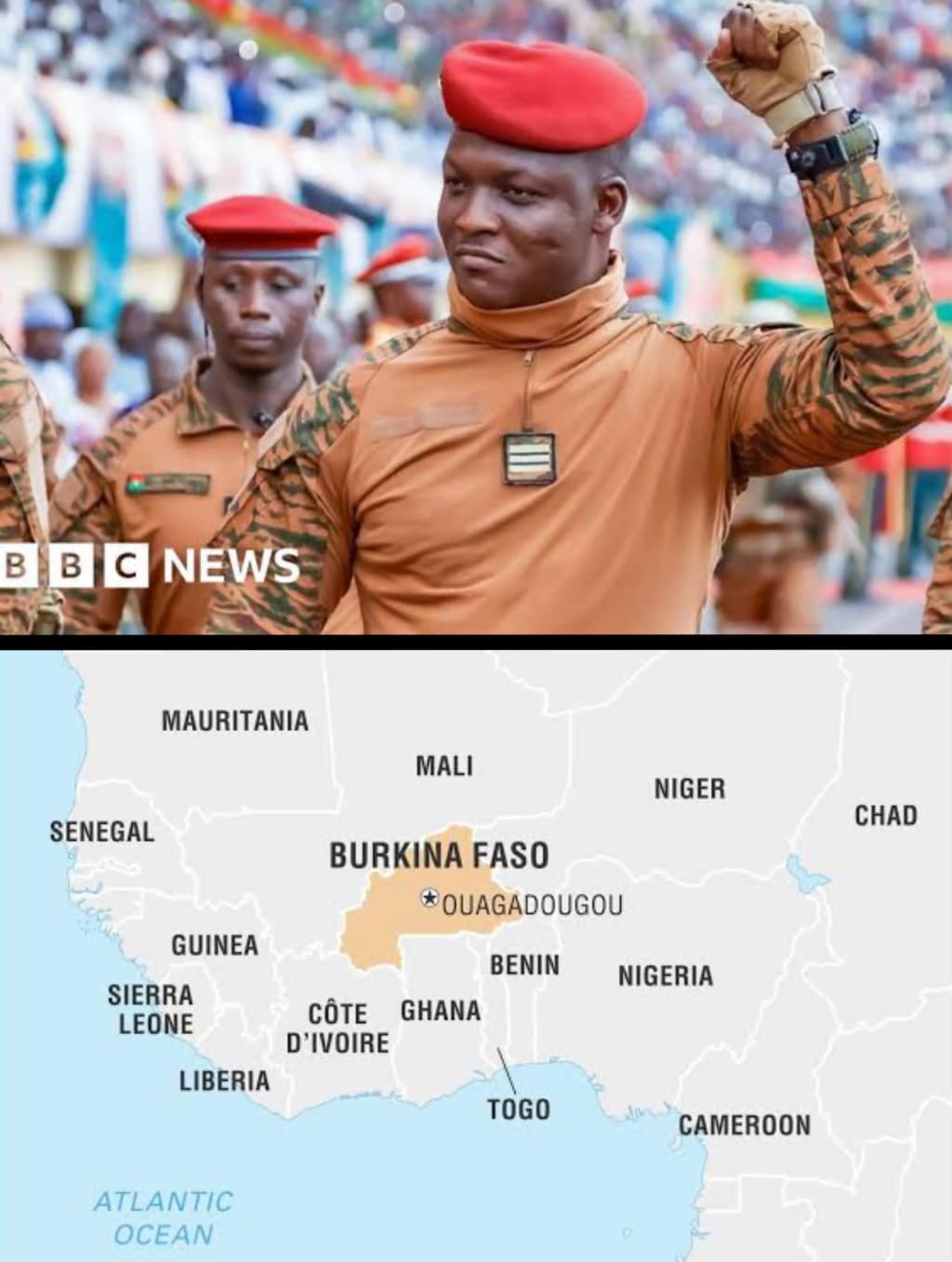
“The Young Revolutionary Leader: Ibrahim Traoré and the New Face of Burkina Faso”
Burkina Faso is a landlocked country located in West Africa, with a population of around 20 million. Its flag bears a resemblance to that of Pakistan’s Tehreek-e-Insaf party 🇧🇫, with red and green colors and a yellow star in the center. Formerly known as the Republic of Upper Volta, the country changed its name to Burkina Faso on August 4, 1984, which means “Land of the Upright People” — a title that reflects its people's desire for integrity and self-respect.
A Colonial Past Under France
Burkina Faso was a French colony, and its official language remains French to this day. France took control of the territory in 1896 and ruled it directly until 1960, when the country was granted nominal independence. However, the influence of France never truly disappeared. For decades, France retained control over Burkina Faso’s economy, trade, military decisions, and most importantly, its natural resources — especially gold.
Despite being one of the world’s richest countries in gold reserves, Burkina Faso was denied the development of local refineries. Instead, French companies continued to extract gold, export it to Europe, and use it to enhance the glittering wealth of Paris, while Burkina Faso remained shackled in poverty. The local population received little to no benefit. As wealth was drained out, poverty, hunger, and crime increased inside the country. Politicians loyal to France continued to plunder public resources through corruption, while ordinary citizens lived in despair.
The Rise of Discontent and Rebellion
By the early 2010s, the situation had reached a boiling point. Frustrated by foreign interference and domestic misgovernance, tribal groups and youth began to resist. Armed rebellions grew. In 2015, elections were held, but once again, the winner was a pro-France president. Things only worsened. Then, in January 2022, the military stepped in and overthrew the civilian government. But the new leader, a military general, failed to deliver on promises. People's lives didn’t improve, nor did the army receive promised wage hikes. Discontent simmered within the military ranks.
The Emergence of Ibrahim Traoré
Just months later, Captain Ibrahim Traoré, a young army officer in his 30s, led a revolt against the general and seized power. Unlike his predecessors, Traoré immediately began making bold, revolutionary decisions. In January 2023, he terminated the security agreement with France, giving them one month to withdraw all French troops from Burkina Faso. This bold declaration shocked the international community. Many asked: Who is this fearless young leader who dares to challenge France?
Strategic Alliances Beyond the West
Once France’s soldiers left, Traoré turned eastward. He visited Moscow and met with President Vladimir Putin. Russia pledged military training and weapons support. Later, China supplied armored vehicles, and Türkiye provided modern drones, which are now being used by Burkina Faso's army in counter-insurgency operations.
Traoré is deeply committed to national self-reliance. Recognizing that foreign companies were exploiting the country’s gold while locals remained unemployed, he founded Burkina Faso’s first gold refinery in 2023. This move was historic—it ensured that the profits from gold would now stay within the country, creating local jobs and boosting the national economy.
He also revoked mining permits from foreign firms, including British companies, and nationalized several mines. These measures sent a clear message to the Western world: Africa has awakened, and the age of plundering is over.
Rejecting Debt Dependence
In August 2024, Ibrahim Traoré took yet another unprecedented step by refusing a $32 million loan offer from the International Monetary Fund (IMF). His message was loud and clear: “We must stand on our own feet.” This decision was widely praised by those who believe in economic sovereignty and freedom from debt traps.
Welfare and Development Initiatives
Despite being a military leader, Traoré is focused on social welfare. Aware that a large portion of his population sleeps hungry, he reached out to Russia, which responded with 25,000 tons of wheat in humanitarian aid. But Traoré does not want his country to become aid-dependent. To secure long-term food security, he imported thousands of modern agricultural machines from China and distributed them free of cost to farmers across the nation.
Under his leadership, electricity access, previously limited to only 20% of the population, has begun to improve. With China's assistance, a 25,000-megawatt solar power project is under development. Additionally, Russia is helping build a nuclear power plant to provide sustainable energy for the future.
In the infrastructure sector, he is constructing roads to connect remote villages with urban centers, realizing that economic development cannot happen without modern transportation.
Moral Leadership and Pan-Islamic Solidarity
Traoré's moral compass sets him apart from many global leaders. When offered funding for 400 mosques by certain Gulf countries, he respectfully declined, requesting that the money be redirected to Palestine, where “our brothers and sisters are starving.” This move earned him global respect and proved his genuine commitment to human values over political optics.
A Role Model for African Youth
At just 37 years old, Captain Ibrahim Traoré has become a symbol of hope for millions across Africa. He represents the dream of true independence, fearless leadership, and people-first governance. Many now consider him a modern-day revolutionary, inspiring a new generation of African leaders to reclaim their nations’ wealth, invest in their people, and challenge neocolonialism.
His leadership reflects the very spirit described by Allama Iqbal in this timeless verse:
> “O Lord, grant the Muslim heart that burning desire,
That sets the soul aflame, that stirs the heart with fire.”
About the Creator
Keep reading
More stories from Ikram Ullah and writers in The Swamp and other communities.
"Merchant of Menace": Why Is Pakistani Scientist Dr. Abdul Qadeer Khan’s Name Linked to Iran’s Nuclear Program?
"Merchant of Menace": Why Is Pakistani Scientist Dr. Abdul Qadeer Khan’s Name Linked to Iran’s Nuclear Program? On February 4, 2004, the people of Pakistan witnessed a scene on their television screens that was nothing short of an explosion — and its echoes were heard around the world.
By Ikram Ullah7 months ago in The Swamp
Suppliers: The Backbone of Global Trade, Communities, and Modern Economies
Suppliers are the often unseen backbone of modern economies, connecting raw materials to finished products and linking local communities to global markets. From small family-owned businesses to multinational corporations, suppliers play a critical role in ensuring that goods and services reach consumers efficiently and reliably.
By Aarif Lashari5 days ago in The Swamp


Comments (1)
Good