
Why are medical students trained using frogs for dissection and not other animals?
Why Frogs Are Used in Medical Training: A Practical, Ethical, and Scientific Perspective on Their Role in Teaching Anatomy and Surgery
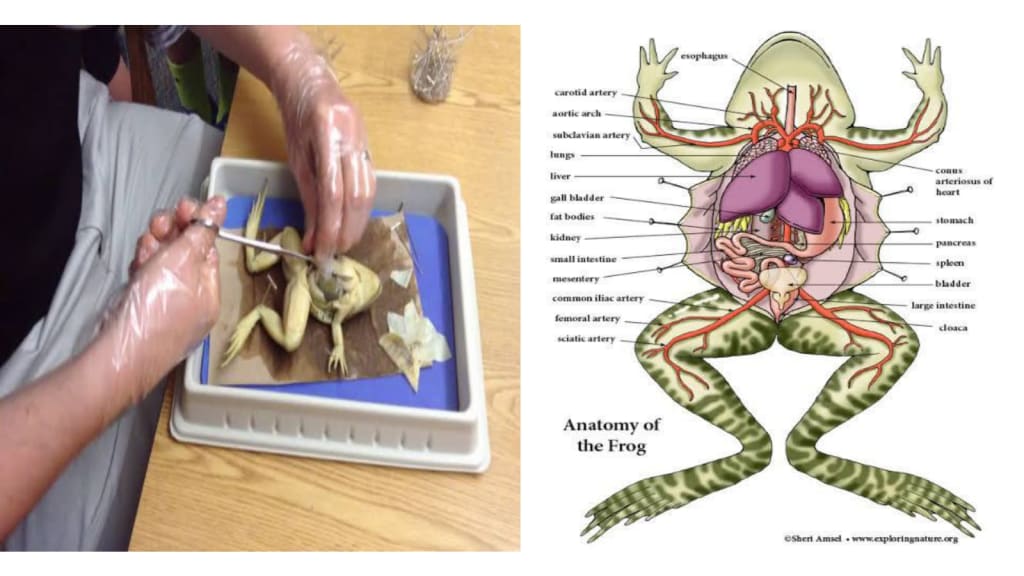
Why are medical students trained using frogs for dissection and not other animals?
Answer: Frogs are commonly used for teaching medical and biological sciences because they are small, easily available, and their internal organ systems are quite similar to those of humans. Therefore, the physiology of frogs is employed to help medical students understand anatomical and physiological principles.
1. Availability and Abundance
One of the major reasons frogs are preferred in medical education is their availability in large numbers. Medical colleges and institutions need a consistent and cost-effective supply of animals for practical lessons and demonstrations. Frogs are widely found in the wild and can also be bred in captivity in large numbers. Unlike larger mammals or exotic species, frogs do not require complicated or expensive environments to survive and reproduce.
This abundance makes it possible to provide every student with a specimen to practice on, without the ethical, financial, and logistical complications that might arise if larger animals were used. For example, using rabbits, cats, or pigs would demand special facilities for their housing, feeding, and care, which would significantly raise the cost and complexity of educational programs.
2. Simplicity and Anatomical Similarity
Frogs have a relatively simple body structure, which makes them ideal for beginners in the field of medicine and biology. Their organ systems—like the circulatory system, nervous system, respiratory system, and digestive system—function in ways that are comparable to human systems. Although they are amphibians and not mammals, their basic physiological processes mirror those of humans to a large extent.
For instance:
Circulatory System: Frogs have a heart and blood vessels that function in a similar manner to the human system, allowing students to understand blood flow, oxygenation, and circulation.
Nervous System: The brain and spinal cord in frogs provide a foundational model for understanding how nerves transmit signals, although less complex than human systems.
Digestive System: Frogs ingest, digest, and excrete food in a way that helps students learn about the roles of the stomach, intestines, liver, and other digestive organs.
This resemblance allows students to gain a foundational understanding of how organ systems function and interact before progressing to more complex models or human simulations.
3. Ethical and Practical Considerations
From an ethical standpoint, using frogs is more acceptable to many institutions and societies than using mammals or higher vertebrates. While ethical concerns still exist and have led to a rise in alternatives like computer simulations and 3D models, frogs are still considered a more justifiable choice than larger animals for basic training.
Moreover, frogs are cold-blooded animals, which means they have a slower metabolism. This property allows for more controlled and extended dissections or experiments without causing rapid deterioration of tissues, making them highly suitable for educational environments where sessions may last for hours.
4. Ideal for Surgical Practice
The size and structure of frogs make them ideal for initial surgical training. They are not so small that procedures become overly difficult for beginners, and not so large that they are impractical for classroom use. Frogs give students a manageable, hands-on opportunity to learn and practice basic surgical techniques such as:
Making incisions
Identifying organs
Suturing (stitching wounds)
Handling live tissues under supervision
These are crucial skills for any future surgeon or physician. Handling frog dissections in the early stages of medical education helps students develop hand coordination, confidence, and a basic understanding of sterile procedures and instrument use.
5. Cost-Effectiveness
Another important factor is cost. Frogs are inexpensive compared to other live animal models. Institutions operating on tight educational budgets can afford to provide frogs for lab experiments without exhausting their resources. In contrast, maintaining and using animals like pigs or dogs would involve costs not just for purchase, but also for feeding, veterinary care, housing, and ethical compliance.
6. Scientific Legacy and Tradition
Historically, frogs have been widely used in biological research and education for centuries. This long-standing tradition has led to a well-established understanding of frog biology in scientific literature. Most of the dissection manuals and protocols are based on frog models, making it easier for teachers and students to follow standardized practices.
For example, Nobel Prize-winning research in neurophysiology and muscle response was often conducted on frogs. Famous experiments, such as those involving the stimulation of frog muscles or the understanding of reflex actions, have laid the groundwork for modern medicine and physiology.
7. Legal and Regulatory Simplicity
In many countries, using amphibians like frogs involves fewer legal restrictions compared to mammals. Regulatory bodies often impose stricter controls on the use of higher animals due to their sentience and social structures. Frogs, being lower on the phylogenetic scale, are thus easier to use in educational settings with minimal bureaucratic hurdles—though ethical guidelines must still be followed.
---
Conclusion:
In summary, frogs are used in medical education because they offer a balance between simplicity, similarity to human anatomy, affordability, and ethical acceptability. Their availability and biological features make them ideal for foundational learning in anatomy and physiology. While modern technology is gradually introducing alternatives to animal dissection, frogs remain a vital part of hands-on medical and biological training for students around the world.
About the Creator
Keep reading
More stories from Ikram Ullah and writers in Futurism and other communities.
Track 1000: China’s Groundbreaking Leap in Green Transportation
China Surprises the World Once Again — This Time Not in Space, But on Earth! China, known for its groundbreaking advancements in science and technology, has once again astonished the world — but this time, the innovation is not related to space exploration; it's firmly grounded on Earth. The China Aerospace Science and Technology Corporation (CASC), a leading state-owned enterprise in the field of space technology, has successfully tested a revolutionary new system named "Track 1000."
By Ikram Ullah10 months ago in Futurism
The Tesla Model Pi: 5 Surprising Truths Behind the Internet’s Favorite Tech Myth
The Ghost in the Machine In the hyper-saturated landscape of consumer electronics, few ghosts haunt the digital zeitgeist quite like the "Tesla Model Pi." The allure is a masterclass in brand gravity: a smartphone engineered by the world’s most disruptive industrialist, designed to shatter the Apple-Google duopoly. However, if you have spent any time on TikTok or YouTube lately, you’ve likely been fed a diet of sophisticated engagement-bait—a alternate reality where the device has already launched, costs a pittance, and connects directly to the Red Planet.
By Mohammad Hamid7 days ago in Futurism
M-Education Market to hit USD 24.3 Billion by 2034
The global M-Education market is experiencing steady growth as mobile technologies continue to transform digital learning environments. The market is projected to increase from USD 5.9 billion in 2024 to approximately USD 24.3 billion by 2034, reflecting a 15.2% CAGR during the forecast period. Mobile education platforms allow students and professionals to access learning content through smartphones and tablets, creating flexible and convenient learning opportunities.
By Roberto Crum7 days ago in Futurism




Comments
There are no comments for this story
Be the first to respond and start the conversation.