
Why the U.S. Revoked Bob Vylan’s Visas: Music, Protest, and the Politics of Expression
When Music Speaks Too Loud: How Bob Vylan’s Glastonbury Chants Sparked a U.S. Visa Ban and Global Free Speech Debate
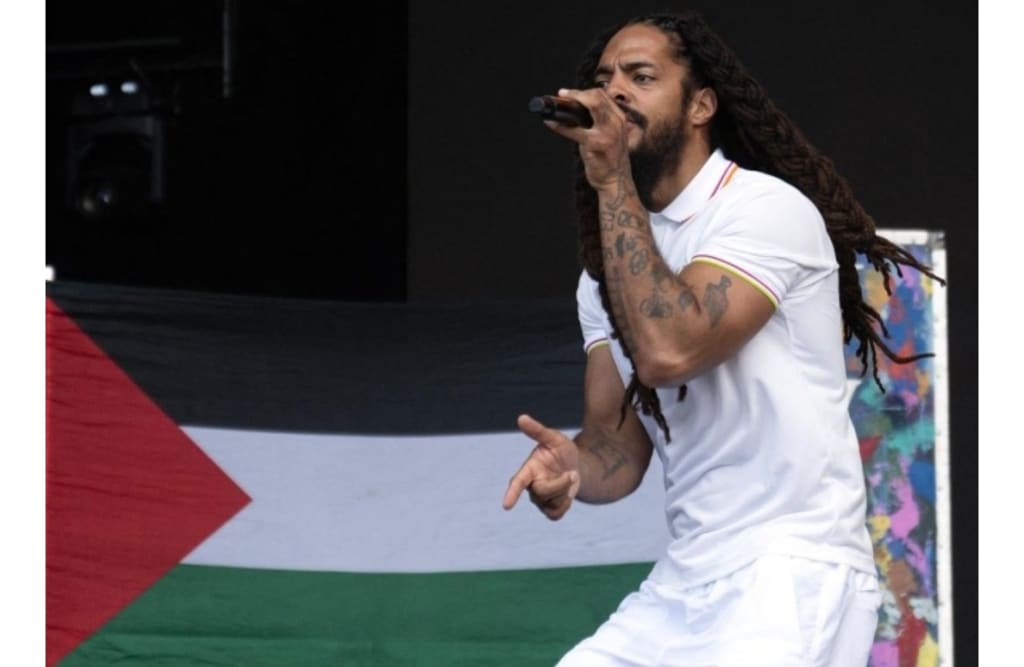
In the ever-evolving intersection of music, activism, and politics, few stories highlight the fragile boundary between free expression and international diplomacy as sharply as the recent visa revocation of British punk-rap duo Bob Vylan by the United States. This unprecedented move has not only sparked outrage in artistic communities but also opened a broader conversation on the role of protest in music, the consequences of political speech, and how international artists are treated when they challenge dominant narratives.
Who Is Bob Vylan?
Bob Vylan, consisting of frontman Bobby Vylan and drummer Bobbie Vylan, is a genre-defying duo from London, England. Formed in 2017, the group blends punk, grime, and hip-hop in a way that is both aggressive and politically charged. They are known for confronting issues such as racism, police brutality, class inequality, and colonialism—all while maintaining an unapologetically anti-establishment tone.
Their DIY ethos and fearless lyricism have earned them a loyal fanbase in the UK and abroad. Unlike many mainstream artists who dilute their messages for broader acceptance, Bob Vylan leans heavily into confrontation. And that’s precisely where their recent controversy begins.
---
The Glastonbury Incident: Where It All Changed
At Glastonbury Festival 2025, Bob Vylan’s performance on June 28 shocked some and energized others. On stage in front of a massive audience, Bobby Vylan led chants of:
> "Free, Free Palestine!"
"Death, Death to the IDF!"
The chants—particularly the latter—ignited a political firestorm. While “Free Palestine” has been widely used in global pro-Palestinian movements, the phrase "Death to the IDF" (Israel Defense Forces) was perceived by many, especially U.S. officials, as crossing a line into incitement of violence.
Shortly after the performance, the United States revoked the group’s visas, effectively banning them from entering the country for their upcoming U.S. tour.
---
The U.S. Government's Justification
The move was confirmed by Deputy Secretary of State Christopher Landau, who stated:
> “Foreigners who glorify violence and hatred are not welcome visitors to our country.”
From the U.S. perspective, the chant targeting the IDF—a branch of a close ally’s military—was not protected free speech but instead a potential incitement to violence and hate speech. U.S. immigration laws allow for the revocation of visas if individuals are deemed to promote or incite violent acts, even through artistic or political expression.
This decision has drawn support from some pro-Israel organizations and lawmakers, but has equally ignited backlash from free speech advocates, artists, and civil liberties groups around the globe.
---
The Fallout: Artistic Freedom vs. Political Consequences
Bob Vylan’s supporters argue that the U.S. reaction reflects a double standard. American artists who engage in provocative or anti-government messaging rarely face such severe consequences—yet international performers seem to be treated with far less tolerance.
Here’s the tension: the United States promotes itself as the global champion of freedom of speech, especially artistic freedom. But when that freedom is exercised by outsiders in a way that challenges U.S. foreign policy or offends political sensibilities, the door appears to close.
---
Free Speech, or Incitement?
Let’s examine the core issue: were Bob Vylan’s statements an exercise in free speech or an incitement to violence?
The chant “Death to the IDF” is undeniably strong and controversial. It can be interpreted in multiple ways: some argue it is a condemnation of institutional violence, while others view it as a call for literal harm against individuals. In legal terms, the question of incitement depends on intent, imminence, and likelihood of actual violence—standards laid out in U.S. Supreme Court precedent (notably Brandenburg v. Ohio).
Since Bob Vylan’s comments were made during a live music performance in the UK, with no direct link to violence, it’s unlikely that U.S. citizens or institutions were immediately endangered. Still, the symbolic power of such statements cannot be ignored—especially when related to one of the most sensitive geopolitical conflicts of our time.
---
The Broader Context: Music as Protest
This isn’t the first time music has collided with politics in a major way:
In the 1960s, artists like Bob Dylan, Nina Simone, and Joan Baez were the voices of civil rights and anti-war movements.
In the 1980s, Fela Kuti used Afrobeat to protest Nigeria’s military regime—often landing him in jail.
In recent years, Kendrick Lamar, Beyoncé, and Childish Gambino have woven powerful political messages into their performances.
What makes Bob Vylan’s case stand out is the international political tension and the governmental consequence. Artists from abroad can no longer assume their expression—even from stages thousands of miles away—will be treated as purely symbolic. In a hyperconnected, politically polarized world, words travel fast, and consequences are swift.
---
Bob Vylan’s Response
The group has not issued a full apology. In fact, Bobby Vylan defended their message in follow-up interviews and social media posts, asserting:
> “We speak for the oppressed, not the oppressors. Music is our protest, and we won’t be silenced.”
They argue that criticizing a government’s military actions—especially amid rising global outrage over civilian casualties in Gaza—should not be equated with hate speech. Their stance reflects a growing sentiment among younger audiences who demand that artists use their platforms to address injustice.
---
Public Reaction: Divided Voices
The public response to the visa cancellation has been deeply polarized.
Supporters of Israel see it as a justified move against rhetoric that threatens the safety and legitimacy of the Jewish state.
Pro-Palestinian activists view it as another example of Western hypocrisy and the silencing of voices demanding justice.
Free speech advocates worry about the precedent this sets for the U.S. to police artistic expression—even when it originates outside its borders.
On platforms like X (formerly Twitter), the hashtag #LetBobVylanIn trended for days. Meanwhile, some conservative commentators called for the group to be banned from more Western countries.
---
What This Means for Other Artists
This incident sends a clear signal: international performers are subject to the political climate of the countries they seek to enter. Messages that challenge dominant narratives—especially those tied to sensitive foreign alliances—can have serious ramifications.
For artists, this means navigating a difficult path between authentic expression and pragmatic caution. For fans and activists, it raises the question: if art is supposed to challenge, provoke, and push boundaries—where exactly should the line be drawn?
---
Conclusion: Art Will Always Be Political
Bob Vylan’s visa controversy is not just a headline—it’s a cultural and political moment. It reflects the ongoing tensions between freedom and responsibility, protest and diplomacy, music and power.
In a time when silence is often seen as complicity, artists like Bob Vylan choose to speak loudly. Whether one agrees with their message or not, their story forces us to reexamine the true cost of protest in a globalized world. As they face canceled tours and travel bans, their music remains a testament to a legacy that refuses to be muted.
About the Creator
Keep reading
More stories from Ikram Ullah and writers in The Swamp and other communities.
The World’s Most Powerful Bunker-Buster Bomb — Capable of Destroying Iran’s Deep Underground Nuclear Sites
🌍 The World’s Most Powerful Bunker-Buster Bomb — Capable of Destroying Iran’s Deep Underground Nuclear Sites The United States possesses a secretive and devastating weapon — one that has never been used in any war so far. But if it were ever unleashed, it could turn deeply buried nuclear bunkers into dust and rubble, even those hidden under rugged mountains.
By Ikram Ullah7 months ago in The Swamp
China Turns Fragile Reefs into Concrete Fortresses and the World Lets It Happen
In the South China Sea, a region fraught with geopolitical tensions and strategic importance, China has embarked on an unprecedented campaign of transformation. Over the past decade, the country has turned fragile coral reefs and low-lying atolls into massive, fortified islands, complete with runways, military facilities, and concrete structures that would seem more at home in a bustling metropolis than in an ecologically sensitive marine ecosystem. While this ambitious engineering feat has drawn widespread attention, the world has largely allowed it to unfold with minimal intervention. The transformation of these reefs into concrete fortresses is a testament to China’s capabilities in large-scale land reclamation. Using a combination of dredging, sand dumping, and heavy construction, China has expanded the surface area of natural formations, creating islands capable of supporting military installations, airstrips, and harbors. Satellite imagery over the years has revealed a stark contrast between the natural reefs and the artificial islands now dominating the waters, highlighting the scope and scale of the operation. One of the most remarkable aspects of this process is the sheer speed at which it has occurred. Some reefs that were mere specks above sea level a decade ago now host multi-story buildings, radar facilities, and missile sites. These developments have given China a strategic advantage, allowing it to extend its reach across the South China Sea and control vital shipping lanes, which carry a significant portion of the world’s trade. The artificial islands also serve as a deterrent, projecting power and influencing the behavior of neighboring countries. Yet, this strategic triumph comes at a severe environmental cost. Coral reefs, long considered the “rainforests of the sea,” are delicate ecosystems that support thousands of marine species. The dredging and construction processes have destroyed vast areas of reef, disrupted fish populations, and altered water currents. Marine biologists warn that the ecological damage is likely irreversible, with implications not just for biodiversity but also for the livelihoods of coastal communities that depend on fishing and tourism. The international response has been muted, despite widespread condemnation from environmental groups and concerned nations. Part of the challenge lies in the legal framework governing the South China Sea. While the United Nations Convention on the Law of the Sea (UNCLOS) sets out rules for territorial waters and exclusive economic zones, enforcement is weak, and China’s actions often exploit legal ambiguities. Attempts by other countries to challenge the reclamation and militarization of these islands have largely failed, leaving the status quo intact. Geopolitically, the world’s reluctance to intervene reflects a combination of caution and pragmatism. China is a global economic powerhouse, and many nations are hesitant to risk confrontation over a maritime dispute. Diplomatic efforts have mostly focused on negotiations and freedom-of-navigation patrols rather than direct interference. Meanwhile, the artificial islands have become symbols of China’s growing assertiveness, testing the resolve of neighboring countries like the Philippines, Vietnam, and Malaysia, who also claim parts of the contested waters. The militarization of these reclaimed islands adds another layer of concern. Some installations are equipped with radar systems capable of monitoring air and maritime traffic across the region. Others host missile batteries that can target ships and aircraft hundreds of kilometers away. These fortresses not only enhance China’s defensive posture but also complicate the strategic calculus for the United States and its allies, who conduct naval operations and patrols in the South China Sea. Despite the warnings, China shows no signs of slowing down. Plans are reportedly underway to expand existing islands and even construct new ones, solidifying its hold on the region. This situation presents a broader question for the international community: how should the world respond when engineering marvels clash with environmental preservation and global security norms? Environmentalists argue that immediate action is necessary to protect remaining reefs, enforce stricter regulations on land reclamation, and hold countries accountable for ecological destruction. Policymakers, on the other hand, are caught between the imperatives of maintaining peace, upholding international law, and addressing environmental crises. The South China Sea, therefore, has become a microcosm of global challenges—where ambition, national interest, and ecological responsibility collide. China’s creation of concrete fortresses from fragile reefs represents a bold combination of ingenuity and assertiveness. But the world’s muted response raises questions about the balance between strategic interests and environmental stewardship. Unless the international community develops new mechanisms to address such transformations, the South China Sea may serve as a warning of what happens when ambition overshadows accountability. The reefs that once teemed with life now stand as stark monuments to human determination, but also as cautionary tales. The consequences of these actions extend far beyond territorial control—they touch on global environmental health, regional stability, and the rules that govern shared spaces in an interconnected world.
By Fiaz Ahmed Brohi2 days ago in The Swamp



Comments
There are no comments for this story
Be the first to respond and start the conversation.