Aqib Hussain
Stories (196)
Filter by community
Russia’s Sabotage Campaign Is Becoming Bolder. AI-Generated.
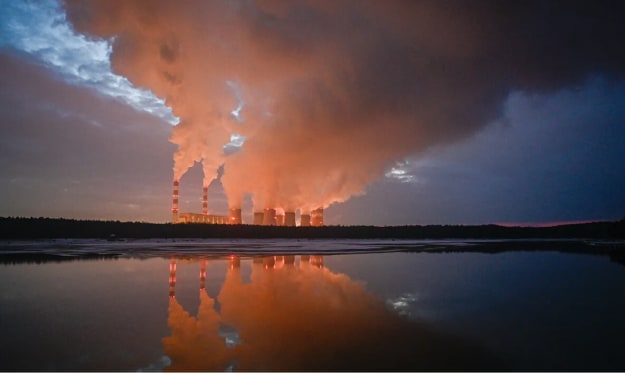
For years, Russia’s use of sabotage as a geopolitical tool has lived in the shadows—plausibly deniable, fragmented, and often dismissed as isolated incidents. Today, that shadow war is growing more visible and more audacious. Across Europe and beyond, a pattern is emerging: infrastructure damage, cyber intrusions, arson attacks, assassinations, and influence operations that increasingly blur the line between peace and open conflict. Russia’s sabotage campaign is no longer tentative. It is bolder, broader, and designed to challenge the West’s ability to respond without escalating into full-scale war.
By Aqib Hussain18 days ago in The Swamp
Russia’s Sabotage Campaign Is Becoming Bolder. AI-Generated.
For years, Russia’s use of sabotage as a geopolitical tool has lived in the shadows—plausibly deniable, fragmented, and often dismissed as isolated incidents. Today, that shadow war is growing more visible and more audacious. Across Europe and beyond, a pattern is emerging: infrastructure damage, cyber intrusions, arson attacks, assassinations, and influence operations that increasingly blur the line between peace and open conflict. Russia’s sabotage campaign is no longer tentative. It is bolder, broader, and designed to challenge the West’s ability to respond without escalating into full-scale war.
By Aqib Hussain18 days ago in The Swamp
Trump Is a Global ‘Wrecking Ball,’ European Security Experts Say. AI-Generated.
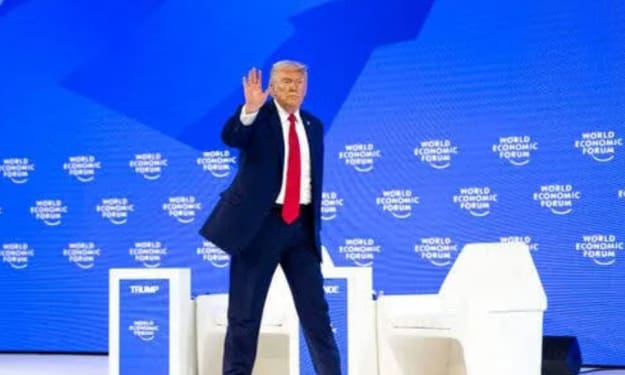
As the prospect of Donald Trump’s return to the White House grows more tangible, anxiety is spreading rapidly across European capitals. Senior defense officials, security analysts, and diplomats are increasingly united in a stark assessment: Trump is viewed not merely as an unpredictable leader, but as a destabilizing force—a global “wrecking ball” whose foreign policy instincts threaten the foundations of European security.
By Aqib Hussain18 days ago in The Swamp
Israel Gives Itself More Control Over the Occupied West Bank. AI-Generated.
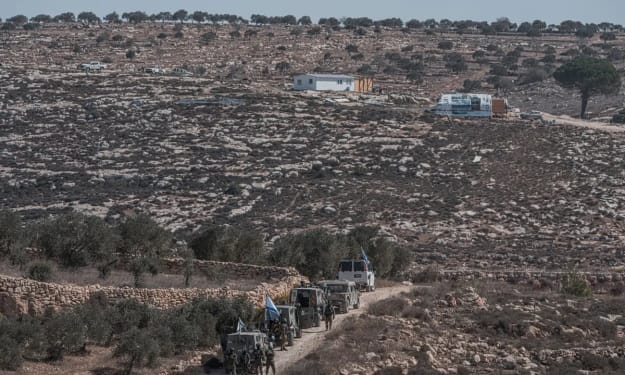
The Israeli government has taken a decisive step that could redefine the political and legal reality of the occupied West Bank. In a move that has triggered sharp international criticism and deep Palestinian concern, Israel has approved new measures that significantly expand its administrative, legal, and territorial control over the area. Supporters frame the decision as a bureaucratic adjustment; critics warn it marks a dangerous slide toward de facto annexation.
By Aqib Hussain18 days ago in The Swamp
Is America About to Attack Iran? A Look at Rising Tensions and Global Stakes. AI-Generated.
Amid rising geopolitical tensions, many around the world are asking a question with serious consequences: Is the United States preparing to attack Iran? The short answer is that while there is no confirmed imminent attack, developments over the past weeks suggest a heightened risk environment involving serious threats, military build‑ups, and diplomatic pressure that could, under certain conditions, escalate into conflict. The Economist Here’s a clear, informative breakdown of what’s happening — and what it might (or might not) mean for a U.S. strike on Tehran. What’s Fueling the Tension At the heart of the current crisis are escalating threats between the U.S. and Iran, particularly over Iran’s nuclear program and its internal political repression. Donald Trump — now back in the White House — has issued several warnings to Tehran, saying a large U.S. naval “armada” is heading toward the region and that Iran should agree to a nuclear deal or face a “far worse” attack. اnational In response, Iran has signaled strong resistance. Iranian leadership has declared that any military action would be treated as the beginning of a full‑scale war, with immediate and far‑reaching retaliation. TASS These developments are accompanied by military deployments — including aircraft carriers and destroyers — and aggressive rhetoric on both sides. Financial Times +1 What the U.S. Has Actually Done To understand whether a major attack is imminent, it helps to look at what the U.S. has already done: 1. Naval and Military Buildup The U.S. has sent significant naval assets to the Middle East, including the USS Abraham Lincoln and accompanying strike group. Military analysts note this is the largest U.S. deployment in the region in years, signaling seriousness but not necessarily intent to strike immediately. Fina2. Past Strikes on Nuclear Sites In June 2025, U.S. forces, alongside or in support of Israeli operations, bombed three Iranian nuclear facilities as part of efforts to curb nuclear development. At the time, U.S. officials insisted they did not want full war, characterizing the mission as a necessary action to check nuclear escalation. Military.com This prior strike is relevant because it shows the U.S. is capable of acting militarily against Iran — but it also said it was not seeking a broader war. Military.com Tehran’s Response Iranian officials have issued stark warnings about the consequences of any U.S. attack: Iran will treat any U.S. military action as a start of war, promising immediate retaliation against the U.S., its allies, and potentially Israel. TASS Iran’s foreign minister has emphasized readiness to respond “powerfully” to any aggression, while also warning that threat‑based diplomacy undermines negotiations. Philstar.com These statements underscore that Iran is not sitting passively — and any attack could trigger a broader regional conflict. Are Diplomacy Efforts Still Alive? Despite the threats, diplomatic channels have not completely closed: Iran has reiterated that it is open to a “fair and equitable” nuclear deal that respects its right to peaceful nuclear technology, but it rejects negotiations under a cloud of military threat. Philstar.com Other global powers, including Russia, have urged the U.S. and Iran to pursue talks rather than force, warning that military action would destabilize the broader Middle East. Reuters This suggests that — even amid hostile rhetoric — there is still a space for negotiation. What Experts Say Security analysts caution that the current situation contains elements of warning, deterrence, and diplomacy rather than clear signs of imminent war: Some see recent rhetoric — like threats of bombardment — as part of pressure tactics meant to force Iran back to negotiations rather than a prelude to immediate conflict. ent of a large naval force could be interpreted as a deterrent posture, aimed both at signaling resolve and reassuring U.S. allies in the region, not solely preparing for an offensive strike. Financial Times Historical context matters: past interactions between the U.S. and Iran have included crises that did not escalate into full war, even when they appeared close. Experts note that both sides are aware of the high risks of a wider conflict. Could It Still Happen? Yes — but it is far from certain. A U.S. attack could occur under specific circumstances, such as: A sudden Iranian attack on U.S. forces or critical regional infrastructure Intelligence suggesting a imminent threat from Iran’s nuclear program Breakdown of diplomatic de‑escalation efforts However, many policymakers and analysts emphasize that the U.S. is not currently at war with Iran and that Washington continues to publicly claim it doesn’t want a broader war, even if it is prepared militarily. TIME What Would Be the Consequences? A direct American military strike on Iran could escalate dramatically: Iran has a wide range of ballistic missiles capable of striking U.S. bases and regional partners. Al Jazeera Iran could activate allied militias and regional forces, potentially spreading conflict across multiple Middle Eastern theaters. omic instability could follow, particularly if the Strait of Hormuz is affected. For these reasons, many diplomats and analysts argue that all-out war would be deeply dangerous — and is not something either side would choose lightly. Bottom Line So, is America about to attack Iran? Not imminently — at least not based on confirmed evidence — but the risk environment is serious and volatile. The U.S. has bolstered its military presence and ramped up rhetoric, while Iran has responded with warnings of severe retaliation. A conflict could occur if diplomatic channels fail or if violent engagement erupts first — but military analysts still see deterrence and negotiation as significant factors in preventing an outright war. Conditions are tense, and global observers are watching closely — because the stakes extend far beyond Iran and the U.S. themselves. The Economist
By Aqib Hussain30 days ago in The Swamp
As Ukraine Accuses Russia of Terrorism, a Deadly Train Strike Sparks Controversy Over Starlink. AI-Generated.
The war in Ukraine has entered a deadly new phase. On January 27, 2026, a passenger train in Kharkiv was hit by drones, killing at least five people and injuring dozens. Ukraine’s government quickly labeled the strike an act of terrorism, and the incident has sparked a heated debate over modern technology in war, especially the controversial role of Starlink satellite internet.
By Aqib Hussain30 days ago in The Swamp
A Better Greenland Deal: Redefining Arctic Diplomacy for the 21st Century. AI-Generated.
Greenland — that massive icy island up north — is suddenly back in the headlines. In early 2026, it became the center of an international stir, thanks to bold statements from U.S. leaders about its strategic value. What started as vague discussions about “total access” soon turned into diplomatic tension, protests in Copenhagen and Nuuk, and a worldwide debate about what a better Greenland deal should look like.
By Aqib Hussain30 days ago in The Swamp
Huge Landslide Leaves Sicilian Homes Teetering on Cliff Edge. AI-Generated.
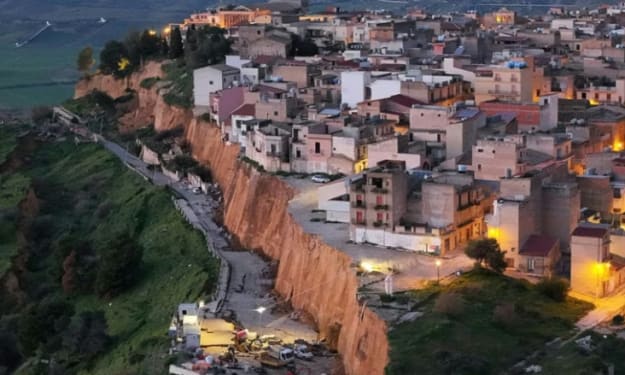
The ground gave way without warning. One moment, homes stood quietly against the backdrop of sea and sky; the next, the earth beneath them began to slide toward the void. In parts of Sicily, a massive landslide has left entire neighborhoods perched precariously on a cliff edge, forcing evacuations and reigniting urgent conversations about climate change, aging infrastructure, and the fragile balance between people and nature.
By Aqib Hussain30 days ago in The Swamp
Colombian Lawmaker Among 15 Killed in Plane Crash Near Venezuela. AI-Generated.
Tragedy struck Colombia this week when a small passenger plane crashed near the Venezuelan border, killing all 15 people on board. Among the victims was Diógenes Quintero, a sitting Colombian lawmaker known for his work advocating for peace and marginalized communities. The devastating accident has left the nation mourning and searching for answers.
By Aqib Hussain30 days ago in The Swamp
Exclusive: Trump Says Hamas Helped Find Last Hostage, Now Must Disarm. AI-Generated.
In a statement that has quickly made international headlines, former U.S. President Donald Trump claimed that Hamas helped locate the remains of the final Israeli hostage, calling the moment a turning point in the long-running Gaza conflict. But Trump didn’t stop there. According to him, this cooperation comes with a condition — Hamas must now disarm.
By Aqib Hussainabout a month ago in The Swamp
NATO Chief Wishes ‘Good Luck’ to Those Who Think Europe Can Defend Itself Without U.S. Help. AI-Generated.
When NATO’s Secretary General bluntly tells Europe “good luck” if it believes it can defend itself without the United States, it’s more than just a sarcastic remark — it’s a wake-up call.
By Aqib Hussainabout a month ago in The Swamp