
Israel Gives Itself More Control Over the Occupied West Bank
How new Israeli policies are reshaping land, law, and the future of Palestinian statehood
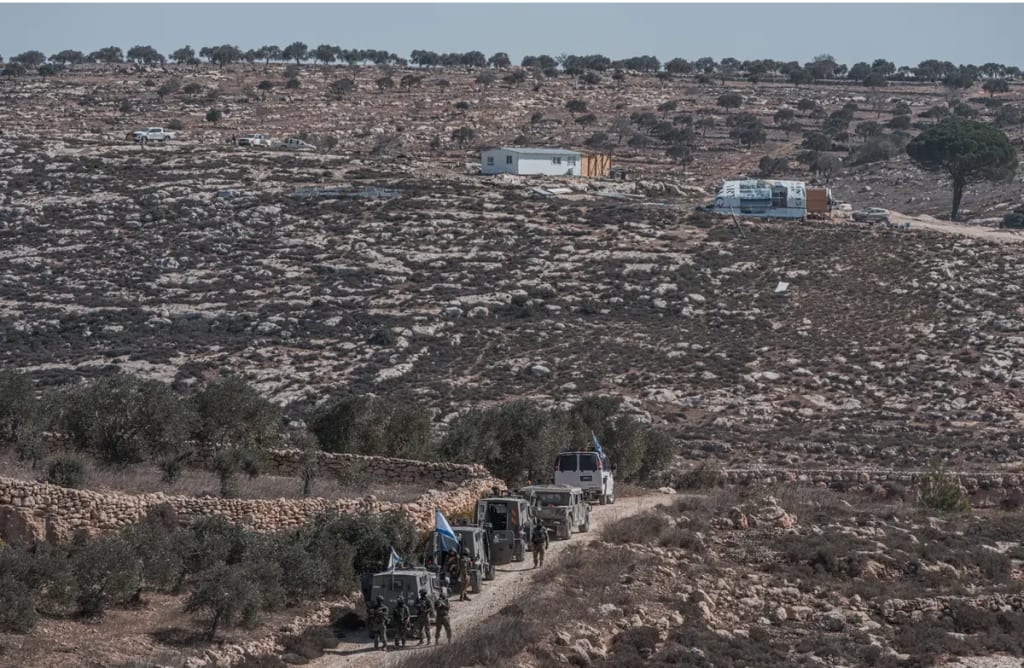
The Israeli government has taken a decisive step that could redefine the political and legal reality of the occupied West Bank. In a move that has triggered sharp international criticism and deep Palestinian concern, Israel has approved new measures that significantly expand its administrative, legal, and territorial control over the area. Supporters frame the decision as a bureaucratic adjustment; critics warn it marks a dangerous slide toward de facto annexation.
This development is not happening in a vacuum. It comes at a time of heightened regional tension, stalled peace negotiations, and a growing sense that the long-promised two-state solution is slipping further out of reach.
What Changed? A Shift in Power and Authority
At the heart of the new policy is a reconfiguration of how the West Bank is governed. Israel has moved to relax longstanding restrictions on land purchases, reopen land registration systems that were previously frozen, and restore state bodies tasked with acquiring land for settlement use.
These steps effectively make it easier for Israeli settlers to buy, register, and develop land across the West Bank. At the same time, Israeli authorities have expanded their enforcement powers in areas that were previously under Palestinian civil administration, including planning, environmental regulation, and archaeological oversight.
While Israel already maintains overarching military control of the West Bank, these changes deepen civilian and bureaucratic authority — a distinction that carries major legal and political consequences.
Why the West Bank Matters
The West Bank has been occupied by Israel since 1967 and is home to roughly three million Palestinians, alongside more than 700,000 Israeli settlers living in settlements considered illegal under international law.
Under the Oslo Accords of the 1990s, the territory was divided into areas with varying levels of Palestinian and Israeli control. These agreements were meant to be temporary, laying the groundwork for a negotiated Palestinian state alongside Israel.
Critics argue the latest measures undermine that framework entirely, shifting control away from the Palestinian Authority and consolidating Israeli dominance in ways that could permanently alter the territory’s status.
Political Motives Behind the Move
Israel’s current government is the most right-wing in the country’s history, with key coalition members openly opposing Palestinian statehood. Senior officials have described the new measures as a way to “normalize” Israeli presence in the West Bank and correct what they see as discriminatory restrictions against Jewish land ownership.
However, statements from government leaders suggest broader ambitions. Some have explicitly argued that strengthening Israeli control over the West Bank is necessary to prevent the creation of a Palestinian state — a position that alarms both Palestinians and international observers.
For many analysts, the policy represents a long-term strategy to create irreversible “facts on the ground” that make territorial compromise increasingly unlikely.
Palestinian Reaction: Fear of Annexation
Palestinian leaders have condemned the move in strong terms, calling it illegal and a direct violation of international law. The Palestinian Authority has warned that expanding Israeli control over land and governance will accelerate settlement growth, increase displacement, and further erode Palestinian self-rule.
On the ground, many Palestinians fear the practical consequences more than the legal arguments. Easier land acquisition for settlers could lead to more home demolitions, restricted access to farmland, and tighter controls on movement — realities that already shape daily life in much of the West Bank.
Militant groups have also seized on the announcement, framing it as proof that diplomatic approaches have failed and calling for renewed resistance.
International Backlash and Diplomatic Strain
The international response has been swift. Governments across Europe and the Middle East have criticized the move, warning it threatens regional stability and violates international norms governing occupied territories.
The United Nations has repeatedly affirmed that Israeli settlements have no legal validity, and human rights organizations argue that the new measures entrench a system of unequal rights between settlers and Palestinians.
Even Israel’s allies have expressed discomfort. While some governments have stopped short of concrete penalties, the diplomatic tone reflects growing frustration with unilateral actions that undermine prospects for peace.
Legal Questions and Global Law
Under international humanitarian law, an occupying power is prohibited from transferring its civilian population into occupied territory or making permanent changes unless justified by military necessity or for the benefit of the local population.
Legal experts argue the latest Israeli policies fail that test. By institutionalizing land acquisition and expanding civilian authority, critics say Israel is blurring the line between occupation and sovereignty — a shift with serious legal implications.
Israel disputes this interpretation, maintaining that the territory’s status is disputed rather than occupied and that the measures simply modernize outdated governance systems. This legal disagreement lies at the core of decades of diplomatic deadlock.
Impact on the Two-State Solution
Perhaps the most significant consequence of the policy is what it means for the future of a two-state solution. Fragmentation of Palestinian territory, accelerated settlement expansion, and diminished Palestinian governance all make the creation of a viable, contiguous Palestinian state increasingly difficult.
For many observers, the question is no longer whether the two-state framework is under threat, but whether it is still realistic at all.
A Defining Moment
Israel’s decision to give itself more control over the occupied West Bank may prove to be a turning point. Supporters see it as a long-overdue assertion of national interests. Critics view it as a step toward permanent occupation and unequal rule.
What is clear is that the move has intensified an already fragile situation. As land, law, and authority continue to shift, the lives of millions of Palestinians — and the future of Israeli-Palestinian coexistence — hang in the balance.
Whether this moment leads to renewed international pressure, deeper conflict, or irreversible change remains an open and urgent question.
About the Creator
Keep reading
More stories from Aqib Hussain and writers in The Swamp and other communities.
Is America About to Attack Iran? A Look at Rising Tensions and Global Stakes
Amid rising geopolitical tensions, many around the world are asking a question with serious consequences: Is the United States preparing to attack Iran? The short answer is that while there is no confirmed imminent attack, developments over the past weeks suggest a heightened risk environment involving serious threats, military build‑ups, and diplomatic pressure that could, under certain conditions, escalate into conflict. The Economist Here’s a clear, informative breakdown of what’s happening — and what it might (or might not) mean for a U.S. strike on Tehran. What’s Fueling the Tension At the heart of the current crisis are escalating threats between the U.S. and Iran, particularly over Iran’s nuclear program and its internal political repression. Donald Trump — now back in the White House — has issued several warnings to Tehran, saying a large U.S. naval “armada” is heading toward the region and that Iran should agree to a nuclear deal or face a “far worse” attack. اnational In response, Iran has signaled strong resistance. Iranian leadership has declared that any military action would be treated as the beginning of a full‑scale war, with immediate and far‑reaching retaliation. TASS These developments are accompanied by military deployments — including aircraft carriers and destroyers — and aggressive rhetoric on both sides. Financial Times +1 What the U.S. Has Actually Done To understand whether a major attack is imminent, it helps to look at what the U.S. has already done: 1. Naval and Military Buildup The U.S. has sent significant naval assets to the Middle East, including the USS Abraham Lincoln and accompanying strike group. Military analysts note this is the largest U.S. deployment in the region in years, signaling seriousness but not necessarily intent to strike immediately. Fina2. Past Strikes on Nuclear Sites In June 2025, U.S. forces, alongside or in support of Israeli operations, bombed three Iranian nuclear facilities as part of efforts to curb nuclear development. At the time, U.S. officials insisted they did not want full war, characterizing the mission as a necessary action to check nuclear escalation. Military.com This prior strike is relevant because it shows the U.S. is capable of acting militarily against Iran — but it also said it was not seeking a broader war. Military.com Tehran’s Response Iranian officials have issued stark warnings about the consequences of any U.S. attack: Iran will treat any U.S. military action as a start of war, promising immediate retaliation against the U.S., its allies, and potentially Israel. TASS Iran’s foreign minister has emphasized readiness to respond “powerfully” to any aggression, while also warning that threat‑based diplomacy undermines negotiations. Philstar.com These statements underscore that Iran is not sitting passively — and any attack could trigger a broader regional conflict. Are Diplomacy Efforts Still Alive? Despite the threats, diplomatic channels have not completely closed: Iran has reiterated that it is open to a “fair and equitable” nuclear deal that respects its right to peaceful nuclear technology, but it rejects negotiations under a cloud of military threat. Philstar.com Other global powers, including Russia, have urged the U.S. and Iran to pursue talks rather than force, warning that military action would destabilize the broader Middle East. Reuters This suggests that — even amid hostile rhetoric — there is still a space for negotiation. What Experts Say Security analysts caution that the current situation contains elements of warning, deterrence, and diplomacy rather than clear signs of imminent war: Some see recent rhetoric — like threats of bombardment — as part of pressure tactics meant to force Iran back to negotiations rather than a prelude to immediate conflict. ent of a large naval force could be interpreted as a deterrent posture, aimed both at signaling resolve and reassuring U.S. allies in the region, not solely preparing for an offensive strike. Financial Times Historical context matters: past interactions between the U.S. and Iran have included crises that did not escalate into full war, even when they appeared close. Experts note that both sides are aware of the high risks of a wider conflict. Could It Still Happen? Yes — but it is far from certain. A U.S. attack could occur under specific circumstances, such as: A sudden Iranian attack on U.S. forces or critical regional infrastructure Intelligence suggesting a imminent threat from Iran’s nuclear program Breakdown of diplomatic de‑escalation efforts However, many policymakers and analysts emphasize that the U.S. is not currently at war with Iran and that Washington continues to publicly claim it doesn’t want a broader war, even if it is prepared militarily. TIME What Would Be the Consequences? A direct American military strike on Iran could escalate dramatically: Iran has a wide range of ballistic missiles capable of striking U.S. bases and regional partners. Al Jazeera Iran could activate allied militias and regional forces, potentially spreading conflict across multiple Middle Eastern theaters. omic instability could follow, particularly if the Strait of Hormuz is affected. For these reasons, many diplomats and analysts argue that all-out war would be deeply dangerous — and is not something either side would choose lightly. Bottom Line So, is America about to attack Iran? Not imminently — at least not based on confirmed evidence — but the risk environment is serious and volatile. The U.S. has bolstered its military presence and ramped up rhetoric, while Iran has responded with warnings of severe retaliation. A conflict could occur if diplomatic channels fail or if violent engagement erupts first — but military analysts still see deterrence and negotiation as significant factors in preventing an outright war. Conditions are tense, and global observers are watching closely — because the stakes extend far beyond Iran and the U.S. themselves. The Economist
By Aqib Hussain14 days ago in The Swamp
The Saddest Thing - The Billionaires Who Rule America Aren't Even Enjoying Themselves
This single post says more about our ruling class than a thousand policy papers. The saddest thing about today's system is that the men robbing the rest of us - sabotaging our economic prospects, our pensions, our access to affordable healthcare - are not even happy.
By Scott Christenson🌴5 days ago in The Swamp
Government Shutdown DHS Funding: What Happens When Safety Is at Risk
A government shutdown is not just a headline. It is a quiet disruption that reaches into homes, airports, borders, and paychecks. When the words government shutdown DHS funding appear together, they signal something more personal than politics. They point to uncertainty for workers who protect borders, respond to disasters, and keep transportation moving. For many Americans, these debates feel distant until flights slow, security lines stretch, or emergency services strain. This article explores what government shutdown DHS funding really means, why it keeps happening, and how it affects real people in ways that are often overlooked.
By Muqadas khan3 days ago in The Swamp


Comments
There are no comments for this story
Be the first to respond and start the conversation.