
Thailand Proposes ‘Calibrated Engagement’ with Myanmar’s Next Government
A cautious diplomatic reset that could reshape ASEAN’s approach to Myanmar’s ongoing crisis
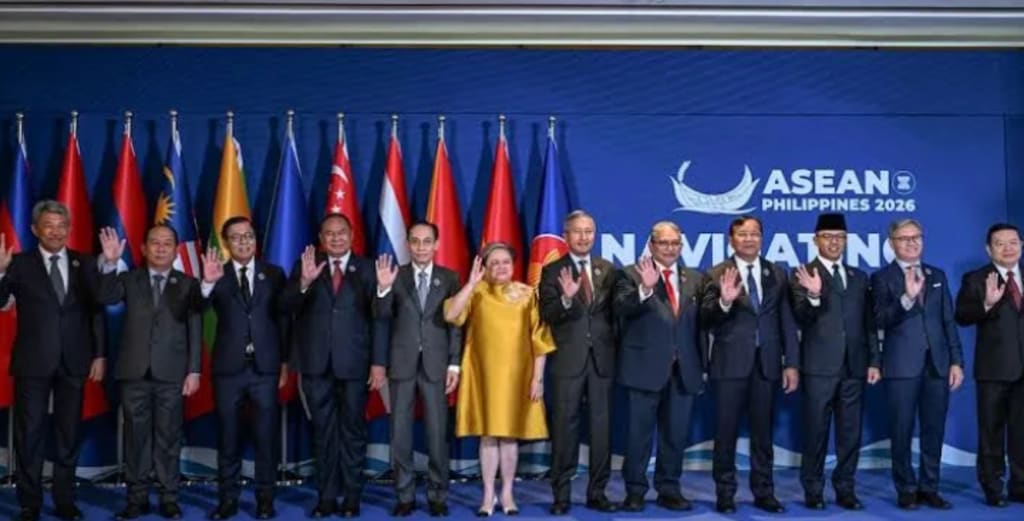
Thailand is rethinking how it deals with its troubled neighbour Myanmar — and the phrase it’s using says everything: “calibrated engagement.”
At a time when Myanmar remains deeply fractured by political unrest, armed conflict, and international isolation, Bangkok’s proposal signals a shift away from outright disengagement and toward a more measured, pragmatic form of diplomacy. The idea isn’t to fully embrace Myanmar’s next government, nor to legitimize military rule — but to engage just enough to influence outcomes, reduce instability, and protect regional interests.
This move has sparked debate across Southeast Asia. Is calibrated engagement a smart diplomatic balancing act — or a risky compromise that could backfire?
Let’s break it down.
Understanding the Background: Myanmar’s Political Crisis
Myanmar has been in turmoil since February 2021, when the military seized power from the elected civilian government. What followed was widespread resistance, a brutal crackdown, and an escalating civil conflict involving ethnic armed groups and pro-democracy forces.
In late 2025, Myanmar held elections that were widely criticized by international observers. Many opposition parties were excluded, voting conditions were tightly controlled, and the process was seen by critics as reinforcing military dominance rather than restoring democracy.
Despite global condemnation, the reality is this: Myanmar’s next government — however controversial — will still govern a country that shares borders, trade routes, and security concerns with its neighbors. And that reality is what Thailand is responding to.
What Does ‘Calibrated Engagement’ Actually Mean?
The term “calibrated engagement” is intentionally cautious.
Thailand’s foreign ministry has emphasized that engagement does not equal endorsement. Instead, it means maintaining controlled diplomatic contact with Myanmar’s next government — engaging selectively, conditionally, and strategically.
In practical terms, this could involve:
Limited political dialogue
Cooperation on humanitarian issues
Border security coordination
Encouraging peace talks through quiet diplomacy
The goal is to apply pressure through presence, rather than abandoning the field entirely. Thailand believes that complete isolation has failed to improve conditions inside Myanmar — and may even have made them worse.
Why Thailand Is Taking This Approach
Thailand’s decision isn’t happening in a vacuum. Several key factors are driving this policy shift.
1. Geography Makes Disengagement Impossible
Thailand and Myanmar share a border stretching over 2,400 kilometers. When violence erupts in Myanmar, Thailand feels the consequences almost immediately — from refugee inflows to cross-border crime and security threats.
Simply put, instability in Myanmar becomes Thailand’s problem, whether Bangkok wants it or not.
Calibrated engagement allows Thailand to keep communication channels open and manage border-related challenges more effectively.
2. Economic and Humanitarian Realities
Trade, energy cooperation, and migrant labor connect the two countries. Millions of Myanmar workers live and work in Thailand, contributing to key industries.
At the same time, humanitarian crises inside Myanmar — displaced civilians, food shortages, and health emergencies — have regional spillover effects. Thailand sees engagement as a way to facilitate humanitarian access without fully legitimizing the ruling authorities.
3. ASEAN’s Struggle to Find Unity
As a core ASEAN member, Thailand is also thinking regionally.
ASEAN’s Five-Point Consensus — designed to guide Myanmar back toward peace — has largely stalled. Member states remain divided on how tough or flexible they should be.
Thailand’s calibrated engagement may be an attempt to break ASEAN’s paralysis, offering a middle ground between sanctions and silence.
Criticism: Is Thailand Going Too Soft?
Not everyone is convinced this approach is wise.
Human rights groups argue that any engagement risks normalizing military rule and undermining Myanmar’s pro-democracy movement. Critics fear the junta could use diplomatic interactions as proof of international acceptance — without making real reforms.
There’s also concern that engagement without clear benchmarks could weaken pressure for:
Political prisoner releases
Inclusive dialogue
An end to violence against civilians
For many activists, calibrated engagement sounds like a polite way of saying “business as usual.”
A Delicate Diplomatic Tightrope
Thailand insists that engagement will be conditional and closely monitored. Officials stress that this is not about rewarding bad behavior — but about influencing outcomes in a complex, high-stakes environment.
The success of this strategy will depend on:
Whether engagement leads to reduced violence
Whether humanitarian access improves
Whether ASEAN can maintain a unified stance
Whether Myanmar’s authorities show any willingness to compromise
Without tangible progress, calibrated engagement risks becoming an empty phrase.
What This Means for the Region
Thailand’s move could shape how Southeast Asia handles political crises going forward.
If calibrated engagement proves effective, it may offer ASEAN a new diplomatic tool — one that balances realism with responsibility. If it fails, it could deepen skepticism toward regional diplomacy and reinforce calls for tougher international action.
Either way, Thailand’s proposal reflects a hard truth: there are no easy solutions to Myanmar’s crisis.
Final Thoughts: Pragmatism Over Ideals?
Thailand’s proposal of calibrated engagement is neither heroic nor heartless — it’s pragmatic. It acknowledges political realities while attempting to preserve influence and stability in a volatile region.
Whether this approach helps Myanmar move closer to peace or merely stabilizes military control remains uncertain. What is clear, however, is that Southeast Asia is entering a new phase of diplomacy — one where idealism and realism collide, and every decision carries lasting consequences.
For now, Thailand is betting that careful engagement is better than complete disengagement. The region — and Myanmar’s people — will be watching closely.
About the Creator
Keep reading
More stories from Aqib Hussain and writers in The Swamp and other communities.
Huge Landslide Leaves Sicilian Homes Teetering on Cliff Edge
The ground gave way without warning. One moment, homes stood quietly against the backdrop of sea and sky; the next, the earth beneath them began to slide toward the void. In parts of Sicily, a massive landslide has left entire neighborhoods perched precariously on a cliff edge, forcing evacuations and reigniting urgent conversations about climate change, aging infrastructure, and the fragile balance between people and nature.
By Aqib Hussainabout 17 hours ago in The Swamp
The Woman Who Stands Between Donald Trump and Greenland
How Denmark’s prime minister became the key figure defending Greenland’s sovereignty When former U.S. President Donald Trump publicly expressed interest in buying Greenland, the idea shocked many around the world. What sounded like a real-estate joke quickly turned into a serious diplomatic issue. At the center of that standoff stood Denmark’s prime minister, a leader who made it clear that Greenland was not for sale and that its future belonged to its people.
By Fiaz Ahmed 4 days ago in The Swamp




Comments
There are no comments for this story
Be the first to respond and start the conversation.