
Huge Landslide Leaves Sicilian Homes Teetering on Cliff Edge
Families flee as unstable ground threatens historic villages along Italy’s dramatic coastline
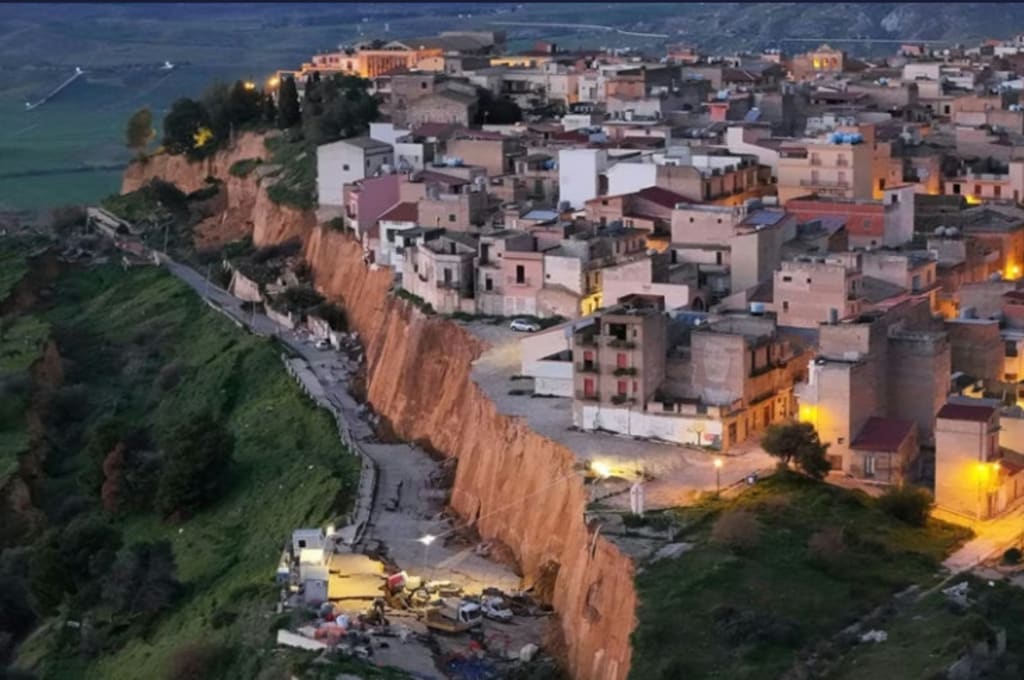
The ground gave way without warning. One moment, homes stood quietly against the backdrop of sea and sky; the next, the earth beneath them began to slide toward the void. In parts of Sicily, a massive landslide has left entire neighborhoods perched precariously on a cliff edge, forcing evacuations and reigniting urgent conversations about climate change, aging infrastructure, and the fragile balance between people and nature.
Sicily, Italy’s largest island, is no stranger to geological drama. Shaped by volcanoes, earthquakes, and centuries of erosion, its beauty has always come with risk. Yet for residents living in the affected coastal and hillside communities, this latest landslide feels different—more sudden, more frightening, and deeply personal.
A Slow Disaster That Turned Sudden
Landslides rarely begin with a single dramatic moment. In this case, locals report weeks of warning signs: cracks spidering across walls, doors that no longer closed properly, and sections of road beginning to sink. Heavy seasonal rainfall soaked the soil, weakening already fragile terrain. Then, gravity did the rest.
Large sections of land collapsed and slid downward, leaving homes hanging over newly formed drop-offs. In some areas, gardens and terraces disappeared entirely, sheared away as if cut with a knife. Power lines were damaged, roads became impassable, and emergency crews rushed in to assess the danger.
Authorities quickly declared evacuation zones, urging residents to leave with only essential belongings. For many families, the order was heartbreaking. Some had lived in these homes for generations, their roots as deep as the soil that had now betrayed them.
Lives on Hold, Homes in Limbo
Evacuated residents describe a surreal sense of suspension—watching from a distance as their houses remain standing, yet clearly unsafe. Technically intact, these buildings could collapse at any moment if the land shifts again.
Temporary shelters, hotels, and relatives’ homes have become makeshift refuges. While physical safety is the immediate priority, the emotional toll is heavy. Uncertainty hangs in the air: Will the homes be saved? Will residents ever return? Or will these structures be lost to the sea below?
Local officials have emphasized that no loss of life has occurred, a fact widely seen as a small miracle. Still, the economic and psychological impact is significant. Property values have plunged overnight, and many residents face the possibility of permanent displacement.
Why Sicily Is So Vulnerable
Geologists point to a combination of factors behind the landslide. Sicily’s terrain includes steep slopes, clay-rich soils, and coastal cliffs that are highly susceptible to erosion. Add intense rainfall—becoming more frequent due to climate change—and the risk multiplies.
Human activity also plays a role. Decades of construction on unstable land, sometimes without sufficient geological studies, have increased vulnerability. In some cases, drainage systems are outdated or poorly maintained, allowing water to accumulate underground and weaken slopes.
Climate experts warn that events like this are no longer rare anomalies. Across the Mediterranean, extreme weather is accelerating erosion and triggering landslides, floods, and wildfires at an alarming rate.
Emergency Response and Ongoing Risks
Civil protection teams, engineers, and geologists remain on site, monitoring ground movement with sensors and drones. Barriers have been erected to keep people away from the most dangerous zones, while discussions continue about whether reinforcement is even possible.
In some areas, stabilizing the land may require extensive engineering solutions, such as retaining walls, drainage improvements, or even partial demolition. In others, the damage may be irreversible, forcing authorities to consider relocating entire communities.
Officials face a difficult balancing act: acting quickly to ensure safety while also addressing residents’ fears and frustrations. Promises of aid and compensation have been made, but past disasters have left some skeptical about how fast help will actually arrive.
A Wake-Up Call Beyond Sicily
While this landslide is a local tragedy, its implications stretch far beyond the island. It serves as a stark reminder that many coastal and hillside communities across Europe—and the world—are living on borrowed time.
Urban planners and policymakers are increasingly urged to rethink development in high-risk areas. Prevention, experts argue, is far less costly than disaster response. That means stricter building regulations, better land-use planning, and serious investment in climate adaptation.
For Sicily, a region already grappling with economic challenges, the question is not just how to rebuild, but how to rebuild smarter.
Holding Onto Hope at the Cliff’s Edge
As the sun sets over the Mediterranean, the affected villages still look deceptively peaceful. Houses glow softly in the evening light, frozen in a moment of uneasy calm. But beneath them, the land remains unstable—a constant reminder that nature, not concrete, always has the final say.
For displaced families, hope now rests on swift action, expert intervention, and a future where safety is no longer taken for granted. Whether these homes can be saved or not, the lesson is clear: when the ground begins to move, the cost of ignoring warning signs is simply too high.
In Sicily, the cliff edge is no longer just a scenic view. It is a line between past and future, stability and loss—and a call to listen more closely when the earth itself begins to speak.
About the Creator
Keep reading
More stories from Aqib Hussain and writers in The Swamp and other communities.
Colombian Lawmaker Among 15 Killed in Plane Crash Near Venezuela
Tragedy struck Colombia this week when a small passenger plane crashed near the Venezuelan border, killing all 15 people on board. Among the victims was Diógenes Quintero, a sitting Colombian lawmaker known for his work advocating for peace and marginalized communities. The devastating accident has left the nation mourning and searching for answers.
By Aqib Hussainabout 20 hours ago in The Swamp
Five Ways Weight-Loss Jabs Are Changing Spending Habits
In recent years, weight-loss jabs have emerged as a groundbreaking innovation in the field of health and wellness. These injections, such as semaglutide (Ozempic, Wegovy) and liraglutide (Saxenda), are designed to help individuals manage their weight effectively by suppressing appetite and improving metabolic health. What started as a medical treatment for diabetes has now transformed into a popular weight-loss solution, and their impact goes far beyond health.
By Muhammad Hassan5 days ago in The Swamp



Comments
There are no comments for this story
Be the first to respond and start the conversation.