
Exclusive: Trump Says Hamas Helped Find Last Hostage, Now Must Disarm
A surprising claim sparks global debate on peace, power, and the future of Gaza
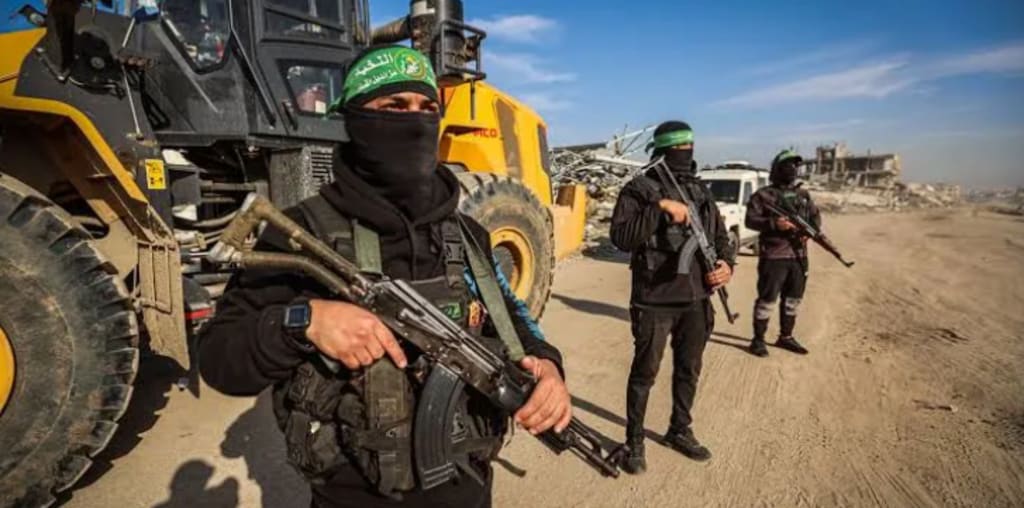
In a statement that has quickly made international headlines, former U.S. President Donald Trump claimed that Hamas helped locate the remains of the final Israeli hostage, calling the moment a turning point in the long-running Gaza conflict. But Trump didn’t stop there. According to him, this cooperation comes with a condition — Hamas must now disarm.
The remarks, made during an exclusive interview, add a new layer of complexity to an already volatile geopolitical landscape. While the recovery of the last hostage closes one painful chapter, Trump argues it also opens the door to the next phase: disarmament, demilitarization, and what he frames as a path toward lasting peace.
The Return of the Last Hostage
The recovery of the final Israeli hostage has been deeply symbolic. For families, it represented closure after months of uncertainty and grief. For political leaders, it marked the end of one of the most emotionally charged aspects of the conflict.
Trump revealed that Hamas provided information that assisted in locating the hostage’s remains — a claim that immediately drew both attention and skepticism. Given Hamas’s long-standing designation as a terrorist organization and its central role in the October 7 attacks, the acknowledgment of any cooperation was unexpected.
Still, Trump emphasized the significance of the moment, describing the recovery as “incredibly difficult” and emotionally heavy. He credited U.S. envoys and international pressure for making the process possible, while maintaining that Hamas’s involvement was real and consequential.
Why Trump Says This Changes Everything
From Trump’s perspective, the hostage recovery represents more than humanitarian progress — it’s a political inflection point.
According to him, Hamas’s assistance proves that pressure and negotiation can produce results. But he was clear that goodwill alone isn’t enough. Trump insists that Hamas must now follow through by laying down its weapons, framing disarmament as a non-negotiable step toward peace.
In his words, the conflict cannot truly end while an armed militant group continues to operate in Gaza. The return of the last hostage, Trump argues, closes the “humanitarian phase” of negotiations and shifts focus toward long-term security.
The Push for Disarmament
Disarming Hamas has long been discussed but rarely seen as realistic. The group has governed Gaza for years with an extensive militant infrastructure, including weapons stockpiles, tunnels, and armed wings.
Trump’s demand raises difficult questions:
Can Hamas realistically be pressured to disarm?
Who would enforce such an agreement?
What happens if they refuse?
Supporters of Trump’s stance argue that reconstruction aid, economic recovery, and political recognition should be conditional on demilitarization. Without removing Hamas’s military power, they say, Gaza risks returning to cycles of violence.
Critics, however, warn that disarmament without broader political concessions could destabilize the region further and push Hamas to harden its stance.
Israel’s Response and Regional Reactions
Israeli leadership welcomed the return of the final hostage and echoed Trump’s call for disarmament. Officials framed the moment as both a moral victory and a strategic opportunity.
At the same time, regional and international actors are watching closely. Arab states, European governments, and humanitarian organizations have expressed cautious optimism, paired with concern over feasibility.
Many analysts point out that Hamas has historically viewed its weapons as essential to resistance and survival. Disarming would require guarantees — political, territorial, and security-related — that are far from settled.
The Bigger Picture: Gaza’s Future
Trump’s comments tie into a broader vision for Gaza’s future — one that includes reconstruction, economic revival, and new governance structures. According to reports, proposals have included international oversight, amnesty options for fighters who surrender weapons, and possible relocation programs.
These ideas remain controversial. Some see them as pragmatic steps toward stability; others view them as unrealistic or dismissive of Palestinian political aspirations.
What’s clear is that disarmament has become the central issue now that the hostage chapter has closed.
A Moment of Opportunity — or Another Stalemate?
The claim that Hamas helped locate the last hostage has reshaped the narrative, even if temporarily. It introduces the possibility that pressure and diplomacy can coexist — but it also raises expectations.
Trump’s position is firm: peace cannot exist alongside armed militias. Whether Hamas agrees or resists will likely define the next phase of the conflict.
For now, the world stands at a crossroads. The return of the final hostage offers a rare moment of unity and relief. What follows — disarmament, negotiation, or renewed confrontation — will determine whether this moment becomes the foundation of peace or just another pause in a long and painful struggle.
About the Creator
Keep reading
More stories from Aqib Hussain and writers in The Swamp and other communities.
NATO Chief Wishes ‘Good Luck’ to Those Who Think Europe Can Defend Itself Without U.S. Help
When NATO’s Secretary General bluntly tells Europe “good luck” if it believes it can defend itself without the United States, it’s more than just a sarcastic remark — it’s a wake-up call.
By Aqib Hussaina day ago in The Swamp
US Immigration Agents Detain Two-Year-Old Minnesota Girl: ‘Depravity Beyond Words
A shocking event in Minneapolis this week has captured national attention. U.S. immigration agents detained a two-year-old girl along with her father, despite a federal judge’s order to release her, sparking protests, legal battles, and public outrage. Advocates have called the incident “depravity beyond words,” highlighting the human cost of interior immigration enforcement far from the U.S. border. The story has become a flashpoint in the ongoing debate over immigration policy, family separation, and how federal agencies interact with local communities. The Incident in Minneapolis On January 22, 2026, federal agents from U.S. Immigration and Customs Enforcement (ICE) detained Chloe Renata Tipan Villacis, a two-year-old girl, along with her father, Elvis Joel Tipan Echeverria, in south Minneapolis after they returned from a local store. According to the family’s lawyers, the agents approached the vehicle where the toddler was sitting, allegedly breaking a glass window to take the child into custody. Minutes later, a Minnesota federal judge issued an emergency order instructing ICE to release the child immediately and prohibiting any transfer out of state. Despite this directive, the father and toddler were placed on a flight to Texas, where they were briefly held in a detention facility. It was only after legal pressure and public outcry that the two-year-old was reunited with her mother, while her father remains in detention. This incident has reignited questions about how ICE enforces immigration laws, particularly when children are involved. Legal Concerns and Human Impact Lawyers representing the family emphasized that Chloe and her father posed no flight risk and that the detention violated federal protections for minors. The family’s legal team claims that ICE ignored the judge’s order, failed to allow a handoff to the mother at the scene, and transported the child in unsafe conditions. Attorney Irina Vaynerman described the situation as “truly unimaginable,” pointing out that detaining a toddler in such circumstances could have lasting psychological effects. Critics argue that the case exemplifies the risks of aggressive enforcement tactics, particularly when federal agents operate in communities far from the border. Government Response The Department of Homeland Security (DHS), which oversees ICE, defended the operation. Officials described the detention as part of a “targeted enforcement operation” and claimed the father had unlawfully re-entered the U.S. and was driving erratically with a child in the vehicle. DHS also stated that agents attempted to return the child to her mother at the scene, a claim disputed by the family’s lawyers. Regardless of differing accounts, the incident has intensified scrutiny of ICE’s interior operations and prompted calls for stronger oversight and accountability. A Broader Pattern This Minneapolis case is part of a wider pattern of interior enforcement in Minnesota. Recent weeks have seen multiple arrests of families and children under Operation Metro Surge, a large-scale ICE operation targeting undocumented immigrants in the area. Another high-profile case involved a five-year-old boy who was temporarily detained with his father, drawing nationwide attention. Critics argue that these sweeps create fear in immigrant communities and undermine trust between residents and law enforcement. Many advocates highlight the disproportionate impact on children, who may face trauma from detention and separation from family members. National and Local Reactions The detention of a toddler has triggered strong responses across the U.S.: Legal advocates condemned the action as a violation of federal protections for minors. Civil rights groups called it a sign of dehumanizing enforcement tactics. Community organizations in Minnesota organized rallies, with thousands protesting outside ICE offices in subzero temperatures. Public support for the family has also surged, with fundraisers covering legal costs and basic needs. Local politicians have expressed concern that aggressive interior enforcement erodes community trust, particularly when children are involved. Legal and Human Rights Implications U.S. law, including the Flores Settlement, protects children in immigration detention, requiring prompt release to parents or legal guardians whenever possible. Lawyers argue that the two-year-old’s detention violated these protections, especially given the ignored federal court order. The case highlights the ongoing tension between enforcement priorities and humanitarian and legal obligations. It also raises questions about agency accountability when minors are involved in enforcement operations. Why This Matters While the case is centered on one toddler and her father, it reflects broader issues with immigration enforcement across the United States. Critics argue that aggressive interior operations: Risk traumatizing children and separating families. Undermine public trust in law enforcement. Raise constitutional and legal concerns about due process and adherence to court orders. Even beyond political debates, the human cost is undeniable. Stories like this prompt national reflection on how a government balances law enforcement with compassion, particularly when the most vulnerable are involved. Looking Ahead The incident in Minneapolis is likely to influence future policies, public opinion, and court decisions on immigration enforcement. Families, advocates, and legal organizations are pushing for stronger protections for children and more oversight of federal operations. At the same time, the case highlights the importance of community awareness and activism. Public scrutiny played a role in ensuring the toddler’s release, demonstrating the power of advocacy and media attention in influencing government action. Final Thoughts The detention of a two-year-old girl and her father in Minneapolis is more than a news story; it’s a reminder of the human impact of immigration policy. Beyond debates over legality or enforcement strategy, the incident emphasizes the need to protect vulnerable populations, especially children, and ensure that government actions adhere to both legal standards and ethical norms. As the legal proceedings unfold, the story continues to shed light on the balance between enforcement and compassion, and how communities, media, and courts can influence outcomes that affect real families.
By Muhammad Hassan4 days ago in The Swamp
Tearful Carol Kirkwood Announces Her Departure from BBC: A Heartfelt Farewell to a Beloved Meteorologist
In a tearful moment that touched the hearts of millions, Carol Kirkwood, one of the most beloved faces of BBC Weather, announced that she will be leaving her role at BBC. After decades of service, Kirkwood’s departure has left fans in shock, and her farewell message was both emotional and heartfelt, reflecting on her career and the joy she has experienced in her time at the broadcaster.
By Ayesha Lasharia day ago in The Swamp


Comments
There are no comments for this story
Be the first to respond and start the conversation.