
Trump Is a Global ‘Wrecking Ball,’ European Security Experts Say
A Potential Second Trump Presidency Raises Alarm Across Europe Over NATO, Ukraine, and the Future of the Liberal World Order
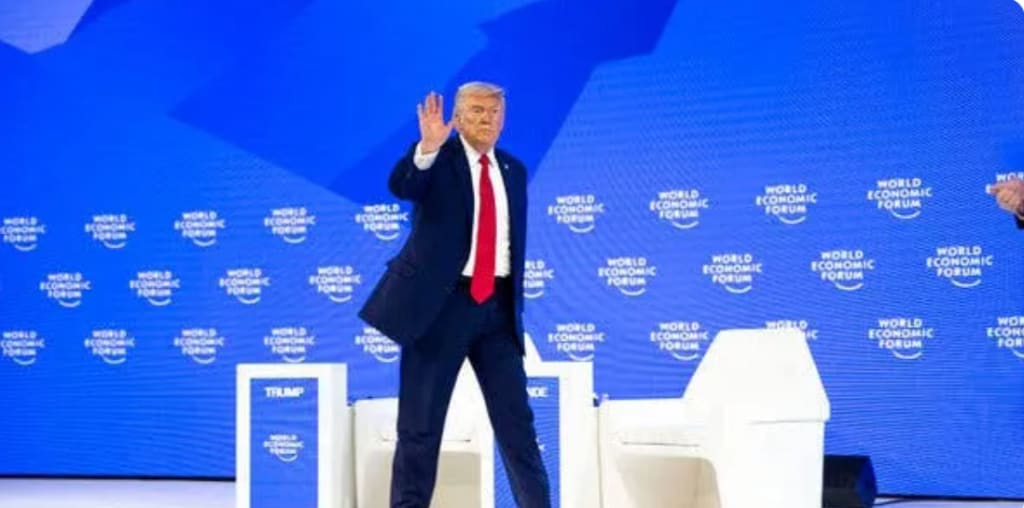
As the prospect of Donald Trump’s return to the White House grows more tangible, anxiety is spreading rapidly across European capitals. Senior defense officials, security analysts, and diplomats are increasingly united in a stark assessment: Trump is viewed not merely as an unpredictable leader, but as a destabilizing force—a global “wrecking ball” whose foreign policy instincts threaten the foundations of European security.
From NATO’s credibility to Ukraine’s survival and the broader rules-based international order, European experts warn that another Trump presidency could upend decades of strategic assumptions that have underpinned peace and stability since World War II.
NATO Under Threat
At the heart of Europe’s concern lies NATO, the cornerstone of transatlantic security. Trump has repeatedly criticized the alliance, labeling it “obsolete” during his first term and suggesting that the United States should not defend allies who fail to meet defense spending targets. More alarmingly, he has openly questioned the principle of collective defense enshrined in Article 5—the guarantee that an attack on one member is an attack on all.
European security experts argue that such rhetoric alone is dangerous, regardless of whether it translates into formal policy. “Deterrence relies on credibility,” said one senior European defense official. “If Washington appears ambivalent about defending Europe, adversaries like Russia will exploit that hesitation.”
Even during Trump’s first term, NATO officials quietly worried that U.S. commitments could erode overnight. A second term, many fear, would be more aggressive, less constrained by institutional checks, and driven by grievance rather than strategy.
Ukraine: The Most Immediate Casualty
No issue looms larger than Ukraine. Trump has repeatedly suggested that U.S. military aid should be reduced or conditioned, and he has claimed—without evidence—that he could end the war “in 24 hours.” European analysts interpret this as a willingness to pressure Kyiv into territorial concessions, effectively rewarding Russian aggression.
Such an outcome, experts warn, would not only devastate Ukraine but also embolden authoritarian regimes worldwide. “If Russia is allowed to win through force,” said a Baltic security analyst, “the message to every revisionist power is clear: borders are negotiable if you’re strong enough.”
For countries on NATO’s eastern flank—Poland, the Baltic states, and Romania—the stakes are existential. A weakened Ukraine would leave them more exposed, while a disengaged United States would force Europe to confront security threats it is not yet fully prepared to handle alone.
A Gift to America’s Rivals
European officials also worry that Trump’s worldview aligns uncomfortably well with the interests of U.S. adversaries. His admiration for authoritarian leaders, skepticism toward democratic alliances, and transactional approach to diplomacy are seen as strategic gifts to Russia and China.
During his presidency, Trump frequently clashed with European leaders while expressing warmth toward Vladimir Putin. Intelligence and defense experts in Europe fear that a second term could involve intelligence-sharing breakdowns, reduced sanctions enforcement, or even a de facto acceptance of Russian spheres of influence.
China, too, stands to benefit. A fractured transatlantic alliance would weaken collective leverage over Beijing on trade, technology, and human rights. “The strength of the West lies in unity,” said a former EU foreign policy adviser. “Trump systematically undermines that unity.”
Europe’s Strategic Dilemma
Trump’s resurgence has reignited an urgent debate within Europe: can the continent rely on the United States as a long-term security guarantor?
While European leaders have long discussed “strategic autonomy,” progress has been slow. Defense spending has increased since Russia’s invasion of Ukraine, but Europe still depends heavily on U.S. intelligence, logistics, and military capabilities.
A second Trump presidency could accelerate Europe’s push toward self-reliance—but experts warn the transition would be painful and incomplete in the near term. “Strategic autonomy is a decade-long project,” one EU defense planner noted. “Trump could force it overnight, whether we’re ready or not.”
Democracy and the Rules-Based Order
Beyond tanks and treaties, European experts see Trump as a threat to the values that underpin Western cooperation. His attacks on democratic institutions, the media, and the rule of law resonate far beyond U.S. borders, emboldening populist and nationalist movements across Europe.
“If the United States—the traditional defender of liberal democracy—retreats from those principles,” said a German political analyst, “it weakens them everywhere.”
This erosion of norms, experts argue, makes global cooperation on issues like climate change, cyber security, and arms control far more difficult. In a world already strained by conflict and competition, the loss of U.S. moral leadership could prove catastrophic.
Preparing for the Unthinkable
Publicly, European leaders remain cautious, emphasizing respect for American voters and the enduring strength of transatlantic ties. Privately, however, contingency planning is underway. Diplomats speak of “Trump-proofing” European security—strengthening defense cooperation, accelerating weapons production, and deepening partnerships beyond Washington.
Yet few believe these measures can fully compensate for a disengaged or hostile United States. “There is no substitute for American power,” one senior NATO official admitted. “That’s why Trump frightens us.”
A Defining Moment for Europe
For European security experts, Trump is not merely a controversial politician. He represents a fundamental challenge to the postwar order that has kept major war at bay for generations. Whether he returns to office or not, his influence has already forced Europe to confront uncomfortable truths about dependence, vulnerability, and the fragility of alliances.
As one analyst put it bluntly: “Trump doesn’t just shake the system—he smashes it. And Europe may be left to pick up the pieces.”
About the Creator
Keep reading
More stories from Aqib Hussain and writers in The Swamp and other communities.
Israel Gives Itself More Control Over the Occupied West Bank
The Israeli government has taken a decisive step that could redefine the political and legal reality of the occupied West Bank. In a move that has triggered sharp international criticism and deep Palestinian concern, Israel has approved new measures that significantly expand its administrative, legal, and territorial control over the area. Supporters frame the decision as a bureaucratic adjustment; critics warn it marks a dangerous slide toward de facto annexation.
By Aqib Hussain2 days ago in The Swamp
The Saddest Thing - The Billionaires Who Rule America Aren't Even Enjoying Themselves
This single post says more about our ruling class than a thousand policy papers. The saddest thing about today's system is that the men robbing the rest of us - sabotaging our economic prospects, our pensions, our access to affordable healthcare - are not even happy.
By Scott Christenson🌴5 days ago in The Swamp
Don’t Drop PM Over Mandelson, Minister Urges Labour MPs
As tensions simmer within the Labour Party, a senior minister has urged MPs not to abandon the Prime Minister over the controversial role of Peter Mandelson. The warning comes amid rising internal criticism, renewed factionalism, and growing concerns that infighting could weaken Labour at a crucial political moment. While Mandelson’s return to influence has reignited old debates, party leadership is calling for unity and strategic discipline over internal revolt.
By Ayesha Lashari4 days ago in The Swamp
Mismatch Challenge Winners
Blending genres isn’t about stacking elements side by side. It’s about what happens when two sets of expectations refuse to cooperate. The strongest entries in the Mismatch Challenge understood that tension and leaned into it. Rather than smoothing the edges, these stories let their chosen genres complicate one another, creating friction that carried through voice, structure, and consequence.
By Vocal Curation Teamabout 19 hours ago in Resources


Comments
There are no comments for this story
Be the first to respond and start the conversation.