voting
Postmortems of voting woes, disenfranchisement, and how countries around the world elect government officials.
Shifting Terrain Podcast Season Two
In Shifting Terrain, host Rachel Rybaczuk explains her show this way: “We explore race and class in politics, beyond the simplistic stereotypes in the news, and between election cycles. Voters, political strategists, organizers, and politicians discuss how race and class are shaping voting patterns, campaigns, the news, and election outcomes. And, ultimately, how we navigate America’s multiracial, cross-class democracy. We highlight voices across the country to interrupt misconceptions fueling political polarization in American politics.”
By Frank Racioppi2 months ago in The Swamp
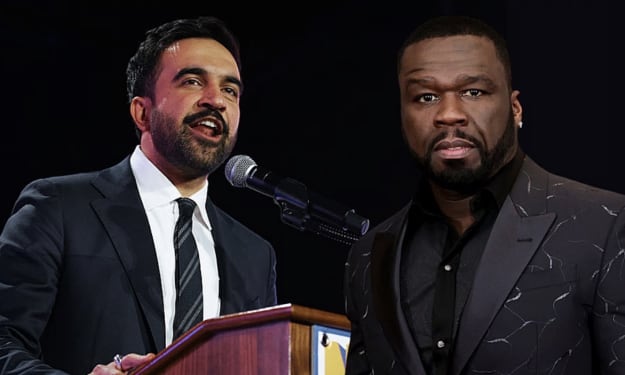
Why Trump Doesn’t Care About Climate Change?
Donald Trump, the current president of the United States, remains one of the most polarizing figures in modern politics. His position on climate change has sparked worldwide criticism, yet it perfectly aligns with his political identity and personal philosophy. Trump is a right-wing politician, a nationalist, and above all, a businessman who sees the world through the lens of profit and power rather than sustainability and science. His refusal to take climate change seriously is not accidental; it reflects his deep commitment to economic nationalism and his belief that environmental concerns should never outweigh America’s industrial and financial interests.
By Keramatullah Wardak2 months ago in The Swamp

“My Heart Stayed Calm Through Horror”. Content Warning.
How about a comparison of horror movies to the horror going on in America, lighthearted, I watched a horror movie last night, to my surprise my heart was not racing. I turned on the news about the ice terrorism and the horrors of Whitehouse being gutted so I turned the news off, turned on a horror movie again. I watched five horror films; my heart was pure at 82 beats a minute. I turned on the news again about tear gas sprayed on Halloween party together in a park, with children and knocking down old people, I said fuck it watched another horror film. what a relief to watch The Conjuring again and not the horrifying evil penetrating from the nazis in DC.
By Vicki Lawana Trusselli 2 months ago in The Swamp
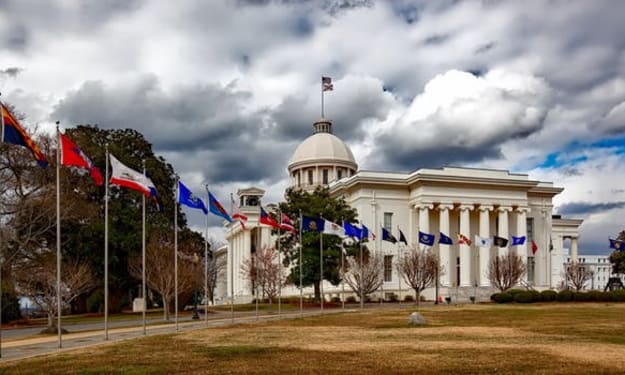
Government Shutdown 2025
The United States is currently experiencing a government shutdown for the first time in nearly seven years that began on October 1st, 2025, a situation that has far-reaching consequences for federal operations, employees, and citizens across the country. As we trudge through the third week of the shutdown, let’s take a look at the causes behind it, its immediate and long-term impacts, and the potential paths toward resolution.
By Shaley Speaks3 months ago in The Swamp
Europe’s Energy Crisis: Is the Continent Ready for Another Winter Without Russian Gas?
Introduction As the chill of winter approaches, Europe once again faces the daunting question: Can the continent survive another cold season without Russian gas? Since the Ukraine war in 2022 and the subsequent sanctions on Moscow, Europe has struggled to secure stable energy supplies. While European leaders claim they are “better prepared” this time, the economic, political, and environmental realities tell a more complex story.
By Filmon Ke Raaz | Movie Mysteries Explained3 months ago in The Swamp
No Kings Mental Health Monday!
Happy Mental Health Monday, friends! Today, we actually have some great things to take in. With the endless “breaking news” headlines and events so trashy they’re difficult to believe are real (like Trump’s AI video of him dumping shit on the American people while wearing a crown), this weekend brought light back into the lives of many Americans.
By Shaley Speaks3 months ago in The Swamp
Trump hopes to put an end to Russia’s war without selling Tomahawks to Ukraine
Previous U.S. By announcing that he intends to put an end to the conflict between Russia and Ukraine without deploying sophisticated American weapons, particularly Tomahawk missiles, to Kyiv, President Donald Trump has once more attracted the attention of the entire world. His most recent statement comes as Washington's debate over how to strike a balance between military assistance and diplomatic intervention grows. Trump, who is known for taking a different approach to foreign policy, insists that peace can be achieved through "strong negotiation and respect" rather than providing an endless supply of weapons. Trump said at a rally in Ohio that if he was elected, he could end the conflict between Russia and Ukraine "within 24 hours." He argued that where current leadership has failed, his administration's diplomatic style, based on leverage and mutual understanding, would succeed. Trump declared, "We don't need to sell or send Tomahawks to Ukraine to stop this war." "We need smart leadership that gets Putin and Zelenskyy to sit down together, not one that keeps fueling war," says the author. His remarks set off a political firestorm in a short amount of time, prompting harsh criticism from Democrats and Republicans who fear withholding military assistance would empower Moscow. The United States' Tomahawk missile, a long-range precision weapon The Navy has come to represent American military might. In light of the intensification of Russian strikes in the eastern and southern regions, Ukraine's allies have discussed the possibility of providing such advanced systems to bolster Kiev's defenses. However, Trump's position departs significantly from the current strategy of the Biden administration, which places an emphasis on continuing to transfer weapons to support Ukraine's resistance. Trump's position, according to critics, understates the war's complexity and the Kremlin's threat. They argue that Ukraine may face overwhelming odds if it does not receive consistent Western military assistance. However, Trump's supporters see his stance as pragmatic and in line with a growing number of U.S. voters who are tired of being involved in foreign affairs. Debate over whether such expenditures truly serve national interests has been sparked by the war's cost in billions of dollars to taxpayers in the United States. Trump's doctrine on foreign policy, which is frequently referred to as "America First," has long emphasized lessening the United States' involvement in long-running conflicts overseas. During his presidency, he criticized NATO members for not contributing enough to their own defense and advocated for troop withdrawals from Syria and Afghanistan. His most recent comments regarding Ukraine follow the same pattern, putting diplomacy ahead of intervention. He stated, "We need peace through strength, not interminable wars through weakness." Diplomats say that Trump's plan to end the war between Russia and Ukraine would probably involve high-level talks and conditional rewards for both sides. In exchange for a ceasefire, he may, according to some, offer Russia relief from some sanctions and encourage Ukraine to accept security guarantees rather than territorial gains. However, others warn that a deal of this kind might jeopardize Ukraine's sovereignty and legitimize Russian aggression. There has been a variety of international reaction to Trump's statement. Although they have not provided any direct comments, Russian officials have previously stated that they would welcome any American leader who is willing to engage in dialogue. In the meantime, officials in Ukraine deemed Trump's claim that he could end the war in one day to be untrue. A spokesperson for the Ukrainian government stated, "We appreciate any effort for peace," but "ending a war started by invasion requires more than negotiation slogans." Despite skepticism, some segments of the American electorate who are dissatisfied with the war's economic effects have found resonance in Trump's remarks. Voters are feeling worn out as a result of inflation, rising energy costs, and spending on defense. Due to the fact that the conflict does not appear to be coming to an end immediately, polls indicate that a growing number of Americans would rather see diplomatic solutions than military escalation. Trump's comments also serve as a strategic campaign message as the 2024 election nears. He wants to set himself apart from President Joe Biden, who continues to support Ukraine militarily, by portraying himself as a dealmaker who can end wars without weapons. Trump sees the idea of resolving the crisis without using Tomahawks or selling them as a sign of fiscal restraint and global influence. It is still unknown whether his strategy would truly bring peace. The territorial disputes, national identities, and geopolitical rivalries that go far beyond simple negotiation are at the heart of the conflict in Ukraine. Nevertheless, the topic of the significance of diplomacy in contemporary warfare has been brought back up by Trump's resolute assertion. The broader question of whether U.S. leadership can shift from weapons to words and still maintain global strength is emphasized by his promise to end the conflict "without firing a single missile."
By GLOBAL NEWS3 months ago in The Swamp
Beyond the Sidelines
In the fast-paced world of sports media, certain personalities become familiar faces in our daily routines. Two such professionals, Shae Cornette and Molly Qerim, have carved out respected niches for themselves, though their paths and roles within the industry are distinct. While their names are sometimes mentioned together by fans, a closer look reveals two separate, impressive careers built on expertise and hard work.
By KAMRAN AHMAD3 months ago in The Swamp
Billionaire Bosses Like Jeff Bezos and Reid Hoffman Denounce Work-Life Balance—And Some Think Working Nonstop Is Key to Success
Billionaire bosses like Reid Hoffman and Jeff Bezos oppose work-life balance, and some believe that continuous work is essential to success. Some of the world's most successful billionaires are challenging the concept of work-life balance entirely in a world where topics like mental health, flexibility, and personal time dominate workplace culture. Entrepreneurs like Reid Hoffman and Jeff Bezos argue that for people who want to be extremely successful, it is unrealistic and even counterproductive to separate work and personal life. Their perspectives bring back a long-standing debate: does unwavering commitment lead to greatness, or does it come at an excessive personal cost? One of the richest people in the world and the founder of Amazon, Jeff Bezos, has long expressed his belief that the term "work-life balance" is misleading. Instead, Bezos prefers to refer to it as a "work-life harmony," suggesting that the two should not be viewed as being in conflict with one another. He says that when someone is happy and energized at work, that happiness extends to their personal life and vice versa. He emphasizes that people should strive to integrate their work and personal lives rather than view them as two distinct entities that are constantly at odds. Bezos's perspective is based on his own experience growing Amazon from a modest online bookstore into a trillion-dollar conglomerate. Bezos was well-known at the beginning of the company for working long hours and setting high standards for his team. Amazon's "customer obsession" culture became a catalyst for innovation as well as a source of controversy, with critics describing it as uncompromising and resolute. Bezos, on the other hand, contends that the people who are willing to fully devote themselves to their vision frequently end up changing the world. In a similar vein, Reid Hoffman, a venture capitalist at Greylock Partners and co-founder of LinkedIn, has stated that the concept of work-life balance is a myth, particularly for individuals working in the startup industry. Entrepreneurship, according to Hoffman, who has invested in numerous tech ventures, necessitates intensity and focus that cannot be constrained by time constraints. Launching a startup is often compared to "jumping off a cliff and assembling an airplane on the way down," according to him. He argues that there is no room for strict separation of work and personal life in such a setting. Immersion is the key to success, not moderation. Other tech giants, such as Elon Musk, who is well-known for his 100-hour workweeks and belief that extraordinary results necessitate extraordinary effort, share Hoffman's perspective. Musk has made it clear that in a highly competitive industry, it is unlikely that anyone who works less than 80 hours per week will succeed. He believes that hard work is not only a virtue but also a requirement for success in business. However, not everyone shares the mindset of a billionaire. Burnout, inequality, and unrealistic expectations are perpetuated, according to critics, by glorifying excessive work. While billionaires may have the means to delegate personal responsibilities to others or take breaks whenever they want, average employees cannot do either of these things. They claim that the idea that constant work will guarantee success is false and harmful. Chronic overwork has consistently been linked to lower productivity, poor mental health, and strained relationships, according to studies. On the other hand, proponents of the "no balance" philosophy contend that sacrifice is necessary for high-level ambition. They point out that history’s greatest innovators—from Thomas Edison to Steve Jobs—were known for their obsessive dedication. They argue that the difference is one of choice: while not everyone needs to work all hours of the day and night, those who choose to pursue an idea that could change the world frequently do so voluntarily, motivated by passion rather than pressure. Even though corporate culture places a greater emphasis on well-being, the conflict between ambition and balance has not been resolved in recent years. The definition of success is being redefined by younger generations, particularly Millennials and Generation Z. Over long hours and prestige, many put flexibility, remote work, and careers with a purpose first. However, those who hold the belief that greatness necessitates pushing past conventional boundaries continue to be inspired by the accomplishments of people like Hoffman and Bezos. In the end, individual choice and circumstance may be the deciding factors in the debate over total dedication versus work-life balance. Harmony and moderation may bring contentment to some, while unrelenting pursuit and immersion may bring it to others. It is undeniable that the world's most successful entrepreneurs all share a single quality: an unwavering drive to blur the lines between work and life and reshape both.
By GLOBAL NEWS3 months ago in The Swamp
Norway Suspects Espionage in Nobel Peace Prize Winner Breach
Norway Suspects Espionage in Nobel Peace Prize Winner Breach Norwegian authorities have launched a high-level investigation after a cyber breach targeting the Nobel Peace Prize organization raised concerns of possible espionage. Officials in Oslo confirmed that sensitive data related to recent laureates and internal communications of the Norwegian Nobel Committee may have been compromised. The suspected infiltration, which reportedly took place over several months, is being treated as a deliberate attempt by a foreign state actor to gather intelligence on global diplomatic discussions and peace negotiations.
By GLOBAL NEWS3 months ago in The Swamp