
The Global AI Earthquake: How Artificial Intelligence Is Quietly Rewriting World Politics
From secret diplomatic battles to climate risks and moral alarms, AI is shaping a new world order faster than anyone expected.

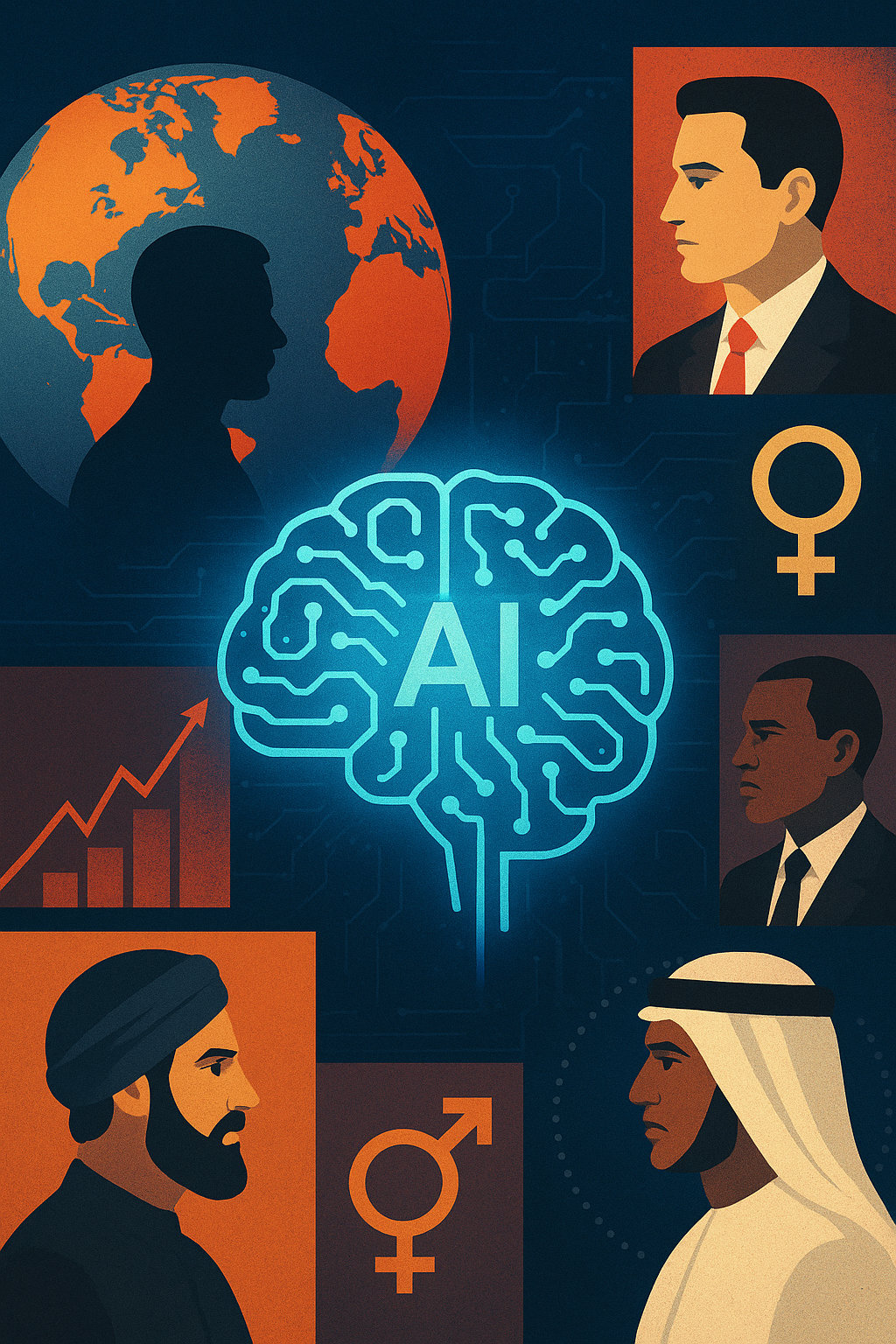
Artificial Intelligence has evolved from a tech curiosity into the most powerful political force of our time. It no longer lives only in Silicon Valley labs or futuristic sci-fi novels. It sits at the center of diplomatic meetings, international treaties, climate debates, military planning, religious warnings, and global economic competition. In just a few years, AI has quietly become the invisible engine pushing the world into a new era.
What makes this global AI revolution so fascinating is not just its speed, but its unpredictability. Governments are racing. Corporations are maneuvering. Nations are negotiating. And somewhere between opportunity and danger, humanity is trying to stay balanced.
This is the story of how AI is shaking the foundations of international politics — and why the world is suddenly paying attention.
A World Gathering Around a New Power
In Paris, leaders from around the globe sat in a hall buzzing with unspoken tension. The AI Action Summit 2025 wasn’t just another conference. It looked more like a historic gathering — the kind that future students might read about in textbooks.
The primary question:
“Who controls AI — and who gets left behind?”
Every country knows AI is no longer just technology. It’s power.
Power to collect information.
Power to manipulate economies.
Power to influence public opinion.
Power to shape wars without firing a single bullet.
Smaller countries fear becoming digital colonies. Bigger countries fear losing dominance. Tech companies fear governments taking control. Governments fear companies becoming too powerful.
This is geopolitical chess at its finest — except the pieces move faster than the players.
The Great Divide: Inequality in the Age of Algorithms
At the Paris summit, a strange silence fell when experts issued a blunt warning:
AI might become the engine of global inequality.
If the world isn’t careful, AI will create two types of nations:
1. AI-Rich Superpowers — the U.S., China, and parts of Europe
2. AI-Poor Nations — struggling to catch up, losing economic and political leverage
This is the first time in history where inequality isn’t just about wealth or weapons — it’s about algorithms.
Energy consumption is another quiet bomb. AI’s data centers eat more electricity than some countries. If this continues unchecked, the climate crisis could accelerate dramatically.
In other words, AI might not only change politics — it might change the planet.
China, the Global South, and the New Digital Diplomacy
A lesser-known but incredibly important development is emerging:
China is using AI to expand influence across the Global South.
This is not the old style of diplomacy involving aid packages and infrastructure deals. This is tech diplomacy — a subtle but powerful way to shape alliances.
Countries in Africa, Latin America, the Middle East, and South Asia are being offered:
AI research partnerships
AI-powered infrastructure
Data centers
Surveillance tools
Digital governance solution
It’s brilliant, strategic, and quietly transformative.
For decades, superpowers fought for military presence.
Now, they fight for digital presence.
AI, Morality, and the Vatican’s Warning
The Vatican surprised the world earlier this year with a rare and alarming statement:
AI has a “shadow of evil.”
Not because AI is demonic, but because it can be misused to spread misinformation, deepen political polarization, manipulate elections, and destabilize societies.
Religion rarely enters the tech conversation — but when it does, the entire world listens.
The Vatican’s message wasn’t just spiritual; it was philosophical:
“If technology becomes more powerful than our moral compass, humanity will be the first casualty.”
In a strange way, AI has forced the world’s oldest institution to confront the world’s newest invention.
Royal Alarm Bells: Harry and Meghan Join the AI Debate
In a surprising twist, Prince Harry and Meghan Markle joined a global call to ban the development of superintelligent AI — the kind that could surpass human control.
Their concern wasn’t celebrity drama; it was existential fear.
The warning was simple:
“There is no second chance with superintelligence.”
The idea is unsettling:
What if AI becomes so advanced that no country, no company, and no human being can control it?
Science fiction? Maybe.
But the fact that global figures are discussing it publicly shows how real the fear has become.
The MENA Region Steps Into the AI Arena
In the Middle East and North Africa, a new kind of political ambition is rising.
Countries like the UAE are investing heavily in AI, not just to modernize their economies but to create a new diplomatic identity.
Tech diplomacy.
AI-driven foreign policy.
Smart governance as a symbol of modern power.
At a major event in Abu Dhabi, regional leaders discussed AI as their next geopolitical tool. Instead of oil barrels, they see data as the resource of the future.
The region that shaped energy politics in the 20th century might shape AI politics in the 21st century.
The AI Arms Race No One Wanted — Yet Everyone Is Running
AI has quietly created a new global arms race.
Not with missiles.
Not with nukes.
But with models — huge, powerful AI systems trained on unimaginable amounts of data.
Nations are investing in:
AI-powered defense systems
Autonomous drones
Real-time battlefield surveillance
Cyber offense and cyber defense tools
For the first time, a war might be decided not by soldiers or tanks, but by code.
“Whoever leads in AI,” one analyst warned, “will lead the world.”
It’s no longer a theory — it’s a strategy.
So… What Does This All Mean?
AI has become the beating heart of global politics.
It influences everything:
Diplomacy.
Security.
Climate.
Economy.
Morality.
Power.
Survival.
And the most extraordinary part?
This revolution is happening quietly.
Silently.
Behind closed-door summits.
In strategy rooms.
At policy meetings.
In research labs.
Inside data centers.
Most people see AI as apps, tools, chatbots, gadgets.
But behind the curtain, AI is becoming the foundation of a new world order.
We’re living through a transformation as big as the Industrial Revolution — except this one travels at the speed of light.
The political battles of the future may not be fought on the ground, but in algorithms.
And the countries that understand this early will shape the destiny of everyone else.
The world is changing fast — and the age of AI power politics has only just begun.
About the Creator
Amanullah
✨ “I share mysteries 🔍, stories 📖, and the wonders of the modern world 🌍 — all in a way that keeps you hooked!”
The steps to losing a child
Step One: Lose a child. Not what anyone wants to happen and nothing you can do to change it, but you can go through steps to becoming happy again. You can go through steps to loving again. You can go through steps to become a new you because after losing a child you will never be the same person you once were.
By Tabitha Hinkley3 days ago in Fiction


Comments (1)
Maybe you a true 👍 🤔 😌