technology
Talking tech; debates about regulating technology, privacy laws, piracy, and the pitfalls of AI.
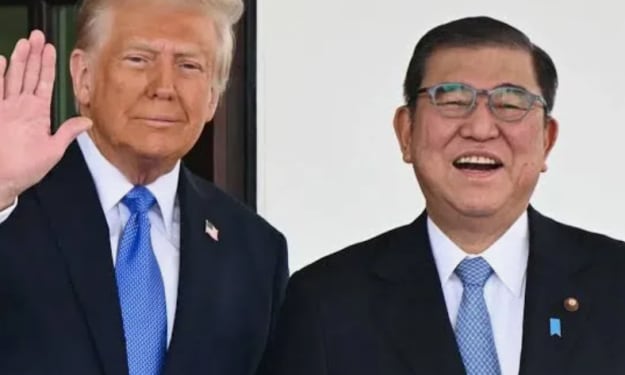
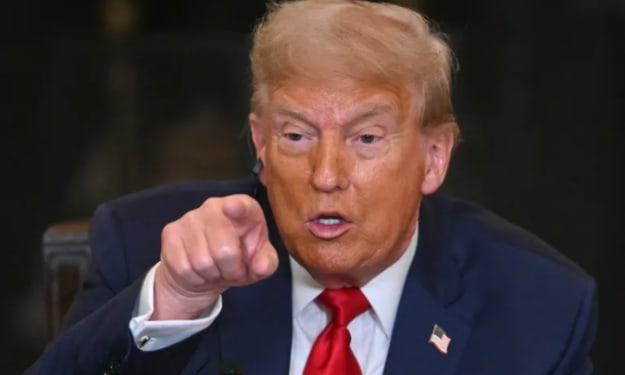
US-Japan trade deal gives Trump control over $550 billion in investments. It could be ‘vapor ware’ — and a model for other countries
**The US-Japan trade agreement grants Trump control over investments worth $550 billion. It Might Be "Vapor Ware" and Serve as an Example for Other Countries** Former President Donald Trump claimed in a high-profile announcement that a new US-Japan trade deal gave the United States leverage over 550 billion dollars in Japanese investment. The deal has been met with both enthusiasm and skepticism, with Trump hailing it as a landmark achievement for American manufacturing and job creation. Some have dubbed it potential "vapor ware" due to critics' claims that the numbers may be exaggerated, the agreements are non-binding, and the economic impact is speculative. Nonetheless, the way the deal is structured and presented may be used as a model for US trade negotiations in the future, especially if the administration is focused on optics and unilateral gain. At the heart of the agreement is a framework wherein Japan pledged to direct investment toward American industries — especially manufacturing, infrastructure, and emerging technologies. During his presidency, Trump put bilateral trade agreements ahead of multilateral ones and hailed the agreement as an example of nationalist economics. It is in line with his "America First" platform, which places an emphasis on bringing manufacturing jobs back to the United States and reducing reliance on supply chains from other countries. However, experts caution that the headline figure of \$550 billion is misleading. Before the agreement was signed, a significant portion of the pledged investment was already in the works. Financial analysts point out that Japanese companies like Toyota, SoftBank, and Mitsubishi have been present in the United States for a considerable amount of time. Trump can take credit for the trade deal because it simply brings together anticipated and existing investments under a new political banner. Furthermore, the agreement lacks specific enforcement mechanisms. It does not include tariff adjustments, guarantees of market access, or procedures for resolving disputes like traditional trade pacts do. Instead, it resembles a memorandum of understanding, which is advantageous from a political standpoint but has no legal force. Because of this, some economists have referred to it as "vapor ware," which refers to a policy that makes headlines but does not result in significant change. The deal's strategy reflects a larger trend in the way trade agreements are being used as political capital, despite the ambiguity. By framing the deal as a huge economic win — regardless of its actual substance — Trump leveraged it for domestic approval and international prestige. His administration argued that the mere announcement of the deal created a “confidence effect,” encouraging private-sector investment and lifting stock markets.
By GLOBAL NEWS6 months ago in The Swamp
The Echo Chamber Effect: How Algorithms Are Rewriting Human Thought
In an age where swiping has become second nature and personalized feeds dictate much of our worldview, one question continues to haunt researchers, ethicists, and digital citizens alike: Are we really thinking for ourselves — or are algorithms doing it for us?
By Tousif Arafat6 months ago in The Swamp
Afghanistan is on Fire! The World Left Astonished Yesterday
In a historic milestone for economic growth and national self-reliance, Afghanistan has taken a bold leap into the world of industrial production. Just two days ago, a grand inauguration ceremony marked the launch of one of the country’s largest vehicle and agricultural machinery production complexes. This massive factory, located in the Pul-e-Charkhi Industrial Zone near Kabul, has begun assembling dump trucks, passenger buses, Corolla-type vehicles, and a range of agricultural machines including fruit processing and packaging units.
By Keramatullah Wardak6 months ago in The Swamp
Why Is Maryland Powering Virginia’s Data Centers Instead of Building a Smarter Grid?
The story is as maddening as it is predictable: Marylanders could end up paying $800 million to power Virginia's data center boom—a surge of AI-driven server farms whose insatiable appetite for electricity is pushing our grid to its limits. Meanwhile, cutting-edge solutions like sodium-ion batteries and micro nuclear reactors, widely adopted in Europe and Asia, remain frustratingly sidelined here in the United States.
By Michael Phillips6 months ago in The Swamp
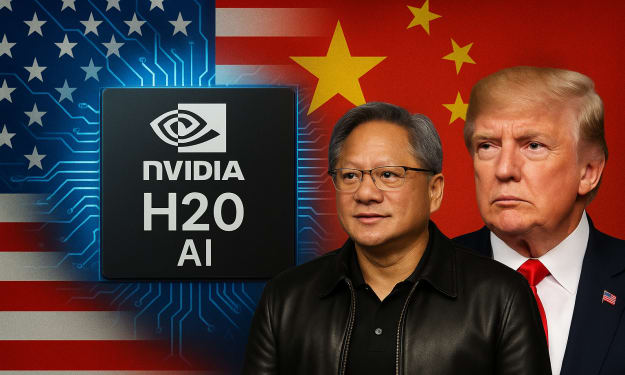
Nvidia Set to Relaunch H20 AI Chip Sales in China Following CEO’s High‑Profile Trump Meeting
In a pivotal moment for global semiconductor markets and U.S.–China tech relations, Nvidia has been granted permission to resume exports of its H20 AI accelerator chips to China. The breakthrough follows a strategic meeting between CEO Jensen Huang and former President Donald Trump, signaling a major shift in U.S. export policy and opening the door for renewed business in one of Nvidia’s most crucial markets.
By Waqar Khan6 months ago in The Swamp
New Israeli mRNA Jab Developed Against Antibiotic-Resistant Bacterium, Offering Hope for Medical Advancements
Antibiotic resistance has escalated into one of the gravest health emergencies of the 21st century. The World Health Organization (WHO) warns that by 2050, drug-resistant infections could claim 10 million lives annually. Superbugs, once treatable with common antibiotics, now outsmart our best defenses, rendering even routine surgeries perilous. The urgency for innovative solutions has never been greater.
By Kageno Hoshino6 months ago in The Swamp
Are We Losing Our Humanity in the Digital Age?
Exploring the Emotional Cost of a Hyperconnected World We live in the most connected era in human history. With a single tap, we can message someone across the globe, share our lives in real time, or scroll endlessly through updates from hundreds of people we barely know. The digital revolution has brought us speed, convenience, and access—but at what cost?
By Malik Rohail Khan6 months ago in The Swamp
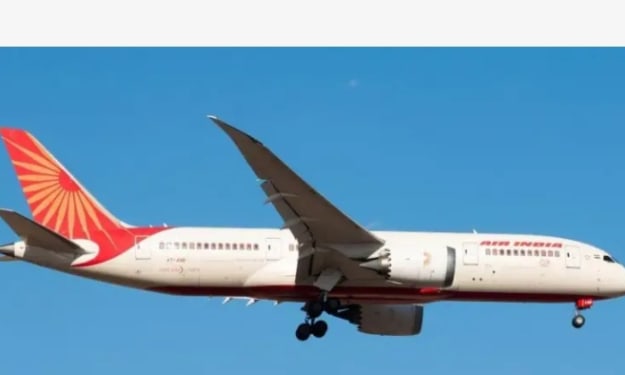
Air India Flight 171: The Mysterious Fuel Cutoff That Led to Disaster
1. A Catastrophe Minutes After Takeoff On June 12, 2025, Air India Flight 171—a Boeing 787‑8 Dreamliner—crash-landed into a residential hostel in Ahmedabad just 30 to 40 seconds after takeoff. The plane was en route from Ahmedabad to London Gatwick, carrying 230 passengers and 12 crew members. Of those aboard, 241 perished, and 19 were killed on the ground, with dozens more injured. Only one passenger survived, later identified as Vishwash Kumar Ramesh .
By Ikram Ullah6 months ago in The Swamp
Trump's Frustration with Putin and the Uncertain Future of the Russia-Ukraine War
The ongoing war in Ukraine continues to test the diplomatic resolve of world leaders, with recent developments highlighting growing frustration in the United States. President Donald Trump, who once vowed to end the war in Ukraine within 24 hours of taking office, now faces mounting obstacles in his attempts to broker peace. Despite multiple rounds of negotiations and increasing diplomatic engagement, a ceasefire remains elusive as Russia intensifies its military campaign against Ukraine.
By Ikram Ullah6 months ago in The Swamp