
Trump's Frustration with Putin and the Uncertain Future of the Russia-Ukraine War
Trump spoke about an agreement with NATO to arm Ukraine; a sanctions bill with bipartisan support also sits in Congress.
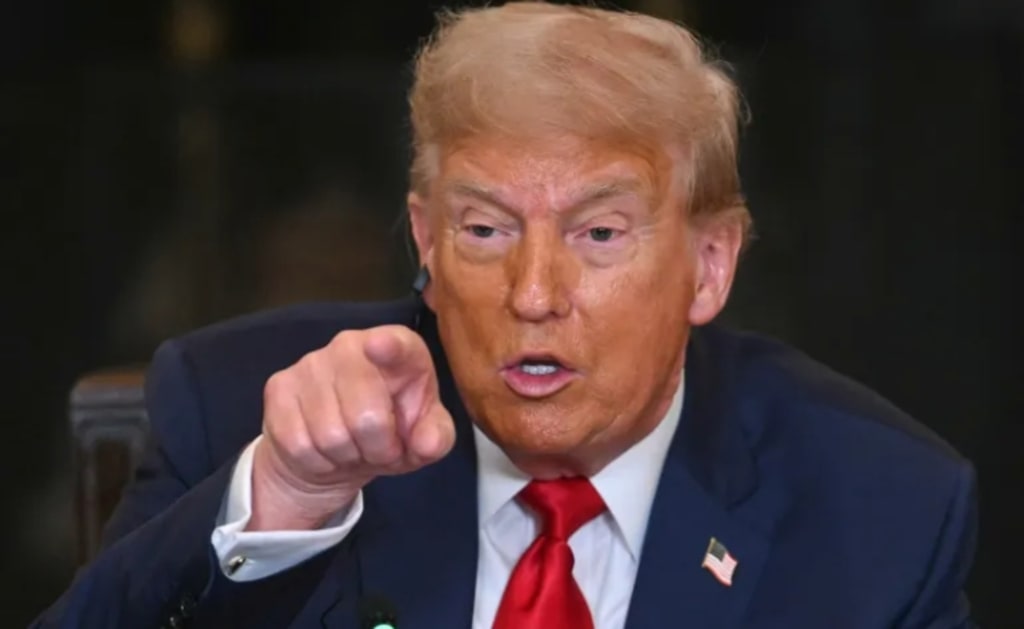
The ongoing war in Ukraine continues to test the diplomatic resolve of world leaders, with recent developments highlighting growing frustration in the United States. President Donald Trump, who once vowed to end the war in Ukraine within 24 hours of taking office, now faces mounting obstacles in his attempts to broker peace. Despite multiple rounds of negotiations and increasing diplomatic engagement, a ceasefire remains elusive as Russia intensifies its military campaign against Ukraine.
In recent days, US Secretary of State Marco Rubio has met twice with Russian Foreign Minister Sergey Lavrov, underscoring Washington's persistent efforts to bring the conflict to a close. These talks, held on the sidelines of the ASEAN summit in Malaysia, lasted nearly an hour but yielded no immediate breakthroughs. Instead, they highlighted the widening gap between American aspirations for peace and Moscow’s hardened stance.
Trump's public tone towards Russian President Vladimir Putin has also shifted. Previously criticized for his seemingly warm approach to the Kremlin, Trump has lately expressed disappointment over Putin's reluctance to show flexibility. “We get a lot of meaningless talk from Putin. He’s very nice, but in the end, it means nothing,” Trump remarked. This growing frustration has raised questions about whether Trump's stance on Russia is evolving into something more confrontational.
Despite these comments, experts remain skeptical about any fundamental shift in Trump’s approach. Analysts argue that previous signs of a harder stance have failed to translate into significant policy changes. While some see an opportunity for a new direction in US foreign policy, others caution against premature conclusions. Trump's unpredictability remains a defining feature of his diplomacy, leaving allies and adversaries alike uncertain about what comes next.
Meanwhile, the Biden-era military aid pipeline to Ukraine has continued under Trump’s leadership, albeit with some turbulence. Earlier this month, the Trump administration briefly paused arms shipments to Kyiv, only to resume them days later. Trump explained the reversal by emphasizing Ukraine's need to defend itself amidst Russia’s renewed offensives. However, in a significant change, Trump announced that future weapons would be sold to NATO, which would then transfer them to Ukraine. “We’re sending weapons to NATO, and NATO is paying for them, one hundred percent,” Trump clarified, describing the deal as part of an arrangement finalized during the NATO summit in The Hague.
Despite these moves, Trump’s decision to continue arming Ukraine has sparked backlash from within his political base. Several prominent figures in the conservative movement expressed disappointment, questioning the wisdom of further entangling the United States in what they perceive as a costly and unwinnable conflict. For many in Trump’s MAGA (Make America Great Again) base, the Ukraine war represents a distraction from America’s domestic priorities.
Alongside military support, Washington is weighing new economic measures to pressure Moscow. A bipartisan bill in Congress seeks to expand sanctions against Russia, targeting not only Russian industries but also countries that continue to purchase Russian oil, gas, and uranium. If passed, this would mark a major escalation in the West's efforts to isolate Russia economically. However, Russia's energy trade with China, India, and Turkey remains robust, limiting the global impact of Western sanctions.
Despite imposing over 21,000 sanctions since the invasion began, the Russian economy has endured, buoyed by energy exports to Asia and limited European purchases of critical materials like uranium. Ukrainian President Volodymyr Zelenskyy continues to call on the West to tighten sanctions further, arguing that only sustained economic pressure can compel Moscow to negotiate peace in good faith.
Trump has flirted with harsher economic measures, even threatening secondary tariffs on nations buying Russian oil. Yet, these threats have so far remained rhetorical. Whether Trump will ultimately back additional sanctions remains uncertain, given his past reluctance to impose meaningful costs on Russia.
At the same time, the Trump administration has hinted at the possibility of disengagement. Secretary of State Rubio recently stated that the US could consider stepping back from the Ukraine conflict if diplomatic efforts fail to produce results. “It’s not our war. We have other priorities,” Rubio said, reflecting a sentiment that has gained traction in some corners of the US political landscape. Trump echoed these thoughts, albeit more cautiously, suggesting that the US remains committed to seeking a resolution but does not wish to remain entangled indefinitely.
Nevertheless, the latest diplomatic meetings suggest the US is not abandoning peace efforts just yet. Rubio reported that during his discussions with Lavrov, new proposals for peace were exchanged. Although the specifics remain confidential, Rubio described them as a “different approach” that could open the door to renewed negotiations. Russia, for its part, also struck a cautiously optimistic tone, reaffirming its willingness to engage in dialogue and explore peaceful solutions.
The path forward for the Russia-Ukraine war remains fraught with uncertainty. On one hand, intensified US-Russia diplomacy and continued arms supplies to Ukraine signal that Washington is not prepared to let Kyiv fall. On the other hand, growing domestic opposition, economic considerations, and diplomatic frustrations could push the US to recalibrate its involvement.
For now, all eyes remain on Trump and Putin, whose complex relationship continues to shape the fate of a war that has already spanned more than three years. Whether through diplomacy, deterrence, or disengagement, the next chapter in the Russia-Ukraine conflict will be defined by the decisions made in Washington and Moscow in the weeks ahead.
About the Creator
Keep reading
More stories from Ikram Ullah and writers in The Swamp and other communities.
Why the U.S. Revoked Bob Vylan’s Visas: Music, Protest, and the Politics of Expression
In the ever-evolving intersection of music, activism, and politics, few stories highlight the fragile boundary between free expression and international diplomacy as sharply as the recent visa revocation of British punk-rap duo Bob Vylan by the United States. This unprecedented move has not only sparked outrage in artistic communities but also opened a broader conversation on the role of protest in music, the consequences of political speech, and how international artists are treated when they challenge dominant narratives.
By Ikram Ullah7 months ago in The Swamp
More Than 1,500 Giant Tortoises Brought Back to the Galápagos Are Reviving a Broken Ecosystem
The slow, deliberate steps of giant tortoises may not seem dramatic, but in the Galápagos Islands, they are quietly fueling one of the world’s most remarkable conservation success stories. After centuries of decline caused by human activity and invasive species, more than 1,500 giant tortoises have been returned to their native islands, and their impact is proving transformative.
By Aarif Lasharia day ago in The Swamp
A Dart at Dusk
Seconds ago, the sullen sun set on the two of us… my exuberant furry companion and me. A fresh breeze embraces us, delivering welcome relief from the day’s oppressive heat. His typical stumbling and staggering along — apace with a sloth — has turned into trip-trapping, high-stepping, almost skipping along.
By Angie the Archivist 📚🪶7 days ago in Petlife




Comments
There are no comments for this story
Be the first to respond and start the conversation.