
Afghanistan is on Fire! The World Left Astonished Yesterday
A great Complex of Factories in Afghanistan

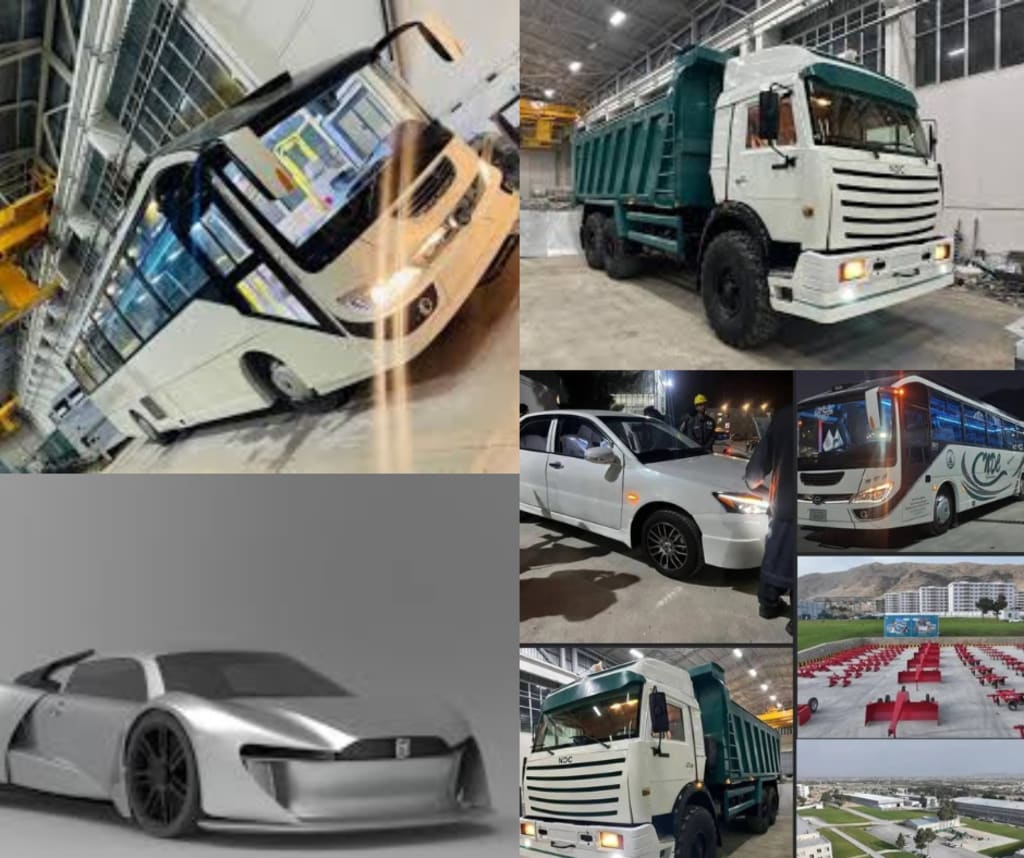
In a historic milestone for economic growth and national self-reliance, Afghanistan has taken a bold leap into the world of industrial production. Just two days ago, a grand inauguration ceremony marked the launch of one of the country’s largest vehicle and agricultural machinery production complexes. This massive factory, located in the Pul-e-Charkhi Industrial Zone near Kabul, has begun assembling dump trucks, passenger buses, Corolla-type vehicles, and a range of agricultural machines including fruit processing and packaging units.
The inauguration brought together senior government officials, investors, engineers, and private sector leaders. More than just a ribbon-cutting event, this ceremony was a powerful symbol of progress—proof that despite decades of conflict and instability, Afghanistan is now capable of producing essential industrial goods domestically.
Watch this Documentary with English Subtitle!
A Turning Point in Afghan Industry
This factory represents more than just bricks and machines. It is part of a long-awaited shift from a consumption-based economy to a production-oriented system. With the establishment of this complex, Afghanistan can now begin to reduce its dependency on imported vehicles and machinery, which has long drained foreign reserves and exposed the country to economic volatility.
Spread across tens of thousands of square meters, the complex is equipped with state-of-the-art production lines, robotic assembly arms, automated paint booths, and engine diagnostic facilities. Each unit produced—from a massive dump truck to a compact Corolla-style car—is assembled under international safety and quality standards.
These vehicles and machines are not just for show—they are designed for real-world functionality. Dump trucks are being assembled for the mining and construction sectors, buses for urban and inter-city public transport, and agricultural machines to support farmers who form the backbone of the Afghan economy. Meanwhile, the Corolla-type vehicles aim to meet the needs of middle-income citizens and taxi operators with a reliable and affordable transportation solution.
Economic Impact
The economic implications of this factory are immense. It is expected to directly employ over 1,500 individuals, ranging from engineers and mechanics to welders and logistics personnel. Indirectly, thousands of others will find opportunities in allied industries like parts supply, packaging, transport, retail, and maintenance.
Moreover, by producing these essential machines locally, Afghanistan can achieve import substitution, saving millions of dollars in foreign exchange each year. Previously, vehicles and machinery were imported from countries like Japan, China, Iran, and Turkey, often with high transportation costs and limited customization options. With local production, costs can be reduced, spare parts become more accessible, and repair and maintenance services improve.
This initiative also paves the way for export potential. Once production reaches a stable volume and quality, Afghanistan could export these machines to neighboring countries such as Tajikistan, Uzbekistan, Turkmenistan, and even Pakistan. This would not only earn foreign currency but also strengthen regional economic ties.
Supporting Afghan Agriculture
One of the most strategic outputs of the factory is its range of agricultural machinery, including tractors, threshers, ploughs, harvesters, and fruit-processing units. In a country where over 60% of the population relies on agriculture, mechanization is vital to improving crop yields, reducing labor burdens, and increasing profitability for farmers.
Previously, Afghan farmers struggled to afford or maintain foreign-made equipment. Now, with locally produced and serviced machines, even small-scale farmers in provinces like Helmand, Herat, Nangarhar, Kunduz, and Balkh can access modern tools at lower prices. Furthermore, the factory's fruit-processing and packaging machines support Afghanistan’s export-oriented fruit industry. High-demand products such as pomegranates, grapes, apples, and melons will now be packaged more hygienically and efficiently, increasing their value in international markets.
Quality and Sustainability
According to engineers working at the site, the production complex meets ISO-standard quality checks and incorporates environmentally responsible practices. Components such as engines and chassis are imported from reliable international suppliers, while the final assembly, testing, and customization are done locally.
To support sustainability, the factory has also integrated solar energy units for powering parts of the facility and is using water recycling systems for cleaning and cooling processes. Plans are underway to begin research and development on electric vehicles, with a goal to introduce eco-friendly buses and compact cars over the next few years. This aligns with the broader goal of promoting green industry in Afghanistan, reducing reliance on fossil fuels, and addressing pollution in urban centers.
Training and Human Capital
The factory isn't just producing machines—it’s also nurturing talent. In partnership with technical institutes and engineering universities in Kabul, the complex offers internships, apprenticeships, and training programs for young Afghan students. This ensures a sustainable pipeline of skilled professionals and contributes to reducing youth unemployment. In addition, on-the-job training is provided to existing workers, enhancing their skill sets and preparing them to operate and maintain advanced machinery. The hope is that Afghanistan will eventually become a hub for skilled industrial labor in the region.
Government and Private Sector Collaboration
This ambitious project is a product of effective public-private partnership (PPP). The Ministry of Industry and Commerce provided regulatory support, land, and tax incentives, while private investors funded construction, machinery procurement, and hiring. This model of cooperation is now being studied for replication in other sectors, such as textiles, construction materials, and pharmaceuticals. It proves that when government facilitation is combined with entrepreneurial initiative, rapid industrial progress is possible, even in a country recovering from prolonged conflict.
National Pride and Symbol of Progress
The Afghan people have responded to the factory’s inauguration with enthusiasm and pride. Social media platforms are filled with images of the vehicles and equipment, accompanied by patriotic messages. For many, this factory is a symbol of national capability and resilience—a message to the world that Afghanistan can build its own future.
Youth groups, students, and professionals are demanding that similar factories be opened in other regions to decentralize industry and promote balanced development. Meanwhile, provincial governments are expressing readiness to allocate land and resources for such projects.
About the Creator
Keramatullah Wardak
I write practical, science-backed content on health, productivity, and self-improvement. Passionate about helping you eat smarter, think clearer, and live better—one article at a time.
Keep reading
More stories from Keramatullah Wardak and writers in The Swamp and other communities.
Back to Stone Era
In an age where technology reigns supreme and global superpowers flex their military muscles through satellites, artificial intelligence, and hypersonic missiles, a silent force is emerging—one so terrifying that it could erase centuries of human advancement in a matter of seconds. This isn’t fiction. It’s not a futuristic tale. It’s a reality knocking on our digital doors. And it might just send us spiraling back to the Stone Era.
By Keramatullah Wardak8 months ago in The Swamp
The Forsyth House Fire
Since 1851, Forsyth House has stood on the corner of Union Street and Gordon Street in the heart of Glasgow. Its iconic, or was... because on Sunday 8th of March, 2026, a fire broke out in a small, seemingly un-named shop in the building and tore all that history down. As I write, the rubble is still unsettled and the street is still blocked off. Central Station is quiet on the upper level, and around 30 small businesses have quite literally gone up in smoke.
By S. A. Crawford2 days ago in The Swamp
Trump and Rubio’s Vision of War: The Art of Destroy and Deal
In the evolving landscape of American foreign policy debates, few ideas have generated as much discussion as the strategic vision sometimes described by critics and supporters alike as the “destroy and deal” approach. The concept is often associated with the rhetoric and policy preferences of prominent U.S. political figures such as Donald Trump and Marco Rubio, who have both argued that strong military leverage can be a powerful tool in forcing adversaries to negotiate. Although the two leaders differ in tone and political background, their views on national security often intersect around the idea that diplomacy is most effective when backed by overwhelming power. Supporters describe the approach as pragmatic realism, while critics warn that it risks escalating conflicts before negotiations even begin. The Core Idea Behind “Destroy and Deal” At its core, the strategy emphasizes the use of decisive force or economic pressure to weaken an adversary’s position before engaging in negotiations. Advocates argue that demonstrating strength first forces opponents to recognize the costs of continued confrontation. The approach draws inspiration from historical examples where military pressure preceded diplomatic agreements. In such cases, leaders have believed that demonstrating battlefield or economic dominance creates the conditions for favorable negotiations. For Donald Trump, the concept aligns with his broader “America First” philosophy, which prioritizes national interests and direct negotiation with rivals. During his presidency, Trump frequently emphasized that strong sanctions, military readiness, and aggressive rhetoric could push adversaries toward diplomatic settlements. Rubio’s Strategic Perspective Marco Rubio, a long-time member of the United States Senate, has framed the strategy in terms of strategic deterrence and global power competition. Rubio has consistently argued that authoritarian rivals must believe the United States is willing to act decisively in order for diplomatic solutions to succeed. His approach reflects concerns about geopolitical competition with countries such as China, Russia, and Iran, where policymakers in Washington believe strong deterrence is necessary to prevent regional aggression. Rubio and like-minded lawmakers contend that negotiations without leverage often fail, especially when dealing with governments that see compromise as weakness. From this perspective, economic sanctions, military deployments, and strategic alliances are tools that create the leverage required for successful diplomacy. Military Pressure and Negotiation Critics describe the “destroy and deal” philosophy as a risky strategy that could escalate conflicts unnecessarily. They argue that relying on military pressure may provoke retaliation and increase instability in already fragile regions. Foreign policy analysts often note that while coercive diplomacy has occasionally succeeded, it has also led to prolonged conflicts when adversaries refuse to back down. The balance between deterrence and escalation remains one of the central challenges of modern international relations. Supporters counter that deterrence itself depends on credibility. If adversaries believe the United States lacks the will to use force, they argue, diplomatic negotiations lose much of their influence. Influence on Global Strategy The broader debate surrounding this strategy reflects a deeper shift in American foreign policy thinking. In recent years, policymakers across the political spectrum have become increasingly concerned about the return of great-power competition. Conflicts and tensions involving the North Atlantic Treaty Organization, rising competition in the Indo-Pacific region, and ongoing confrontations in the Middle East have all contributed to a more assertive strategic environment. Within this context, the idea of combining pressure with negotiation has gained traction among some policymakers who believe traditional diplomacy alone is insufficient to manage modern geopolitical rivalries. The Critics’ View Opponents argue that such strategies risk oversimplifying complex conflicts. They contend that international crises often require long-term diplomatic engagement, coalition-building, and economic cooperation rather than purely coercive tactics. Some analysts warn that a doctrine centered too heavily on force could undermine international institutions and alliances that have historically played key roles in maintaining stability. Human rights groups have also expressed concern that aggressive strategies may increase civilian suffering in conflict zones if military operations become the primary tool of foreign policy. The Future of the Debate The ongoing discussion surrounding the “destroy and deal” concept reflects broader disagreements about how the United States should navigate an increasingly competitive world. While some policymakers believe stronger military leverage is essential, others advocate for diplomacy and multilateral cooperation as the primary tools for resolving disputes. Ultimately, the effectiveness of any strategy will depend on how it is applied in specific situations. Military strength, economic influence, and diplomatic engagement are all components of modern statecraft, and balancing them remains one of the most difficult tasks for policymakers. As debates continue in Washington and beyond, the ideas associated with Donald Trump and Marco Rubio will likely remain part of the conversation about how the United States approaches war, negotiation, and the pursuit of national interests in an uncertain global landscape.
By Fiaz Ahmed about 18 hours ago in The Swamp



Comments
There are no comments for this story
Be the first to respond and start the conversation.