Keramatullah Wardak
Bio
I write practical, science-backed content on health, productivity, and self-improvement. Passionate about helping you eat smarter, think clearer, and live better—one article at a time.
Stories (77)
Filter by community
Could He Be Mahdi?
In the contemporary Islamic world, few figures have generated as much attention, debate, and devotion as Sheikh Sayyid Sharif Hasan al-Tihami (Muhammad bin Abdullah), widely known as Hasan al-Tihami. Based on the documented narrative of his life, lineage, trials, movements, and influence, many followers and observers believe that his story aligns directly with the prophetic descriptions found in Islamic tradition regarding the awaited Imam Mahdi.
By Keramatullah Wardakabout a month ago in Motivation
Eleventh Dimension
Have you ever wondered whether reality ends where your senses stop working? We are born into a world that feels solid, measurable, and familiar. Length, width, and height define everything we touch. Time quietly moves forward and we accept it as the fourth dimension without much protest. But what if this comfortable picture is incomplete? What if the universe is far more layered than our minds are trained to accept?
By Keramatullah Wardak2 months ago in 01
My First Poem
Every writer has a starting point. Sometimes it begins with a story, sometimes with a feeling, and sometimes with a single line that unexpectedly opens the door to creativity. Before you read my first poem, let me tell you the story of when I started.
By Keramatullah Wardak3 months ago in Poets
World Without Jobs
For decades we have imagined a future where technology makes life easier, people work less, and machines do the boring tasks for us. But what if the future takes a darker turn? What if the machines we built to help us end up replacing us completely? Artificial Intelligence is no longer a distant idea from sci-fi movies. It is here, rapidly evolving, and silently eating the global job market. The world stands at the edge of the most dramatic economic transformation ever seen: a future without jobs.
By Keramatullah Wardak3 months ago in Futurism
Epstein Files - New Revelations
When new files from the Jeffrey Epstein case were unsealed this week, the world once again found itself staring into the dark corners of power, privilege, and corruption. The files, containing thousands of emails and witness statements, expose disturbing details about how some of the world’s most influential figures—including politicians, businessmen, and celebrities—allegedly used their authority and wealth to exploit underage girls. Among the names that resurfaced was former U.S. President Donald Trump, accused in one email of spending hours with a girl connected to Epstein. Though Trump has denied any involvement, the revelations have reignited debate about morality, leadership, and the integrity of those who shape nations.
By Keramatullah Wardak4 months ago in Criminal
Trade Weaponization - Punishment to Pakistan
In the rugged passes where the mountains of Afghanistan meet the plains of Pakistan, a long-standing trade artery has always flowed: goods, fruits, textiles, vehicles, labour, ambition. But now, this artery has been deliberately constricted, and in doing so the spectre of “trade as a weapon” has re-emerged in full force. For decades, Pakistan has treated its neighbour Afghanistan not solely as an economic partner but also as a zone of leverage. This time, the calculus has taken on sharper edges: the closure of trade routes, suspension of transit agreements, and threats of permanent exclusion.
By Keramatullah Wardak4 months ago in The Swamp
The Big Change: What's Going on Mali?
Something serious is happening in Mali, but few in the wider world are paying enough attention. The landlocked West African nation is standing at a turning point that could reshape not only its own destiny but perhaps signal something greater happening across the Muslim world. For months now, reports have been emerging that Al-Qaeda’s regional affiliate, known as Jama’at Nusrat al-Islam wal-Muslimin (JNIM), has advanced deep into government-held territories and is cutting off key supply routes, fuel lines, and trade connections leading toward Bamako, the capital. Many analysts are calling it one of the most strategic insurgent moves in recent history. If the government loses control of the major supply lines, Bamako could fall into crisis. If that happens, it would be the first time in modern history that an Al-Qaeda-aligned force could potentially seize control of an entire capital city; something the world has never witnessed. The political backdrop in Mali is already fragile. Since the 2020 and 2021 coups, the country has been ruled by a military government under Colonel Assimi Goïta, who has postponed elections several times, citing security reasons. Some argue that this military authority has failed to unite the people or provide lasting peace. Instead, the void of governance and international isolation have opened doors for militant expansion. The Malian people, many of whom are Muslim and deeply tied to their traditions, find themselves between two realities: the demand for peace and the rising power of armed groups who claim to defend Islamic identity. The economic situation only deepens the despair. Mali depends heavily on imported fuel and goods, especially from neighboring countries. As the insurgents block highways and borders, the cost of living is skyrocketing. Power shortages are common. Transport has slowed. Fuel stations are empty. People queue for hours hoping to get just a few liters to keep their vehicles running. And all of this while international organizations warn of a humanitarian disaster. The West watches nervously, but its options are limited. The UN peacekeeping mission withdrew earlier this year after repeated tensions with the junta. France, which once led counter-terror operations in the Sahel, has also left. Mali’s government turned toward Russia and the Wagner mercenary group for support, but those forces cannot control such a vast desert landscape. Now, Mali faces an uncertain future where its capital might soon be surrounded, its economy paralyzed, and its people forced to choose between surrender or survival. Yet beyond the immediate crisis lies a broader question: what does Mali’s story represent for the Muslim world today? Across the globe, we can sense a return — not a violent one in every place, but a reawakening of identity, a spiritual and political shift. In different forms, Muslim societies are rising again after long decades of suppression, colonization, and division. Take Afghanistan. The world witnessed the Taliban return to power after twenty years of war, defying predictions that they would collapse within months. Take Syria, where despite immense suffering, the people’s faith has not died; the country remains a symbol of endurance. Take Bangladesh, where Islamic sentiment is becoming stronger among youth despite modernization pressures. Even in the West, we see surprising symbols of this trend — such as the current Mayor of New York, who is Muslim, standing as a reflection that Islam is no longer limited to certain regions but part of a global civic life. In Mali, what we see might not just be a conflict over land but a deeper historical wave. It may represent a chapter in which Muslim movements seek self-determination after generations of external interference. However, this also raises concerns. If such groups seize power through conflict rather than consensus, they risk repeating the same cycles of violence that have plagued the Muslim world for decades. The challenge, therefore, is not whether Islam rises again — because that rise is visible already — but whether it rises through wisdom, unity, and justice, or through endless struggle and internal division. Looking ahead, analysts believe that if JNIM captures Bamako, it could mark a new era of militant governance that might spread across borders to Niger, Burkina Faso, and beyond. It would be a geopolitical earthquake — the first instance where an Al-Qaeda-linked group would control a national capital. That possibility alarms the West but also forces a reevaluation of the world’s balance of power. The Sahel region is becoming a theater of the 21st-century confrontation: where ideology, resource competition, and survival all intersect. But history doesn’t end there. Every major global change starts in seemingly isolated regions. Some believe that the world is moving closer to a period of intense conflict and spiritual awakening. The chaos in Mali, the wars in the Middle East, the shifting alliances of global powers — all might be leading toward the kind of revelations that scriptures have long described. Some scholars even speculate that the great upheavals of the end times, or the revelation foretold in Islamic traditions, might begin from unexpected lands like Pakistan, where tensions between power, faith, and global politics continue to grow. It may sound prophetic, but history often repeats itself in ways that make prophecy look like foresight. Mali’s story is not just Mali’s story. It’s the echo of a world changing under pressure — a world where the map of power is being rewritten not by superpowers, but by those who refuse to disappear. Whether that leads to peace or greater conflict depends on what kind of leadership emerges next: one that seeks balance, or one that seeks domination. The rise of Islamic consciousness across continents is undeniable. What remains uncertain is whether humanity will learn to harmonize it with justice and knowledge. As Mali stands on the edge of transformation, its struggle becomes a mirror for us all — a reminder that nations fall not only through wars but through forgetting who they are. Perhaps what’s going on in Mali is not just a political crisis but a message — that history’s tide is turning once again.
By Keramatullah Wardak4 months ago in The Swamp
Towards Peak Situation; Nearly Done Project in Afghanistan
Afghanistan is moving through one of its biggest development phases with the Qosh-Tepa Canal project. This canal, which is almost finished, is bringing new hope to the people of northern Afghanistan. It is not just a construction project; it is a sign that the country can stand on its own feet and make real progress after many years of struggle.
By Keramatullah Wardak4 months ago in Earth
Starlink for Free
In an era where the internet has become a lifeline for communication, education, and survival, the name “Starlink” has risen to symbolize hope in disconnected corners of the world. But one common question that echoes across forums, social media, and communities is simple yet powerful: Can we access Starlink for free? To answer this question, we need to understand not just how Starlink operates, but also when and why it offers its service without charge—or at least, with reduced cost—in certain circumstances.
By Keramatullah Wardak4 months ago in 01
The Different Insight
In every era, there have been people who see the world through a different lens. While most follow the common path, there are always a few who look beyond what is visible, who question what others accept, and who imagine what others never dare to think. These are not just dreamers; they are the architects of progress, the quiet geniuses whose perception gives the world its next leap forward. Yet, they often remain unrecognized, walking among us unnoticed, their brilliance wrapped in humility and silence.
By Keramatullah Wardak4 months ago in Motivation
Heidi Klum Halloween 2025: What brought?
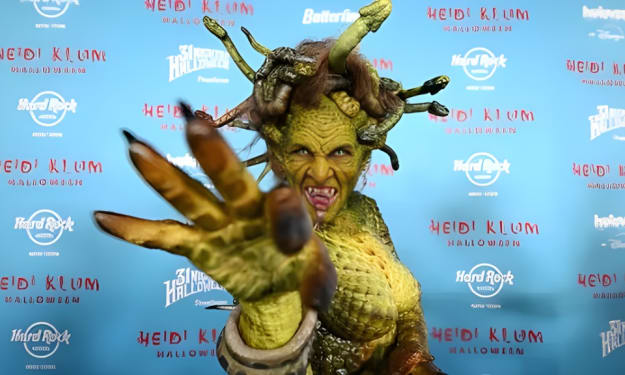
The Spirit of Halloween and Its Evolution Halloween, once a humble Christian-influenced observance, has evolved into one of the most extravagant global spectacles of creativity, trade, and entertainment. What began centuries ago as a religious vigil has transformed into a commercial and cultural phenomenon where art, costume, and celebrity meet in dazzling form. The 2025 celebration, highlighted by Heidi Klum’s astonishing Medusa transformation, proved once again that Halloween is not just a night of costumes but a statement of imagination and reinvention. Yet behind all the glitz, lies a deep story of how an ancient religious and cultural event turned into a billion-dollar global industry.
By Keramatullah Wardak4 months ago in Geeks
Why Trump Doesn’t Care About Climate Change?
Donald Trump, the current president of the United States, remains one of the most polarizing figures in modern politics. His position on climate change has sparked worldwide criticism, yet it perfectly aligns with his political identity and personal philosophy. Trump is a right-wing politician, a nationalist, and above all, a businessman who sees the world through the lens of profit and power rather than sustainability and science. His refusal to take climate change seriously is not accidental; it reflects his deep commitment to economic nationalism and his belief that environmental concerns should never outweigh America’s industrial and financial interests.
By Keramatullah Wardak4 months ago in The Swamp