
Air India Flight 171: The Mysterious Fuel Cutoff That Led to Disaster
A chilling investigation into how a modern Boeing Dreamliner plummeted just seconds after takeoff—raising questions of cockpit error, design failure, or something more mysterious.

1. A Catastrophe Minutes After Takeoff
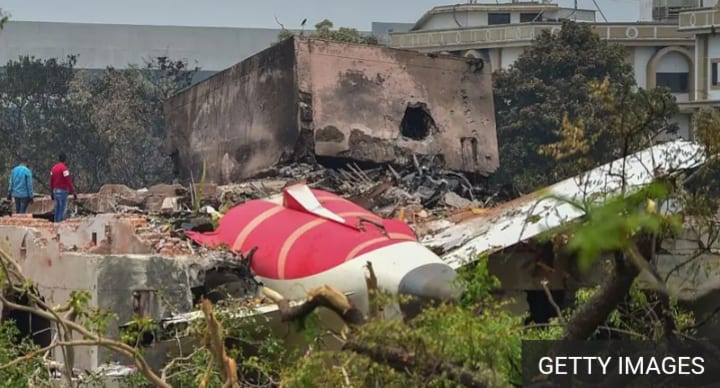
On June 12, 2025, Air India Flight 171—a Boeing 787‑8 Dreamliner—crash-landed into a residential hostel in Ahmedabad just 30 to 40 seconds after takeoff. The plane was en route from Ahmedabad to London Gatwick, carrying 230 passengers and 12 crew members. Of those aboard, 241 perished, and 19 were killed on the ground, with dozens more injured. Only one passenger survived, later identified as Vishwash Kumar Ramesh .
The aircraft reached an altitude of just 625 feet, never climbing beyond 180 knots, before descending uncontrollably . In the chaos that followed, even experienced investigators struggled to identify what had so rapidly spiraled into tragedy.
---
2. Fuel Was Cut, Engines Shut Down
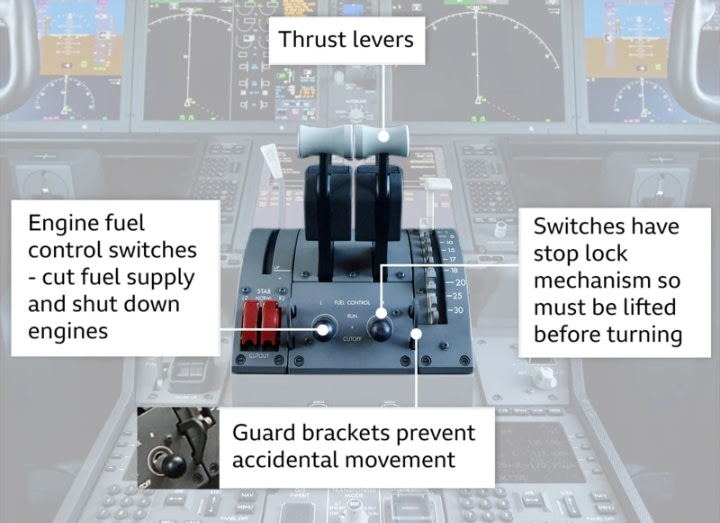
The 15‑page preliminary report released by India’s Aircraft Accident Investigation Bureau (AAIB) offers the first insight: within seconds of takeoff, both fuel control switches—normally set to “RUN”—were found in the “CUTOFF” position on both engines, causing an immediate loss of thrust. Power was briefly restored when the switches were flipped back on, but the plane lacked sufficient altitude or time to recover .
Investigators stressed that fuel contamination, bird strikes, or mechanical failure were ruled out. The report also confirmed one engine relit, while the other never regained full power .
---
3. Cockpit Confusion Revealed in Voice Recordings
Perhaps the most chilling detail: cockpit audio captured one pilot asking the other, “Why did you cut off?” The other replied, “I did not do it.” Neither pilot claimed responsibility, and the identities were not clarified. Voice analysis is ongoing to determine who was speaking—whether Captain or First Officer .
No unusual circumstances—alarm triggers, smoke, or emergency alerts—preceded the switch movement. Just a brief exchange before the mayday call and fall from the sky.
---
4. Design Safeguards Make Accidental Shutdown Unlikely
The fuel cutoff switches on the 787 are equipped with dual safety mechanisms: a lock requiring upward pull before flipping, and side brackets to prevent accidental activation. Experts say it is almost impossible to move both switches in one motion unintentionally. That’s why accidental shutdown during a critical climb has been dismissed .
A Canadian aviation specialist told BBC, “I’ve never seen fuel cutoff switches moved accidentally. It would take deliberate action.” Similarly, former NTSB manager Peter Goel called it “highly suspect” that both switches were toggled without intention .
---
5. Was It Human Error—or Something Else?
Given the improbability of accidental activation, analysts are now contemplating harder questions:
Was the movement intentional? If so, by whom and why?
Could pilot confusion, fatigue, or miscommunication play a role?
Sean Prochnicki, former Air Accident Investigator at Ohio State University, stated that the absence of other cockpit alerts or visible system failures makes accidental or emergency shutdowns unlikely. This shifts focus to potential human involvement—whether purposeful or inadvertent, which remains under scrutiny .
---
6. Past Warnings: FAA Bulletin from 2018
In December 2018, the U.S. Federal Aviation Administration issued an advisory bulletin (non-mandatory) warning that some Boeing 737s had fuel control switches installed without locking mechanisms. The same switch design is also used in Boeing 787‑8s like VT‑ANB. Air India had not carried out the suggested inspections, citing that the advisory was not mandatory .
This cost-cutting measure—or oversight—has now entered the spotlight. Experts argue that a faulty or missing lock could allow unauthorized switch movement, although other companies reported no direct incidents until now.
---
7. Emergency Measures Were Activated—but Too Late
Static CCTV from the airport showed the Ram Air Turbine (RAT) deploying shortly after engine failure—indicating both power and hydraulic loss. RAT deployment is a rare emergency backup, showing the severity of the failure .
Although one engine began relighting and showed signs of recovery, the aircraft lacked height to stabilize. Flight data suggests fuel switches were reset to “RUN” seconds apart, with engines trying to restart—one succeeding partially—but it was already too late .
---
8. One Mayday, One Survivor, Many Questions
Just before losing contact, the cockpit transmitted a “Mayday, Mayday, Mayday.” The call received no response before the crash. Flight data recorder (FDR) and cockpit voice recorder (CVR) files—over 49 hours of voice audio and full flight data logs—have been retrieved and sent to the AAIB lab in Delhi for deeper review .
Despite protests from families and aviation bodies, the AAIB made no immediate safety directives to Boeing or GE, suggesting no design flaw has been confirmed thus far. The final report is expected within a year, pending thorough evaluation of cockpit recordings and engineering analysis .
---
9. Aviation Experts Demand Transparency
Experts and families alike have voiced frustration over the preliminary report’s unanswered questions. While it confirms sequence and cockpit confusion, it fails to address who moved the switches or why. Many feel the investigation may be biased toward pilot error without transparency. Aviation unions and victim representatives have called for an impartial, fully public inquiry—including possible sabotage or suicide theories .
Former NTSB manager Peter Goel urged investigators to identify every voice in the cockpit recording and reconstruct the entire timeline, down to the moment the aircraft began rolling and altitude dropped.
---
10. Legacy: A First for the Dreamliner
Air India Flight 171 marks the first fatal hull-loss of any Boeing 787, an aircraft model celebrated for modern safety standards since entering service in 2011. With over 41,000 flight hours logged, VT‑ANB had recently undergone comprehensive maintenance including a C‑check and engine overhaul, making the crash all the more unexpected .
It also dealt a serious blow to the Tata Group’s efforts to rebrand Air India since its 2022 acquisition. The tragedy also draws attention to broader safety concerns in India’s aviation infrastructure and regulatory regime.
---
📝 Key Timeline at a Glance
Event Time / Details
Takeoff ~08:08:42 UTC (180 knots airspeed)
Fuel switches cut off Both engines within 1 second
Engine relight attempt Fuel switches returned to RUN within seconds
Mayday call ~08:09:05 UTC
Crash impact 30–40 seconds after takeoff
Survivor One passenger survived
Lives lost 260 total (241 onboard, 19 on ground)
Report published 11–12 July 2025
Final report expected Within 12 months
---
🚨 Why This Still Matters
The switches are designed to resist accidental movement—so why were they flipped in active flight?
Voice recordings are crucial to identify who moved them and whether confusion, error, or intent was involved.
A prior FAA bulletin suggested design or inspection concerns—why wasn’t action taken?
Families, aviation bodies, and experts demand a transparent, victim-inclusive investigation rather than speculation.
---
✅ Final Thoughts
The preliminary report has only deepened the mystery surrounding Air India Flight 171. While confirming that fuel was deliberately or accidentally cut to both engines, it raises more questions than it answers. Was it pilot error? Mechanical fault? Sabotage or confusion? Until the full investigation is released, the truth remains suspended in uncertainty.
But one thing is clear: aviation must remain vigilant. This landmark accident underlines how even rare, protected controls can become vulnerable—and how a single cockpit moment can transform a routine flight into catastrophe.
About the Creator
Keep reading
More stories from Ikram Ullah and writers in The Swamp and other communities.
Trump's Frustration with Putin and the Uncertain Future of the Russia-Ukraine War
The ongoing war in Ukraine continues to test the diplomatic resolve of world leaders, with recent developments highlighting growing frustration in the United States. President Donald Trump, who once vowed to end the war in Ukraine within 24 hours of taking office, now faces mounting obstacles in his attempts to broker peace. Despite multiple rounds of negotiations and increasing diplomatic engagement, a ceasefire remains elusive as Russia intensifies its military campaign against Ukraine.
By Ikram Ullah8 months ago in The Swamp
The Forsyth House Fire
Since 1851, Forsyth House has stood on the corner of Union Street and Gordon Street in the heart of Glasgow. Its iconic, or was... because on Sunday 8th of March, 2026, a fire broke out in a small, seemingly un-named shop in the building and tore all that history down. As I write, the rubble is still unsettled and the street is still blocked off. Central Station is quiet on the upper level, and around 30 small businesses have quite literally gone up in smoke.
By S. A. Crawford3 days ago in The Swamp
First Nations Leaders Head to England to Raise Treaty Concerns with King Charles
A delegation of First Nations leaders from Canada has traveled to England to meet with King Charles III, raising concerns over unresolved treaty obligations and the historical impact of colonial policies. The visit represents a rare opportunity for Indigenous leaders to engage directly with the British monarchy, which has long been viewed as a symbolic authority connected to treaties signed during the colonial era. The delegation includes chiefs and elders from multiple First Nations communities across Canada, representing a diverse range of regions and interests. Their mission is to secure recognition for longstanding grievances related to land rights, resource extraction, and the implementation of treaties originally negotiated between Indigenous communities and the Crown. The leaders emphasize that these treaties are still legally binding under Canadian law and that acknowledgment from the monarchy carries both symbolic and political weight. During preliminary discussions in London, the delegation highlighted concerns that many treaties have been inadequately honored over the past century. Chief Shawn Atleo of the Assembly of First Nations explained, “These agreements were made with the Crown, and yet, too often, their promises have been ignored or inadequately implemented. We come to England not to challenge the monarchy personally, but to seek recognition and a commitment to dialogue that respects the original intentions of these treaties.” King Charles, who has publicly expressed interest in reconciliation and environmental stewardship, reportedly welcomed the delegation and listened to their concerns during a formal audience. While the meeting did not produce immediate policy changes, it was described as a significant step toward acknowledging the historical obligations of the Crown and creating channels for continued discussion. The visit also underscores the complex role of the monarchy in contemporary Canada. Although political authority is vested in the Canadian government, the Crown remains a central figure in treaty law and Indigenous governance structures. Experts note that while King Charles cannot unilaterally enforce treaty obligations, recognition from the monarchy can strengthen Indigenous claims and encourage Canadian authorities to address outstanding issues more seriously. Beyond legal recognition, the delegation emphasized the social and cultural dimensions of their visit. Indigenous leaders brought artifacts, documents, and oral histories to illustrate the historical context of treaties and the impact of colonial policies on their communities. These presentations serve not only to educate British officials and the monarchy but also to reinforce the ongoing cultural and spiritual significance of these agreements for First Nations people. In addition to meetings with King Charles, the delegation has scheduled engagements with members of the British Parliament, legal experts, and historians specializing in colonial law. These discussions aim to foster broader understanding of the treaties and explore avenues for collaboration in addressing contemporary challenges related to Indigenous rights, land stewardship, and community development. The timing of the visit is particularly noteworthy, coming amid ongoing debates in Canada over reconciliation and Indigenous sovereignty. Recent legal rulings have emphasized the binding nature of treaties and the duty of the government to consult and accommodate First Nations communities in matters affecting their lands. Leaders in London hope that raising awareness internationally will complement domestic efforts and create additional pressure for meaningful action. Observers note that the visit carries symbolic significance for both the monarchy and Indigenous communities. For King Charles, it represents an opportunity to reinforce his public image as a monarch engaged with global issues and committed to dialogue and reconciliation. For the First Nations delegation, it demonstrates a proactive approach to asserting treaty rights and preserving cultural heritage in an international context. Reactions from Canadian officials have been cautiously supportive. While the federal government remains the primary authority responsible for treaty implementation, Indigenous Affairs Minister Penny Collenette praised the delegation for taking a diplomatic approach. “Engagement at all levels is important, and raising these issues in London complements ongoing efforts at home,” she said. The delegation plans to return to Canada later this month, with follow-up meetings expected to continue both domestically and internationally. Advocates stress that the visit should be viewed as part of a broader movement to ensure that historical treaties are honored, Indigenous voices are heard, and the principles of justice and fairness guide ongoing governance decisions. As the delegation concludes its visit, leaders expressed hope that the dialogue will mark the beginning of sustained engagement with the monarchy, the UK government, and Canadian authorities. “Our goal is not confrontation, but recognition, understanding, and meaningful action,” said Chief Atleo. “By raising these issues here in England, we hope to reaffirm the commitments made generations ago and ensure that future generations inherit the respect and rights promised to our people.”
By Fiaz Ahmed 7 days ago in The Swamp



Comments
There are no comments for this story
Be the first to respond and start the conversation.