politics
Politics does not dictate our collective cultural mindset as much as it simply reflects it; We've got to look in the mirror sometimes, and we've got one.
🇬🇳 Guinea Junta Chief Wins Presidential Election by Landslide — What It Means for the Country. AI-Generated.
Guinea’s political landscape has undergone a dramatic shift as General Mamady Doumbouya, the country’s junta leader, has won the presidential election by a landslide, according to provisional results released on December 30, 2025. The election, held on December 28, marked the first presidential vote since Doumbouya led a military coup in 2021 that ousted then-President Alpha Condé. The outcome—endorsing Doumbouya with 86.72 % of the vote—raises important questions about democratic transition, political freedoms, and Guinea’s future direction. �
By Aarif Lashariabout a month ago in The Swamp
Stranger Things Finale Release Date
Introduction After nearly a decade of Demogorgons, mind flayers, and Eggo-fueled nostalgia, Stranger Things is preparing to say goodbye. With fans worldwide searching “Stranger Things finale release date,” “when does the last episode of Stranger Things come out?” and “what time is Stranger Things finale coming out?,” anticipation has reached fever pitch.
By KAMRAN AHMADabout a month ago in The Swamp
Astronaut Amanda Nguyen Says Backlash from Blue Origin Flight Left Her Depressed. AI-Generated.
Amanda Nguyen, one of the recently celebrated astronauts aboard Blue Origin’s latest spaceflight, has opened up about the emotional challenges she faced following her historic journey. While the mission marked a significant milestone in her career and for women in space exploration, Nguyen revealed that the backlash from the public and media left her grappling with depression, highlighting an often-overlooked side of fame and achievement in high-profile fields like aerospace. Nguyen, who has trained extensively and dedicated years to preparing for this opportunity, was initially celebrated for her courage and pioneering spirit. Blue Origin’s flight, designed to bring civilians into suborbital space, has been hailed as a step forward in commercial space travel. For Nguyen, it was not just a personal achievement but a symbol of progress, particularly for young women aspiring to enter STEM fields. However, the excitement was soon overshadowed by a wave of criticism. Social media platforms erupted with debates over the ethics, costs, and environmental impacts of space tourism. Some commentators questioned the need for civilian spaceflights, while others criticized the perceived elitism of those able to afford such trips. For Nguyen, who saw her flight as a platform to inspire and educate, the intense scrutiny was difficult to navigate. Speaking candidly in a recent interview, Nguyen shared, “I thought reaching space would be the happiest moment of my life, but the backlash made me feel isolated and questioned my worth. It was overwhelming, and I struggled with depression as I tried to process the criticism.” Her words shed light on a reality that many high-achieving individuals face: public recognition often comes with immense pressure and judgment. Mental health experts note that the unique pressures faced by astronauts and public figures in pioneering fields can be intense. Dr. Laura Mendes, a psychologist specializing in high-stakes professions, explains, “Astronauts are trained for extreme physical and cognitive challenges, but the social and emotional aspects are often underestimated. The sudden shift from being celebrated to being scrutinized can trigger anxiety, depression, and self-doubt.” Nguyen’s experience serves as a reminder that emotional resilience is just as important as technical skill in the aerospace industry. Despite the negativity, Nguyen emphasized the importance of focusing on her broader goals. She has continued to engage with educational initiatives, giving talks at schools and universities to encourage young people, especially girls, to pursue careers in science and space exploration. “I don’t want the criticism to define me. Space exploration is about curiosity, progress, and learning, and that’s what I aim to inspire,” she said. Blue Origin, meanwhile, has expressed support for Nguyen and her fellow passengers, recognizing the challenges that come with the spotlight. The company has highlighted her contributions to the mission and praised her commitment to education and public engagement. A spokesperson noted, “We understand the scrutiny that comes with such high-profile flights and stand by our astronauts. Their achievements are significant for the entire space community.” Nguyen’s story also sparks a broader conversation about how society responds to groundbreaking achievements. While criticism is part of public life, experts argue that constructive dialogue should focus on education, ethics, and innovation rather than personal attacks. By supporting pioneers like Nguyen, communities can foster a culture that celebrates exploration while encouraging responsible debate. In reflecting on her journey, Nguyen acknowledges the lessons she has learned about resilience and mental health. “I realized that it’s okay to feel vulnerable, and seeking help doesn’t diminish your accomplishments. Sharing my experience may help others who feel overwhelmed by public scrutiny,” she said. Her openness underscores the importance of mental health awareness in fields traditionally dominated by technical achievements. As Nguyen continues to inspire the next generation, her experience highlights both the excitement and the challenges of modern space travel. While the journey to the stars is thrilling, it also comes with an emotional landscape that is often hidden from public view. Her story reminds us that behind every historic flight is a human being navigating the pressures of expectation, criticism, and personal growth. The backlash that once left Nguyen feeling depressed has, in a sense, become a catalyst for advocacy. By speaking out, she is helping to change the narrative around mental health in high-pressure professions and encouraging a more compassionate view of those who dare to reach for the stars. In doing so, Amanda Nguyen’s legacy extends beyond the rocket and into the hearts of those she inspires.
By Fiaz Ahmed Brohiabout a month ago in The Swamp
America’s World Turned Upside Down: A Nation at a Crossroads. AI-Generated.
In recent years, the phrase “America’s world turned upside down” has become more than just a dramatic expression — it reflects a deep shift in the country’s political, social, economic, and global standing. Once seen as the uncontested leader of the free world, the United States now faces internal divisions, global challenges, and a rapidly changing international order that has forced it to rethink its role on the world stage.
By Muhammad Hassanabout a month ago in The Swamp
Nearly 25 Islamic State Fighters Killed or Captured in Syria, U.S. Military Says. AI-Generated.
Despite losing its self-declared “caliphate” years ago, the Islamic State (IS) continues to pose a security threat in parts of Syria. According to a recent statement from the U.S. military, nearly 25 Islamic State fighters have been killed or captured during targeted operations, highlighting both the group’s lingering presence and the ongoing international effort to prevent its resurgence. A Reminder That IS Has Not Disappeared The announcement serves as a stark reminder that while IS no longer controls vast territories as it once did, it has adapted into a more covert and decentralized force. Operating mainly through sleeper cells, the group continues to exploit instability in Syria, especially in remote desert regions and areas affected by weak governance. U.S. Central Command (CENTCOM) stated that the operations were conducted in coordination with partner forces, including the Syrian Democratic Forces (SDF). These missions were aimed at disrupting IS networks, safe houses, and logistical routes that allow the group to plan attacks and recruit new members. Precision Operations and Intelligence-Based Strikes According to military officials, the recent operations relied heavily on intelligence gathering and precision tactics rather than large-scale troop movements. This approach reflects a broader shift in counterterrorism strategy, focusing on targeted raids and surveillance instead of prolonged ground combat. By killing or capturing key operatives, coalition forces aim to weaken IS leadership structures and reduce the group’s ability to coordinate attacks. Even small-scale successes, military analysts say, can have a significant impact by creating fear and confusion within extremist networks. Why Syria Remains a Breeding Ground Syria’s prolonged civil war has left the country fragmented, economically devastated, and politically unstable—conditions that extremist groups often exploit. In areas where basic services are scarce and security is inconsistent, IS attempts to reassert influence through intimidation, propaganda, and targeted violence. Thousands of suspected IS fighters and family members are currently held in detention facilities and camps in northeastern Syria. These overcrowded and under-resourced camps have become a major concern for international observers, who warn they could turn into incubators for future radicalization if long-term solutions are not found. The Role of the United States and Its Partners The United States maintains a limited military presence in Syria as part of its broader mission to ensure the lasting defeat of IS. While American troops are not engaged in frontline combat, they provide critical support in the form of training, intelligence, and air power. U.S. officials emphasize that their role is not about occupation but about preventing a security vacuum that could allow extremist groups to regroup. The recent operations underscore Washington’s commitment to this mission, even as global attention shifts to other conflicts. A Regional and Global Security Concern The persistence of IS in Syria is not just a local issue—it has regional and global implications. The group has inspired attacks and recruitment efforts far beyond the Middle East, using online platforms to spread extremist ideology. Counterterrorism experts warn that even weakened groups can remain dangerous if left unchecked. History has shown that extremist organizations often thrive when international focus wanes, making sustained pressure essential. Challenges Ahead While the killing or capture of nearly 25 fighters is a tactical success, it does not signal the end of the threat. IS has demonstrated resilience, adapting its tactics to survive military setbacks. Lone-wolf attacks, assassinations, and bombings remain part of its strategy. Moreover, long-term stability in Syria requires political solutions, economic recovery, and reconciliation—factors that lie beyond the scope of military action alone. Without addressing these root causes, counterterrorism victories risk being temporary. Conclusion: Vigilance Over Victory The U.S. military’s announcement highlights progress in the ongoing fight against the Islamic State, but it also underscores the complexity of defeating extremist ideology. Military operations can disrupt and degrade, but lasting peace depends on governance, opportunity, and international cooperation. As Syria continues to navigate the aftermath of war, the global community faces a critical choice: remain engaged to prevent extremism from resurfacing, or risk repeating the mistakes of the past. For now, the message from recent operations is clear—Islamic State may be weakened, but vigilance remains essential.
By Fiaz Ahmed Brohiabout a month ago in The Swamp
How Thousands of Secret Russian Documents Were Exposed. AI-Generated.
In an era defined by cyber warfare, whistleblowers, and digital leaks, the exposure of thousands of secret Russian documents has emerged as one of the most striking intelligence breaches in recent history. The revelations did not come from a single dramatic act, but rather from a combination of human error, technological vulnerability, and the growing sophistication of investigative journalists and open-source researchers. Together, these factors peeled back layers of secrecy surrounding the Russian state, offering rare insight into how power, security, and information truly operate behind closed doors.
By Fiaz Ahmed Brohiabout a month ago in The Swamp
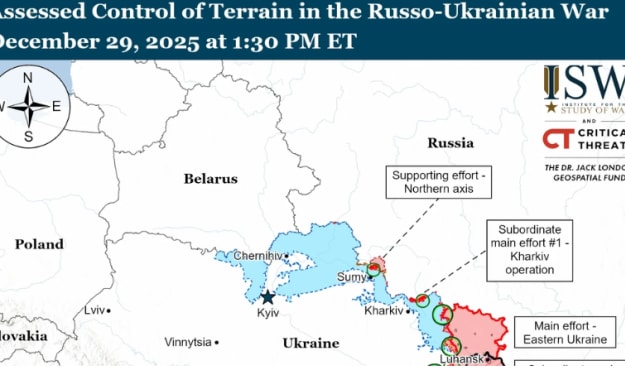
ISW Russian Offensive Campaign Assessment, December 29, 2025. AI-Generated.
On December 29, 2025, the Institute for the Study of War (ISW) published its Russian Offensive Campaign Assessment, offering a comprehensive snapshot of the evolving military, informational, and political dynamics shaping the conflict between Russia and Ukraine. This assessment, widely referenced by Western media and analysts, sheds light on battlefield activities, propaganda efforts, diplomatic maneuvering, and the broader strategic environment. �
By Aqib Hussainabout a month ago in The Swamp
Happy New Year 2026: 50+ Wishes, Images, Greetings, Messages, WhatsApp and Facebook Status to Share with Loved Ones | Hindustan Times. AI-Generated.
As the world steps into 2026, people across the globe are ready to welcome a fresh chapter filled with hope, happiness, and new opportunities. New Year’s Day is more than just a date change—it is a celebration of fresh beginnings, renewed dreams, and heartfelt connections with family and friends. Whether you’re welcoming the year with fireworks, prayers, or quiet reflection, sharing warm wishes is one of the most meaningful traditions.
By Muhammad Hassanabout a month ago in The Swamp
The ‘Thorny’ Issues That Threaten to Derail a Russia–Ukraine Peace Deal. AI-Generated.
As the Russia–Ukraine war grinds on, global attention periodically shifts toward the possibility of peace talks. Diplomatic signals, back-channel negotiations, and international mediation efforts often raise hopes that an agreement could finally end Europe’s deadliest conflict in decades. Yet beneath these cautious gestures lies a dense web of unresolved and deeply contentious issues. These “thorny” problems continue to threaten any meaningful peace deal, making a lasting resolution far more complex than simply declaring a ceasefire. Territorial Disputes: The Core of the Conflict At the heart of the war lies the question of territory. Russia claims sovereignty over regions of Ukraine it has occupied or annexed, while Ukraine insists on the full restoration of its internationally recognized borders. Neither side has shown willingness to compromise on this fundamental issue. For Kyiv, conceding territory would undermine national sovereignty and reward aggression. For Moscow, relinquishing control would weaken its strategic narrative and domestic political standing. Any peace deal that fails to resolve territorial claims risks collapsing under public and political pressure. Security Guarantees and NATO Anxiety Ukraine’s long-term security remains another major obstacle. The country seeks firm security guarantees to prevent future invasions, often pointing toward closer integration with Western military alliances. Russia, however, views such arrangements as an existential threat, particularly if they involve NATO. Moscow has repeatedly cited NATO expansion as a justification for its actions. Bridging this gap—offering Ukraine credible protection without provoking Russia—remains one of the most delicate challenges for negotiators. Sanctions: Relief vs. Leverage Western sanctions imposed on Russia are a powerful bargaining chip, but they also complicate peace talks. Russia wants sanctions relief as part of any agreement, arguing that economic pressure must ease alongside de-escalation. Ukraine and its allies, however, see sanctions as leverage to ensure compliance and accountability. Prematurely lifting restrictions could weaken enforcement mechanisms, while maintaining them indefinitely risks prolonging hostilities. Finding a balanced sanctions framework acceptable to all sides is proving extraordinarily difficult. Accountability and War Crimes Justice for alleged war crimes is another sensitive issue. Ukraine has demanded accountability for atrocities committed during the conflict, while Russia rejects accusations and resists international investigations. For Kyiv, ignoring justice would betray victims and undermine the rule of law. For Moscow, accepting accountability could set dangerous legal and political precedents. This clash between justice and pragmatism threatens to stall negotiations before they gain momentum. Domestic Political Pressures Peace talks do not occur in a vacuum; domestic politics play a decisive role. Ukrainian leadership faces a population that has endured immense suffering and largely opposes territorial concessions. Any agreement perceived as weak could trigger public backlash. Similarly, Russia’s leadership must maintain a narrative of strength, especially amid internal economic strain and political scrutiny. Leaders on both sides risk appearing vulnerable if they compromise too much, making political survival a hidden but powerful barrier to peace. The Role of External Actors International stakeholders add another layer of complexity. Western nations support Ukraine militarily and financially, while also shaping the terms under which peace talks might proceed. Meanwhile, countries seeking to mediate often have their own strategic interests. Diverging priorities among external actors can slow consensus and dilute negotiation efforts. A peace deal acceptable to Ukraine and Russia must also satisfy—or at least not alienate—their respective allies. Economic Reconstruction and Reparations Even if fighting stops, rebuilding Ukraine will require enormous financial resources. Questions around who pays for reconstruction, whether frozen Russian assets can be used, and how economic recovery will be managed remain unresolved. Russia opposes using its assets for reparations, while Ukraine sees compensation as essential for recovery. These financial disputes could resurface even after a ceasefire, threatening long-term stability. Trust Deficit and Past Failures Perhaps the most underestimated challenge is the deep lack of trust. Previous agreements and ceasefires have collapsed, leaving both sides skeptical of future promises. Without robust monitoring mechanisms and enforceable guarantees, any peace deal risks becoming another temporary pause rather than a permanent solution. A Fragile Path Forward The path to peace between Russia and Ukraine is littered with unresolved issues that go far beyond battlefield dynamics. Territory, security, sanctions, justice, domestic politics, and international influence are tightly interwoven, making compromise exceptionally hard. While diplomacy remains essential, lasting peace will require not only political courage but also innovative solutions that address these thorny challenges head-on. Until these core issues are genuinely confronted, any peace deal will remain fragile—more a hopeful aspiration than a durable end to a devastating war.
By Fiaz Ahmed Brohiabout a month ago in The Swamp