
Nearly 25 Islamic State Fighters Killed or Captured in Syria, U.S. Military Says
Targeted operations highlight ongoing efforts to prevent the terror group’s resurgence in war-torn Syria

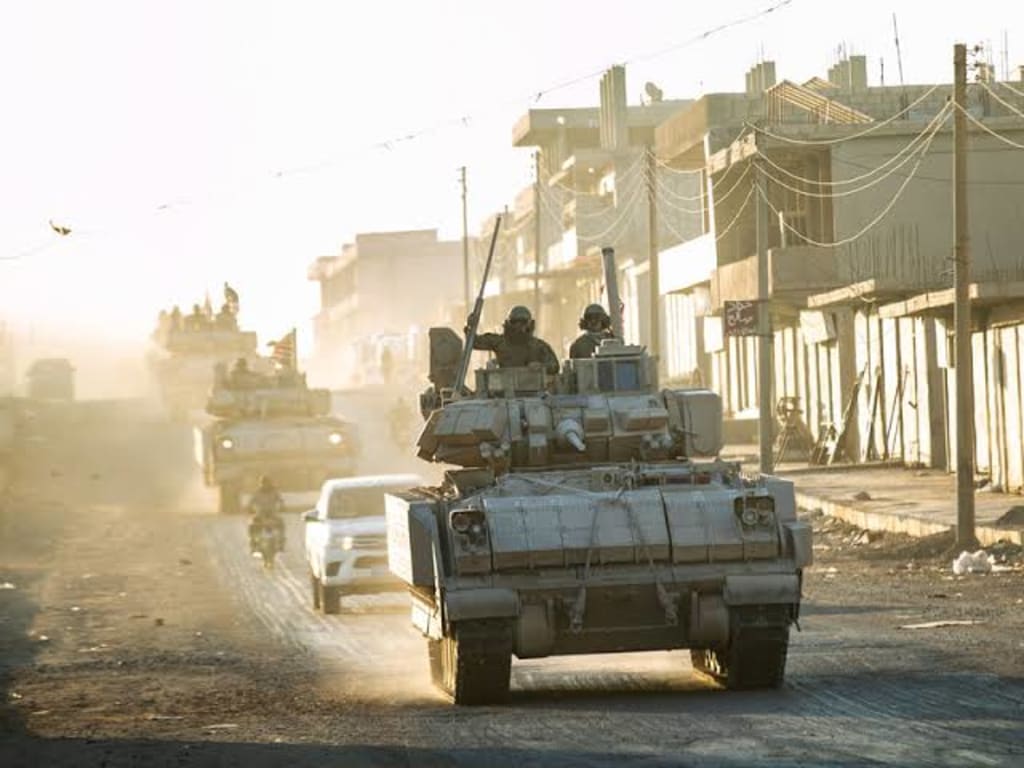
Despite losing its self-declared “caliphate” years ago, the Islamic State (IS) continues to pose a security threat in parts of Syria. According to a recent statement from the U.S. military, nearly 25 Islamic State fighters have been killed or captured during targeted operations, highlighting both the group’s lingering presence and the ongoing international effort to prevent its resurgence.
A Reminder That IS Has Not Disappeared
The announcement serves as a stark reminder that while IS no longer controls vast territories as it once did, it has adapted into a more covert and decentralized force. Operating mainly through sleeper cells, the group continues to exploit instability in Syria, especially in remote desert regions and areas affected by weak governance.
U.S. Central Command (CENTCOM) stated that the operations were conducted in coordination with partner forces, including the Syrian Democratic Forces (SDF). These missions were aimed at disrupting IS networks, safe houses, and logistical routes that allow the group to plan attacks and recruit new members.
Precision Operations and Intelligence-Based Strikes
According to military officials, the recent operations relied heavily on intelligence gathering and precision tactics rather than large-scale troop movements. This approach reflects a broader shift in counterterrorism strategy, focusing on targeted raids and surveillance instead of prolonged ground combat.
By killing or capturing key operatives, coalition forces aim to weaken IS leadership structures and reduce the group’s ability to coordinate attacks. Even small-scale successes, military analysts say, can have a significant impact by creating fear and confusion within extremist networks.
Why Syria Remains a Breeding Ground
Syria’s prolonged civil war has left the country fragmented, economically devastated, and politically unstable—conditions that extremist groups often exploit. In areas where basic services are scarce and security is inconsistent, IS attempts to reassert influence through intimidation, propaganda, and targeted violence.
Thousands of suspected IS fighters and family members are currently held in detention facilities and camps in northeastern Syria. These overcrowded and under-resourced camps have become a major concern for international observers, who warn they could turn into incubators for future radicalization if long-term solutions are not found.
The Role of the United States and Its Partners
The United States maintains a limited military presence in Syria as part of its broader mission to ensure the lasting defeat of IS. While American troops are not engaged in frontline combat, they provide critical support in the form of training, intelligence, and air power.
U.S. officials emphasize that their role is not about occupation but about preventing a security vacuum that could allow extremist groups to regroup. The recent operations underscore Washington’s commitment to this mission, even as global attention shifts to other conflicts.
A Regional and Global Security Concern
The persistence of IS in Syria is not just a local issue—it has regional and global implications. The group has inspired attacks and recruitment efforts far beyond the Middle East, using online platforms to spread extremist ideology.
Counterterrorism experts warn that even weakened groups can remain dangerous if left unchecked. History has shown that extremist organizations often thrive when international focus wanes, making sustained pressure essential.
Challenges Ahead
While the killing or capture of nearly 25 fighters is a tactical success, it does not signal the end of the threat. IS has demonstrated resilience, adapting its tactics to survive military setbacks. Lone-wolf attacks, assassinations, and bombings remain part of its strategy.
Moreover, long-term stability in Syria requires political solutions, economic recovery, and reconciliation—factors that lie beyond the scope of military action alone. Without addressing these root causes, counterterrorism victories risk being temporary.
Conclusion: Vigilance Over Victory
The U.S. military’s announcement highlights progress in the ongoing fight against the Islamic State, but it also underscores the complexity of defeating extremist ideology. Military operations can disrupt and degrade, but lasting peace depends on governance, opportunity, and international cooperation.
As Syria continues to navigate the aftermath of war, the global community faces a critical choice: remain engaged to prevent extremism from resurfacing, or risk repeating the mistakes of the past. For now, the message from recent operations is clear—Islamic State may be weakened, but vigilance remains essential.
About the Creator
Fiaz Ahmed Brohi
I am a passionate writer with a love for exploring and creating content on trending topics. Always curious, always sharing stories that engage and inspire.
Keep reading
More stories from Fiaz Ahmed Brohi and writers in The Swamp and other communities.
How Thousands of Secret Russian Documents Were Exposed
In an era defined by cyber warfare, whistleblowers, and digital leaks, the exposure of thousands of secret Russian documents has emerged as one of the most striking intelligence breaches in recent history. The revelations did not come from a single dramatic act, but rather from a combination of human error, technological vulnerability, and the growing sophistication of investigative journalists and open-source researchers. Together, these factors peeled back layers of secrecy surrounding the Russian state, offering rare insight into how power, security, and information truly operate behind closed doors.
By Fiaz Ahmed Brohi19 days ago in The Swamp
With Tensions High, Israel and Iran Secretly Reassured Each Other via Russia
Amid ongoing tensions in the Middle East, Israel and Iran have reportedly engaged in secret communications through Russia, aiming to manage a delicate balance of deterrence and avoid an escalation into open conflict. While public rhetoric between the two nations remains sharply hostile, diplomatic backchannels are being used to reduce the risk of miscalculations that could ignite broader regional warfare.
By Aarif Lashari4 days ago in The Swamp
How to Succeed at the Benson Directory®
Congratulations and welcome to the Benson Directory® employee #22391! As our newest call handler, you will have the privilege of speaking with dozens of unique and interesting people on a daily basis as well as the opportunity to earn bonuses for high performance. Contained within this handbook you will find a set of ease to follow instructions designed to help you settle in to your new role and begin paving the way to success.
By S. A. Crawford2 days ago in Fiction



Comments
There are no comments for this story
Be the first to respond and start the conversation.