
China Flexes Blockade Capabilities Near Taiwan on Second Day of Military Drills
Escalating military exercises highlight Beijing’s growing pressure on the island

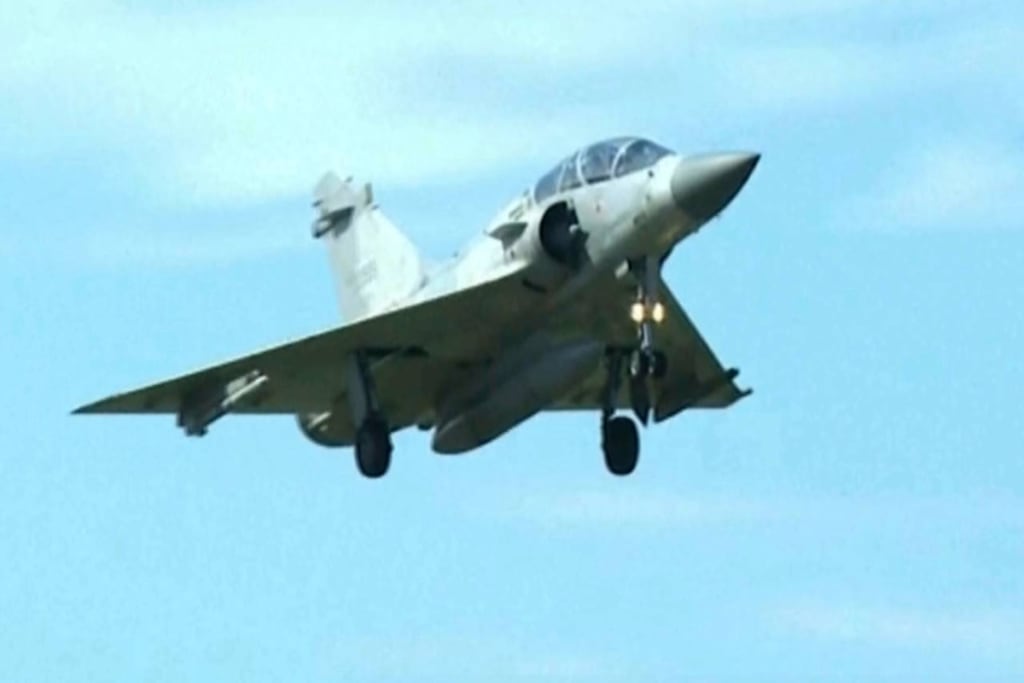
Escalating Exercises Highlight Beijing’s Ability to Isolate the Island
China intensified military pressure on Taiwan as the People’s Liberation Army (PLA) continued large-scale exercises around the island, focusing on blockade-style operations during the second day of drills. The maneuvers, which involved coordinated naval, air, and missile forces, underscored Beijing’s growing ability to restrict access to Taiwan by sea and air—an approach widely seen as a strategic alternative to a full-scale invasion.
The drills come amid already heightened tensions in the Taiwan Strait, drawing sharp reactions from Taipei and increasing concern among regional and global powers monitoring stability in East Asia.
What Happened During the Second Day of Drills
On the second day, the PLA’s Eastern Theater Command deployed warships, fighter jets, bombers, and missile units in areas surrounding Taiwan. Military analysts noted that the focus appeared to be on joint operations, simulating how different branches of China’s armed forces could work together to cut off Taiwan’s external connections.
Chinese state media described the exercises as testing “combat readiness” and “precision strikes,” while also emphasizing control over key maritime routes. Several aircraft reportedly crossed the unofficial median line of the Taiwan Strait, a symbolic boundary that had long served as a buffer between the two sides.
Taiwan’s Ministry of National Defense confirmed increased Chinese military activity and said it was closely tracking movements using air, sea, and land-based surveillance systems.
Why Blockade Capabilities Matter
A blockade scenario is considered one of the most serious threats to Taiwan. Rather than launching an immediate invasion, China could attempt to isolate the island, disrupting trade, energy supplies, and communication links. Taiwan is heavily dependent on maritime routes for imports, including food and fuel, making blockade tactics particularly concerning.
By showcasing these capabilities, China is sending a clear strategic message: it possesses the means to apply sustained pressure without necessarily crossing the threshold into outright war. Analysts believe this approach gives Beijing flexibility while increasing psychological and economic pressure on Taipei.
Taiwan’s Response and Public Reaction
Taiwanese officials condemned the drills as provocative and destabilizing. President Lai Ching-te’s administration reiterated its commitment to maintaining peace while emphasizing the island’s readiness to defend itself.
Although daily life in Taiwan largely continued as normal, the exercises heightened public awareness of regional security risks. Airlines adjusted flight routes, and shipping companies monitored developments closely due to the potential impact on commercial traffic through the Taiwan Strait—one of the world’s busiest trade corridors.
Beijing’s Strategic Messaging
China maintains that Taiwan is a part of its territory and regularly uses military drills to reinforce this claim. Officials framed the exercises as a warning against what they call “separatist forces” and foreign interference, particularly from the United States and its allies.
The timing and scale of the drills suggest an effort to demonstrate strength not only to Taiwan, but also to international audiences. By emphasizing blockade operations, Beijing appears to be signaling its readiness to escalate pressure if political developments move in a direction it opposes.
International Reactions and Regional Concerns
The military exercises have drawn concern from the United States, Japan, and several European countries, which have urged restraint and warned against actions that could destabilize the region. Western governments view peace in the Taiwan Strait as critical to global economic stability, given Taiwan’s role in semiconductor manufacturing and global trade.
Security experts warn that while drills are not uncommon, the increasing frequency and realism of China’s exercises raise the risk of miscalculation or accidental confrontation.
What This Means Going Forward
China’s second day of military drills near Taiwan highlights a shift toward more sophisticated and realistic scenarios, particularly those involving blockade and joint-force coordination. While the exercises stop short of actual conflict, they add pressure to an already fragile security environment.
For Taiwan, the drills reinforce the importance of defense preparedness and international partnerships. For the wider world, they serve as a reminder that tensions in the Taiwan Strait remain one of the most serious geopolitical flashpoints today.
As China continues to refine its military capabilities, the challenge for all sides will be managing competition without tipping into conflict—an increasingly delicate balance in the Indo-Pacific region.
About the Creator
Asad Ali
I'm Asad Ali, a passionate blogger with 3 years of experience creating engaging and informative content across various niches. I specialize in crafting SEO-friendly articles that drive traffic and deliver value to readers.
The Forsyth House Fire
Since 1851, Forsyth House has stood on the corner of Union Street and Gordon Street in the heart of Glasgow. Its iconic, or was... because on Sunday 8th of March, 2026, a fire broke out in a small, seemingly un-named shop in the building and tore all that history down. As I write, the rubble is still unsettled and the street is still blocked off. Central Station is quiet on the upper level, and around 30 small businesses have quite literally gone up in smoke.
By S. A. Crawford3 days ago in The Swamp
Top tipple tricks
Been thinking a lot about drinking, lately. Not least because of a recent episode of over-indulgence and the inevitable after effects. Some readers may recall the earlier articles I wrote about beating the booze. Here I set out an experiment in techniques for cutting down on my alcohol intake. The experiment was successful, the techniques worked, and I have armed myself with an arsenal of weapons in the war against the demon drink. I have yet to fire the first round however. It's all a question of timing (perhaps procrastination).
By Raymond G. Taylor7 days ago in Psyche




Comments
There are no comments for this story
Be the first to respond and start the conversation.