
The ‘Thorny’ Issues That Threaten to Derail a Russia–Ukraine Peace Deal
From territory and security guarantees to sanctions and justice, deep-rooted conflicts continue to block a lasting peace

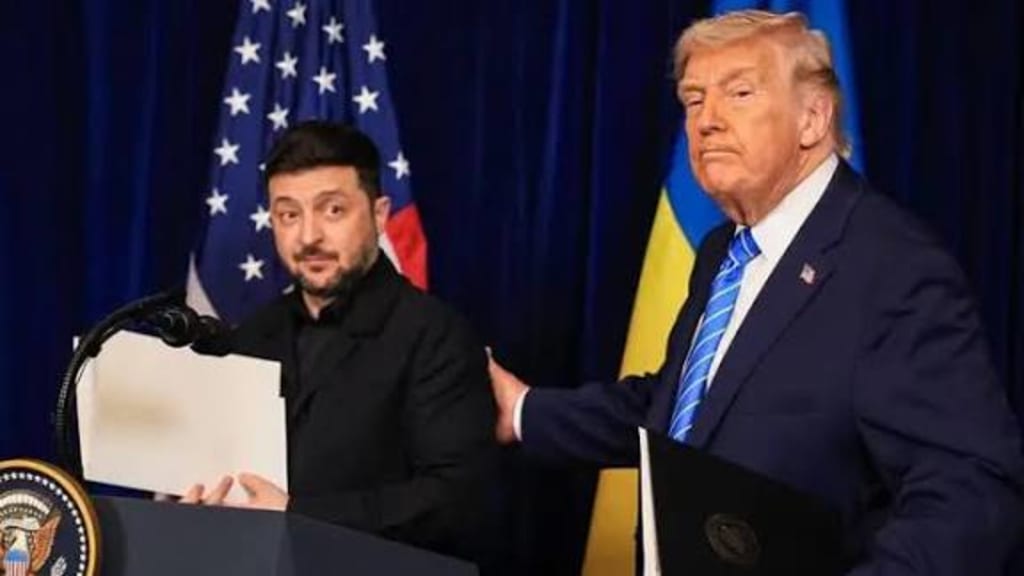
As the Russia–Ukraine war grinds on, global attention periodically shifts toward the possibility of peace talks. Diplomatic signals, back-channel negotiations, and international mediation efforts often raise hopes that an agreement could finally end Europe’s deadliest conflict in decades. Yet beneath these cautious gestures lies a dense web of unresolved and deeply contentious issues. These “thorny” problems continue to threaten any meaningful peace deal, making a lasting resolution far more complex than simply declaring a ceasefire.
Territorial Disputes: The Core of the Conflict
At the heart of the war lies the question of territory. Russia claims sovereignty over regions of Ukraine it has occupied or annexed, while Ukraine insists on the full restoration of its internationally recognized borders. Neither side has shown willingness to compromise on this fundamental issue. For Kyiv, conceding territory would undermine national sovereignty and reward aggression. For Moscow, relinquishing control would weaken its strategic narrative and domestic political standing. Any peace deal that fails to resolve territorial claims risks collapsing under public and political pressure.
Security Guarantees and NATO Anxiety
Ukraine’s long-term security remains another major obstacle. The country seeks firm security guarantees to prevent future invasions, often pointing toward closer integration with Western military alliances. Russia, however, views such arrangements as an existential threat, particularly if they involve NATO. Moscow has repeatedly cited NATO expansion as a justification for its actions. Bridging this gap—offering Ukraine credible protection without provoking Russia—remains one of the most delicate challenges for negotiators.
Sanctions: Relief vs. Leverage
Western sanctions imposed on Russia are a powerful bargaining chip, but they also complicate peace talks. Russia wants sanctions relief as part of any agreement, arguing that economic pressure must ease alongside de-escalation. Ukraine and its allies, however, see sanctions as leverage to ensure compliance and accountability. Prematurely lifting restrictions could weaken enforcement mechanisms, while maintaining them indefinitely risks prolonging hostilities. Finding a balanced sanctions framework acceptable to all sides is proving extraordinarily difficult.
Accountability and War Crimes
Justice for alleged war crimes is another sensitive issue. Ukraine has demanded accountability for atrocities committed during the conflict, while Russia rejects accusations and resists international investigations. For Kyiv, ignoring justice would betray victims and undermine the rule of law. For Moscow, accepting accountability could set dangerous legal and political precedents. This clash between justice and pragmatism threatens to stall negotiations before they gain momentum.
Domestic Political Pressures
Peace talks do not occur in a vacuum; domestic politics play a decisive role. Ukrainian leadership faces a population that has endured immense suffering and largely opposes territorial concessions. Any agreement perceived as weak could trigger public backlash. Similarly, Russia’s leadership must maintain a narrative of strength, especially amid internal economic strain and political scrutiny. Leaders on both sides risk appearing vulnerable if they compromise too much, making political survival a hidden but powerful barrier to peace.
The Role of External Actors
International stakeholders add another layer of complexity. Western nations support Ukraine militarily and financially, while also shaping the terms under which peace talks might proceed. Meanwhile, countries seeking to mediate often have their own strategic interests. Diverging priorities among external actors can slow consensus and dilute negotiation efforts. A peace deal acceptable to Ukraine and Russia must also satisfy—or at least not alienate—their respective allies.
Economic Reconstruction and Reparations
Even if fighting stops, rebuilding Ukraine will require enormous financial resources. Questions around who pays for reconstruction, whether frozen Russian assets can be used, and how economic recovery will be managed remain unresolved. Russia opposes using its assets for reparations, while Ukraine sees compensation as essential for recovery. These financial disputes could resurface even after a ceasefire, threatening long-term stability.
Trust Deficit and Past Failures
Perhaps the most underestimated challenge is the deep lack of trust. Previous agreements and ceasefires have collapsed, leaving both sides skeptical of future promises. Without robust monitoring mechanisms and enforceable guarantees, any peace deal risks becoming another temporary pause rather than a permanent solution.
A Fragile Path Forward
The path to peace between Russia and Ukraine is littered with unresolved issues that go far beyond battlefield dynamics. Territory, security, sanctions, justice, domestic politics, and international influence are tightly interwoven, making compromise exceptionally hard. While diplomacy remains essential, lasting peace will require not only political courage but also innovative solutions that address these thorny challenges head-on.
Until these core issues are genuinely confronted, any peace deal will remain fragile—more a hopeful aspiration than a durable end to a devastating war.
About the Creator
Fiaz Ahmed Brohi
I am a passionate writer with a love for exploring and creating content on trending topics. Always curious, always sharing stories that engage and inspire.
Keep reading
More stories from Fiaz Ahmed Brohi and writers in The Swamp and other communities.
Iran’s Ailing Supreme Leader Resorts to His Only Playbook as Crises Mount and Protests Erupt
Iran is once again at a crossroads. As economic hardship deepens, regional tensions escalate, and public anger spills into the streets, the country’s aging Supreme Leader, Ayatollah Ali Khamenei, appears increasingly reliant on a familiar and rigid strategy: repression, defiance, and ideological consolidation. With his health reportedly deteriorating and succession questions looming, Iran’s leadership is doubling down on the only playbook it has ever trusted—crackdowns at home and resistance abroad. A Nation Under Multiple Pressures Iran today faces a convergence of crises rarely seen in its modern history. Years of harsh international sanctions have weakened the economy, sending inflation soaring and shrinking the purchasing power of ordinary citizens. Essential goods have become expensive, unemployment remains high—especially among youth—and corruption scandals continue to erode public trust. At the same time, regional instability has intensified. Iran’s involvement in proxy conflicts across the Middle East, from Lebanon to Yemen, has drawn increasing scrutiny and retaliation. Tensions with Israel and the United States remain dangerously high, while diplomatic efforts to revive nuclear negotiations have largely stalled. These pressures are not abstract. They are felt daily by Iranians who struggle to afford food, fuel, and housing. For many, frustration has transformed into open dissent. Protests as a Persistent Threat Over the past few years, Iran has witnessed repeated waves of protests—sparked by economic grievances, political repression, and demands for social freedoms. While the intensity of demonstrations fluctuates, their persistence signals a deeper shift: fear is no longer enough to ensure silence. Women, students, workers, and ethnic minorities have increasingly challenged the state’s authority. Social media, despite heavy censorship, continues to amplify dissenting voices and expose state violence. Each protest cycle weakens the narrative that the Islamic Republic enjoys unquestioned legitimacy. For the Supreme Leader, these protests represent not just unrest, but an existential challenge to the system he has ruled over for decades. The Only Playbook: Repression and Resistance Faced with mounting instability, Khamenei has turned to the same tactics that have defined his leadership since 1989. Domestically, this means empowering security forces, expanding surveillance, tightening media controls, and issuing harsh sentences to protesters and activists. Dialogue or reform remains off the table. The message from the top is clear: concessions are seen as weakness. Externally, Iran continues to frame itself as a besieged revolutionary state standing against Western “arrogance.” Anti-US and anti-Israel rhetoric intensifies whenever internal pressure rises, serving to redirect public attention outward and rally hardline supporters. This strategy has worked before—at least temporarily. But critics argue it is increasingly ineffective in a society that is younger, more connected, and less ideologically driven than previous generations. Health Concerns and the Succession Question Adding to the uncertainty is the Supreme Leader’s declining health. At 85, Khamenei has reportedly faced recurring medical issues, fueling speculation about who might succeed him. While the Iranian system is designed to project continuity, succession is a sensitive moment that could destabilize elite power structures. In response, the leadership appears focused on tightening internal cohesion. Loyalists are elevated, dissenters purged, and institutions like the Revolutionary Guard gain even more influence. Stability, in this view, must be enforced—not negotiated. A Strategy Running Out of Time? The central question is whether Iran’s old playbook can still deliver results. Repression may suppress protests, but it does not address the root causes of discontent. Economic mismanagement, lack of political participation, and social restrictions continue to alienate large segments of the population. Moreover, international isolation limits Iran’s ability to recover economically, while regional confrontations risk dragging the country into wider conflict. For now, the Supreme Leader’s approach reflects a belief that endurance—not reform—is the path to survival. But history suggests that systems relying solely on force often struggle to adapt when circumstances change. Conclusion: A Defining Moment for Iran Iran stands at a defining moment. As crises multiply and protests refuse to disappear, the leadership’s reliance on repression and defiance may buy time—but not stability. With an ailing Supreme Leader at the helm and a restless population below, the gap between rulers and ruled continues to widen. Whether Iran can navigate this period without deeper turmoil remains uncertain. What is clear is that the old playbook, once seen as unshakable, is being tested like never before.
By Fiaz Ahmed Brohi20 days ago in The Swamp
So You Decided To Become a Nurse Practitioner:
So you decided to become an "Advanced Practice" nurse. Congratulations!... is what I would say if this was a good idea. Grad school? In this economy? What were you thinking? Likely it was something along the lines of either 1) “I've seen these other chucklefucks do it— Why can't I?” or even 2) “I've got a nice career, I should shake it up. I miss feeling like I have no clue what I'm doing.”
By Sandor Szabo3 days ago in Fiction



Comments
There are no comments for this story
Be the first to respond and start the conversation.