
Why Countries Are Preparing for Future Wars
Rising military budgets, new weapons, and the fear shaping global security

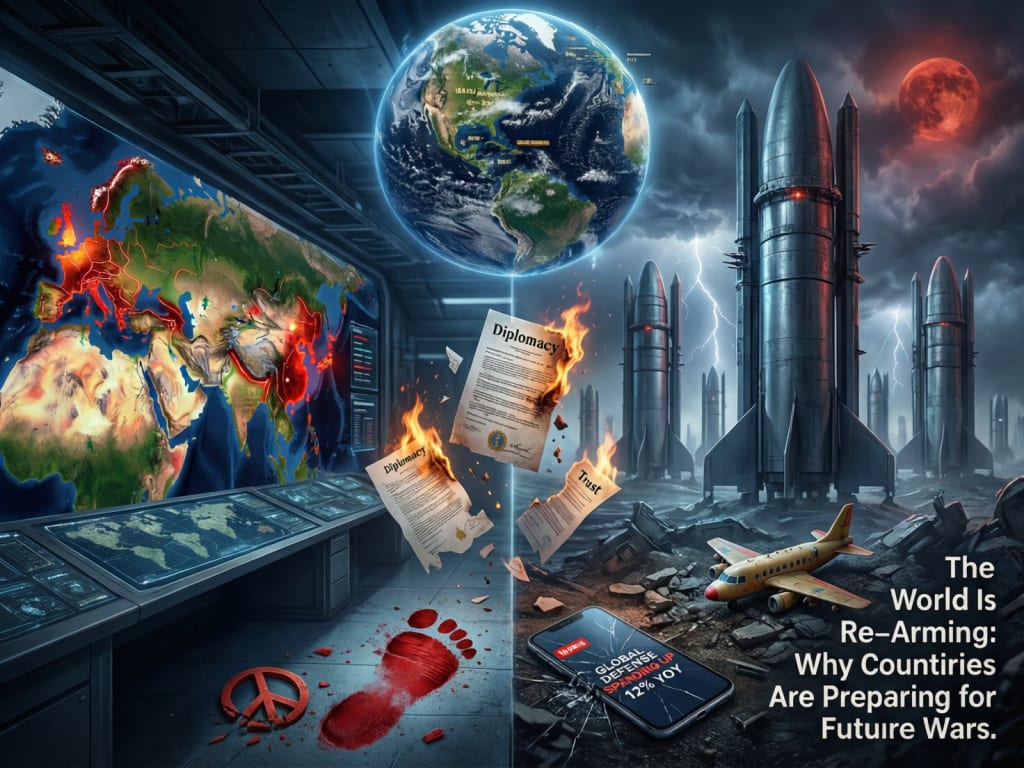
The World Is Re-Arming: Why Countries Are Preparing for Future Wars
Across the world, countries are increasing their military spending at a speed not seen in decades. Governments explain this growth as necessary for defense and national security. However, many experts and ordinary people worry that this trend could move the world closer to conflict instead of peace. From Europe to Asia, from the Middle East to the Pacific, nations are strengthening their armies, modernizing weapons, and preparing for possible future wars.
One major reason behind this global shift is rising insecurity. Ongoing wars and regional conflicts have changed how governments think about safety. When one country increases its military power, nearby nations often feel threatened. They respond by increasing their own defenses. This creates a dangerous cycle where fear leads to military preparation, and military preparation creates even more fear.
In Europe, military planning has changed dramatically in recent years. Countries that once relied mainly on diplomacy and economic cooperation are now investing heavily in defense. Many nations are rebuilding their armies, purchasing advanced fighter jets, expanding missile systems, and increasing troop readiness. Even countries that traditionally avoided military alliances are now joining defense groups or strengthening ties with powerful allies.
Asia is also experiencing rising tensions. Disputes over land, sea routes, and political influence push countries to expand their naval and air forces. Powerful fleets operate in crowded waters, and military bases are built in sensitive areas. In such environments, even a small mistake or misunderstanding could quickly turn into a serious crisis if communication fails.
The Middle East remains one of the most heavily armed regions in the world. Long-standing rivalries, internal conflicts, and foreign involvement continue to fuel military growth. Advanced missiles, drones, and air defense systems are becoming more common. While leaders speak about deterrence and national security, many civilians live with constant uncertainty, fearing escalation and instability.
Technology is changing warfare faster than ever before. Modern armies now focus less on large ground forces and more on advanced tools such as drones, cyber weapons, and artificial intelligence. Drones can attack targets from long distances without risking soldiers’ lives. Cyberattacks can disrupt power grids, communication networks, and financial systems. These new methods lower the cost of conflict and make it easier to strike without declaring open war.
Another important factor is declining trust in international institutions. Many countries no longer believe global organizations can protect them during serious crises. As a result, governments rely more on their own military strength rather than international cooperation. This weakens global trust and increases the chance of independent and risky actions.
Military spending also has strong effects on national economies. While defense industries create jobs and support technology development, large military budgets often reduce funding for healthcare, education, and social welfare. Citizens may feel safer in theory, but their daily lives can become more difficult. This trade-off creates strong debates inside many countries.
Supporters of re-arming argue that strong defenses prevent war. They believe showing military strength discourages enemies from attacking. Critics argue the opposite, pointing to history, which shows that arms races often lead to conflict rather than prevent it. When weapons grow faster than trust, peace becomes fragile.
Communication remains the most important tool for avoiding disaster. Diplomatic talks, military hotlines, and confidence-building measures can reduce misunderstandings. When leaders use aggressive language or ignore diplomacy, risks rise quickly.
The world today is not yet at global war, but the signs of preparation are clear. Weapons are being built, alliances tested, and military strategies rewritten. The future depends on whether leaders choose restraint or escalation.
History teaches a clear lesson: preparing for war should never replace working for peace. Strong defense may be necessary, but without dialogue, cooperation, and trust, it becomes a path toward instability. In a connected world, real security comes not from weapons alone, but from communication, responsibility, and shared global understanding.
About the Creator
Wings of Time
I'm Wings of Time—a storyteller from Swat, Pakistan. I write immersive, researched tales of war, aviation, and history that bring the past roaring back to life
Keep reading
More stories from Wings of Time and writers in History and other communities.
Tensions, Transitions, and a Fragile Global Balance
Today’s World Affairs: Tensions, Change, and an Unstable Balance Today’s world affairs show a global system under great pressure. Many countries are facing political tension, economic uncertainty, and security challenges at the same time. The world is changing quickly, and no single event explains everything. Instead, a mix of conflicts, power struggles, and new technology is shaping how nations deal with each other.
By Wings of Time 2 months ago in History




Comments
There are no comments for this story
Be the first to respond and start the conversation.