
Tensions, Transitions, and a Fragile Global Balance
How conflict, competition, and cooperation are shaping the world right now

Today’s World Affairs: Tensions, Change, and an Unstable Balance
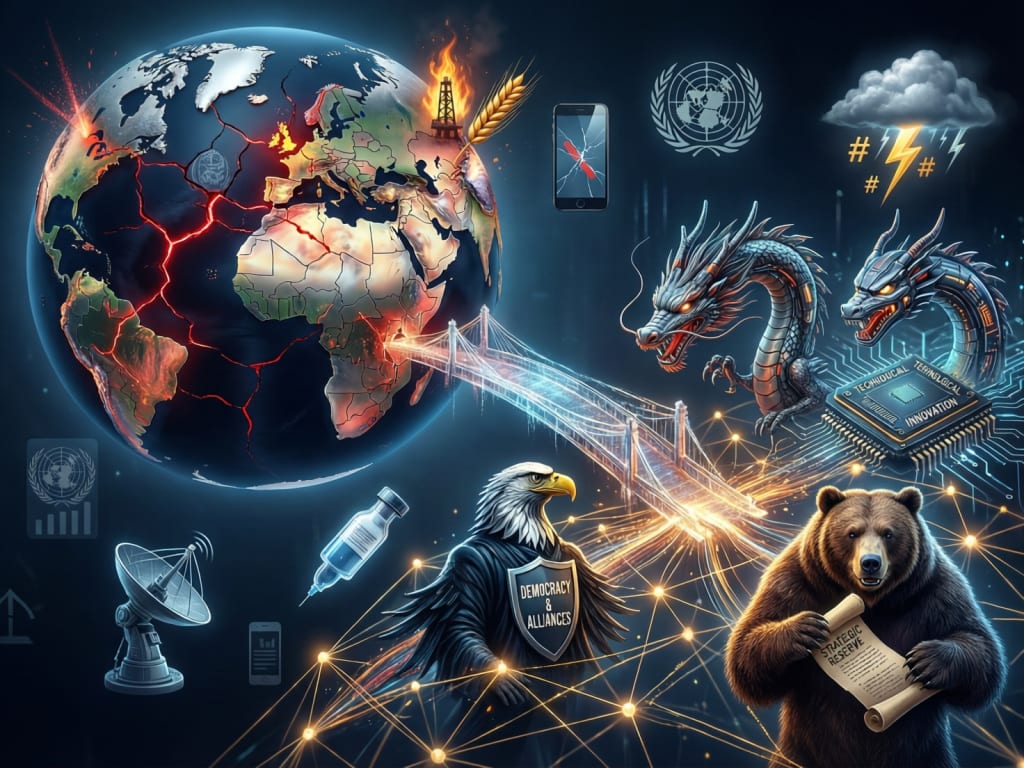
Today’s world affairs show a global system under great pressure. Many countries are facing political tension, economic uncertainty, and security challenges at the same time. The world is changing quickly, and no single event explains everything. Instead, a mix of conflicts, power struggles, and new technology is shaping how nations deal with each other.
One of the most important features of today’s world is instability. Conflicts continue in Eastern Europe, the Middle East, and parts of Africa. These wars are not limited to the countries where fighting takes place. They affect the whole world. Energy prices rise, food becomes more expensive, and global trade faces disruption. Even nations far away from these conflicts feel the impact in their daily lives.
Major powers play a strong role in global affairs. Countries like the United States, China, and Russia compete for influence and control. Each of them has a different idea of how the world should be organized. This competition affects military planning, economic policy, and international diplomacy. Smaller countries often find themselves in a difficult position. They must balance relationships with powerful nations while trying to protect their own interests.
Diplomacy still exists, but it is under strain. Governments continue to hold talks and negotiations, often in private. However, trust between countries is low. Leaders frequently use strong language in public speeches to appeal to people at home. While this may help politically, it can make international relations more tense. When dialogue slows down or stops, misunderstandings increase and risks grow.
Economic pressure has become a common tool in world affairs. Countries use sanctions, trade restrictions, and financial limits to influence other governments. These measures are meant to avoid military conflict, but they often have serious effects on ordinary people. Higher prices, job losses, and shortages can follow. As a result, foreign policy and economic policy are now closely connected.
Technology is also changing global power. Cyberattacks, digital spying, and online misinformation are part of modern conflict. Nations no longer rely only on soldiers and weapons. A cyberattack can damage banks, power systems, or communication networks without physical fighting. Artificial intelligence and space technology are becoming important parts of national security. This new form of conflict makes the world more complex and harder to control.
At the same time, many global problems require cooperation. Climate change, health emergencies, and natural disasters affect all countries. Extreme weather, rising sea levels, and disease outbreaks show how connected the world has become. No country can solve these problems alone. However, political rivalry often slows down joint action, making solutions less effective.
International organizations were created to help manage global challenges, but they now face criticism. Some countries believe these institutions are slow or unfair. Others argue they are still necessary to prevent conflict and encourage cooperation. The debate over whether to reform or replace these organizations reflects uncertainty about the future of global leadership.
Public opinion now plays a bigger role in world affairs. News spreads quickly through social media and global television. A single statement by a political leader can affect markets, alliances, and public reactions within hours. This creates pressure on leaders to respond quickly, sometimes without careful planning.
Despite many tensions, cooperation has not disappeared. Countries still trade, provide humanitarian aid, and work together in science and education. These efforts may receive less attention, but they help reduce conflict and support global stability.
Today’s world affairs show a world in transition. Old systems are weakening, and new ones are still forming. The decisions made today will shape the future. In a deeply connected world, stability depends on dialogue, patience, and shared responsibility—not isolation.
About the Creator
Wings of Time
I'm Wings of Time—a storyteller from Swat, Pakistan. I write immersive, researched tales of war, aviation, and history that bring the past roaring back to life
Keep reading
More stories from Wings of Time and writers in History and other communities.
Can World War III Be Prevented?
Can World War III Be Prevented? The idea of World War III is no longer limited to history books or fictional movies. Rising global tensions, regional wars, arms buildups, and political rivalries have made many people wonder whether another world war is possible—and more importantly, whether it can still be prevented. While the risks are real, global conflict is not inevitable. Prevention depends on choices made by leaders, institutions, and societies today.
By Wings of Time 2 months ago in History
The Year 1957 in Review: Fun Facts, Trivia, and Historic Highlights
This quick read is a collection of fun facts, trivia, and historical events from the year 1957. Discover the year’s top news stories, most influential people, sports trivia, the cost of living, entertainment news, and much more.
By Gregory DeVictor6 days ago in History



Comments
There are no comments for this story
Be the first to respond and start the conversation.