
The Ram Mandir Dispute: Unraveling India’s Century-Old Saga of Faith, Politics, and Justice | Part-II
Let us understand the post-independence developments and the efforts to reclaim Lord Rama’s birthplace.


Post-Independence Developments (1947–1950)
After India gained independence in 1947, tensions resurfaced just two years later. On the night of December 22, 1949, during a nine-day Ramcharitmanas recitation organized by the Akhil Bhartiya Ramayana Mahasabha, an idol of Ram Lalla was placed inside the Babri Masjid. The next morning, large crowds gathered, claiming it to be a divine emergence.
On December 29, 1949, the Sunni Central Waqf Board filed an FIR regarding the incident. Notably, no individual from the Muslim community came forward to file a complaint; instead, the Sunni Central Waqf Board took up the case. In their complaint, they alleged that Hindus were falsely claiming a divine appearance of Ram Lalla and had deliberately installed the idol themselves to assert control over the central dome of the mosque.
Amid rising tensions, the government locked the inner portion of the mosque to prevent further escalation. Hindus, however, were distressed, feeling that Ram Lalla was “imprisoned.” Home Minister Sardar Vallabhbhai Patel and Prime Minister Jawaharlal Nehru instructed Uttar Pradesh Chief Minister Govind Ballabh Pant and to remove the idol, but the Faizabad Deputy Commissioner, K.K. Nair, refused, citing potential riots. He says that it would be like playing with fire. There’s crowd everywhere and nobody wouldn’t make such a mistake. Under pressure, he resigned. After extensive discussions, the government assessed the situation and decided not to remove the idol of Ram Lalla to avoid escalating tensions between the two communities. To strike a balance, on January 5, 1950, the government instructed the Magistrate to issue an order locking the entire area — both the inner and outer portions — to the general public. The arrangement allowed only priests to enter the outer portion, known as the Ram Chabutra, to offer prayers to Ram Lalla and perform sacrifices. Common people were permitted to visit and pay their respects from a distance, ensuring that neither community felt entirely alienated.
On January 16, 1950, Gopal Singh Visharad filed a case in Faizabad court, seeking permission to offer prayers. In 1959, the Nirmohi Akhara filed a separate case. So, looking at all these things, the court takes it seriously and orders that this entire disputed area would have an official map ready. This order was issued on 1st April, 1950.
On June 25, 1950, the local commissioner submitted two site plans of the disputed area, one showing the mosque and the other detailing the surrounding locality. As the matter escalated, back-to-back cases were filed. Hindus demanded permission to conduct pujas to Ram Lalla inside the mosque, while Muslims insisted that the idol be removed.
The mosque was designated as the disputed structure, and the surrounding land was termed the disputed area. From the Muslim side, the Sunni Central Waqf Board argued that the mosque was built by Babur, a Sunni, and thus the land belonged to them.
All the cases were consolidated and transferred to the High Court, but the prolonged legal process caused nationwide unrest. Hindu organizations like VHP and RSS, dissatisfied with the delays, began mobilizing teams to expedite efforts for reclaiming the land.
The Rise of Political Movements (1980–1989)
In 1980, the Janata Party dissolved, giving rise to the BJP. By April 1984, the VHP began a nationwide campaign to intensify the demand for constructing the Ram Temple. Their strategy included organizing Rath Yatras across India to gain widespread support and increase pressure on the government. However, their planned September 1984 Rath Yatra was halted due to the assassination of Indira Gandhi and the subsequent unrest. In the elections that followed, the BJP contested for the first time but performed poorly, winning only two seats. This led to Atal Bihari Vajpayee being replaced by Lal Krishna Advani as BJP president.
By October 1985, the VHP resumed its Rath Yatras at 25 locations, receiving overwhelming public support. This marked a turning point as Lal Krishna Advani linked the BJP to the Ram Temple issue, uniting RSS, BJP, and VHP efforts to construct the temple. Meanwhile, Congress faced backlash over the Shah Bano case. After the Supreme Court’s ruling in favor of Shah Bano, a Muslim woman seeking alimony, Prime Minister Rajiv Gandhi overturned the decision with a new law, sparking allegations of Muslim appeasement and fueling Hindu support for the BJP and VHP.
On January 25, 1986, lawyer Umesh Chandra Pandey appealed to remove restrictions on Hindus conducting pujas to Ram Lalla. Under public and political pressure, the High Court ordered the gates of Ram Lalla to be opened for Hindu worship. The lock was opened within 40 minutes of the court order, a process broadcast live on TV. This raised suspicions about the government’s intentions, with Rajiv Gandhi accused of appeasing Hindus to counter the fallout from the Shah Bano case.
The decision to open the gates escalated tensions. Hindu groups intensified their demands for the temple’s construction, while Muslim groups formed the Babri Mosque Action Committee to counter these efforts. However, the Sunni Central Waqf Board remained the only Muslim party in court. On the Hindu side, the Nirmohi Akhara, representing the priests of Ram Chabutra, and Ram Lalla himself, as a legal entity, became parties to the case. Indian law permits deities to be represented in court, with worshippers presenting evidence on their behalf. In 1989, Deoki Nandan Agarwal, a former judge and VHP leader, presented all documentation on behalf of Ram Lalla in the court case. After his death, Triloki Nath Pandey took over the representation.
The Foundation Stone Event (1989)
In February 1989, during the Kumbh Mela, the VHP announced plans to lay a foundation stone for the Ram Temple on November 9, 1989. The event, seen as symbolic, involved collecting over 3.5 lakh bricks inscribed with “Ram” from across India. Despite fears of riots, the foundation was laid peacefully in the presence of Home Minister Buta Singh and Uttar Pradesh Chief Minister Narayan Dutt Tiwari.
This marked a turning point, with three main parties now involved in the legal battle: the Sunni WAQF Board, the Nirmohi Akhara, and Ram Lalla Virajman (represented legally by worshippers). The stage was set for the next phase of this contentious issue.
With each passing step, the Vishwa Hindu Parishad (VHP) and Rashtriya Swayamsevak Sangh (RSS) advanced their efforts to construct the Ram Temple. As elections approached, the Bharatiya Janata Party (BJP) also decided to join the movement. In November 1989, Lal Krishna Advani announced a Rath Yatra, distinct from the VHP’s Rath Yatra. This journey commenced in September 1990 from Gujarat’s Somnath Temple and was meticulously organized by Narendra Modi, earning him considerable praise.
Dilip Trivedi, the former Gujarat VHP president, says, “Narendrabhai’s speeches were inspiring and his planning meticulous in Gujarat during the Ram Janmabhoomi movement. One of his popular speeches, ‘Lok adalat mein Ayodhya (Ayodhya in the people’s court)’, sold thousands of copies in cassettes.”
The Rath Yatra covered a distance of 10,000 kilometers, passing through various regions and culminating in Ayodhya. As the Yatra began, India experienced widespread unrest, drawing significant attention to the BJP. This initiative brought the Ram Temple issue to the forefront across the nation, even sparking riots in areas with imbalanced Hindu-Muslim populations.
The Yatra reached Bihar on October 22, 1990. Upon Advani’s arrival in Samastipur, Bihar, at 3 a.m., Lalu Prasad Yadav ordered his arrest, citing the Yatra’s role in inciting riots and worsening Bihar’s situation. Consequently, the Yatra was halted.
Lalu Prasad has mentioned the incident in a speech in Parliament. “The logic behind arresting LK Advani was to take credit as a secular leader and secure the Muslim votes.”
The BJP, which had won only two seats in 1984, saw Advani’s decision to align with the Ram Temple movement pay off. In the 1989 elections, the BJP secured 85 seats, forming governments in Uttar Pradesh, Rajasthan, Madhya Pradesh, and Himachal Pradesh. This marked a significant rise for Advani and cemented the Ram Temple’s inclusion in the BJP manifesto. Although the Yatra was stopped in Bihar, Karsevaks (volunteers performing selfless service for their faith) continued to Ayodhya, determined to conduct Kar Seva there.
Mulayam Singh Yadav, then Chief Minister of Uttar Pradesh, declared that not even a bird would be allowed near the disputed area. Undeterred, the Karsevaks reached Ayodhya on October 30, 1990. Police attempted to stop them, but a saint-turned-driver commandeered a police bus, transporting Karsevaks to the disputed site. They attempted to hoist a saffron flag on the Babri Mosque. Following Mulayam Singh’s orders, police opened fire, killing over 30 Karsevaks. In a twist of events, a monkey carrying a saffron flag climbed the mosque’s dome, leading Karsevaks to believe it was Lord Hanuman’s divine intervention.
By 1991, the BJP’s influence had grown significantly. The party formed its first government in Uttar Pradesh on June 24, 1991, with Kalyan Singh as Chief Minister. Meanwhile, Congress’s P.V. Narasimha Rao became Prime Minister. The BJP’s tally of 221 seats in the Lok Sabha elections underscored the Ram Temple’s political significance.
When Kalyan Singh became Chief Minister, he visited Ayodhya and vowed, “Ram Lalla, we are here. We will build the temple here.” This slogan quickly gained widespread popularity. On October 7, 1991, invoking the Land Acquisition Act’s Sections 4, 6, and 17, the state government acquired land around the disputed site for “tourism and development.” This land was leased to the VHP’s Ram Janambhoomi Nyas trust for one rupee, ostensibly to develop Shri Ram Katha Park. However, Muslim groups challenged this in court, leading to a stay order prohibiting any construction on the disputed land.
In January 1992, the BJP government removed barriers around the disputed area, facilitating access. By February, RSS, BJP, VHP, and Bajrang Dal held a meeting. Former Intelligence Bureau (IB) head Maloy Krishna Dhar later alleged that this meeting planned the demolition of the disputed structure on December 6, 1992, to strengthen their case in court. Dhar claimed that Congress, under Narasimha Rao, turned a blind eye to these developments. These allegations are detailed in Dhar’s book Open Secrets: India’s Intelligence Unveiled and corroborated by Cobra Post’s sting operation, which revealed planning had begun 10 months prior.
On March 24, 1992, Kalyan Singh publicly declared that the Ram Temple’s construction was imperative, regardless of his government’s fate. The VHP, on July 7, 1992, openly hinted at demolishing the disputed structure if construction was not permitted. Tensions escalated nationwide, with uncertainty looming over Ayodhya.
On September 24, 1992, the VHP issued an ultimatum, demanding construction permission within three months. When the government failed to act, negotiations collapsed. On October 30, 1992, the Dharma Sansad convened in Delhi, where Hindu organizations strategized to construct the Ram Temple. They decided that Kar Seva would be conducted in Ayodhya on December 6, 1992. While the plan ostensibly involved symbolic actions like collecting soil and reciting prayers, many feared the disputed structure’s demolition was premeditated.
The stage was set for a pivotal moment in India’s history, with the nation holding its breath in anticipation of what would unfold.
On December 6th, 1992, India found itself in a state of unprecedented tension and anticipation. The Kar Seva program, which had been the subject of intense debate, was set to take place. The Chief Minister of Uttar Pradesh, Kalyan Singh, had assured the Supreme Court and the Legislative Assembly that the mosque would remain unharmed and that only Kar Seva would occur. He argued that halting the Kar Seva could ignite further riots. Despite these assurances, Singh made it clear that under no circumstances would bullets be fired on the Kar Sevaks.
Former DGP Prakash Singh later revealed that the UP government had strategically posted officers around Ayodhya who were aligned with their agenda.
From December 1st, 1992, Kar Sevaks began converging on Ayodhya. By December 5th, over 1.5 lakh Kar Sevaks had gathered, turning Ayodhya into a fortress. Stages were set, and political leaders, including Atal Bihari Vajpayee and Lal Krishna Advani, addressed the crowd. Vajpayee emphasized the need to level the ground at the disputed site for sitting arrangements, while Advani declared that sacrifices, even of the government, would be made if necessary. Leaders from BJP, RSS, VHP, and Bajrang Dal were present, though some, like Uma Bharti, had to resort to disguises to bypass security and reach the pandal.
“The sharp rocks pointing out cannot be sat upon, the ground has to be leveled to make it suitable for sitting. Arrangements for Yagya will be done”
-Atal Viharti Bajpayee
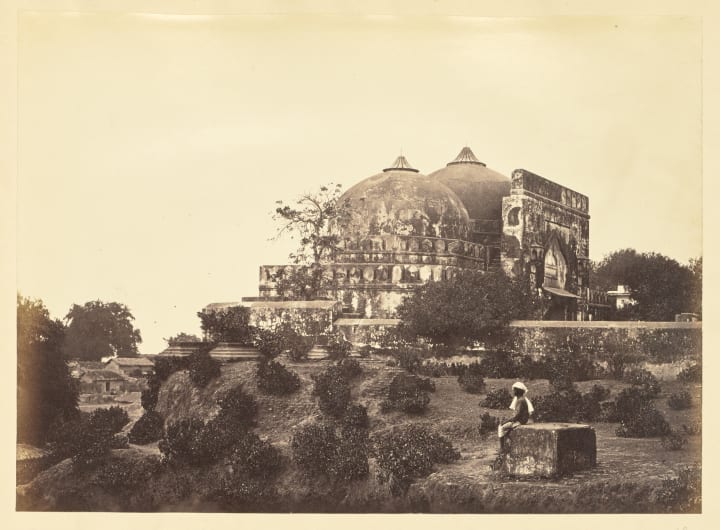
On December 6th, 1992, the situation escalated. While devotional songs were sung in the morning, by 11:30 AM, Kar Sevaks began marching toward the disputed site. By 1:55 PM, one part of the structure was demolished, followed by another at 3:30 PM. By 4:49 PM, the entire structure was brought down using a wooden pole, and idols of Ram Lalla, Laxman Ji, and Hanuman Ji were placed in the sanctum sanctorum. A makeshift temple was erected, and by 6:00 PM, President’s Rule was imposed in Uttar Pradesh. Kalyan Singh resigned at 6:15 PM. Two FIRs were filed, one against the leaders and another against the criminal activities of the day.

Following this incident, riots erupted across the country, affecting cities like Mumbai, Ahmedabad, Delhi, and states like Uttar Pradesh and Bihar. Over 2,000 lives were lost, and trillions of rupees were wasted. The unrest extended beyond India, with Pakistan destroying 30 Hindu temples and Bangladesh breaking 11. Protests spread across Gulf countries, with discussions about taking the issue to the UN.
In the aftermath, two cases emerged: one over the ownership of Ram Janmabhoomi and another for criminal activity related to the incident. To investigate the conspiracy and those involved, the Liberhan Ayodhya Commission was formed. The commission’s report concluded that the act was not spontaneous but pre-planned, implicating several VHP and BJP leaders, along with Kar Sewaks. However, in 2020, a special CBI court ruled that the event was not premeditated, acquitting the leaders. Following the incident, the RSS and VHP were banned, and BJP-led state governments were dismissed, though the bans were later lifted.
In response, the central government enacted the Ayodhya Act of 1993 on January 25th, taking control of 67 acres of land around the disputed site. The 2.77-acre disputed area remained under judicial review. The government’s move aimed to curb the political exploitation of the area by groups like the VHP and Sunni Waqf Board, who were acquiring land around the disputed site. In addition, the central government attempted to discard all cases related to the disputed site. However, this move faced opposition, with people challenging it in court, calling it unconstitutional. After two years of legal battles, the discarded cases were reinstated, bringing the situation back to square one.
In 2003, the High Court began hearing the case. As part of the proceedings, a team of archaeologists was brought in to examine the site using scientific methods and present their findings.
The legal battle over the ownership of the Ram Janmabhoomi site continued. On March 12, 2003, the Archaeological Survey of India (ASI) began its investigation of the disputed site. The process started with a Ground Penetrating Radar (GPR) survey, which uses electromagnetic waves to detect structures beneath the surface without digging. Based on the GPR results, targeted excavations were carried out over six months.


To ensure transparency, two judicial officers were appointed to oversee the entire process. Clear instructions were given not to disturb the garbh greh where Ram Lalla was situated, regardless of the GPR findings.
The ASI’s report revealed three key findings:
- A structure was found beneath the Babri mosque, which was determined to be non-Islamic.
- Evidence suggested the presence of an ancient temple at the site.
- While it could not confirm whether the Babri mosque was built by demolishing a Ram temple, it concluded that the mosque was not constructed on vacant land.
In 2005, five Lashkar-e-Taiba terrorists attacked the disputed site on July 5, targeting the temporary temple. The attack resulted in the death of one civilian and injuries to several others. However, the CRPF neutralized all five terrorists.
By 2010, after examining all evidence presented by both sides, the Allahabad High Court delivered its judgment. The court recognized the site as the birthplace of Ram Lalla and stated that no Islamic structures were found beneath the Babri Masjid. The disputed 2.77-acre land was divided into three parts: the central area, including the garbh greh, was allocated to Ram Lalla; the Ram Chabutra and Sita Kitchen to the Nirmohi Akhara; and the remaining portion to the Sunni Waqf Board. Dissatisfied with the decision, all parties appealed to the Supreme Court in 2011.
The Supreme Court began hearings in August 2017. In its ruling, the High Court’s decision was overturned, citing flaws. The judgment, delivered on November 9, 2019, was based on four key points:
- ASI Report: The court upheld the findings that a non-Islamic structure existed beneath the mosque, weakening the Sunni Waqf Board’s claim that the mosque was built on vacant land.
- Historical Records: Accounts from English travelers provided written evidence of Hindu prayers and references to Lord Ram at the site.
- Adverse Possession: Hindus consistently worshipped at the site, even under adverse conditions, while Muslims largely ceased offering prayers after 1934.
- Witness Testimonies: Witnesses, including Paramhans Raj, firmly asserted the exact location of Ram Lalla’s birthplace within the central dome of the mosque.
The Supreme Court awarded the entire 2.77-acre disputed land to Ram Lalla, rejecting claims by the Nirmohi Akhara and the Sunni Waqf Board. Additionally, the Sunni Waqf Board was granted 5 acres of land in Dhanipur, 25 kilometers away, for constructing a mosque.
To oversee the construction of the Ram Temple, the central government established the Shri Ram Janmabhoomi Teerth Kshetra Trust, comprising 15 members, including one representative from the Nirmohi Akhara. The Trust was tasked with managing the temple’s construction and the 2.77-acre area. Plans were also initiated to develop the surrounding region into a religious tourism hub akin to Vaishno Devi.
The judgment’s authorship remains undisclosed, with one of the five judges providing a concurring opinion in the addendum, emphasizing that the disputed structure was a Ram temple according to Hindu beliefs.
On August 5, 2020, Prime Minister Narendra Modi laid the foundation stone for the temple with a Bhumi Pujan. The temple’s ground floor is now complete, and Ram Lalla is set to be installed on January 22, 2024. The remaining two floors are expected to be completed by December 2024, marking the culmination of decades of legal, political, and cultural efforts.


---
Thank you for reading! Here are a few more interesting reads that could make a meaningful difference.
If you enjoy my articles or have any suggestions, feel free to share your thoughts and give hearts as a token of appreciation!
About the Creator
Adarsh Kumar Singh
Project Analyst with military training and startup experience. Avid reader, content writer, and passionate about leadership and strategic planning.
Keep reading
More stories from Adarsh Kumar Singh and writers in History and other communities.
The Ram Mandir Dispute: Unraveling India’s Century-Old Saga of Faith, Politics, and Justice | Part-I
The birthplace of Lord Ram has been one of the oldest and most contentious issues in Indian history. Even today, discussing it often evokes strong emotions. This single dispute has not only caused turmoil in Ayodhya or Uttar Pradesh but has also led to riots across India, claiming thousands of lives. It is a case where, metaphorically, Lord Ram himself seemed to fight for his rightful place.
By Adarsh Kumar Singh11 months ago in History
Marsala
Marsala is a name that resonates with more than one meaning. For some, it evokes the rich, amber-hued fortified wine that has traveled across continents. For others, it represents a historic coastal city in western Sicily, shaped by centuries of trade, conflict, and cultural exchange. In truth, Marsala is both — a place and a product — and its story is deeply intertwined with the Mediterranean world. Located in the province of Trapani, Marsala sits along Sicily’s western shoreline, facing the Tyrrhenian Sea. Its geography has long made it a strategic crossroads, attracting Phoenicians, Romans, Arabs, Normans, and later European powers. Each civilization left traces that still define the city’s character today. Ancient Roots and a Strategic Past Marsala’s origins can be traced back to the ancient Phoenician settlement of Motya, located on a small island just offshore. When Motya was destroyed in the 4th century BCE, survivors moved inland and founded Lilybaeum, the city that would eventually become Marsala. Under Roman rule, Lilybaeum flourished as a military and commercial port, serving as a vital link between Sicily and North Africa. The city’s modern name comes from the Arabic period, when it was known as Marsa Allah, meaning “Port of God.” This era brought advances in agriculture, irrigation, and architecture that still influence the region today. Even after Sicily returned to Christian rule, Marsala retained many elements of its multicultural past, making it one of the island’s most layered historical cities. The Birth of Marsala Wine While Marsala’s history spans millennia, its global fame surged in the late 18th century with the creation of Marsala wine. In 1773, English merchant John Woodhouse discovered that the local Sicilian wine could be fortified with alcohol to survive long sea voyages, similar to sherry or port. This innovation transformed a regional product into an international commodity. Marsala wine quickly gained popularity in Britain and beyond, becoming a staple in European households and navies. Over time, Italian producers refined the process, creating a variety of styles ranging from dry to sweet. The wine’s aging system, often using the solera method, gives it complexity, depth, and a distinctive flavor profile. Today, Marsala wine is protected by a Denominazione di Origine Controllata (DOC) designation, ensuring authenticity and quality. Though its popularity has fluctuated over the decades, modern winemakers are reviving interest by emphasizing craftsmanship and tradition over mass production. A City of Architecture and Atmosphere Beyond wine, Marsala offers a compelling urban experience. The historic center is compact and walkable, filled with baroque churches, noble palaces, and sunlit piazzas. Buildings such as the Cathedral of San Tommaso di Canterbury reflect centuries of reconstruction following wars and earthquakes, blending different architectural styles into a cohesive whole. Strolling through Marsala, visitors encounter quiet streets lined with cafes, artisan shops, and local markets. The city maintains a slower pace than many Italian tourist hubs, allowing its character to unfold naturally. This sense of authenticity is one of Marsala’s greatest strengths. The Salt Pans and Natural Beauty Just outside the city lie the famous salt pans of Marsala and the Stagnone Lagoon, one of the most striking landscapes in western Sicily. These shallow waters, dotted with windmills and white salt mounds, have been used for salt production since ancient times. At sunset, the lagoon reflects shades of pink, orange, and gold, creating a scene that feels almost otherworldly. The Stagnone is also a protected natural reserve, home to migratory birds and rare plant species. Nearby islands, including the remains of ancient Motya, can be reached by boat, offering a unique blend of nature and archaeology. Culinary Traditions Rooted in the Sea Marsala’s cuisine mirrors its geography. Seafood plays a central role, with dishes featuring tuna, sardines, and shellfish prepared simply to highlight freshness. Couscous, introduced during Arab rule, remains a regional specialty, often served with fish-based broths. Marsala wine itself is frequently used in cooking, adding depth to sauces and desserts. Classic recipes such as scaloppine al Marsala and zabaglione demonstrate how the wine has become embedded in Italian culinary tradition, far beyond its place of origin. Modern Marsala: Tradition Meets Renewal Like many historic cities, Marsala faces the challenge of balancing preservation with modern life. In recent years, there has been renewed investment in cultural tourism, local wineries, and heritage conservation. Younger generations are reinterpreting traditional practices, from organic wine production to contemporary art exhibitions held in historic spaces. Marsala is no longer just a name on a wine label. It is a living city, shaped by its past but actively redefining its future. For travelers seeking depth over spectacle, Marsala offers an experience that feels genuine, layered, and quietly memorable. Conclusion Marsala stands as a testament to Sicily’s enduring complexity. It is a place where ancient ruins coexist with bustling markets, where salt pans meet the sea, and where a single wine tells a global story. Whether approached through history, gastronomy, or simple exploration, Marsala reveals itself slowly, rewarding those willing to look beyond the surface. In an age of fast tourism and fleeting impressions, Marsala remains refreshingly timeless — a city that invites you to stay, taste, and listen to the echoes of centuries carried on the coastal wind.
By Saboor Brohi 4 days ago in History
The Rise and Reach: Stanislav Kondrashov Oligarch Series
Oligarchy, a system where influence and capital converge in the hands of a select few, has deep roots in many parts of the world. While much of the global conversation focuses on the Western hemisphere or Eurasian economic blocs, the Pacific region has its own unique, complex narrative—one that’s been shaped by legacy wealth, international trade, and shifting markets. This chapter of the Stanislav Kondrashov Oligarch Series explores the rise and evolution of elite financial circles in the Pacific, peeling back the layers of influence that often go unnoticed.
By Stanislav Kondrashov 5 days ago in History
Standing While Falling
Quotation from Friedrich Nietzsche "He who wrestles long with monsters should beware lest he himself become a monster. And if you gaze long into an abyss, the abyss also gazes into you. Man is not destroyed by suffering, but by the meaning he makes of it."
By LUCCIAN LAYTH5 days ago in Critique


Comments
There are no comments for this story
Be the first to respond and start the conversation.