
The Last Empire of Diamonds: De Beers and the Invention of ‘Forever’
How marketing transformed carbon into the world’s most desired symbol of love.

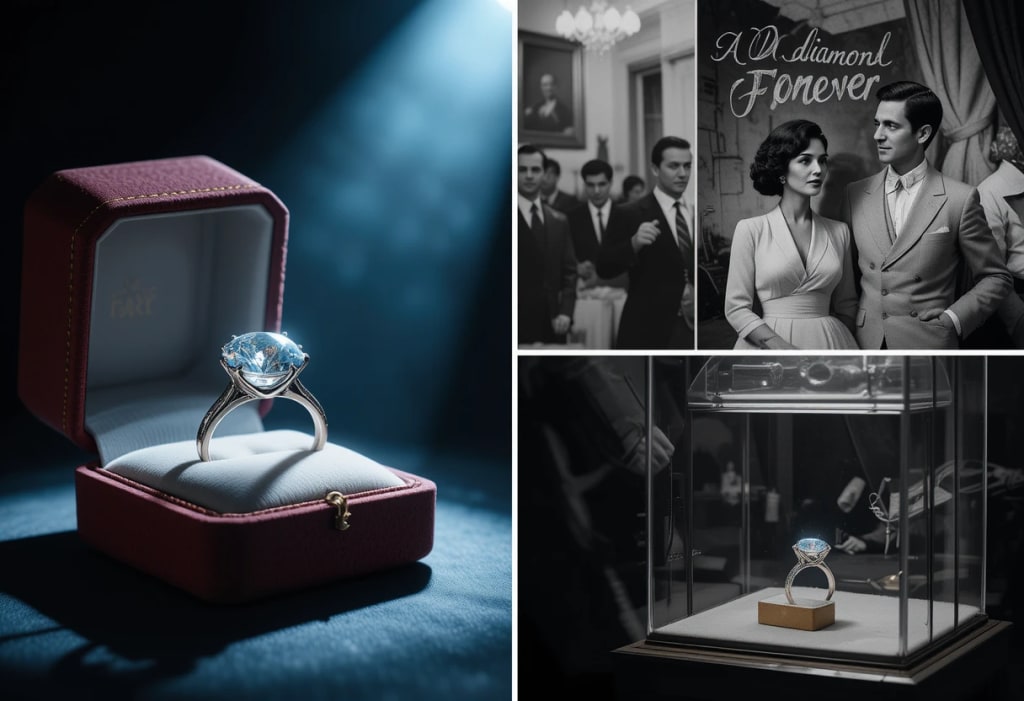
The Last Empire of Diamonds: De Beers and the Invention of ‘Forever’
How marketing transformed carbon into the world’s most desired symbol of love.
Diamonds are among the hardest substances on earth, forged under unimaginable pressure deep beneath the surface of the planet. And yet, their place in human society has less to do with geology and more to do with marketing.
The truth is unsettling: diamonds were not always the ultimate symbol of love, nor were they historically the standard token of marriage. That transformation came from the genius — and ruthlessness — of De Beers, the company that built an empire on the promise of “forever.”
The Discovery That Sparked an Empire
The story begins in the late 19th century, in the dusty hills of Kimberley, South Africa. When miners struck massive diamond deposits in 1867, the global supply of diamonds, once rare and reserved for royalty, suddenly threatened to flood the market.
Enter Cecil Rhodes, an ambitious businessman who founded De Beers Consolidated Mines in 1888. His vision was simple: control supply to control value. By buying up mines and consolidating production, De Beers became the gatekeeper of diamonds. For decades, they maintained an iron grip, controlling as much as 90% of the world’s diamond trade.
But mining was only half the battle. To truly make diamonds priceless, De Beers needed to create demand.
The Marketing Masterstroke
By the 1930s, diamonds were losing their luster. The Great Depression had made them seem frivolous, and sales declined. De Beers turned to the American advertising firm N.W. Ayer & Son, who were tasked with a bold mission: make diamonds not just desirable, but essential.
In 1947, copywriter Frances Gerety penned four words that would change history:
“A Diamond is Forever.”
This slogan, ranked as the greatest of the 20th century by Advertising Age, was more than marketing. It was psychology. It tied diamonds to the permanence of love, to marriage, to eternity itself.
Suddenly, proposing without a diamond seemed unthinkable.
How Desire Was Manufactured
The brilliance of De Beers’ campaign lay in its subtlety. Instead of flashy product ads, they embedded diamonds into culture itself. They placed rings on Hollywood stars, scripted movie proposals, and influenced magazine features. Diamonds became not just jewelry, but a ritual.
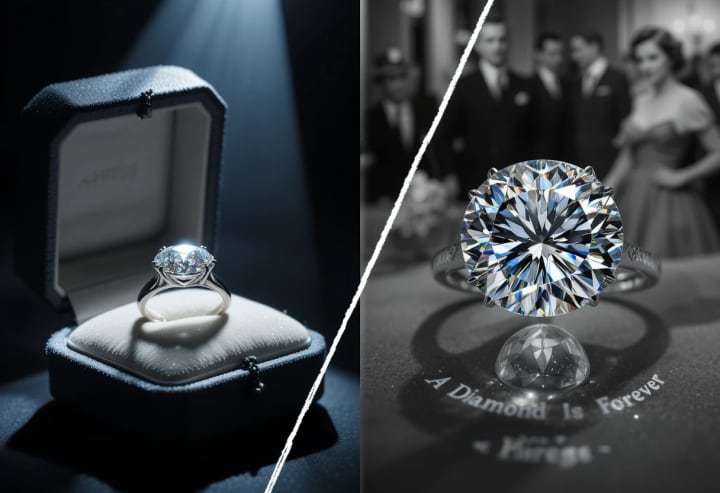
The Two-Month Salary Rule: De Beers promoted the idea that a man should spend two months’ salary on an engagement ring. This “rule” was not tradition but invention — a clever way to tie financial sacrifice to romantic devotion.
Celebrity Endorsements Before Social Media: From Marilyn Monroe singing “Diamonds Are a Girl’s Best Friend” to Elizabeth Taylor’s legendary gems, diamonds became symbols of glamour and passion.
Generational Legacy: Advertisements framed diamonds as heirlooms, passed from mother to daughter, solidifying the idea that a diamond ring was not just a purchase but an inheritance of love.
By the mid-20th century, diamonds were firmly entrenched as the universal language of commitment.
The Economics of Scarcity
The genius of De Beers was not only in marketing but in market manipulation. They stockpiled diamonds, releasing them slowly to keep prices artificially high. For decades, they maintained a near-monopoly, ensuring that diamonds — though geologically abundant — remained symbolically rare.
This artificial scarcity, combined with emotional advertising, created one of the most successful illusions in business history: that diamonds were both limited and eternal.
Cracks in the Facade
In recent decades, the empire has faced challenges. Antitrust lawsuits in the United States forced De Beers to restructure. The rise of competitors in Russia, Canada, and Australia weakened their grip on supply.
Then came lab-grown diamonds — chemically identical to mined ones, but often cheaper and ethically sourced. For younger generations concerned with sustainability, the romance of a mined stone is fading.
Still, De Beers has fought back, positioning natural diamonds as rarer and more “authentic” than their lab-grown counterparts. The marketing war continues, and the diamond retains its symbolic power.
The Cultural Legacy of ‘Forever’
Despite shifts in markets and morals, the fact remains: De Beers permanently altered how the world views love and commitment. Before their campaign, engagement rings varied widely — sapphires, rubies, even pearls were common. After, diamonds became non-negotiable.
Today, billions of people around the globe equate a diamond ring with romance, devotion, and status. Weddings, proposals, anniversaries — all are entwined with the glint of carbon crystallized under pressure.
It is one of the greatest feats of branding in history: taking something common in the earth’s crust and elevating it into the most enduring symbol of human emotion.
The Lasting Empire
Though De Beers no longer controls the diamond industry as it once did, its influence endures in every jewelry store window, every proposal, every sparkling Instagram post tagged #engaged.
The empire of diamonds is not just about stones. It is about stories — of love, of aspiration, of eternity.
In that sense, the slogan still holds true.
Because while diamonds themselves may be plentiful, the myth De Beers created is forever.
About the Creator
Keep reading
More stories from waseem khan and writers in History and other communities.
The Ghost of Coco Chanel: How One Woman Reinvented Fashion Forever
The Ghost of Coco Chanel: How One Woman Reinvented Fashion Forever The dark, glamorous, and complicated legacy of Chanel. The name Coco Chanel lingers in the world of fashion like a ghost — ever-present, elusive, and immortal. To this day, her designs define elegance, her fragrance whispers of timeless femininity, and her persona embodies both brilliance and controversy. More than a designer, Chanel was a revolution, a woman who dared to dismantle the corseted cages of her era and replace them with freedom, power, and allure.
By waseem khan5 months ago in History
The Quiet Name on Maple Street
Kim Jong-un was born into a world unlike almost any other—a world sealed by borders, ideology, and secrecy. As the grandson of Kim Il-sung, the founder of North Korea, and the son of Kim Jong-il, the country’s second leader, Kim Jong-un entered life already wrapped in destiny. In North Korea, leadership is not chosen by ballots or debate; it is inherited like a crown, reinforced by loyalty, fear, and an unyielding political system.
By The best writer 3 days ago in History


Comments
There are no comments for this story
Be the first to respond and start the conversation.