
🍯 The Great Molasses Flood of Boston, January 15, 1919: A Sticky Catastrophe That Swept Through the Streets and Caused Multiple Fatalitie
📒Chaos in Boston

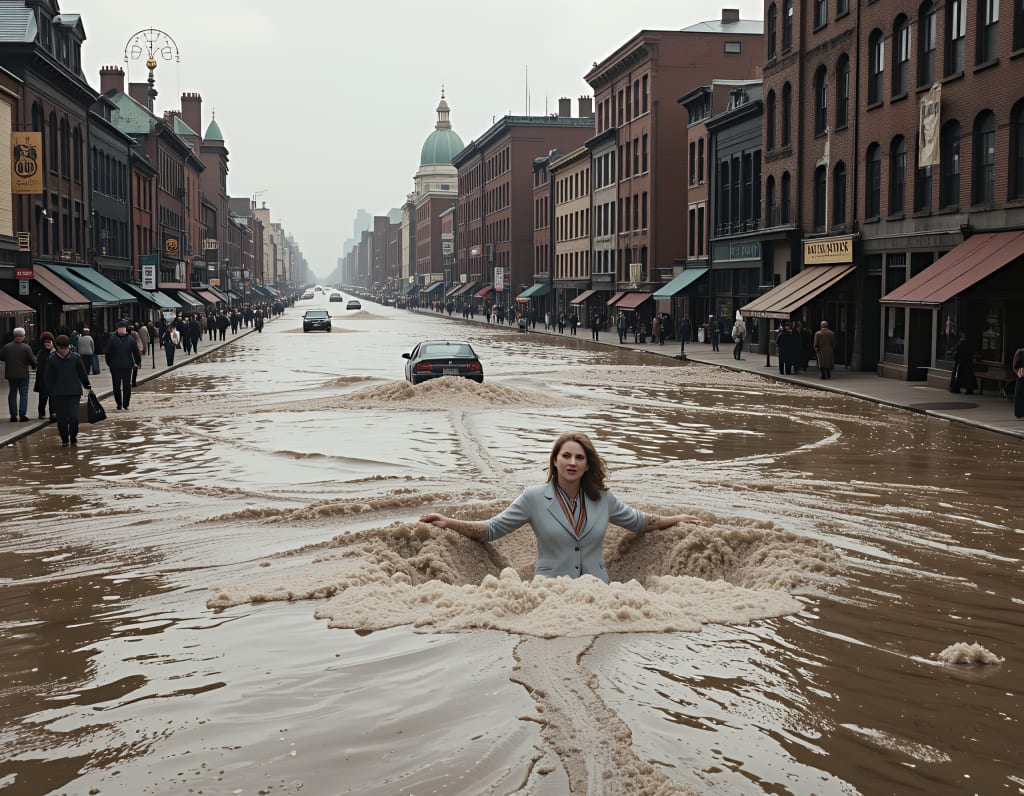
🌇 Part 1: Boston at Boiling Point - The City Before the Flood
To understand how a flood of molasses could destroy part of a city and take lives, we must first travel back to Boston in the winter of 1919 - a city full of contradictions, opportunity, and unrest. The Great War had just ended in November 1918, and like many American cities, Boston was adjusting to the uneasy transition from wartime industry to peacetime life. Amid economic shifts, labor strikes, political radicalism, and the tail-end of a deadly flu pandemic, tension simmered in the air.
The North End, one of Boston's oldest and most tightly packed neighborhoods, was a bustling immigrant hub. Italians, Irish, Jews, and other working-class families lived in tight quarters, side by side with shipyards, railways, and rumbling elevated train tracks. It was gritty, loud, and full of energy - but also overcrowded, under-served, and vulnerable to industrial hazards.
At the center of this looming disaster stood an unlikely villain: molasses. Thick, brown, sweet, and sticky, molasses was used not only in baking and candy but, more significantly at the time, as a base for producing industrial alcohol - essential for everything from munitions to rum. With Prohibition just around the corner, molasses was both a staple and a highly profitable commodity.
Enter the United States Industrial Alcohol Company (USIA), which had been using molasses to supply wartime needs and looked to expand its postwar operations. On the waterfront at Commercial Street, they built a massive steel tank in 1915, 50 feet tall and 90 feet in diameter, capable of holding more than 2.3 million gallons (8.7 million liters) of molasses. That's enough to fill more than 3 Olympic-sized swimming pools.
From the beginning, the tank was flawed. Neighborhood children reported hearing it groan and creak when it was full. Workers noticed leaks and patched them with tar. In winter, molasses thickened into a slow-moving sludge, but in summer, it expanded, hissed, and bubbled. No one, however, seriously considered what would happen if the entire thing failed - until it did.
🛢️ Part 2: The Steel Giant - A Faulty Tank with a Deadly Secret
The steel tank that loomed over the North End had been constructed with astonishing speed - and shocking negligence. The USIA was eager to store molasses in Boston, partly because of the proximity to port facilities and railway lines, but also to process alcohol before the looming Prohibition amendment was ratified. Time was money, and safety came second.
The tank was built in just a few months and was never tested properly for structural integrity. The steel used was too thin for a tank of its size and lacked the proper manganese content that would've helped make it more flexible and crack-resistant in cold weather. There were no engineering drawings submitted to the city, and the structure wasn't inspected thoroughly - common practice in the unregulated world of early 20th-century American industry.
As early as the day it was filled, residents noticed something strange. A low moaning came from the tank walls when full. Molasses oozed from its seams so frequently that children would collect it in cups. Employees even painted the leaking areas brown to camouflage the seeping syrup. The problems were known, but profits mattered more than structural soundness.
On January 13, 1919, a new shipment of molasses arrived from the Caribbean - unseasonably warm compared to Boston's cold winter air. The tank was filled nearly to capacity. That warm molasses settled atop colder syrup inside the tank, creating pressure, fermentation, and gas buildup. Two days later, without warning, the steel giant could take no more.
At 12:40 p.m. on January 15, 1919, with a sound described as a machine gun fire of rivets popping, the tank burst open.
🌊 Part 3: The Wave - 2.3 Million Gallons of Chaos
What followed was unlike anything Boston - or the world - had ever seen.
With a thunderous roar, the tank exploded outward, sending a wave of molasses 25 feet (7.6 meters) high and moving at an estimated 35 mph (56 km/h) through the streets. It wasn't just thick - it was unstoppably thick. Weighing more than 13,000 tons, the wall of syrup tore through everything in its path: buildings, horses, lampposts, railcars, and people.
A nearby firehouse was crushed. A horse-drawn wagon was thrown against a telegraph pole. Rail lines were bent into twisted iron snakes. Men, women, and children were knocked off their feet or sucked into the dark, syrupy mass. Many suffocated, trapped under debris and molasses that hardened with the cold air.
The Boston Elevated Railway's tracks were twisted and a train was nearly derailed. A truck was hurled into the harbor. Horses screamed as they were trapped and drowned. People who had no idea what hit them found themselves coated in syrup, gasping for breath, trying to wade through a flood that behaved more like lava than water.
Rescue was nearly impossible. Police, firefighters, sailors, and civilians rushed to help, but the molasses slowed everything. One officer sank so deep he nearly suffocated. It clung to skin and clothing, and hardened in the cold, making every movement a desperate effort.
In the end, 21 people were killed, and over 150 injured. The victims were crushed, drowned, or suffocated. Bodies were so hard to find that weeks passed before all the dead were accounted for. Even dogs and cats weren't spared. One man was found under a slab of concrete two blocks from the tank site. Another victim, a 10-year-old boy named Pasquale Iantosca, was simply out playing when the wave hit.
The city was stunned. The North End, already marginalized, was now traumatized.
🧹 Part 4: The Sticky Aftermath - Cleanup, Anger, and a Landmark Trial
Once the flood receded, Boston was left with a mess of biblical proportions. Streets, buildings, and basements were coated with a thick, sticky film. Cleaning up took over 87,000 man-hours. Firefighters hosed down buildings. Crews used saltwater and sand to break up the hardened molasses. Horses' hooves had to be scrubbed individually.
The harbor itself was stained brown for months. Downtown Boston became known as "Smell City" for weeks as molasses clung to cobblestones, streetcars, and walls. Even faraway locations reported sticky fingerprints as the molasses was spread by cleanup crews and gawking visitors.
But the aftermath wasn't just physical. Public outrage grew. Residents of the North End - many poor, immigrant families - had lost loved ones, property, and livelihoods. They demanded accountability. For the first time in U.S. history, a class-action lawsuit was brought against a powerful company for negligence.
The trial lasted over five years, with over 1,000 exhibits and 1,500 pages of testimony. USIA blamed anarchists, sabotage, and everything except poor engineering. But the evidence was overwhelming: the tank was faulty, poorly inspected, and carelessly managed.
In 1925, the court ruled that the United States Industrial Alcohol Company was responsible, and they were ordered to pay more than $600,000 in damages (about $10 million today). It was a landmark ruling for corporate liability and helped pave the way for modern building codes and safety regulations.
Today, the Great Molasses Flood might sound like a joke - but for the families of the victims and the people of Boston, it was a true tragedy. It exposed the consequences of corporate greed, government oversight failure, and the dangers of rapid industrial expansion.
In the decades since, the story of the flood has become part of Boston folklore. Schoolchildren still learn about it. Writers, comedians, and historians have all reexamined it as an example of how absurd and devastating real-life disasters can be.
At Langone Park in the North End - once the site of the doomed tank - a small plaque marks the event. Locals still say that on hot days, you can smell molasses in the cracks of the pavement. Whether legend or truth, it serves as a sticky reminder of the past.
What's remarkable is not just the tragedy itself, but how it transformed legal history. The flood helped usher in better building inspection practices, engineering requirements, and corporate accountability. It turned a humble sweetener into a case study in industrial catastrophe.
And all because someone rushed a molasses tank.
About the Creator
Kek Viktor
I like the metal music I like the good food and the history...
Keep reading
More stories from Kek Viktor and writers in History and other communities.
🐖The Pig War on the US–Canada Border, 1859: A Territorial Dispute Triggered by the Killing of a Single Pig
🏞 Part 1: A Snoutful of Trouble - The Pig That Started It All In the otherwise quiet and pastoral June of 1859, San Juan Island - then an unsettled jewel in the Pacific Northwest's emerald crown - became the unlikely battleground for a bizarre territorial standoff between two of the world's most powerful nations: the United States and Great Britain. San Juan Island, lush with cedar forests, rugged coastlines, and fertile grazing fields, was inhabited by a small but tense mix of British employees of the Hudson's Bay Company and independent American homesteaders drawn west by the promise of land and opportunity.
By Kek Viktor8 months ago in History
3 Times Safety Rules Were Written After It Was Already Too Late
Safety rules like to pretend they are proactive. They wear reflective vests, carry clipboards, and speak confidently about prevention. But history knows the truth: many safety rules were written after something went catastrophically wrong, when prevention was no longer an option and regret had already filled out the paperwork.
By Enoch Saginiabout 23 hours ago in History
The Titanic Mystery: Secrets Beneath the Frozen Sea
On the night of April 14, 1912, the RMS Titanic sailed calmly through the dark waters of the North Atlantic, carrying more than 2,200 souls and the dreams of a modern world that believed it had conquered nature. Labeled “unsinkable,” the Titanic was the pride of human engineering. Yet before dawn broke, the great ship lay shattered beneath miles of icy ocean. More than a century later, the Titanic remains not just a tragedy—but a mystery filled with unanswered questions.
By The best writer 6 days ago in History
How to Succeed at the Benson Directory®
Congratulations and welcome to the Benson Directory® employee #22391! As our newest call handler, you will have the privilege of speaking with dozens of unique and interesting people on a daily basis as well as the opportunity to earn bonuses for high performance. Contained within this handbook you will find a set of ease to follow instructions designed to help you settle in to your new role and begin paving the way to success.
By S. A. Crawford3 days ago in Fiction



Comments
There are no comments for this story
Be the first to respond and start the conversation.