
🐖The Pig War on the US–Canada Border, 1859: A Territorial Dispute Triggered by the Killing of a Single Pig
🛡️📙A story from American history

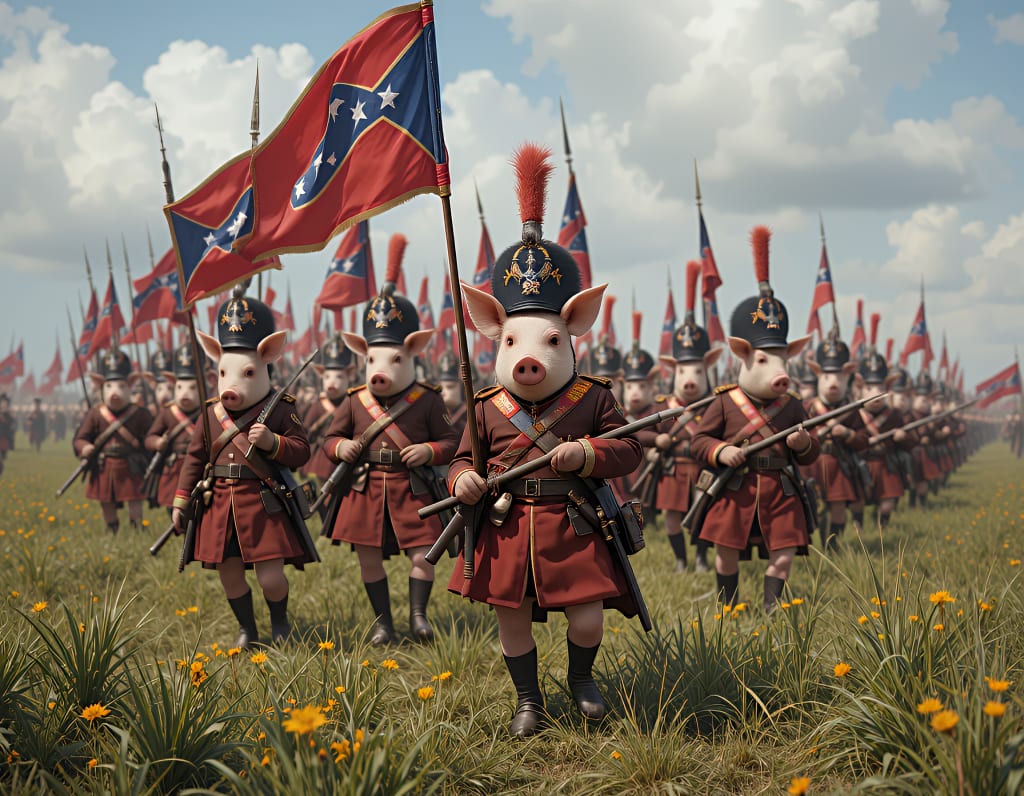
🏞 Part 1: A Snoutful of Trouble - The Pig That Started It All
In the otherwise quiet and pastoral June of 1859, San Juan Island - then an unsettled jewel in the Pacific Northwest's emerald crown - became the unlikely battleground for a bizarre territorial standoff between two of the world's most powerful nations: the United States and Great Britain. San Juan Island, lush with cedar forests, rugged coastlines, and fertile grazing fields, was inhabited by a small but tense mix of British employees of the Hudson's Bay Company and independent American homesteaders drawn west by the promise of land and opportunity.
At the center of the uproar was a black Berkshire boar owned by Charles Griffin, an Irishman and prominent member of the British community. Griffin's pig was not particularly malicious, but it had developed an unfortunate taste for potatoes - specifically, those growing in the garden of Lyman Cutlar, an American farmer and recent arrival to the island. Cutlar had moved to San Juan under the 1850 U.S. Donation Land Claim Act, which encouraged settlement in the Oregon Territory (a term that loosely encompassed much of the modern-day Pacific Northwest).
The pig had been causing trouble for some time, repeatedly invading Cutlar's garden and feasting on his potato crop. After several complaints and what Cutlar saw as a refusal by Griffin to contain the animal, he did what any irritated 19th-century frontiersman might: he shot it. One shot, one pig down - and one international incident ignited.
Griffin was incensed. He demanded $100 in compensation, which would be roughly $3,000 today - a staggering amount for a pig, even one of fine British stock. Cutlar offered a more modest $10. The disagreement spiraled. Griffin reported the matter to British authorities, who threatened to arrest Cutlar. Cutlar, in turn, called upon American officials for protection, setting into motion a sequence of events that transformed a minor grievance into an international dispute.
This was no ordinary spat over livestock. The island's murky legal status - a byproduct of ambiguities in the 1846 Oregon Treaty - meant that both the British and Americans believed they had rightful jurisdiction. That treaty had tried to resolve the broader U.S.-British territorial conflict in the Pacific Northwest, but the specific language about "the middle of the channel" left open which channel was intended, resulting in overlapping claims to the San Juan archipelago.
In short, the pig was simply the match that lit the fuse.
🗺️ Part 2: A Frontier in Flux - The Disputed Territory of San Juan Island
The Pig War cannot be fully understood without examining the foggy geopolitical backdrop that preceded it. The 1846 Oregon Treaty between the U.S. and Great Britain was meant to resolve long-standing disputes over the Pacific Northwest. The treaty settled on the 49th parallel as the international boundary from the Rockies to the sea - but as the two nations approached the complex maze of islands and channels between the mainland and Vancouver Island, clarity gave way to confusion.
The treaty vaguely declared that the border would run "through the middle of the channel which separates the continent from Vancouver's Island." But what exactly was "the" channel? To the Americans, the answer was the Haro Strait, which lay west of the San Juan Islands. To the British, it was the Rosario Strait to the east. Depending on the interpretation, San Juan Island fell either on American or British soil.
The ambiguity created a jurisdictional twilight zone, and settlers from both countries took advantage of the murk. The Hudson's Bay Company (HBC) staked early economic claims on the island, using it to graze sheep and assert a British presence. Meanwhile, American pioneers, many of them lured westward by land incentives and Manifest Destiny rhetoric, saw the island as ripe for homesteading.
In this tense, overlapping arrangement, even the smallest conflict could have dangerous ripple effects. The shooting of Griffin's pig was more than an isolated incident; it tapped into fears, resentments, and nationalistic fervor on both sides. Local British magistrates threatened legal action. American settlers, suspicious of British authority, feared arrests, loss of land, and British encroachment.
Thus, a potato patch became the site of imperial brinkmanship.
⚔️ Part 3: Sabers, Shovels, and Standoff - Military Escalation Begin
With tension mounting and trust eroding, the situation quickly turned from civil complaint to military confrontation. American settlers appealed to Brigadier General William S. Harney, commander of the U.S. Army's Department of Oregon, known for his combative tendencies and lack of subtlety. When Harney heard of the pig incident and the threatened arrest of an American citizen by British authorities, he reacted not with diplomacy but with troops.
Harney dispatched Captain George Edward Pickett - yes, the same Pickett who would later lead the infamous charge at Gettysburg - with 66 soldiers of the 9th Infantry to San Juan Island. On July 27, 1859, Pickett arrived, set up camp, and raised the American flag. His orders were clear: defend American settlers and assert U.S. sovereignty.
Pickett's arrival was met with alarm by British officials. Rear Admiral Robert L. Baynes, commander of British naval forces in the Pacific, responded by sending three warships to the island. British Royal Marines landed at the north end of the island. Over the next weeks, both sides increased their numbers - eventually swelling to nearly 500 British troops with artillery and over 400 American infantry and cavalry, dug in and ready.
What made the situation even more surreal was how both forces avoided the one thing they were trained for: battle. Despite being heavily armed and stationed just miles apart, neither side wanted to be the first to fire. Admiral Baynes famously declared that he would not "involve two great nations in a war over a squabble about a pig." Still, trenches were dug, cannons aimed, sentries posted. It was the 19th-century version of a nuclear standoff - without the nukes, and with a pig instead of a bomb.
🕊️ Part 4: Diplomacy and Joint Occupation - From Potential War to Peculiar Peace
News of the standoff quickly made its way to Washington and London, where political leaders were horrified that a small-scale dispute might escalate into a full-blown war. President James Buchanan, who had plenty of other headaches (including looming secession), sent one of America's most seasoned military diplomats: General Winfield Scott, known for his cool head and experience in diffusing border disputes.
Scott arrived in the Pacific Northwest and began direct negotiations with British colonial officials. His calm demeanor and deft diplomacy led to a compromise: a joint military occupation of San Juan Island until the border issue could be settled through diplomatic means.
Beginning in late 1859, both nations stationed troops on the island - but under strict orders to avoid provocation. The British established their camp at the north end, the Americans at the south. Remarkably, the soldiers quickly went from potential enemies to drinking buddies. They hosted joint dances, celebrated holidays together, played cricket and baseball, and visited each other's camps. It became perhaps the most polite military occupation in history.
This unusual status quo lasted not months, but 12 years. For over a decade, the two powers shared the island in a delicate balance of peaceful cohabitation, even as the Civil War came and went in the United States and the British Empire continued expanding elsewhere.
The Pig War's final act came not through gunpowder but arbitration. In 1871, the United States and Great Britain agreed to resolve lingering disputes through the Treaty of Washington, which included submitting the San Juan boundary question to a neutral third party: German Emperor Wilhelm I.
Wilhelm appointed a three-person commission to examine both sides' claims. After reviewing documents, maps, testimonies, and years of occupation history, the commission sided with the Americans. On October 21, 1872, they ruled in favor of the Haro Strait as the rightful boundary. San Juan Island was formally awarded to the United States.
The British withdrew peacefully, and the stars and stripes were raised without a shot being fired. Thus ended the Pig War - a war in which the only casualty was a pig, and which might be the most civilized example of saber-rattling in history.
Today, visitors to San Juan Island can explore both the American and British camps, now part of the San Juan Island National Historical Park. Interpretive trails, preserved buildings, and historical markers tell the story of a near-war that instead became a symbol of diplomacy done right.
The pig may be long gone, but its legacy remains: a reminder that even the pettiest of provocations can spiral into international crisis - but also that rational minds and peaceful intentions can prevail, even amid cannon and chaos.
About the Creator
Kek Viktor
I like the metal music I like the good food and the history...
Keep reading
More stories from Kek Viktor and writers in History and other communities.
🏰The Defenestrations of Prague, 1419 and 1618: Political Assassinations by Throwing People Out of Windows That Sparked Wars
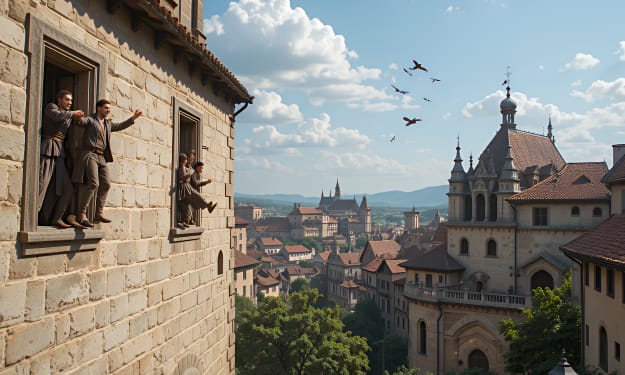
Part 1: Introduction - What Is a Defenestration? The term defenestration may sound peculiar to modern ears, but it holds a deeply significant place in European history - particularly in the Czech lands. Derived from the Latin words de- ("down from" or "away") and fenestra ("window"), defenestration simply means the act of throwing someone out of a window. Though seemingly straightforward, this term encapsulates a rare yet dramatic form of political violence that became emblematic of Prague's turbulent religious and political struggles during the late Middle Ages and the early modern period.
By Kek Viktor8 months ago in History
How Case Documents Are Maintained in Philadelphia County
Case documentation forms the backbone of judicial accountability in Philadelphia County. Every filing, order, transcript, and judgment plays a defined role in preserving procedural accuracy and historical reference. The methods used to preserve these materials reflect long-standing legal standards combined with structured administrative practice. This article explains how case documents are created, organized, stored, reviewed, and preserved within Philadelphia County, with a clear focus on factual processes rather than commentary or promotion.
By Owen Perryabout 23 hours ago in History
The Quiet Collapse of Global Arms Control
The Quiet Collapse of Global Arms Control For decades, arms control agreements helped prevent the world’s most powerful weapons from spiraling out of control. Treaties limited nuclear stockpiles, increased transparency, and built fragile trust between rival states. Today, that system is quietly unraveling—and its collapse may define the next era of global insecurity.
By Wings of Time about 15 hours ago in History



Comments
There are no comments for this story
Be the first to respond and start the conversation.