
*The Forgotten Scroll*
Unearthing the Secrets That History Tried to Bury

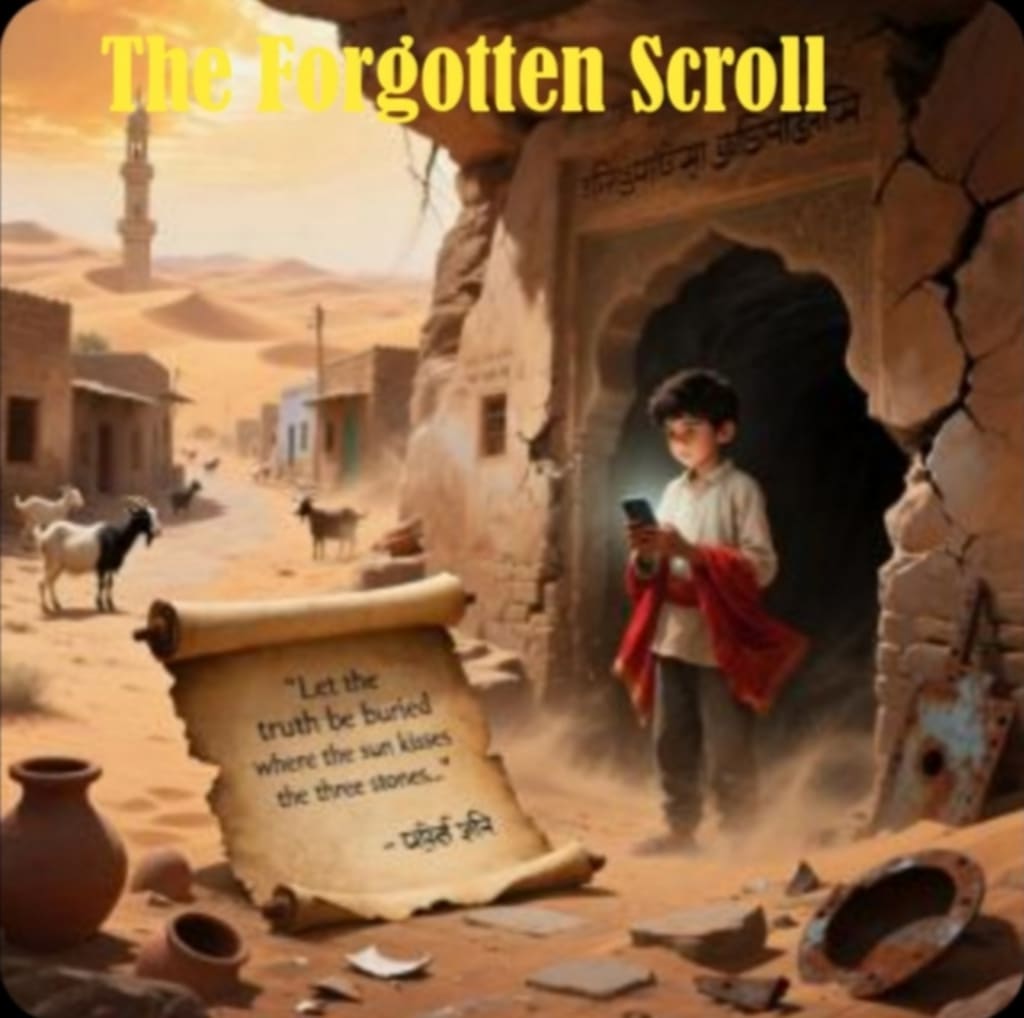
In the quiet, sun-scorched village of Kanodar, nestled on the fringes of the Thar Desert, life moved slowly—like the shifting dunes after a windstorm. Dust coated the rooftops, goats wandered narrow lanes, and time seemed to pause between prayers and market calls. Here lived Ayaan, a seventeen-year-old with ink-stained fingers and a mind full of questions no textbook could answer.
His father taught history at the local school, reciting dates and dynasties with dutiful precision. But Ayaan wasn’t satisfied with rote memorization. He wanted the feel of history—the echo of footsteps in abandoned courtyards, the scent of old paper, the weight of a forgotten name carved into stone. While other boys chased cricket balls under the blistering sun, Ayaan wandered the outskirts of town, notebook in hand, sketching ruins and jotting down tales from elders who remembered stories their grandparents had whispered.
One sweltering afternoon, after a fierce sandstorm had torn through the region, Ayaan explored the remains of an ancient haveli—a crumbling sandstone mansion said to have belonged to a minor noble during the Rajput era. Most of it had long since collapsed, reclaimed by thorny shrubs and scorpions. But the storm had uncovered something new: a jagged crack in the wall, revealing moss-covered steps descending into darkness.
Curiosity pulled him down.
The air grew cooler as he stepped into a small chamber, his phone’s dim light flickering over cracked walls. Among shards of pottery and rusted iron lay a bundle wrapped in red silk, its threads brittle with age. His breath caught. With trembling hands, he unwrapped it.
It was a scroll.
The script was faded but legible—archaic Rajasthani mixed with Sanskrit. He recognized the royal seal: a sun rising over a lion, the insignia of Maharaja Suraj Singh of Jodhpur, a ruler mentioned only once in his schoolbook, dismissed as “insignificant.” But this decree told a different story.
It described a secret meeting in 1543 between the Maharaja and Prince Arif Khan, a Mughal governor’s son who had turned rebel, disillusioned by war and empire. Together, they forged a pact—not for power, but protection. They planned to shield desert villages from forced conscription and taxation, creating a network of hidden knowledge to preserve local medicine, astronomy, and language—even if kingdoms fell.
At the bottom, a single line stood out:
"Let the truth be buried where the sun kisses the three stones, until a seeker with honest eyes arrives."
Ayaan didn’t sleep that night. He sat on his rooftop, the scroll beside him, watching the stars blink above the desert. The next morning, he showed it to his father.
The old teacher read it in silence, then looked at his son with tears in his eyes.
“This isn’t just a document, Ayaan. It’s a voice from the past—talking directly to us.”
News spread quietly at first. Then came archaeologists from Jaipur. Then journalists. Then a team from Delhi’s National Archives. Carbon dating confirmed the scroll was over 470 years old. Its contents challenged long-held beliefs about Mughal-Rajput relations—revealing not just conflict, but rare moments of unity born from compassion.
Ayaan joined the search to find the "three stones." They studied old maps, consulted folk songs, and interviewed shepherds who knew the desert like their own palms. For weeks, nothing.
Then one evening, an elderly man named Gulab Singh appeared at Ayaan’s doorstep, leaning on a crooked staff.
“I heard you’re looking for stones that greet the sun,” he said. “My grandfather used to pray there. Called it Surya Prakash Sthal—the Place of First Light.”
He led them across dunes and dry riverbeds until they reached a lonely ridge. There, standing like silent sentinels, were three tall, black basalt stones—aligned so that at dawn, the sun’s rays passed between them, casting a golden path across the sand.
They dug carefully.
Beneath two meters of earth, they found a sealed chamber. Inside were clay tablets inscribed with cures for desert fevers, star charts mapping monsoon patterns, poems in dialects thought lost, and letters between villagers and scholars. It was a time capsule of resistance—not with swords, but with knowledge.
Historians called it “The Kanodar Archive.” Textbooks were revised. A small museum rose in the village square. Ayaan was honored by the state, but what stayed with him wasn’t the applause—it was the moment he held one of the tablets, feeling the fingerprints of someone who had lived centuries before, yet understood the same sky, the same thirst, the same hope.
Years passed. Ayaan studied archaeology, then history, traveling to remote corners of India—listening, preserving, honoring stories buried in silence. But every winter, he returned to Kanodar. And each morning, he walked to the three stones.
There, as the sun rose and touched the rock, he would sit quietly—listening.
Because history, he learned, isn’t loud.
It doesn’t shout from monuments or march in parades.
It whispers—in dust, in silence, in the courage of those who believed someone, someday, would care enough to listen.
And all it takes is one curious heart to bring the past back to life.
About the Creator
meerjanan
A curious storyteller with a passion for turning simple moments into meaningful words. Writing about life, purpose, and the quiet strength we often overlook. Follow for stories that inspire, heal, and empower.
Reader insights
Outstanding
Excellent work. Looking forward to reading more!
Top insights
Compelling and original writing
Creative use of language & vocab
Easy to read and follow
Well-structured & engaging content
Excellent storytelling
Original narrative & well developed characters
Expert insights and opinions
Arguments were carefully researched and presented
Eye opening
Niche topic & fresh perspectives
Heartfelt and relatable
The story invoked strong personal emotions
Masterful proofreading
Zero grammar & spelling mistakes
On-point and relevant
Writing reflected the title & theme
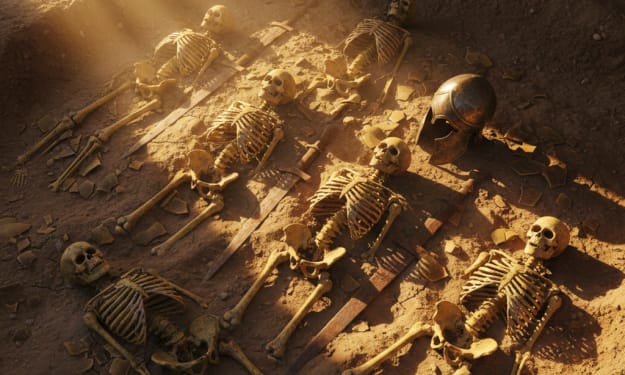
What Seven Soldier Skeletons Reveal About Their Lives.
History is often written by the victors, recorded in ink on parchment that celebrates grand strategies and royal decrees. However, the most honest account of war is frequently found beneath the earth, written in the very bones of those who fought it. When archaeologists uncover a mass grave—such as a recent discovery containing the remains of seven soldiers—they aren't just looking at the end of a life; they are opening a biological diary that spans decades.
By Irshad Abbasi about 2 hours ago in History
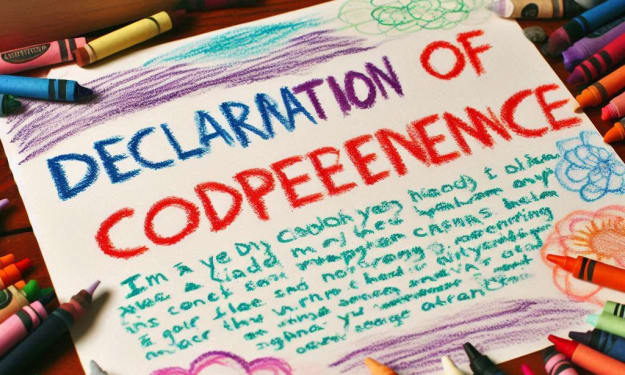
A Historic Declaration
We the People of the Husbands of the United States of America, in Order to form a more perfect Union, and I mean you...with me...establish Justice, insure domestic Tranquility, provide for the common defence, promote the general Welfare, and secure the Blessings of Liberty to ourselves, after Puberty, do ordain and establish this Declaration of Co-Dependence.
By Gerard DiLeo4 days ago in Humans


Comments
There are no comments for this story
Be the first to respond and start the conversation.