
The Battle of Waterloo (1815): The Event That Shaped European History
(1815)

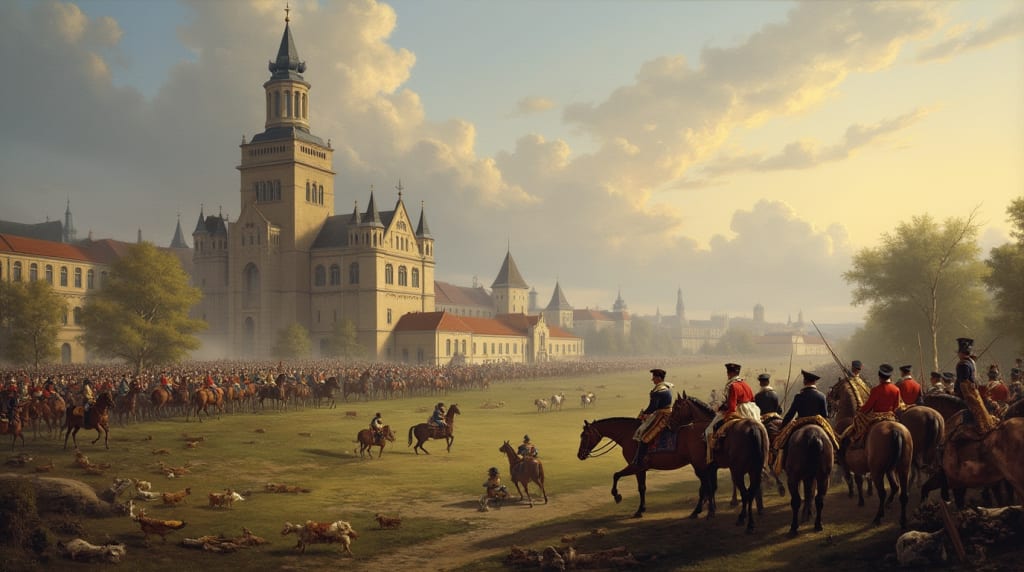
The Battle of Waterloo (1815): The Event That Shaped European History
The Battle of Waterloo stands as one of the most pivotal moments in European history. It marked the end of Napoleon Bonaparte’s imperial ambitions and reshaped the political landscape of Europe for decades to come. Fought on June 18, 1815, near the village of Waterloo in present-day Belgium, this decisive battle brought an end to Napoleon’s Hundred Days and ushered in a new era of stability. In this article, we will explore the causes, key events, and consequences of the Battle of Waterloo, as well as its lasting legacy.
1. What Was the Battle of Waterloo? An Overview
The Battle of Waterloo was a climactic confrontation between Napoleon Bonaparte’s French army and the forces of the Seventh Coalition, led by Arthur Wellesley, Duke of Wellington, and Gebhard Leberecht von Blücher, the Prussian commander. This battle decisively ended Napoleon’s return to power and signaled the final collapse of the Napoleonic Empire.
2. Historical Context: How Did Europe Arrive at Waterloo?
The Fall of Napoleon (1814): Napoleon was forced to abdicate and was exiled to the island of Elba after a series of defeats.
The Return of Napoleon: In March 1815, Napoleon escaped Elba and returned to France, quickly regaining power in what became known as the Hundred Days.
The Seventh Coalition: Alarmed by Napoleon’s return, the major European powers—Britain, Prussia, Russia, and Austria—formed the Seventh Coalition to overthrow him permanently.
3. The Opposing Forces: Who Fought at Waterloo?
Napoleon’s Army: Consisting of approximately 73,000 troops, including experienced infantry, cavalry, and artillery units.
The Coalition Forces: Comprised around 118,000 troops, including British, Dutch, Belgian, and Prussian soldiers. The coalition was led by two commanders:
Duke of Wellington (British-led forces).
Field Marshal Blücher (Prussian-led forces).
4. Causes of the Battle of Waterloo
The battle was the result of Napoleon’s attempt to reclaim his position as Emperor of France and reassert French dominance in Europe. Key causes include:
Napoleon’s Ambition: His desire to rebuild the Napoleonic Empire.
The European Powers’ Determination: The allied nations sought to prevent a resurgence of French imperialism.
The Strategic Importance of Belgium: Controlling Belgium was vital for both Napoleon and the coalition forces due to its proximity to France and its role as a staging ground for future campaigns.
5. Prelude to the Battle: Strategic Moves and Mistakes
Before Waterloo, Napoleon aimed to divide and conquer the coalition armies before they could unite:
On June 16, 1815, Napoleon defeated the Prussians at the Battle of Ligny, forcing them to retreat.
Simultaneously, his forces engaged the British-led army at the Battle of Quatre Bras, delaying Wellington’s advance.
However, Napoleon failed to decisively destroy the Prussian army, allowing them to regroup and play a critical role at Waterloo.
6. The Battle of Waterloo: Key Events of the Day
The battle began on the morning of June 18, 1815, under wet and muddy conditions that hindered both armies.
Initial French Assaults: Napoleon launched attacks on the coalition’s center and flanks, aiming to break through Wellington’s defensive lines.
Stubborn British Defense: The British forces, positioned on high ground, held firm against repeated French assaults, particularly at key positions like Hougoumont and La Haye Sainte.
Arrival of the Prussians: In the late afternoon, Blücher’s Prussian forces arrived on Napoleon’s right flank, tipping the balance of the battle.
Final French Attack: Napoleon’s elite Imperial Guard made a desperate charge but was ultimately repelled. This marked the collapse of the French army and the end of the battle.
7. The Role of Wellington and Blücher in Securing Victory
Duke of Wellington: Demonstrated exceptional defensive strategy, utilizing the terrain and holding his forces together under immense pressure.
Field Marshal Blücher: His timely arrival with the Prussian army was critical in overwhelming Napoleon’s forces and ensuring a coalition victory.
8. Aftermath of the Battle: The Fall of Napoleon
Napoleon’s Defeat: After his loss at Waterloo, Napoleon abdicated for the second time and was exiled to the remote island of Saint Helena, where he lived until his death in 1821.
End of the Napoleonic Wars: The battle marked the conclusion of over two decades of conflict in Europe.
9. Consequences of Waterloo: A New European Order
Political Stability: The battle reinforced the power of the coalition nations and restored the Bourbon monarchy in France.
The Congress of Vienna: The victory at Waterloo solidified the agreements made during the Congress of Vienna (1814-1815), which aimed to establish a balance of power in Europe.
Military Innovations: Waterloo highlighted the importance of coalition warfare, defensive tactics, and the strategic use of reserves.
10. Legacy of the Battle of Waterloo
Cultural Impact: The battle inspired numerous works of art, literature, and historical studies. Notably, Victor Hugo’s novel Les Misérables includes a vivid account of Waterloo.
Tourism and Memorials: Today, the battlefield is a major historical site, attracting visitors from around the world.
Symbol of Defeat: The term “Waterloo” has entered the lexicon as a metaphor for a decisive defeat.
11. Why Did Napoleon Lose at Waterloo?
Historians point to several reasons for Napoleon’s defeat:
Poor Weather Conditions: Heavy rain delayed the French attack, giving coalition forces time to prepare.
Tactical Errors: Napoleon underestimated the resilience of Wellington’s army and the speed of Blücher’s reinforcements.
Exhausted Troops: The French army was fatigued after days of marching and fighting.
Numerical Disadvantage: The coalition forces outnumbered the French and were better coordinated.
12. Waterloo’s Broader Implications for Europe
End of French Dominance: The battle marked the definitive end of France’s dominance in Europe.
Rise of Britain: Britain emerged as the leading global power, a status it would maintain throughout the 19th century.
A Precedent for International Cooperation: The coalition’s victory demonstrated the effectiveness of multilateral alliances in achieving shared goals.
13. Conclusion: The End of an Era, the Start of a New Order
The Battle of Waterloo was more than just a military engagement—it was a turning point that reshaped the trajectory of European history. It marked the fall of Napoleon and the dawn of a new political and military order in Europe.
Today, Waterloo stands as a symbol of determination, strategy, and the complexities of power struggles. Its lessons on leadership, unity, and resilience continue to resonate, making it one of the most studied and celebrated battles in world history.
About the Creator
💓 Pulse of Stories 💓
The world of short and inspiring stories! Here you will find stories that touch hearts, ignite the imagination, and take you on quick yet deep journeys.
Keep reading
More stories from 💓 Pulse of Stories 💓 and writers in History and other communities.
The Wars of the Roses (1455-1487): A Bloody Struggle That Shaped England’s Future
The Wars of the Roses (1455-1487): A Bloody Struggle That Shaped England’s Future The Wars of the Roses were a series of brutal civil wars that tore England apart for over three decades. Fought between two noble houses, the House of York and the House of Lancaster, the conflict was over the throne of England. The name derives from the symbols of the rival factions: a red rose for the Lancastrians and a white rose for the Yorkists. This article will delve into the causes, events, and consequences of the Wars of the Roses, as well as their lasting impact on England’s history.
By 💓 Pulse of Stories 💓about a year ago in History
Savoy Hotel – Mussoorie: The Colonial Luxury Hotel Where an Unsolved Murder Still Walks the Corridors
The First Night: Beauty Wrapped in Silence Mussoorie looks peaceful from a distance. Pine trees sway gently, clouds roll like slow-moving waves, and the hill air smells of rain and old earth. But as evening falls, the silence becomes heavier—almost watchful.
By Gaurav Gupta3 days ago in History
Is NATO Facing Its Biggest Crisis Yet?
Is NATO Facing Its Biggest Crisis Yet? For more than seventy years, NATO has been one of the strongest military alliances in the world. Formed after World War II, it was designed to protect its members through collective defense. An attack on one was considered an attack on all. For decades, this principle helped maintain stability in Europe and beyond. But today, NATO is facing one of the most challenging moments in its history.
By Wings of Time 6 days ago in History
Silver Screen Magic with Mae West
American actress and singer Mae West became a popular film actress during the Great Depression. She started entertaining in vaudeville, then performed on Broadway, and finally went to Hollywood. She signed up with Paramount Pictures and made her debut in the 1932 film “Night After Night.” She also starred in musicals, comedies, and crime dramas. The American Film Institute named her one of the best classic Hollywood actresses.
By Rasma Raisters5 days ago in Geeks


Comments
There are no comments for this story
Be the first to respond and start the conversation.