
Can World War III Be Prevented?
Why diplomacy, restraint, and global cooperation matter more than ever in a dangerous world


Can World War III Be Prevented?
The idea of World War III is no longer limited to history books or fictional movies. Rising global tensions, regional wars, arms buildups, and political rivalries have made many people wonder whether another world war is possible—and more importantly, whether it can still be prevented. While the risks are real, global conflict is not inevitable. Prevention depends on choices made by leaders, institutions, and societies today.
Modern wars rarely begin with formal declarations. They grow out of unresolved disputes, broken trust, and repeated escalations. Conflicts in Eastern Europe, the Middle East, and East Asia show how quickly regional crises can draw in major powers. Yet these same situations also reveal something important: despite severe tensions, global war has so far been avoided. This suggests that prevention, while difficult, is still possible.
One of the strongest barriers against World War III is mutual awareness of its consequences. Unlike past centuries, today’s leaders understand that a global war would not have clear winners. Nuclear weapons, cyber warfare, and economic collapse would affect all nations, including those that initiate conflict. This shared understanding creates hesitation, even among rivals.
Diplomacy remains the most effective tool for prevention. Quiet negotiations, back-channel communication, and crisis hotlines help reduce misunderstandings during tense moments. Many conflicts escalate not because leaders want war, but because of miscalculation or lack of communication. Keeping diplomatic channels open—even between hostile states—can prevent small incidents from becoming catastrophic events.
International institutions also play a critical role. Organizations like the United Nations, despite their limitations, provide platforms for dialogue and conflict management. Peacekeeping missions, mediation efforts, and international law help slow down the rush toward violence. While these institutions are often criticized as weak, the absence of such structures would make global conflict more likely, not less.
Another key factor is arms control. Agreements that limit nuclear weapons, missiles, and emerging technologies reduce the risk of accidental or rapid escalation. When arms control collapses, mistrust grows, and countries prepare for worst-case scenarios. Rebuilding or modernizing arms control frameworks is essential in a world where weapons systems move faster than human decision-making.
Economic interdependence also acts as a restraint. Global trade connects rival nations in ways that make war extremely costly. A large-scale conflict would disrupt supply chains, collapse markets, and trigger global recession. While economic ties alone cannot stop war, they increase the pressure on governments to seek alternatives to military confrontation.
However, prevention is becoming harder. Nationalism, political polarization, and misinformation weaken global cooperation. Social media amplifies fear and anger, making compromise appear like weakness. Leaders facing domestic pressure may choose aggressive policies to gain support at home, even if those policies increase international risk.
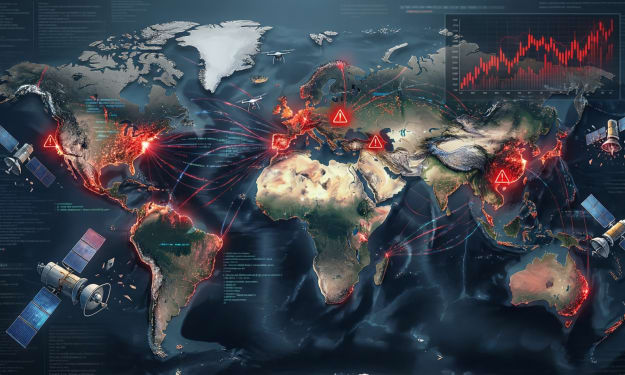
Another challenge is the rise of new domains of conflict. Cyber warfare, space militarization, and artificial intelligence reduce reaction time and increase uncertainty. A cyberattack or satellite disruption could be misinterpreted as an act of war, leading to rapid escalation before diplomacy has time to work. Managing these new threats requires updated rules and shared norms.
Public awareness also matters. Citizens influence governments through elections, media, and public pressure. When societies demand accountability, transparency, and peaceful solutions, leaders are less likely to pursue reckless actions. War often becomes easier when populations are disconnected from its real human cost.
Preventing World War III is not about idealism—it is about survival. History shows that wars are not accidents; they are the result of repeated decisions. Each choice to escalate, ignore dialogue, or demonize opponents moves the world closer to disaster. Each choice to negotiate, pause, or de-escalate moves it away.
The future is not predetermined. World War III can still be prevented, but only if global leaders recognize that strength is not measured by domination, but by restraint. Cooperation does not mean agreement on everything—it means understanding that shared survival matters more than short-term victory.
In a connected world, peace is no longer just a moral goal. It is a global necessity.
About the Creator
Wings of Time
I'm Wings of Time—a storyteller from Swat, Pakistan. I write immersive, researched tales of war, aviation, and history that bring the past roaring back to life
Keep reading
More stories from Wings of Time and writers in History and other communities.
What Would World War III Look Like Today?
What Would World War III Look Like Today? When people imagine World War III, many still picture massive armies, tanks rolling across borders, and cities reduced to rubble by bombs. While traditional warfare would still play a role, a modern world war would look very different from the conflicts of the 20th century. Advances in technology, global interdependence, and new forms of power have changed how wars are fought—and how they affect the world.
By Wings of Time 2 months ago in History
The Mysterious Arms Drop: When Weapons Fell from the Sky Over India
In the mid-1990s, one of the most mysterious and controversial arms smuggling operations in South Asia unfolded in dramatic fashion when a large cache of weapons literally fell from the sky in eastern India. The incident involved an aircraft traveling between Karachi and Dhaka, allegations of international intelligence links, and a clandestine mission that continues to raise questions about who was behind it and why.
By Irshad Abbasi 5 days ago in History


Comments
There are no comments for this story
Be the first to respond and start the conversation.