World History
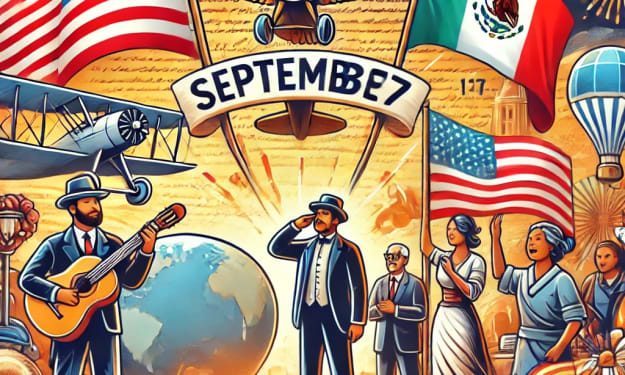
September 17: A Day of Reflection and Change
September 17 might seem like just another day, but it’s a date that has witnessed crucial historical events, important milestones, and cultural celebrations around the world. From the adoption of the United States Constitution to moments of great change in science and society, September 17 holds a special place in history.
By Zulqarnain Haiderabout a year ago in History
The Five Pillars of Islam: A Guide to the Foundations of Faith. AI-Generated.
The Five Pillars of Islam: A Guide to the Foundations of Faith Islam, one of the world’s major religions, is built upon a framework of faith and practice that guides a Muslim’s relationship with Allah, fellow human beings, and the broader world. Central to this framework are the Five Pillars of Islam, essential acts of worship that embody the core beliefs and duties of a Muslim. These pillars provide the spiritual and moral foundation upon which the life of every practicing Muslim is built. Each of these acts reinforces a commitment to faith, discipline, and community, ensuring a balanced and righteous life.
By Islamic Zoneabout a year ago in History
A Day the World Stood Still: Alice's Story
I still remember that morning like it was yesterday. The sky seemed bluer than usual, the air crisper with the promise of fall. New York City was as alive and busy as ever, with the symphony of honking car horns, footsteps echoing against concrete sidewalks, and the steady hum of a city that never slept. Like thousands upon thousands on that fateful day, I weaved through the sea of people who made Manhattan their home in my own daily ritual. I had no idea then that within hours all hell would break loose.
By Jim Watsonabout a year ago in History
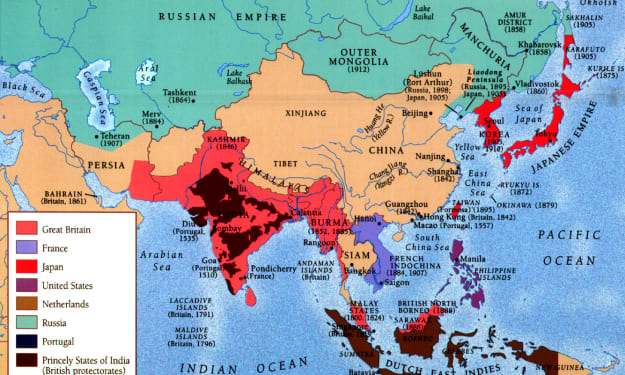
Comparison of European colonialism in Asia
Several colonial powers, especially different Western Europeans, established colonies in Asia during the 18th and 19th centuries. Although they were on the same land, each imperial power had its style, from administration to colonial officials. As a result, the following countries showed different attitudes towards the people in their colonies. How do these colonial powers compare?
By Wahyu Gandi G.about a year ago in History
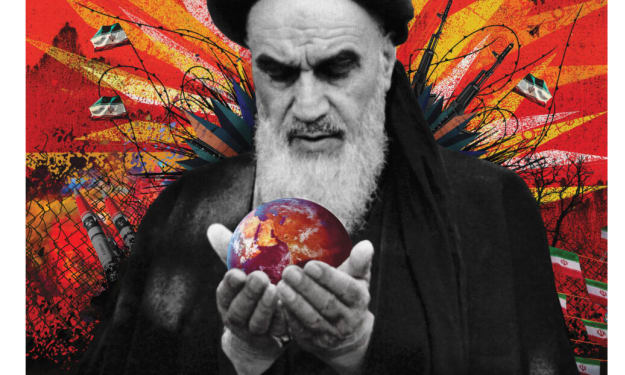
The Iranian Revolution, when communists and Islamists came together
We often hear the narrative that religionists and communists are difficult and will never unite. The reason is religious groups think that communists are a group of godless people, while communists think that religion is opium. But who would have thought, these two ideologies that are placed at odds with each other could in fact unite, in a process of social change called revolution. The revolution in question is the Iranian revolution.
By Wahyu Gandi G.about a year ago in History
Why Kwame Nkrumah Was a Threat
Focus: Kwame Nkrumah and African Independence Leaders The Central Intelligence Agency, or CIA for short, has long been invincible to the naked eye, but shrouded in indescribable mystery and controversy. Until recently, coups were seen as internal struggles, manifestations of a people who desire regime change; but to the contrary, they are often planned and legitimized from the outside and then projected as a sign of local instability.
By BlogForGenZabout a year ago in History
Rasta Ways of Living
The Rasta Diet The Rastafari diet is something that is often overlooked by many people who do not know a great deal about Rastafari. The Rasta has a very interesting belief in their thoughts about dead beings. The Rasta’s do not like being around any animal that is dead. This idea stems into their diet. The Rasta believes that it is wrong to eat animals that have died because then you are turning your body into a cemetery. This does not mean that a Rasta will not eat dairy products. Most Rasta’s have no problem with the consumption of milk because it does not come from a dead animal. Although most Rasta’s will not eat animal meat, many Rasta’s will eat fish. However the Rasta will not eat shellfish. This stems from more readings in the Bible. Some but not all Rasta will go as far as to not t eat fruit that has been altered from its original form. This means they would not eat fruit that has been pealed, cut, or smashed. There is also a large number of Rasta that will not eat any processed food.
By Sanzilaus Onserioabout a year ago in History
RASTAFARIAN
For many Rasta’s moving back to Ethiopia is their dream. Fortunately for some this dream has come true. In 1963 Emperor Haile Selassie I gave 500 hectares of land to any African that wished to return to Ethiopia. The land that was given is located in the small southern Ethiopian town of Shasemene. The small town of Shasemene has a population of 13,000. The people living in this town are 90% Christian and 10% Muslim. The town has many visitors because it is a cross roads of the three largest Ethiopian cities. Prostitution is very common in this town and many women make good money through this business. Other than prostitution there is little contact between the sexes. The town’s economic base is in trade and farming. The staple crops are maize, beans, potatoes, wheat, barley and injera (a local grain used in traditional Ethiopian breads).
By Sanzilaus Onserioabout a year ago in History