
The Five Pillars of Islam: A Guide to the Foundations of Faith
Five pillars of Islam.
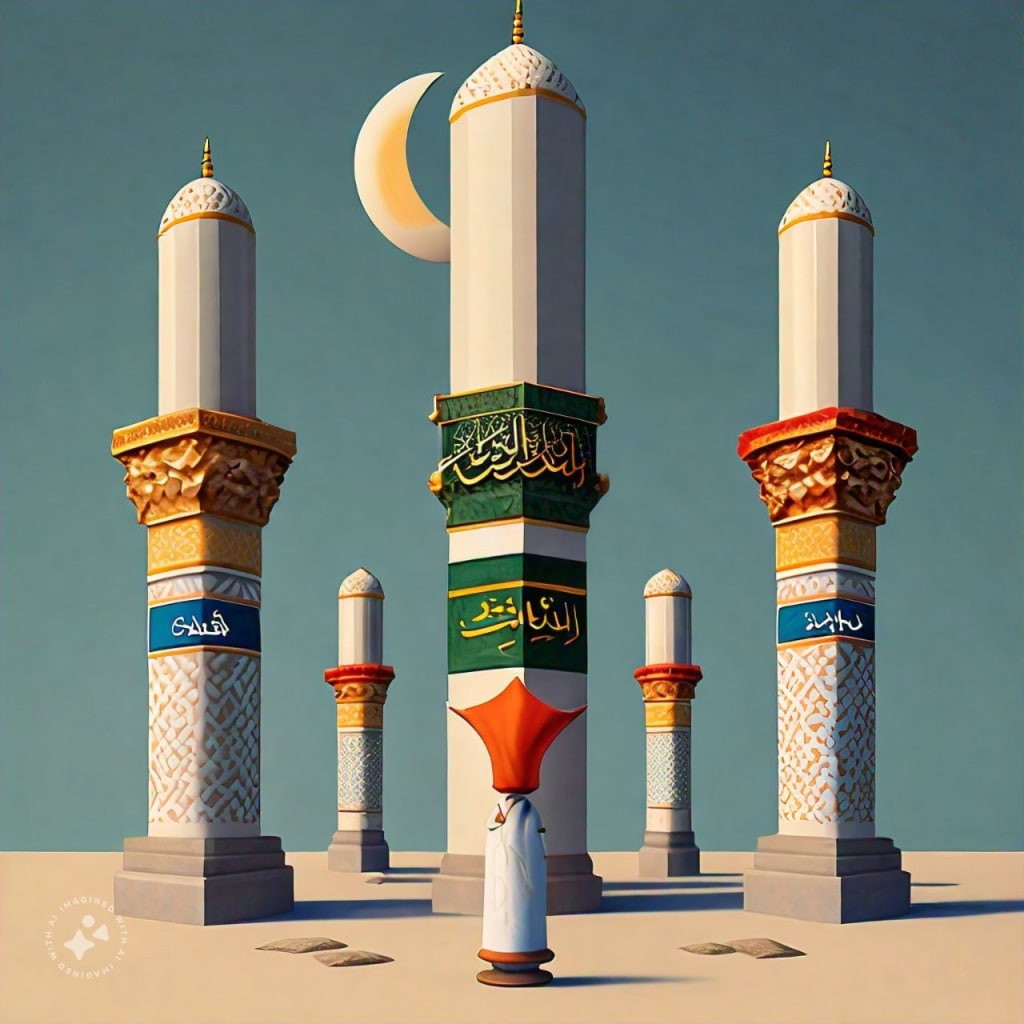
The Five Pillars of Islam: A Guide to the Foundations of Faith
Islam, one of the world’s major religions, is built upon a framework of faith and practice that guides a Muslim’s relationship with Allah, fellow human beings, and the broader world. Central to this framework are the Five Pillars of Islam, essential acts of worship that embody the core beliefs and duties of a Muslim. These pillars provide the spiritual and moral foundation upon which the life of every practicing Muslim is built. Each of these acts reinforces a commitment to faith, discipline, and community, ensuring a balanced and righteous life.
1. Shahada (Faith)
The first pillar of Islam is the Shahada, the declaration of faith. It is t the most fundamental belief in Islam and serves as the entry point to the religion. The Shahada is a simple yet profound statement: “La ilaha illallah, Muhammadur rasulullah,” meaning "There is no god but Allah, and Muhammad is His Messenger."
This testimony expresses two key beliefs. The first part affirms the oneness of Allah, emphasizing that there is only one God, who is the Creator and Sustainer of all things. The second part acknowledges that Muhammad (peace be upon him) is the final messenger of Allah, completing the line of prophets, including Adam, Noah, Abraham, Moses, and Jesus (peace be upon them all). For a Muslim, reciting the Shahada is not merely a verbal declaration; it reflects a deep internal conviction and a lifelong commitment to live by the principles of Islam.
2. Salah (Prayer)
The second pillar is Salah, the obligatory prayer performed five times a day. These prayers are a direct link between the worshiper and Allah. Muslims perform Salah at specific times of the day: Fajr (before dawn), Dhuhr (midday), Asr (mid-afternoon), Maghrib (after sunset), and Isha (night). Each prayer consists of physical movements—standing, bowing, prostrating, and sitting—accompanied by recitations from the Qur'an.
Salah serves as a constant reminder of a Muslim's faith and reinforces discipline, spiritual purity, and closeness to Allah. Through these prayers, Muslims are reminded of their dependence on Allah and the importance of gratitude. The regularity of Salah helps maintain a connection with the Creator, amidst the distractions of daily life, fostering mindfulness and humility.
3. Zakat (Charity)
The third pillar of Islam is Zakat, the mandatory giving of alms to those in need. Zakat literally means "purification" or "growth," and it refers to purifying one's wealth by giving a portion of it to those who are less fortunate. The standard rate for Zakat is 2.5% of a Muslim’s accumulated wealth, provided they have reached the minimum threshold, or nisab.
Zakat serves both spiritual and social purposes. On a spiritual level, it teaches Muslims the value of generosity and the importance of not being attached to material wealth. It reminds them that their wealth is a blessing from Allah and that they have a responsibility to use it wisely. Socially, Zakat ensures the redistribution of wealth within society, reducing poverty and promoting social justice. By supporting the poor, orphans, and those in debt, Muslims help create a more equitable society, where the well-being of the community is prioritized.
4. Sawm (Fasting)
Sawm, the fourth pillar, refers to the obligatory fasting during the month of Ramadan, the ninth month of the Islamic lunar calendar. During this month, Muslims fast from dawn until sunset, abstaining from food, drink, smoking, and marital relations. Fasting in Ramadan is not just a physical act of self-denial; it is a time for spiritual reflection, increased devotion, and self-control.
The fast is broken each day at sunset with a meal called Iftar, and the month culminates in Eid al-Fitr, a celebration of the successful completion of the fast. Fasting during Ramadan is seen as a way to cleanse the soul, strengthen one’s faith, and develop empathy for those who are less fortunate. It teaches patience, discipline, and gratitude for the sustenance that Allah provides. Ramadan is also a time for Muslims to engage in additional prayers, read the Qur'an, and give charity.
5. Hajj (Pilgrimage)
The fifth and final pillar of Islam is the Hajj, the pilgrimage to the holy city of Mecca in Saudi Arabia. Every Muslim who is physically and financially able is required to perform Hajj at least once in their lifetime. Hajj takes place during the Islamic month of Dhu al-Hijjah, and it involves a series of rituals that commemorate the trials and sacrifices of the Prophet Ibrahim (Abraham) and his family.
The Hajj is a profound act of worship that unites Muslims from all over the world. Pilgrims wear simple white garments, known as Ihram, which symbolize purity and equality before Allah. By removing distinctions of wealth, status, and nationality, the pilgrimage emphasizes the unity of the global Muslim community (ummah). Hajj is a deeply transformative experience for Muslims, reminding them of their ultimate purpose in life and their submission to Allah’s will.
Conclusion
The Five Pillars of Islam—Shahada, Salah, Zakat, Sawm, and Hajj—are the bedrock of Islamic practice. Together, they guide Muslims in their relationship with Allah, instilling a sense of discipline, compassion, and community. By fulfilling these obligations, Muslims not only strengthen their faith but also contribute to the betterment of society, fostering harmony, equity, and spiritual growth. These pillars represent a holistic approach to worship, balancing the inner, spiritual life with outward, ethical conduct in the world.
About the Creator
Keep reading
More stories from Islamic Zone and writers in History and other communities.
Discovering Islam: A Guide to Faith and Way of Life
What is Islam ? • Islam is a monotheistic religion that comes from the Arabic roots , which refers to surrender or submission. Islam as a religion was established in the seventh century in Makkah by the Prophet Mohammed, who is regarded as the last of the prophets sent by Allah. The significant articles of faith in Islam are found in the Five Pillars which refer to one’s faith (Shahada), prayer (salat), fasting (sawm), alms (dukkaxt or Zakat), and pilgrimage to the holy Kaaba (Hajj).
By Islamic Zoneabout a year ago in Chapters
Military Strength of Alexander the Great and the Chola Empire: A Historical Comparison
Though separated by more than a thousand years and operating in vastly different geographical and cultural contexts, both forces achieved extraordinary success through discipline, innovation, and strategic brilliance. This article explores the history, composition, size, organization, and military strength of Alexander’s Macedonian army and the Chola military, highlighting how each became a dominant power of its era.
By Say the truth 5 days ago in History


Comments (1)
Hoi Dear I am Add the Line in this article