
Why Kwame Nkrumah Was a Threat
Kwame Nkrumah: The Overthrow of a Visionary Leader in Africa. Explore the rise and fall of Kwame Nkrumah, the first president of Ghana. Uncover the complexities of his vision for Africa and the impact of his overthrow.

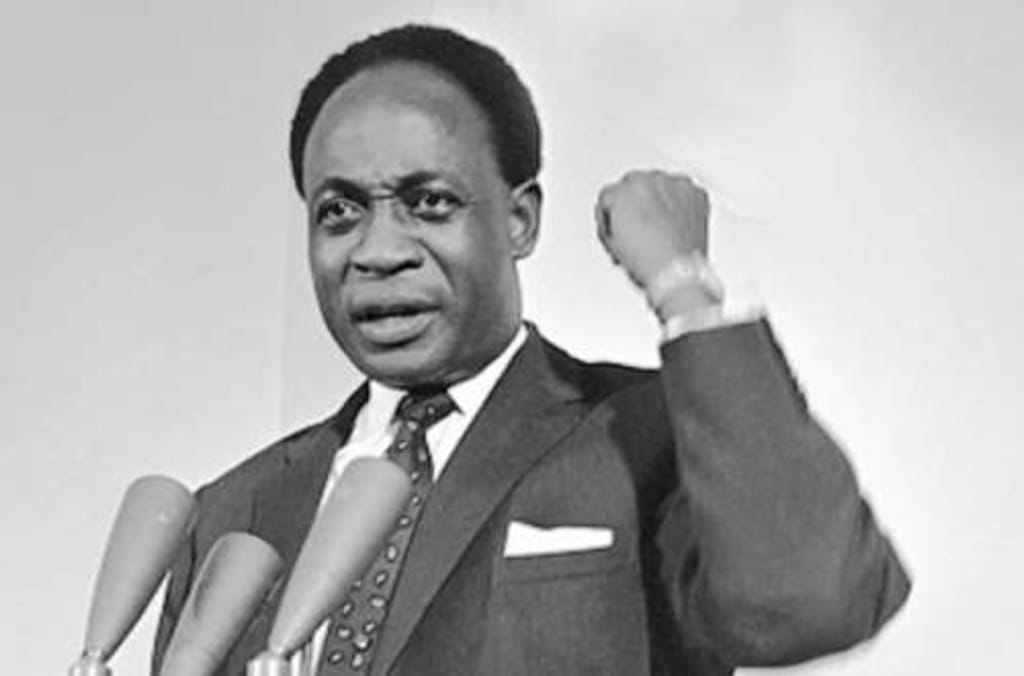
Focus: Kwame Nkrumah and African Independence Leaders
The Central Intelligence Agency, or CIA for short, has long been invincible to the naked eye, but shrouded in indescribable mystery and controversy. Until recently, coups were seen as internal struggles, manifestations of a people who desire regime change; but to the contrary, they are often planned and legitimized from the outside and then projected as a sign of local instability.
They are not sudden, sharp actions. In fact, they are built on long-term processes to control geopolitical orders, financial networks, and natural resources. CIA covert operations are, by their very nature, hard to prove definitively, but research into the agency's work, declassified documents, as well as revelations by former CIA employees have unwound a complicated information web.
In this article, we will discuss African independence leaders who were ousted or assassinated by Western intelligence services, with the main focus on Kwame Nkrumah.
Congo's Patrice Lumumba died in 1961, following the poisoning of the opposition leader of Cameroon, Felix Moumie, in 1960.
Sylvanus Olympio, leader of Togo, was killed in 1963. Mehdi Ben Barka, leader of the Moroccan opposition movement, was kidnapped in France in 1965, and his body was never found. Eduardo Mondlane, leader of Mozambique's FRELIMO, fighting for independence from the Portuguese, died from a parcel bomb in 1969. And of course, Ghana's Osagyefo Kwame Nkrumah was overthrown in 1966.
Kwame Nkrumah: "This decade is the decade of African independence. Forward then to independence, to independence now. Tomorrow, the United States of Africa."
As Kwame Nkrumah, Ghana's Founding Father, as well as Africa's first post-colonial President, south of the Sahara would come to learn. This is what one has to plan, almost in secret, and launch when ready. Because as soon as you say it, you'll have a target on your back.
Kwame Nkrumah’s Vision for a United Africa and the CIA's Role in Ghana's Political Landscape
From the moment Nkrumah ascended to power, the CIA's eyes were tracking him and what was happening in Ghana from far away, Langley, Virginia.
Nkrumah's ideologies were rooted in his vision of a United States of Africa. He believed that the only way for Africa to truly progress was through the creation of a federal state based on a common market, a common currency, a unified army, and a common foreign policy that would enable Africa to solve internal conflicts as well as defend itself against external threats.
Ghana's independence from British colonial rule in 1957 was not only significant for Ghana but also for the rest of the continent.
Consistent with his Independence Day declaration, Nkrumah said Ghana's independence was meaningless unless it was linked with the total liberation of the entire continent.
Nkrumah trained African liberation fighters, financed their movements, and encouraged them to send colonialists packing from their territories.
It is no wonder that in less than a decade after Ghana's independence, more than 35 African countries also attained their own independence. It is also no wonder that, according to some quotes, he had to be taken out by any means necessary.
How Kwame Nkrumah’s Anti-Imperialist Stance and Vision for African Unity Led to Western Intervention and CIA Involvement in Ghana
Nkrumah's efforts to unite Africa under one government and his anti-imperialist stance attracted the resentment of the West, particularly the United States.
In Nkrumah's book Dark Days in Ghana, Nkrumah alleged that the CIA and other intelligence agencies were actively plotting to undermine his government, using bribes and promises of political power to recruit traitors in his government.
Although his critics dismissed these claims as delusional, declassified documents later proved that the CIA had orchestrated the plot to get rid of Nkrumah, who, according to the files, did more to undermine American interests than any other black African.
The US government was determined to get rid of Nkrumah before he managed to unite Africa under one government. They worked with senior Ghanaian military and police officers, supported by British and American diplomats and intelligence officers who provided long-term planning, financing, and logistical aid to mastermind Nkrumah's ouster.
The UK and the US began discussions of regime change in Ghana in 1961, a whole five years before its actual execution. Details of plans from this time are mostly unknown, since declassified documents from this period remain censored.
According to the US State Department at the time, Nkrumah had an overpowering desire to export his brand of nationalism.
Unquestionably, Nkrumah made Ghana one of the foremost practitioners of subversion in Africa. He resisted economic policies proposed by the International Monetary Fund (IMF) and the World Bank.
Nkrumah was patron to a Bureau of African Affairs, which allegedly had agents supporting nationalist and opposition movements across Africa. These included the Ivory Coast, Burkina Faso, Niger, Togo, Senegal, Cameroon, Liberia, and Nigeria. The ultimate goal was to assist more radical leaders in getting to positions of power.
He even mounted an offensive against apartheid South Africa, providing money and training to the military wing of the African National Congress.
Washington's Economic Tactics and the Appointment of a Black US Ambassador Contributed to Kwame Nkrumah’s Downfall
In the years leading to the coup, Washington withheld loans to Ghana and worked to lower world cocoa prices through stockpiling in order to deprive Kwame Nkrumah of much-needed foreign exchange.
US Ambassador Franklin Williams, one of the first African Americans to be an ambassador, had presented his credentials to Nkrumah on January 17, 1966—a few weeks before the coup. But before taking up his position, he exchanged private correspondence with friends, bragging that he would soon be running the country.
Williams' associations with US intelligence and the coup were a more disturbing brand of betrayal, considering Nkrumah's pan-Africanism and his call for Ghana to be a haven for Black artists, thinkers, and leaders.
Three weeks before the coup, an editorial in "The Spark," a newspaper founded by Nkrumah, asked why the US would send an African American ambassador to Ghana when it did not support racial equity in its own country and would surely not send a Black ambassador to a European nation.
There was speculation that Nkrumah saw his appointment as a sign of disrespect and felt that the US was sending a Black ambassador to do its dirty work.
US Manipulation, Military Deception, and the Violent Coup That Overthrew Kwame Nkrumah During His Vietnam Peace Mission
On February 21, 1966, three days before the coup, Nkrumah went on a state visit to Vietnam to negotiate a peaceful settlement to the US war in Vietnam. The United States had encouraged him to go on the diplomatic mission and indeed promised to halt the bombing of North Vietnam in order to ensure his safety.
Meanwhile, back home, a group of 600 soldiers stationed in the northern part of the country was ordered to start moving south to Accra, a distance of about 435 miles, or 700 kilometers. They were told at first that they were mobilizing to respond to the situation in Southern Rhodesia.
When they reached the capital, the coup leaders told the soldiers that Nkrumah was meeting with Vietnam President Ho Chi Minh in preparation for the deployment of Ghanaian soldiers to the Vietnam War.
Later, the soldiers were told they were going to be deployed in Southern Rhodesia, now Zimbabwe, to fight against the white government of Ian Smith. So the coup plotters riled up the soldiers and justified their takeover by "charging" that Nkrumah's administration was abusive and corrupt.
They explained that they were disturbed by Kwame Nkrumah's aggressive involvement in African politics and by his belief that Ghanaian troops could be sent anywhere in Africa to fight so-called liberation wars, even though they never did so.
Above all, they pointed to the absence of democratic practices in the nation, a situation they claimed had affected the morale of the armed forces. The soldiers were divided up and led to capture various key government installations; the State Broadcasting House and the International Communication buildings were captured quickly.
The heaviest fighting broke out at the Flagstaff House (the presidential residence). But when Colonel EK Kopota threatened to bomb the presidential residence if resistance continued, Nkrumah's wife, Fathia Nkrumah, advised the guards to surrender. The coup leaders informed the public of the regime change over the radio at dawn on February 24, 1966.
On the ground, senior officials of the Ghana Army carried out the coup as the US intelligence agency pulled the strings and called the shots from behind the scenes. The coup statement over the radio was as follows:
"Fellow citizens of Ghana, I have come to inform you that the military, in cooperation with the Ghana police, have taken over the Government of Ghana today. The myth surrounding Nkrumah has been broken. Parliament is dissolved, and Kwame Nkrumah is dismissed from office. All ministers are also dismissed. The ruling Convention People's Party (CPP) is disbanded with effect from now. It will be illegal for any person to belong to it."
On the other side of the world, in Vietnam, a 50-man entourage accompanying Kwame Nkrumah ended up deserting him. A CIA telegram informed Washington of the coup and said the coup leaders appeared to be implementing the plans they were reported earlier to have agreed on for the immediate post-coup period.
According to the military, 20 members of the presidential guard had been killed and 25 wounded. Others suggest a death toll of 1,600. Whatever the number of the dead, it was far from the bloodless coup reported in the British press.
Kwame Nkrumah's Exile and the CIA's Secret Role in His Overthrow: The Untold Story of Howard Bain's Covert Operation
After the coup, Nkrumah went into exile. He sought refuge from his close ally Sekou Touré, the president of Guinea, who made him an honorary co-president of that country.
An ex-CIA whistleblower stationed in Africa, John Stockwell, made comments about the role of the CIA in Nkrumah's downfall. Part of his account mentioned Howard Bain, who was the CIA station chief in Accra. He engineered the overthrow of Kwame Nkrumah.
Inside the CIA, it was quite clear: Howard Bain got a double promotion and was awarded the Intelligence Star for the overthrow of Kwame Nkrumah. The magic of it was that Howard Bain had enough imagination and drive to run this operation without ever documenting what he was doing. There wasn't one shred of paper generated that would name the CIA hierarchy as being responsible.
While Nkrumah's policies were seen as socialist-leaning and aligned with communist interests, his government did not take direct orders from the Soviet Union or China. In fact, he often criticized the Soviet Union for not doing enough to support African liberation movements.
It became obvious when Nkrumah started promoting the African personality as a theme for self-governance. Under the purported lack of democracy excuse, they overthrew Nkrumah, which sent Ghana into a tailspin for decades.
Did conditions in Ghana get better after Kwame Nkrumah's Overthrow?
This is the question that is never asked. Then consider this irony. We are to assume that the US and the UK had so much love for Ghana that they had the moral obligation to free her of Nkrumah's tyranny.
Did the coup and the many others that followed result in achieving the ideals that were purportedly lacking under Nkrumah? Instead, we saw a culture of military brutalities and parades of military-style executions.
After the coup, the International Monetary Fund rubbed salt into the injury by sending a delegation to Accra to tell the military junta to discontinue Nkrumah's industrialization program, which they did. As a reward, some of them got airports named after them.
The US Embassy had long played up Nkrumah's alleged economic mismanagement and poor human rights record, although it tolerated a higher number of political prisoners among the military junta that succeeded him and worse economic outcomes.
The National Liberation Council that took over worked towards the privatization of state-owned businesses. This enabled the restoration of foreign dominance over Ghana's economy as the country was reoriented towards the West.
Kwame Nkrumah’s Pan-African Vision and Resource Nationalization Threatened Western Economic Interests, Leading to His Overthrow
Ultimately, the coup was orchestrated because Nkrumah was seen as a threat to Western economic interests, as they feared he would nationalize resources.
The Americans had invested a lot in the Volta Dam and felt that if this project did not succeed, they would lose money and international credibility. They wanted the project completed while minimizing Nkrumah's power.
US foreign affairs officials interpreted Nkrumah's policies in the context of Egypt's nationalization of the Suez Canal, the subsequent Soviet funding of the Aswan High Dam, and the 1964 Panama Canal crisis that threatened American control of the waterway.
Nkrumah's sponsorship of anti-imperial causes around Africa was understood by Western powers as destabilizing, rather than supporting American democracy. His role as a key member of the non-aligned movement, which aimed to chart a viable third way, could only be seen by binary-thinking Cold War politicians as anti-Western. US policy in Africa was primarily driven by anxiety about the threat of Soviet and Chinese interests.
Africans became ciphers, illegible, accepting how they could help unravel communism. US foreign affairs and intelligence officials discussed using psychological warfare to isolate Nkrumah and turn public support away from him.
It is striking that mid-level US and British agents felt they had the moral and political right to assess an African regime's right to exist. The lives and interests of people, particularly Black people in a sovereign country, were insignificant.
How the 1966 Coup Derailed Africa’s Economic Independence
Nkrumah firmly believed that political independence was meaningless without economic independence.
Thus, by the time he was overthrown in the CIA-inspired coup, Ghana had a whopping 68 sprawling state-owned factories, producing every need of the population: from shoes, textiles, furniture, lorry tires, canned fruits, vegetables, glass, radios, TVs, books, steel, and educated manpower. Virtually everything! Nkrumah wanted to industrialize Ghana within a single generation, and everything was on course until the powers that be used some disgruntled, self-serving Ghanaian soldiers to stage that coup that slow-rolled Ghana's progress.
It was a major setback, not only for Ghana but for the whole of Africa. If Nkrumah had been allowed to complete his industrialization plan, Ghana would today have been another Singapore on the west coast of Africa.
However, we are left with nostalgia, only to wonder what might have been if Kwame Nkrumah had never been overthrown.
Final Thoughts
Kwame Nkrumah’s legacy is one of vision, ambition, and a relentless pursuit of African unity and independence. His efforts to industrialize Ghana, his stand against imperialism, and his Pan-African ideals made him a formidable leader on the global stage.
However, his progressive agenda also made him a target for Western powers, particularly the US, which viewed his policies as a threat to their economic and geopolitical interests during the Cold War. The 1966 CIA-backed coup that overthrew Nkrumah was not just a blow to Ghana, but to Africa’s potential for self-determined progress.
Nkrumah’s dream of economic independence and a united Africa may not have been fully realized, but his ideas continue to inspire movements across the continent. His downfall serves as a reminder of how external forces can derail local progress, and it leaves us to reflect on what could have been if his vision for Africa had been allowed to flourish.
The story of Kwame Nkrumah is a powerful chapter in the history of African liberation and the ongoing struggle for true independence—both political and economic.
About the Creator
BlogForGenZ
A budding platform dedicated to Gen Z perspectives. While my story count is currently small, my commitment to quality content is sky-high. I'm working hard to fill my page with, well, work. Hang tight, the fun is on its way.
Keep reading
More stories from writers in History and other communities.
Nobel Peace Prize
The Nobel Peace Prize has stood as one of the world’s most recognized honors. Awarded annually in Oslo, it is meant to celebrate individuals or organizations that have made significant contributions toward peace, diplomacy, and humanitarian progress. While its mission appears straightforward, the Nobel Peace Prize has never been free from debate. In recent years, conversations surrounding global politics—particularly discussions about the Trump Nobel Peace Prize—have brought renewed attention to how peace is defined, measured, and rewarded in the modern era. The Origins and Meaning of the Nobel Peace Prize The Nobel Peace Prize was established by Alfred Nobel, the Swedish inventor best known for creating dynamite. In his final will, Nobel directed that a portion of his wealth be used to recognize efforts that foster peace among nations, reduce standing armies, or promote diplomacy and cooperation. Since its first award in 1901, the prize has honored activists, diplomats, organizations, and world leaders whose actions shaped international dialogue. Unlike other Nobel categories, the peace prize is awarded by a Norwegian committee rather than a Swedish institution. This distinction reflects Nobel’s desire to separate the prize from national interests and focus instead on global responsibility. Over time, the definition of “peace” has expanded. Early recipients were often disarmament advocates or mediators. More recent laureates have included human rights defenders, climate activists, and international organizations working in conflict zones. Politics and the Nobel Peace Prize Despite its humanitarian ideals, the Nobel Peace Prize has always intersected with politics. Recognizing peace efforts often means evaluating political leadership, international negotiations, and long-term consequences—none of which are easy to measure in real time. Some awards have been widely celebrated, while others sparked controversy. Critics often argue that certain laureates were honored prematurely, before the lasting results of their actions became clear. Supporters counter that the prize is meant to encourage peace efforts, not merely reward completed achievements. This tension has made the Nobel Peace Prize a reflection of global priorities at any given moment, rather than a simple historical judgment. Donald Trump and Nobel Peace Prize Discussions Few modern political figures have generated as much debate in connection with the Nobel Peace Prize as Donald Trump. During and after his presidency, conversations about a potential Trump Nobel Prize emerged repeatedly, particularly among supporters who pointed to his role in diplomatic initiatives. The phrase Trump Nobel Peace Prize gained traction following agreements and negotiations in regions long marked by conflict. Advocates argued that these diplomatic efforts aligned with Alfred Nobel’s vision of reducing international tension through dialogue rather than force. At the same time, critics questioned whether these actions met the broader ethical and humanitarian standards traditionally associated with the award. They pointed to domestic divisions, foreign policy controversies, and unresolved global conflicts as reasons for skepticism. This divide highlights a core challenge of the Nobel Peace Prize: peace is rarely absolute, and political leadership is often complex and contradictory. Trump Nobel Peace Prize 2026: Speculation and Context As global politics continue to evolve, speculation around a Trump Nobel Peace Prize 2026 has appeared in media discussions and public commentary. It is important to note that nominations for the Nobel Peace Prize are confidential for decades, and speculation does not confirm consideration or selection. However, the mere discussion of Trump Nobel Peace Prize 2026 reflects how the award has become part of broader cultural and political conversations. Supporters view such recognition as validation of diplomatic achievements, while critics see the speculation as politicizing an institution meant to rise above partisan debate. This dynamic is not unique to Trump. Many past leaders, from various ideological backgrounds, were debated heavily before or after receiving the prize. The Nobel Peace Prize often mirrors global disagreements rather than resolving them. How the Nobel Committee Makes Its Decision Each year, hundreds of nominations are submitted by qualified individuals, including academics, lawmakers, and previous laureates. The Nobel Committee evaluates these nominations through research, expert consultation, and internal debate. The process considers intent, impact, and long-term significance. However, because peace efforts often unfold over years or decades, the committee must make decisions without full historical clarity. This reality explains why some awards age gracefully while others remain controversial. The committee rarely responds directly to public pressure or online campaigns. Media attention, including discussions around a Trump Nobel, does not guarantee influence over the final decision. The Broader Impact of the Nobel Peace Prize Beyond individual recipients, the Nobel Peace Prize plays a symbolic role. It brings global attention to issues that might otherwise be ignored, from humanitarian crises to fragile peace processes. Even controversial nominations can spark meaningful debate about what peace truly means in the modern world. The prize also raises questions about accountability. When leaders are considered for such recognition, the public is encouraged to examine policies, outcomes, and moral responsibility more closely. In this sense, discussions surrounding the Trump Nobel Peace Prize are not just about one individual. They reflect deeper conversations about diplomacy, leadership, and the evolving standards by which peace is judged. Conclusion: A Prize That Reflects the World The Nobel Peace Prize remains one of the most influential and debated honors in global society. Its power lies not only in recognizing peace efforts but also in challenging the world to think critically about conflict, cooperation, and responsibility. Whether discussions involve historic activists or modern political figures like those associated with Trump Nobel Peace Prize 2026 speculation, the award continues to reflect the complexities of international relations. Peace is rarely simple, and neither is the process of honoring it. Ultimately, the Nobel Peace Prize serves as a reminder that striving for peace is an ongoing journey—one shaped by ideals, actions, and the difficult choices that define human history.
By Saboor Brohi 7 days ago in History
The History of America — A Nation Forged by Struggle and Change
Long before the name “America” existed, the vast lands of North America were home to millions of Indigenous peoples. These societies—such as the Navajo, Iroquois, Cherokee, Apache, and many others—developed rich cultures, languages, and systems of governance. They farmed, hunted, traded, and built complex communities deeply connected to the land. For thousands of years, these civilizations thrived, long before European ships ever crossed the Atlantic.
By The best writer 6 days ago in History
Smart phones, Humans and Aliens.
WARNING. I will be tapping into one of your favorite creative tensions: The absurdity of humans worshipping their glowing rectangles as if they were tiny oracles. There’s something deliciously poetic about that contradiction, and it lends itself beautifully to an instructive proviso.
By Novel Allen7 days ago in Poets



Comments
There are no comments for this story
Be the first to respond and start the conversation.