
The History of Traffic Lights: A Revolution in Road Safety
Guiding the Way: The Evolution of Traffic Lights from Victorian Streets to Smart Cities
Introduction
Traffic lights are an essential part of modern road systems, guiding drivers, cyclists, and pedestrians through intersections with efficiency and safety. However, the traffic light system as we know it today has evolved over more than a century. Its development has been shaped by the rise of automobiles, advancements in electrical engineering, and the growing need for organized urban infrastructure. This journey from rudimentary signaling devices to today’s sophisticated, AI-driven systems offers a fascinating glimpse into how technology has reshaped public spaces and transport.
Early Beginnings: The Birth of Traffic Control
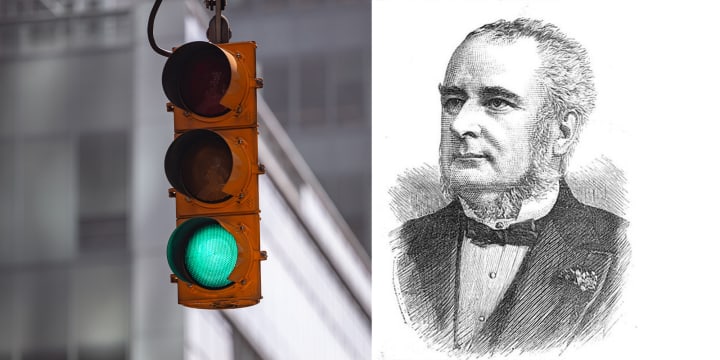
Before the advent of motor vehicles, traffic in cities consisted of pedestrians, horse-drawn carriages, and cyclists. By the mid-19th century, the increasing number of carriages in cities like London posed significant challenges to public safety. The growing complexity of road traffic demanded some form of control at major intersections.
The first known traffic signal was installed in London in 1868. Designed by British railway engineer John Peake Knight, it was positioned outside the Houses of Parliament to control horse-drawn traffic. Knight’s design was inspired by railway semaphores and featured two arms that indicated “stop” and “go.” These were manually operated by a police officer, and at night, gas lamps illuminated the signals—red for "stop" and green for "go." Though innovative, the system was not foolproof. In less than a month, a gas leak caused an explosion that injured the police officer in charge of operating the signal, leading to its removal and highlighting the dangers of early traffic control methods.
The Rise of Automobiles and the Need for Control
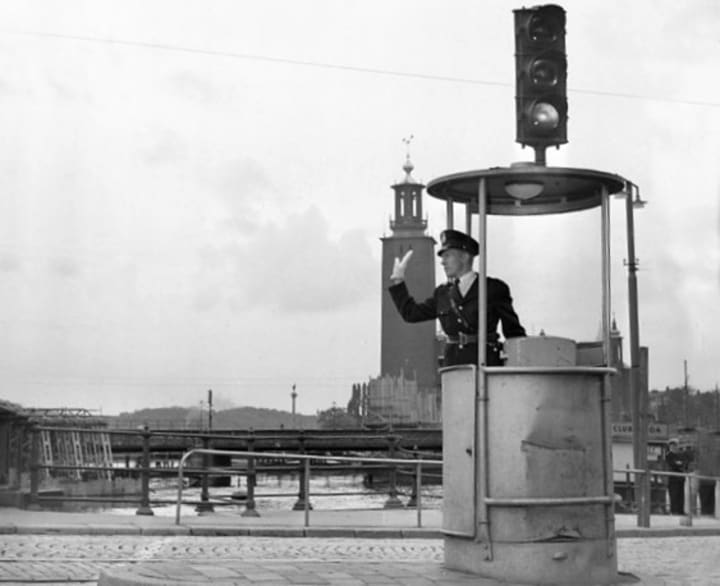
As motor vehicles began to populate city streets at the turn of the 20th century, the demand for a more reliable and efficient form of traffic control became evident. The situation in urban areas grew increasingly hazardous, with accidents becoming more frequent as cars, carriages, and pedestrians jostled for space on the roads.
In response to this growing concern, Cleveland, Ohio, became home to the first electric traffic light system in 1914. Invented by James Hoge, the system was installed at the intersection of East 105th Street and Euclid Avenue. Hoge’s design featured red and green lights powered by electricity, with a bell that warned drivers of an upcoming change. Unlike its gas-powered predecessor, this system proved more durable and effective, laying the groundwork for modern traffic signals. The lights were manually operated by police officers, a common feature in early systems as automation had yet to be developed.
However, the idea of a more automated and intuitive system began to emerge as road networks expanded and car ownership skyrocketed in the 1920s. In Detroit, police officer William Potts made a revolutionary change in 1920 by introducing the first three-color traffic light. Inspired by railroad signals, Potts added the yellow light to indicate a transition period between stopping and going. This innovation allowed for safer intersections and reduced the number of accidents caused by drivers racing to beat a changing light. Potts’ system spread rapidly across the United States, eventually becoming the global standard for traffic lights.
The Growth of Automated Systems
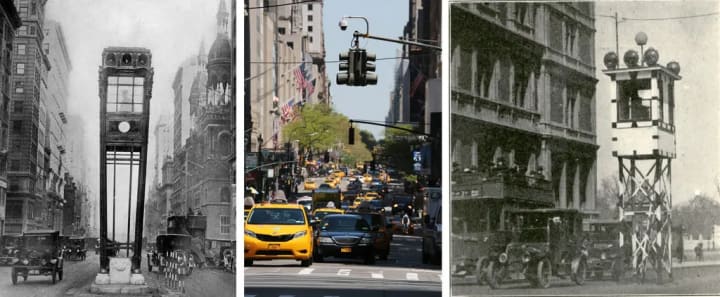
By the 1920s and 1930s, cities were growing at an unprecedented pace, and manual operation of traffic signals was no longer practical in busy urban environments. This period saw the emergence of automatic traffic lights, which used timed intervals to change lights without human intervention.
One key innovation came from Garrett Morgan, an African-American inventor who patented a mechanical traffic signal in 1923. His device was unique in that it included an “all-stop” signal, which halted traffic in all directions to allow pedestrians to cross safely. This invention reduced accidents at intersections, making roads safer for both drivers and pedestrians. Morgan’s design was later sold to General Electric, which helped to commercialize it across the country.
Another milestone came in 1926 when Wolverhampton, England, installed the first set of automatically controlled traffic lights. Using a timer mechanism, the lights changed automatically after a set period, creating a more efficient flow of traffic. This was an important step toward the fully automated systems we use today.
Post-War Innovations and Global Adoption
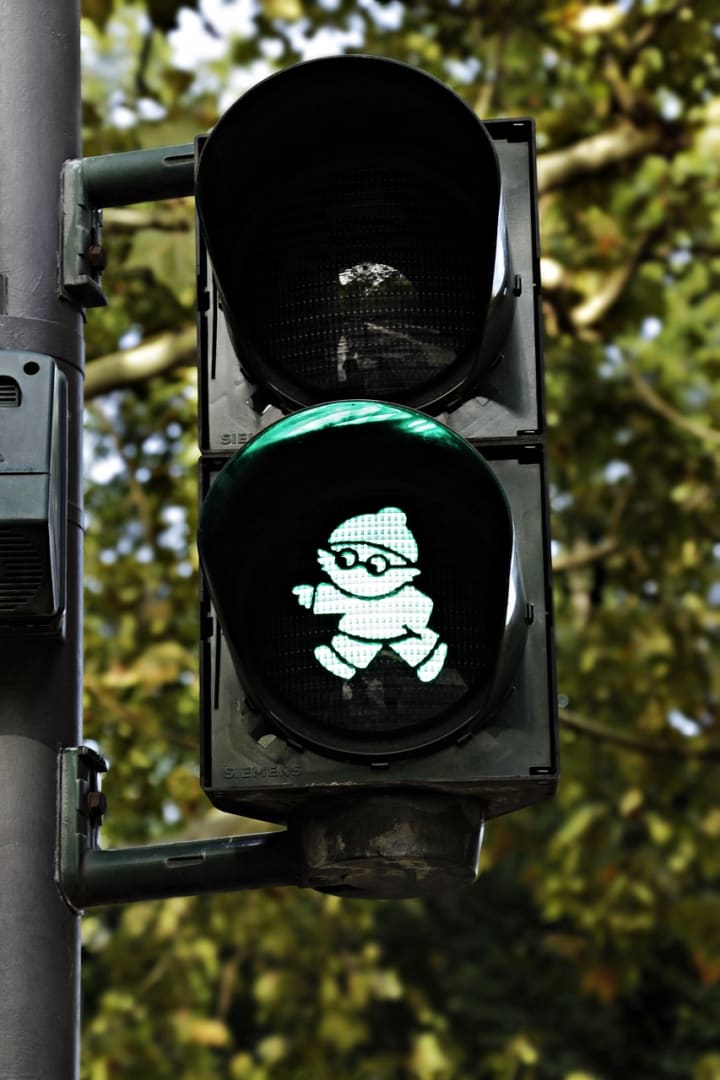
The period following World War II saw rapid advances in traffic control technology as cities around the world faced the challenges of increasing car ownership and urban congestion. By the 1950s, traffic lights were a standard feature in most major cities, helping manage the growing complexity of road networks. The introduction of vehicle sensors in the late 1950s allowed traffic lights to respond to the presence of cars, further streamlining the flow of traffic and reducing waiting times at intersections during off-peak hours.
During the 1960s, the first computerized traffic signal systems were introduced in cities like Toronto and Los Angeles. These systems could control multiple intersections at once, ensuring synchronized traffic flow during peak hours. Computerization allowed for more efficient traffic management and laid the foundation for modern intelligent traffic systems.
The Modern Era: Smart Traffic Lights and AI Integration
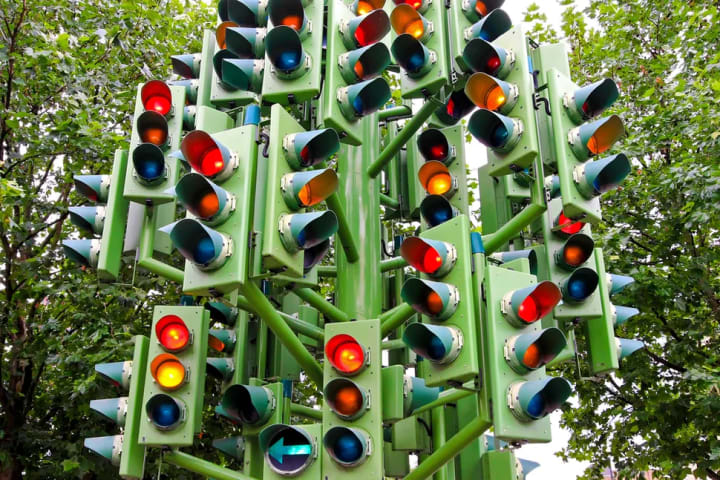
Today, traffic lights have become far more than just simple red, yellow, and green signals. The development of smart cities has driven innovation in traffic management, with traffic signals now part of complex networks that integrate artificial intelligence (AI), the Internet of Things (IoT), and real-time data analytics. Modern traffic lights are capable of adjusting to changing traffic patterns in real time, optimizing traffic flow, and reducing congestion.
In many cities, traffic lights are equipped with sensors that detect not only the presence of vehicles but also their speed and direction. These systems can communicate with each other to create a more coordinated approach to traffic management, particularly during peak hours or in response to accidents or road closures. AI-powered traffic systems are also being developed to predict traffic patterns and adjust lights accordingly, making roads safer and more efficient.
As autonomous vehicles become a reality, traffic lights are expected to play an even more integrated role in transportation networks. Shortly, traffic signals may communicate directly with self-driving cars, further optimizing the flow of vehicles through intersections and reducing the risk of human error.
Conclusion
The history of traffic lights reflects the broader story of technological progress and urban development. From the early days of manually operated semaphores in Victorian London to the sophisticated, AI-driven systems of today, traffic lights have continually evolved to meet the changing needs of society. As cities continue to grow and transportation technology advances, the humble traffic light will remain a key component in ensuring safe and efficient movement on our roads.
About the Creator
PETER J
Driven by a passion to inspire and uplift, Peter. J is a motivational story writer who weaves tales of resilience, personal growth, and triumph over adversity.
Charlie Chaplin — The Tramp Who Conquered the World
Charlie Chaplin was not born into comfort or certainty. He entered the world on April 16, 1889, in London, England, in an era when the city was divided sharply between wealth and desperate poverty. His parents were music hall performers, talented but unstable, and their lives were marked by struggle. Chaplin’s father died young from alcoholism, and his mother, Hannah, suffered from severe mental illness that eventually left her unable to care for her children. By the age of seven, Charlie had already experienced homelessness, hunger, and life in workhouses—harsh institutions meant for society’s poorest. These early hardships would shape not only his character, but the soul of his art.
By The best writer about 14 hours ago in History
Miss Persephone's Manual to a Seemingly Ordinary Life
Miss Persephone was found at the dining table, her blue eyes swollen, her tears arriving and retreating like the tides of the ocean. Earlier that day, her family had visited her in the retirement home where she had lived for eight years. It was her eightieth birthday.
By Imola Tóth3 days ago in Fiction



Comments
There are no comments for this story
Be the first to respond and start the conversation.