World History
Cults of Gods: Is Aphrodite older than the Olympians?
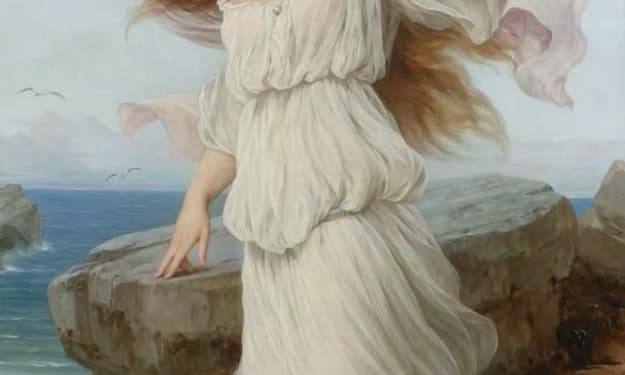
The goddess who sided with the Trojans during the Trojan War, restrained the bloodthirsty Ares, and inspired rivalry with the mortal Psyche was also one of the most influential cultic deities of the Hellenic world. Aphrodite was not merely a poetic symbol of love and beauty; she was a widely worshipped divine power whose sanctuaries, festivals, and epithets reveal a far more complex religious role.
By Alex Smithabout a month ago in History
OpenAI Unveils GPT-5.2: A Game-Changer AI Built for Professional Work. AI-Generated.
Why OpenAI’s New AI Model Feels Less Like Software and More Like a Skilled Colleague The announcement didn’t come with fireworks or dramatic promises, yet the impact was immediate. When OpenAI revealed GPT-5.2, the message was simple but powerful: artificial intelligence is no longer just assisting professionals — it is beginning to think alongside them. For people who rely on accuracy, speed, and judgment in their daily work, this update feels different from anything before it.
By David Johnabout a month ago in History
The Holy Grail. AI-Generated.
The Holy Grail is considered one of the most enigmatic and captivating subjects in Western literature and Christian tradition. It is not merely an artifact; it is a profound symbol that embodies the search for spiritual perfection, salvation, and divine knowledge. The concept of the Grail ranges from the historical cup used by Christ at the Last Supper to a mythical vessel that grants eternal power and healing.
By Mayar Younesabout a month ago in History
The Babylonians Who Beat Us to Calculus
A Discovery That Changes the Story, Today So, here we are in 2025, still trying to wrap our heads around how brilliant ancient civilizations really were. We’ve always known the Babylonians were math and astronomy rockstars, but the more we uncover, the more it feels like we’ve underestimated them by a lot.
By Areeba Umairabout a month ago in History
Childhood of Ronaldo
Childhood of Ronaldo ( written by Haris ) How a Boy From Madeira Chased a Dream Bigger Than an Island Cristiano Ronaldo dos Santos Aveiro was born on February 5, 1985, on the small Portuguese island of Madeira—a place of steep mountains, ocean winds, and narrow streets where children played football until the sun sank into the Atlantic. No one on that island imagined that one of those children would grow up to become one of the greatest footballers the world had ever known. But before the trophies, before the stadium lights, before the name “Ronaldo” echoed throughout continents, there was simply a boy who loved to run, barefoot and breathless, after a ball.
By Muhammad Haris khan afridiabout a month ago in History
Five American Legends That Started With One Ordinary Person
There is a certain hour before sunrise when the world feels suspended. When the trees hold their breath, the sky is bruised purple, and even the wind waits for something to happen. America was built in these moments. Not by generals. Not by presidents. Not by famous names etched into marble.
By The Iron Lighthouseabout a month ago in History
Tea tells a story spanning thousands of years
China is the birthplace of tea, and tea embodies the essence of China. China's 5,000-year history is also the history of the emergence and development of Chinese tea culture. Many people around the world drink tea, but the Chinese nation is arguably the most knowledgeable about tea culture. After all, this is the origin and home of tea culture, and home to many tea drinkers, tea lovers, and tea connoisseurs. As one of the seven necessities of life (firewood, rice, oil, salt, soy sauce, vinegar, and tea), tea drinking is extremely common in China. In ancient China, tea was always closely intertwined with people's lives. After the publication of Lu Yu's *The Classic of Tea* during the Tang Dynasty, Chinese tea culture officially entered the historical stage, permeating various fields such as poetry, painting, calligraphy, religion, and medicine, becoming an inseparable part of the material and cultural life of the Chinese nation. Tea culture refers to the cultural characteristics formed during tea drinking activities, including tea ceremony, tea virtues, tea spirit, tea couplets, tea books, tea utensils, tea manuals, tea poems, tea paintings, tea studies, tea stories, tea art, and so on. China is the birthplace of tea, and tea drinking in China is said to have begun in the Shennong era, at least 4,700 years ago. Even now, the Han Chinese still have the custom of using tea as a form of gift-giving. Today, tea culture continues to evolve and develop, with the Way of Tea and tea art being of paramount importance.
By water kingabout a month ago in History
The Letter That History Tried to Bury
In 2024, the attic of our old family home was scheduled for renovation. My mother insisted that everything stored in the attic had already been sorted, but something about the dusty crates and untouched trunks told me otherwise.
By TariqShinwariabout a month ago in History