
The Letter That History Tried to Bury
A forgotten wartime letter resurfaces after 80 years—and destroys everything a family believed about its past.

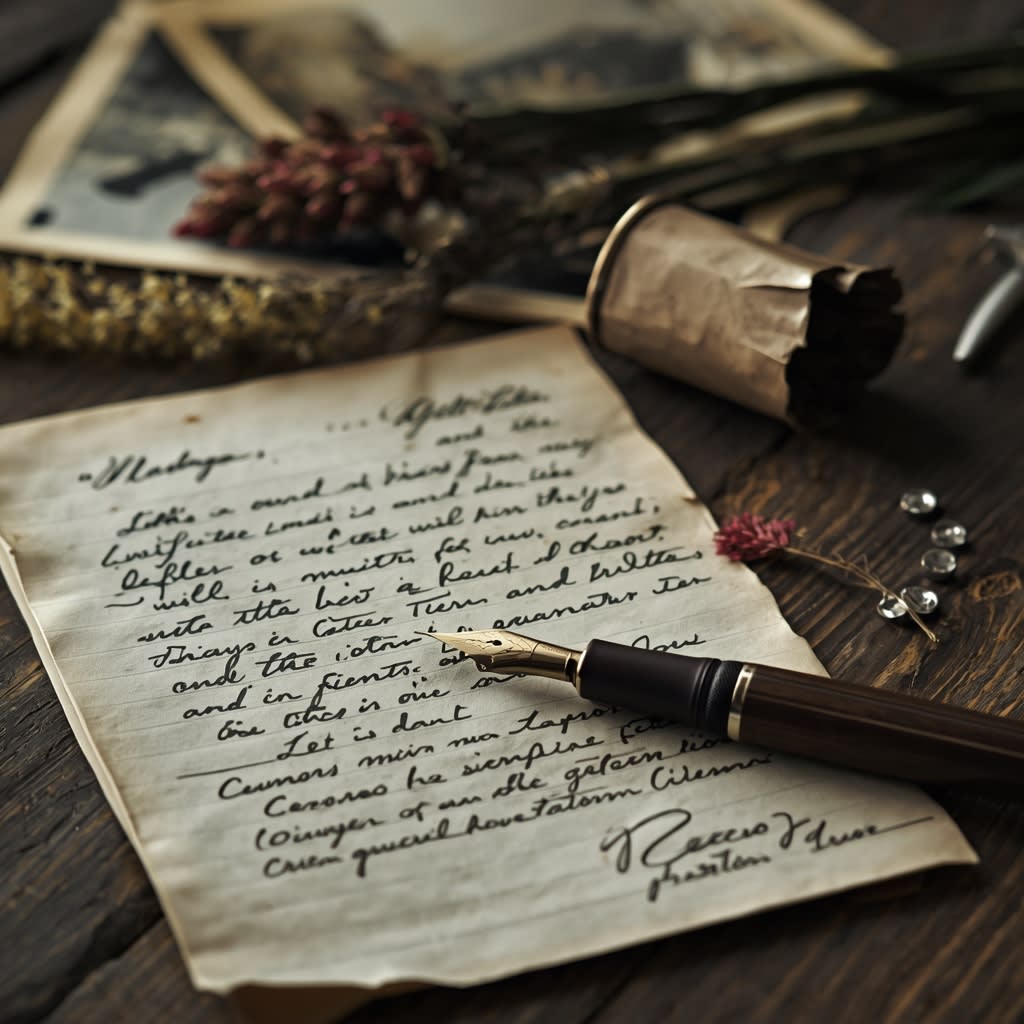
In 2024, the attic of our old family home was scheduled for renovation. My mother insisted that everything stored in the attic had already been sorted, but something about the dusty crates and untouched trunks told me otherwise.
I wasn’t expecting to find anything important—mostly old clothes, faded photo albums, a few broken toys from my childhood. But then I found a wooden box wrapped in cloth, sealed with a rusted lock.
The initials engraved on it read: E.H.
My great-grandmother, Eleanor Hayes.
Eleanor was a mysterious woman in our family history. She died long before I was born, and every story about her was strangely vague. All I really knew was that she had lived through World War II, worked as a nurse, and married my great-grandfather after the war ended. Everything else was whispered, avoided, or quickly changed to another topic.
The lock snapped easily.
Inside, I found letters—dozens of them—bound by ribbon now turned yellow with age. But one letter lay on top, separate from the rest, as if it had been placed last.
It was dated March 18, 1944.
The handwriting was hurried, emotional.
The name at the bottom froze me:
Captain Samuel Price.
Price was not my great-grandfather.
My heart beat faster as I unfolded the fragile paper.
**“My dearest Eleanor,
If you are reading this, I fear the worst has happened. But I need you to know the truth…”**
The more I read, the more the attic felt smaller, the air heavier.
Samuel wrote about how he had met Eleanor when she was assigned to his unit’s medical station. He wrote about how the war had stolen years from them, about the nights they spent hiding in abandoned farmhouses, comforting each other when bombs shook the earth.
And worst of all—
He wrote that they had planned to marry once the war was over.
That they had already exchanged rings privately.
That she was the only person he had ever truly loved.
I stopped breathing for a moment.
Everything we’d been told about Eleanor was wrong.
Samuel ended the letter with a plea:
**“…If fate keeps us apart, promise me this:
Do not let them rewrite our story.
Do not let history bury what we were.”**
My hands trembled as I read those lines again and again.
There were more letters—long ones, short ones, smudged ones, tear-stained ones. All from Samuel. All filled with a love so intense it felt like it was still alive in the paper.
But the last letter in the stack was different.
It was not from Samuel.
It was from someone named Thomas Gray, dated May 1944—two months later.
He wrote:
**“Miss Hayes,
It is my heartbreaking duty to inform you that Captain Price was killed during the attack on the northern ridge…”**
The rest of the letter blurred as tears filled my eyes.
Samuel had died in battle
—never knowing that Eleanor continued to love him.
—never knowing she kept every letter he sent.
And now, 80 years later, I was the one reading them.
I went downstairs in silence.
My mother was making tea when I placed the letters on the table. At first she didn’t understand. Then she saw the names.
Her face drained of color.
She whispered, “Where did you find these?”
“In the attic,” I said softly. “Mom… Eleanor loved someone else before great-grandfather. Someone she planned to marry.”
She sank into a chair.
Then she told me a story she had never spoken aloud:
Eleanor had been pregnant—before the war ended. Samuel never knew. After he died, Eleanor returned home broken, devastated, and desperate to keep the child. But her parents refused to let her raise a child alone. They forced her to marry another man—my great-grandfather—who agreed to raise the baby as his own.
And that baby was my grandfather.
Our entire family line came from a love story the world had tried to erase.
A love the war never allowed to bloom.
That night, I read every letter again. Slowly. Carefully.
I could feel Eleanor’s pain in every unread line, Samuel’s longing in every shaky word. And for the first time, the mystery surrounding my great-grandmother finally made sense: her silence, her distant eyes, the sadness hidden behind every family photo.
She lived her whole life carrying a story she wasn’t allowed to tell.
But now the truth was here, in ink and paper.
A story buried by war.
A story revived by chance.
A story that changed everything I thought I knew about my family.
And in that quiet moment, I understood something:
History doesn’t disappear.
It waits—
in letters, in memories, in secrets—
for someone brave enough to uncover it.
About the Creator
Keep reading
More stories from TariqShinwari and writers in History and other communities.
The Timeless Wonders of Egypt’s Pyramids
The Timeless Wonders of Egypt’s Pyramids For thousands of years, the pyramids of Egypt have captured the imagination of people all over the world. Rising majestically from the golden sands of Giza, these incredible structures are more than just tombs; they are symbols of human ingenuity, ambition, and the enduring legacy of one of history’s most remarkable civilizations.
By TariqShinwari3 months ago in History
India’s Biggest Bank Fraud: Vijay Mallya
An Indian man who was once called the “King of Good Times” in his era lived a life like a king. He would throw parties worth millions of rupees in a single night. While billionaires around the world owned private jets, he even had his own Boeing 727.
By Imran Ali Shah5 days ago in History


Comments
There are no comments for this story
Be the first to respond and start the conversation.