
OpenAI Unveils GPT-5.2: A Game-Changer AI Built for Professional Work
How GPT-5.2 Reinvents Productivity, Intelligence, and Real-World AI Capabilities in the Workplace

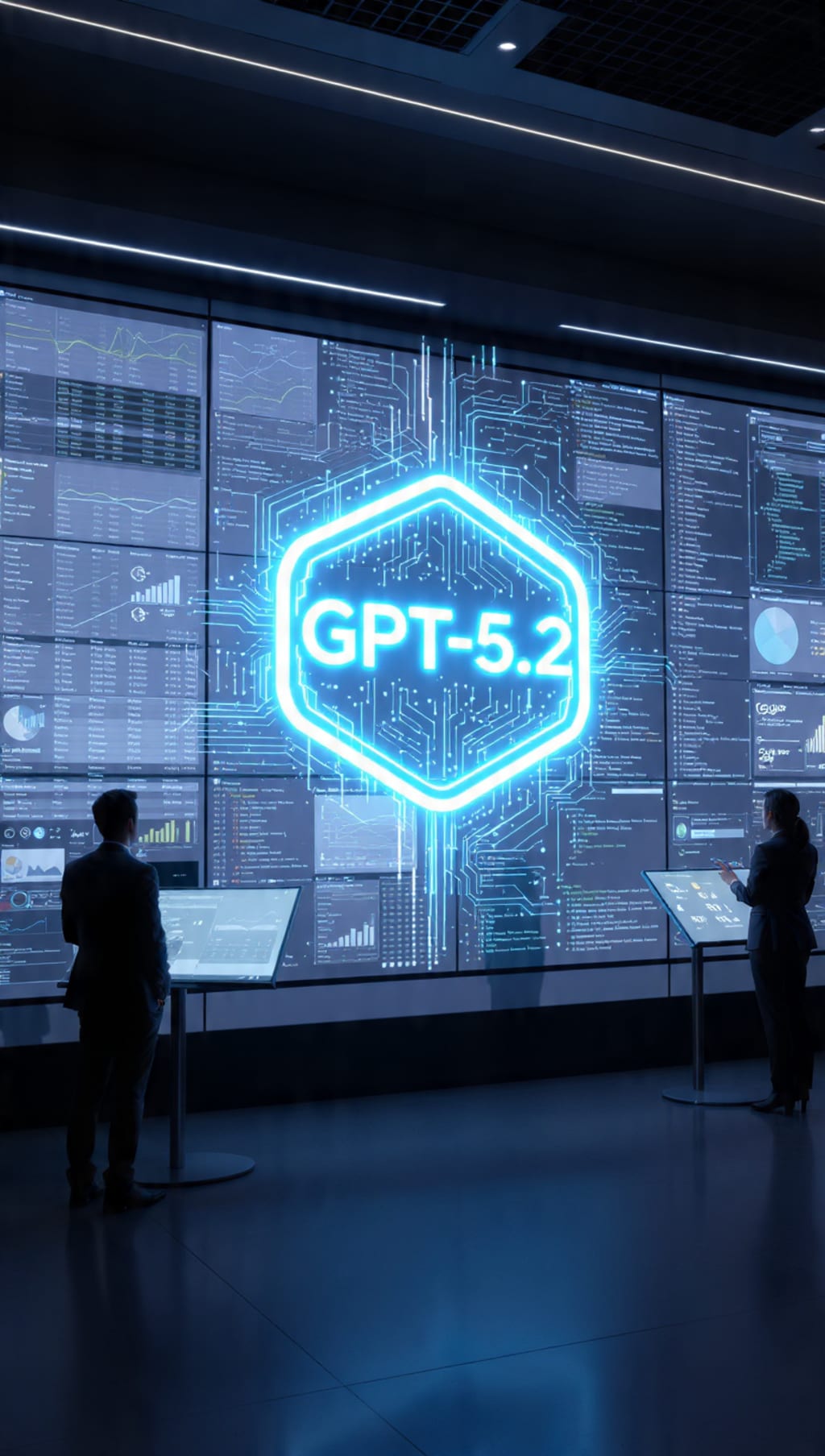
Why OpenAI’s New AI Model Feels Less Like Software and More Like a Skilled Colleague
The announcement didn’t come with fireworks or dramatic promises, yet the impact was immediate. When OpenAI revealed GPT-5.2, the message was simple but powerful: artificial intelligence is no longer just assisting professionals — it is beginning to think alongside them. For people who rely on accuracy, speed, and judgment in their daily work, this update feels different from anything before it.
For years, AI tools have been impressive but imperfect. They wrote drafts, summarized documents, and helped with research, yet something was always missing. Context slipped. Logic broke. Confidence sometimes replaced correctness. GPT-5.2 steps into that gap with a noticeable sense of maturity, as if the technology finally understands what real work actually looks like.
What makes GPT-5.2 stand out is not a single feature, but the way everything works together. It handles long conversations without losing direction. It understands complicated instructions without needing repetition. Most importantly, it behaves less like a chatbot and more like a professional assistant that knows when to slow down and think.
OpenAI designed GPT-5.2 specifically for knowledge-heavy roles. That includes analysts, marketers, developers, consultants, writers, educators, and business leaders. In internal evaluations, the model performed at or above expert human levels across dozens of real-world job tasks. These weren’t abstract tests — they were practical assignments drawn from actual professions.
One moment GPT-5.2 might be structuring a financial forecast, the next it’s reviewing a legal clause or debugging a piece of code. It doesn’t rush through the work. It reasons, checks assumptions, and explains its thinking clearly. This is where users begin to notice the shift from automation to collaboration.
There are now multiple versions of GPT-5.2, each designed with a different working style in mind. The fastest version responds instantly, perfect for quick writing, summarization, and everyday productivity. A more advanced “thinking” version takes extra time, carefully breaking down complex problems. Then there is the professional-grade version, built for tasks where accuracy matters more than speed.
What feels refreshing is the choice. Users can decide whether they want rapid answers or deeper reasoning, depending on the task at hand. That flexibility makes GPT-5.2 feel less rigid and more adaptable, something earlier models struggled to achieve.
Another noticeable improvement is reliability. AI hallucinations — confident but incorrect answers — have been a long-standing concern. With GPT-5.2, those errors are significantly reduced. The model is more cautious when uncertain and more transparent about what it knows and what it does not. For professionals, that trust matters more than flashy creativity.
Visual understanding has also taken a step forward. GPT-5.2 can analyze charts, screenshots, and diagrams with better accuracy. This opens new doors for data analysts, designers, and project managers who work with visual information daily. Instead of switching tools, users can now reason through visuals and text in one place.
For developers, the experience feels especially refined. GPT-5.2 doesn’t just write code; it understands systems. It follows logic across files, identifies potential issues, and suggests improvements that feel intentional rather than generic. Debugging becomes faster, and learning new frameworks feels less overwhelming.
Perhaps the most interesting part of GPT-5.2 is how it fits naturally into a workday. It doesn’t demand attention. It quietly saves time. Internal studies suggest professionals already reclaim nearly an hour a day using AI tools, and GPT-5.2 is positioned to push that even further. Over weeks and months, that time adds up to real productivity gains.
The competitive pressure in the AI space is intense. With companies like Google and others racing forward, OpenAI needed more than incremental updates. GPT-5.2 feels like a strategic move — not just to stay ahead, but to redefine expectations. Instead of asking what AI can do, users are now asking how much of their workflow it can responsibly handle.
This doesn’t mean humans are being replaced. If anything, GPT-5.2 highlights the value of human judgment. The model performs best when guided, reviewed, and partnered with real expertise. It amplifies skills rather than erasing them, making good professionals even more effective.
In many ways, GPT-5.2 signals a turning point. AI is no longer experimental or novelty-driven. It is becoming infrastructure — quietly embedded into how modern work gets done. Those who adopt it early may not notice dramatic changes overnight, but over time, the difference becomes undeniable.
GPT-5.2 isn’t loud. It doesn’t need to be. Its strength lies in how seamlessly it fits into professional life, handling complexity with calm confidence. And that may be the clearest sign yet that AI has entered a new phase — one where usefulness finally outweighs surprise.
About the Creator
David John
I am David John, love to write (passionate story teller and writer), real time stories and articles related to Health, Technology, Trending news and Artificial Intelligence. Make sure to "Follow" us and stay updated every time.
Keep reading
More stories from David John and writers in History and other communities.
ChatGPT 5.2 Has Arrived: A New Era of Everyday and Work Productivity
A New Chapter in the AI Story When OpenAI quietly began rolling out ChatGPT 5.2, the tech world buzzed with excitement. People from students to CEOs had been waiting for another major leap, and this update didn’t disappoint. Imagine an AI that not only answers questions but truly thinks through them — that’s the promise behind GPT-5.2. This release blends speed, precision, and deeper reasoning, making it more useful than ever for both casual conversations and serious business workflows.
By David Johnabout a month ago in History
3 Completely Normal Jobs With Disturbing Hidden Histories
Every job has a backstory. Some are boring, some are inspiring, and some are better left buried. While modern versions of certain professions look harmless—sometimes even respectable—their origins tell a much darker story.
By Enoch Sagini4 days ago in History
Albert Einstein: The Mind That Changed the Universe
Albert Einstein was not born a legend. When he entered the world on March 14, 1879, in the quiet German city of Ulm, nothing about his early life suggested that he would one day transform science forever. In fact, his beginnings were remarkably ordinary—and in some ways, difficult. As a child, Einstein spoke slowly, so slowly that his parents worried something might be wrong. Teachers considered him distracted and stubborn, a boy who questioned too much and obeyed too little. Yet hidden beneath that quiet exterior was a restless, powerful curiosity that would later reshape the universe itself.
By The best writer 3 days ago in History



Comments
There are no comments for this story
Be the first to respond and start the conversation.