World History
The Man Who Never Lived
During the spring of 1943, the outcome of World War II might have hinged not on a war, but on a modest London morgue. A small group of British intelligence officers stood before a locked door around a corpse — the corpse of a man who never even lived. His name was Major William Martin of the Royal Marines. He was dressed in a neat uniform, carried a new ID card, and had his love letters tucked into the breast pocket of his jacket. But there was a twist:
By Logan Bennett9 months ago in History
Kashmir: War of two states
Kashmir: The War of Two States, the Poverty of a Nation Kashmir. When you hear the word, snow-capped mountains, blue rivers, and flower-filled valleys come to mind. But behind this natural beauty lies the sigh of a nation, a bloody chapter in history, and a battlefield of pride for two states. For India and Pakistan, Kashmir is a symbol of national pride. But those who have repeatedly been deprived in the game of these two states are the Kashmiris—the original inhabitants of this valley, whose very existence is questionable.
By Abdul Barik9 months ago in History
The True Value of Honesty: Beyond Price and Profit
Introduction "How much is honesty worth?"—a question that echoes through every corner of human interaction, from boardrooms to family tables, from courtrooms to classrooms. At first glance, honesty may appear as a moral principle or virtue. However, upon deeper analysis, it reveals itself to be a force that shapes entire civilizations, governs economies, underpins justice systems, and builds personal relationships. Honesty is not just a virtue; it's a currency—perhaps the most valuable one we possess.
By Sakhawat Hossain9 months ago in History
A golden chapter
There are some eras in history that serve as a model of learning for not just one nation, but for all of humanity. One such era in Islamic history is the “Khilafah Rashidah” or “Era of the Rightly Ruled Caliphate”—which was established after the death of the Prophet Muhammad (peace and blessings of Allah be upon him) under the leadership of his closest companions. During this era, four caliphs took office one after the other: Abu Bakr (may Allah be pleased with him), Umar (may Allah be pleased with him), Uthman (may Allah be pleased with him), and Ali (may Allah be pleased with him). These four are called the ‘Al-Khalifa’ or ‘The Rightly Guided Caliphs’ because they embodied the ideals of the Prophet in practical politics, administration, social order, and justice.
By Abdul Barik9 months ago in History
The Rise and Fall of the Baghdad Pact: Why CENTO Failed in the Middle East
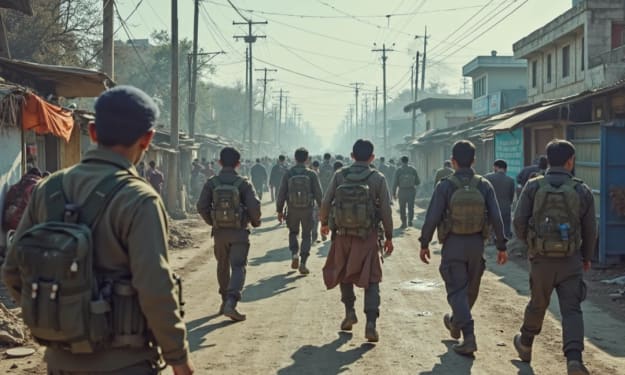
Baghdad Pact and the 'Wall of Allies': That Military Alliance Like NATO Which Did Not Help Pakistan When Needed When you hear the name of Baghdad, the capital of Iraq, many thoughts come to mind — from Harun al-Rashid and the capital of the Abbasid Caliphate to Saddam Hussein.
By Ikram Ullah9 months ago in History
The Fragmented Kingdom of Axum: Ethiopia’s Overlooked Empire of Wealth and Prestige . AI-Generated.
The Fragmented Kingdom of Axum: Ethiopia’s Overlooked Empire of Wealth and Prestige Concealed in the highlands of contemporary Ethiopia lies the heritage of a once-formidable empire the Kingdom of Axum. Renowned for its monumental obelisks, architectural excellence, and robust trading networks, Axum served as a symbol of African influence and affluence for over 800 years. From the 1st to the 10th centuries CE, it matched the Roman, Persian, and Indian empires in cultural significance and commercial strength.
By Say the truth 9 months ago in History
The Silver City of the Andes: The Rise and Fall of Potosí’s Forgotten Fortune
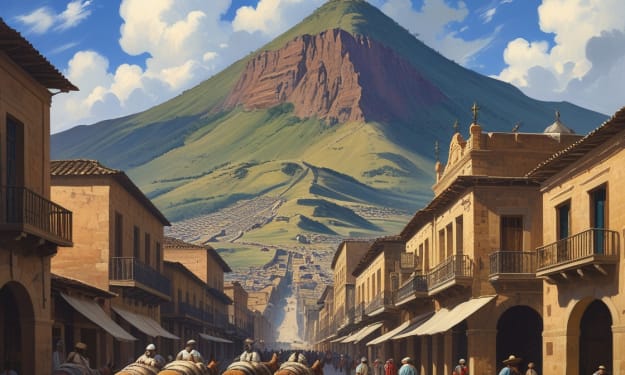
The Silver City of the Andes: The Ascendancy and Decline of Potosí’s Overlooked Wealth Nestled high in the Bolivian Andes, Potosí was once the most affluent city on the planet during the Spanish colonial period. Driven by the extraordinary silver riches of Cerro Rico (the "Rich Mountain"), Potosí supported the Spanish Empire and transformed global commerce, yet its affluence exacted a lethal toll. This article examines the narrative of how the silver from a single mountain sparked an economic upheaval, wreaked havoc on indigenous labor, and ultimately faded into insignificance as the veins ran dryleaving behind remnants, myths, and the specters of imperial avarice.
By Say the truth 9 months ago in History
The Final Enigma: The Mysterious Death of Alexander the Great
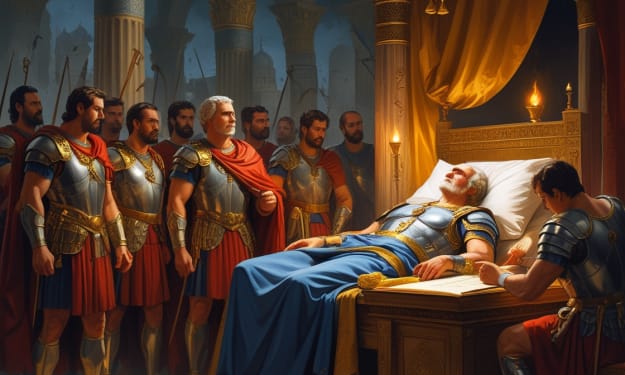
The Ultimate Puzzle: Deciphering the Enigmatic Demise of Alexander the Great The passing of Alexander the Great in 323 BCE persists as one of the most captivating historical conundrums. Was it due to poison, illness, or a more sinister cause? This article investigates the final days of the iconic conqueror, scrutinizing ancient narratives and contemporary hypotheses to reveal the reality behind one of history's most profound puzzles.
By Say the truth 9 months ago in History
Echoes Behind the Iron Curtain: Soviet Union
History is rarely neutral. It is shaped, framed, and retold by those with the power to publish and the platforms to influence. For decades, the Western narrative around the Soviet Union has been less about balanced historical record and more about ideological victory. Through selective memory and strategic silence, the West has painted an image of the USSR as a failed, brutal experiment, erasing its scientific, social, and cultural achievements while blaming an entire state and its people for the actions of individual leaders.
By The Spotlight9 months ago in History
Echoes of Stone
The prehistoric figurine known as the Venus de Losange is a small but potent testament to the symbolic world of early Homo sapiens. Carved during the Upper Paleolithic period, estimated at 25,000–30,000 years ago, this enigmatic artifact offers more than artistic intrigue—it opens a rare window into the social, emotional, and spiritual dimensions of our distant ancestors.
By Navinder Dinesh Ram9 months ago in History
The Night the Sodder Children Vanished
It was Christmas Eve, 1945, in Fayetteville, West Virginia. The Sodder family was celebrating together. George and Jennie Sodder had ten children, and their cozy house was filled with the sounds of laughter, excitement, and Christmas cheer. That night, five of the younger children — Maurice (14), Martha (12), Louis (9), Jennie (8), and Betty (5) — were allowed to stay up a little later to play with new toys. The rest of the family went to bed.
By Asad khan 3139 months ago in History
Edan Alexander , A Journey Through Darkness and Hope
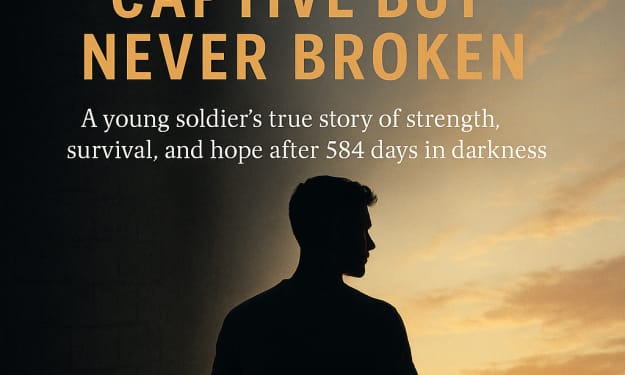
The Long Journey of Edan Alexander Edan Alexander was born in Israel, in the city of Tel Aviv. But when he was a small boy, his family moved to the United States. He grew up in a quiet town called Tenafly in New Jersey. Edan was a kind and friendly boy. He loved playing sports, listening to music, and spending time with his family.
By Tahir khan9 months ago in History