
Echoes of Stone
Unraveling the Symbolism of the Venus de Losange

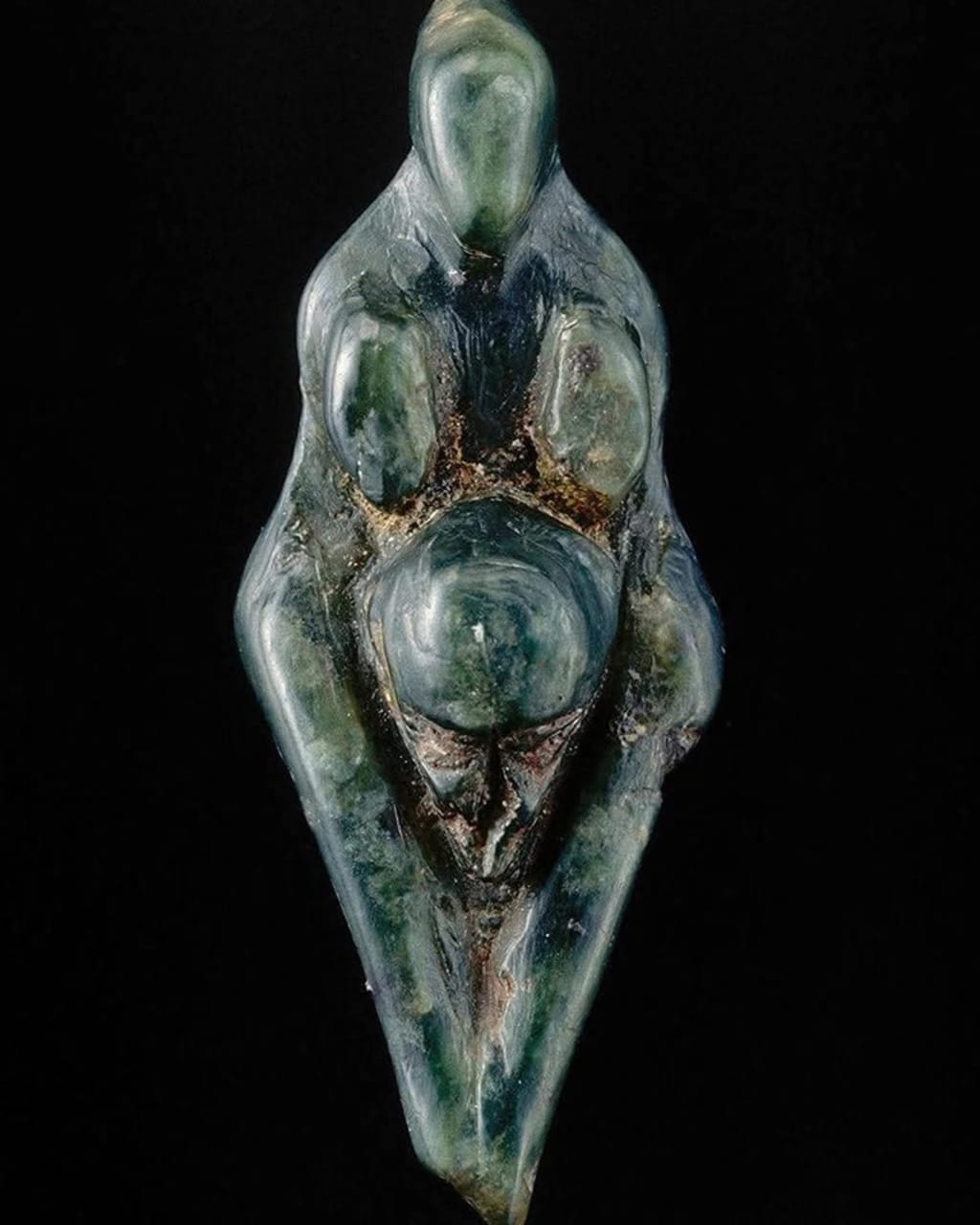
The prehistoric figurine known as the Venus de Losange is a small but potent testament to the symbolic world of early Homo sapiens. Carved during the Upper Paleolithic period, estimated at 25,000–30,000 years ago, this enigmatic artifact offers more than artistic intrigue—it opens a rare window into the social, emotional, and spiritual dimensions of our distant ancestors.
The Venus Tradition in Prehistory
The Venus de Losange belongs to a broader category of prehistoric artifacts often referred to as "Venus figurines"—a term applied by modern archaeologists to denote small carvings of female forms discovered across Ice Age Europe. These figurines typically emphasize reproductive features such as exaggerated breasts, hips, and thighs, while omitting facial or anatomical detail. They are not literal representations but rather symbolic abstractions—the earliest known examples of figurative art.
The name "Venus" is anachronistic, referencing the Roman goddess of love and beauty, despite predating classical mythology by tens of thousands of years. In the case of Venus de Losange, the term “Losange” (French for “rhombus” or “diamond”) likely alludes to the figurine’s geometric stylization, indicating a move toward symbolic or conceptual representation in early art.
A Snapshot of Upper Paleolithic Society
At the time of the Venus de Losange's creation, humans lived in small, nomadic bands. Survival depended on cooperation, hunting, gathering, and profound attunement to the rhythms of nature. Social life was likely egalitarian, and while roles may have been gendered, there is no evidence of rigid hierarchies.
Artifacts such as this figurine suggest that Upper Paleolithic humans possessed not only practical intelligence but also the ability for symbolic thought, emotional depth, and social storytelling. Without written language, early humans encoded meaning into objects—rendering their thoughts, fears, hopes, and reverence in stone, bone, and ivory.
Interpretation and Symbolism
The Venus de Losange likely carried multiple layers of meaning, depending on its cultural context:
- Fertility Symbol: The emphasis on reproductive anatomy suggests reverence for the female body as a source of life. In an environment where infant mortality and survival were constant concerns, fertility may have been sacralized.
- Spiritual Talisman: It may have served a ritualistic function—used in rites related to childbirth, seasons, or renewal.
- Cultural Totem: As a portable object, it could represent group identity or ancestral connection, passed down through generations.
Rather than being purely aesthetic, these objects were likely tools of meaning-making—bridging individual experience and collective understanding.
Nature, Emotion, and Human Cognition: Then and Now
What sets this artifact apart is not just its age, but what it reveals about the human psyche. In the Paleolithic era, nature was omnipresent, and survival depended on intuition, emotional cohesion, and group empathy. Emotional intelligence was not discussed—it was lived. Bonds between individuals were forged through shared struggle, ritual, and memory.
In contrast, the modern world is shaped by abstraction, control, and intellectualization. We analyze what may once have been felt instinctively. Emotional intelligence today is categorized and cultivated through disciplines like psychology and education. Meanwhile, our relationship with nature has shifted from reverence to exploitation.
This contrast highlights the figurine’s enduring resonance. The Venus de Losange is a symbol of connection—to the body, the earth, and one another. It represents a time when symbol, survival, and spirit were intertwined.
Conclusion
The Venus de Losange is more than a prehistoric artifact; it is a relic of deep time, a whisper from a world where meaning was carried not in words, but in form. It reminds us that the sacred once lived in the everyday, and that art—no matter how ancient—is a mirror reflecting the timeless human desire to understand life, fertility, identity, and belonging.
As we contemplate this small carved figure, we are not just observing an object. We are listening to an echo—one that still vibrates through the collective memory of our species.
About the Creator
Navinder Dinesh Ram
Kritrima Buddhimattā
Keep reading
More stories from Navinder Dinesh Ram and writers in History and other communities.
Blockchain for Compliance in Marine Environmental Regulations
Introduction The maritime industry plays a critical role in global trade but is also a significant contributor to environmental degradation. With growing concerns about climate change, pollution, and the health of marine ecosystems, governments and international bodies have introduced stringent environmental regulations. These regulations aim to limit the environmental impact of maritime activities by enforcing strict guidelines on emissions, waste management, and resource use.
By Navinder Dinesh Ram2 years ago in Education
The Year 1986 in Review: Fun Facts, Trivia, and Historic Highlights
This quick read is a collection of fun facts, trivia, and historical events from the year 1986. Discover the year’s top news stories, most influential people, sports trivia, grocery prices, and much more.
By Gregory DeVictora day ago in History


Comments
There are no comments for this story
Be the first to respond and start the conversation.