
The Final Enigma: The Mysterious Death of Alexander the Great
Alexander the Great, one of the most legendary conquerors in history, died unexpectedly at the age of 32 in Babylon. His death remains an unsolved mystery, with theories ranging from poisoning and illness to autoimmune disease and alcohol-induced collapse. This article explores his final days and the competing explanations for his demise, drawing from ancient texts and modern medical insights to examine one of history’s most enduring enigmas.

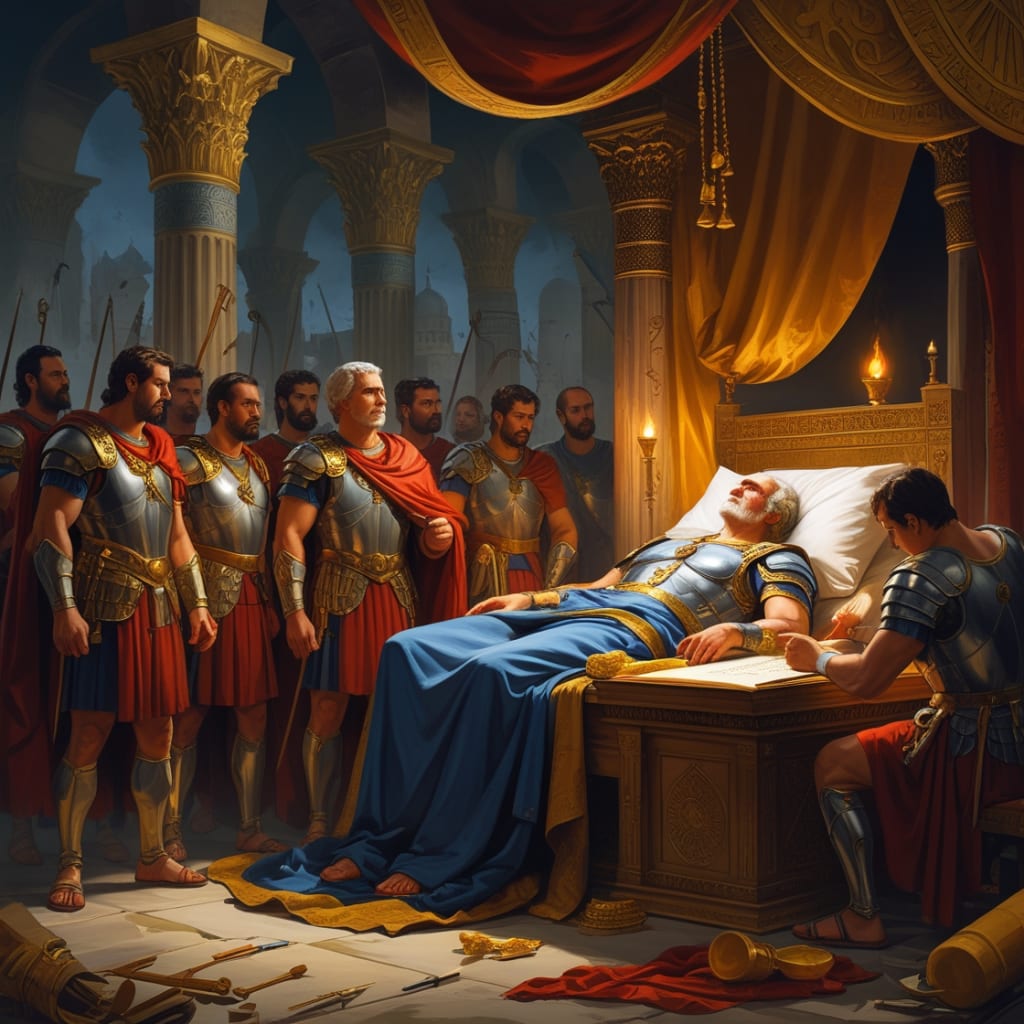
The Ultimate Puzzle: Deciphering the Enigmatic Demise of Alexander the Great
The passing of Alexander the Great in 323 BCE persists as one of the most captivating historical conundrums. Was it due to poison, illness, or a more sinister cause? This article investigates the final days of the iconic conqueror, scrutinizing ancient narratives and contemporary hypotheses to reveal the reality behind one of history's most profound puzzles.
The Ultimate Puzzle: Deciphering the Enigmatic Demise of Alexander the Great
In June 323 BCE, within the palace of Nebuchadnezzar II in Babylon, Alexander the Great one of the most formidable and mysterious figures in human history succumbed at the tender age of 32. By that period, he had subdued most of the known world, from Greece to the Indus Valley, creating an empire that extended over 3,000 miles. His demise, however, initiated a tumult of confusion, power conflicts, and ultimately the disintegration of his empire. Yet the question that has confounded historians for more than two millennia remains: what were the circumstances surrounding Alexander the Great's death?
The abrupt and enigmatic nature of Alexander's demise, compounded by conflicting historical narratives, has led to unending speculation. Was it the consequence of poison, illness, exhaustion, or a mixture of all three? Let us investigate the concluding days of Alexander's life, probing the various hypotheses regarding his premature passing.
The Final Days in Babylon
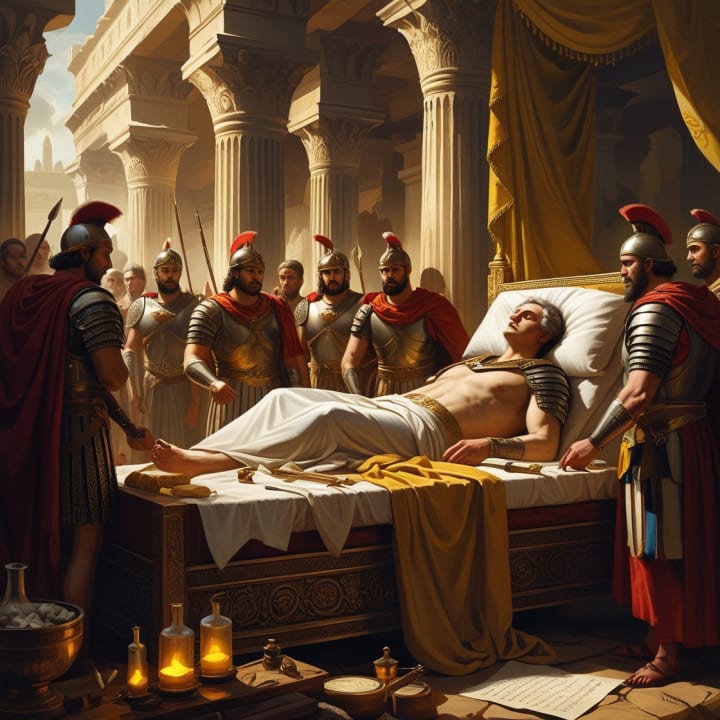
As per the ancient historian Plutarch, Alexander had returned to Babylon following his extensive campaigns in India. He was strategizing a new expedition this time targeting Arabia. During a feast celebrating the return of a dear friend, Alexander reportedly consumed a considerable quantity of wine and soon after developed a high fever. Over the span of several days, his health deteriorated. He ultimately lost his ability to articulate and succumbed after nearly two weeks of illness.
Curiously, no observable wounds or external injuries were recorded. His generals and associates were perplexed. Furthermore, ancient authors such as Arrian, Diodorus, and Curtius Rufus present differing timelines and symptoms, further complicating the historical account.
Hypothesis 1: Poison
One of the earliest and most enduring theories posits that Alexander was murdered. After all, his ambitious disposition and unpredictable conquests rendered him both revered and feared even among his closest allies. This theory suggests that he was poisoned, potentially by political adversaries who were apprehensive of his future conquests or disapproved of his growing adoption of Persian customs.
However, there are challenges to this theory. Most poisons known during that era would have acted swiftly, and Alexander's ailment was reported to persist for 10–12 days. This timeframe does not align with typical symptoms of poisoning unless a rare or slow-acting toxin was utilized and there is no direct proof of such a substance.
Nonetheless, some speculate on the potential involvement of Antipater, a powerful Macedonian general and regent. His sons Cassander and Iollas (Alexander's cupbearer) were present in Babylon. Might they have administered poison at their father's instigation?
Hypothesis 2: Natural Illness
More recently, medical professionals have proposed that Alexander succumbed to a natural illness. Malaria and typhoid fever were prevalent in Mesopotamia during that period, and both correspond with numerous reported symptoms of Alexander, including fever, abdominal discomfort, and fatigue.
A particularly persuasive hypothesis originates from Dr. Leo Schep of the New Zealand National Poisons Centre, who postulates that Alexander may have experienced Guillain–Barré syndromean autoimmune condition that can be stimulated by bacterial infection. This affliction could elucidate his paralysis, extended suffering, and even the intriguing assertion from ancient narratives that Alexander’s remains exhibited no signs of decay for several days post-mortem.
In ancient times, the notion that his body remained intact contributed to the legend that he was divine. However, from a medical perspective, Guillain–Barré syndrome can induce a loss of motor abilities while the individual remains cognitively awarepotentially clarifying the days of silence leading up to his demise.
Theory 3: Alcohol and Fatigue
Another hypothesis attributes Alexander’s death to a lifetime of profound physical and psychological strain, exacerbated by excessive alcohol consumption. Alexander was renowned for both his endurance in battle and his engagement in opulent feasts, frequently partaking in substantial quantities of alcohol.
Some historians suggest that after years of relentless campaigning, injuries, and drinking, his body ultimately betrayed him. He had also recently been grieving the loss of his close companion Hephaestion, which may have contributed to depression and further self-destructive tendencies.
A Death Enveloped in Myth
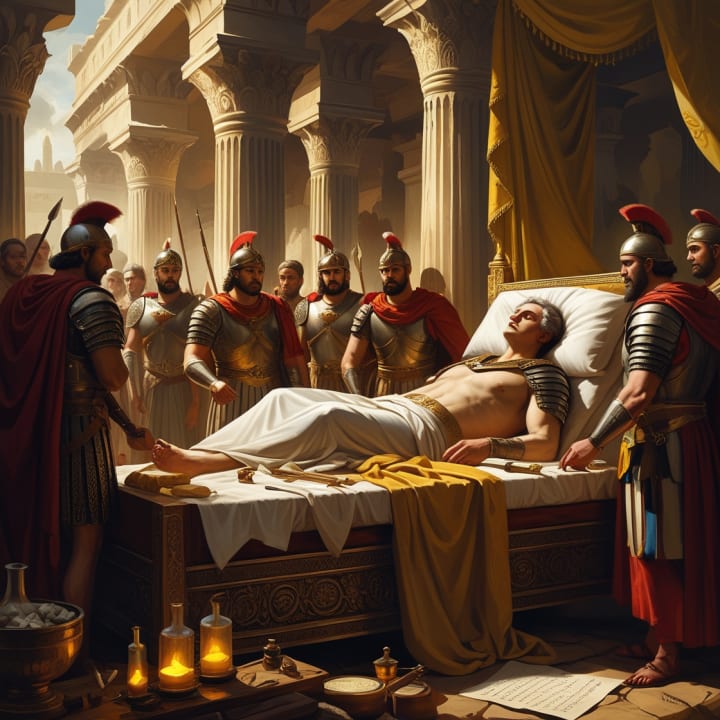
Regardless of the actual cause, the enigma of Alexander’s death has persisted due to the legends surrounding it. One well-known account implies that, when queried on his deathbed regarding who should succeed him, Alexander murmured, “To the strongest. ” This ambiguous reply incited his generals into a lethal contest for succession, ultimately resulting in the fragmentation of his empire into rival Hellenistic realms.
His remains were reportedly interred in a golden sarcophagus and transported to Egypt, where they disappeared from historical documentationyet another enigma associated with his identity.
Conclusion
Alexander the Great was more than merely a military strategisthe embodied ambition, conquest, and the fusion of cultures. His death, akin to his life, became a source of myth and fascination. While poison, illness, and fatigue remain the principal theories, no conclusive explanation has been established.
More than 2,000 years later, the passing of Alexander continues to captivate usnot due to the manner of his demise, but because of the legacy it has bequeathed. Whether by natural illness or political assassination, his departure signified the conclusion of an epoch and the inception of a legacy that still resonates through the annals of history.
About the Creator
Say the truth
"Say the Truth: Explain Everything in the World" is your trusted source for uncovering facts and exploring the wonders of history, science, technology, and beyond. We simplify complex ideas and reveal truths to inspire curiosity .
Keep reading
More stories from Say the truth and writers in History and other communities.
Emeralds Beneath the Waves: The Untold Story of the Spanish Galleon Santa Margarita
Emeralds Beneath the Waves: The Untold Narrative of the Spanish Galleon "Santa Margarita" Off the sun-kissed coastline of Florida, in the core of the Caribbean, resides a submerged tomb harboring centuries-old enigmasamong them, the lost Spanish galleon Santa Margarita. Sunk during a devastating hurricane in 1622, the Santa Margarita bore a cargo of such wealth that it would astonish the imagination: gold ingots, silver coins, Colombian emeralds, and treasures from throughout the extensive Spanish Empire. Although centuries have elapsed, the tale of the Santa Margaritaits calamity, its riches, and the enduring pursuit to recover its bountyremains one of the most captivating maritime legends globally.
By Say the truth 8 months ago in History
Why Pastor Collar Shirts Are Essential for Modern Church Leaders
In today’s modern church, appearance matters just as much as message. Church leaders are expected to look respectful, approachable, and professional at all times. Clothing plays a big role in creating this image. Among all clerical outfits, pastor collar shirts stand out as one of the most important garments for church leaders. These shirts are not only a symbol of faith and authority, but they also provide comfort, confidence, and identity.
By Sameera eclergys2 days ago in History
Silver Screen Magic with Mae West
American actress and singer Mae West became a popular film actress during the Great Depression. She started entertaining in vaudeville, then performed on Broadway, and finally went to Hollywood. She signed up with Paramount Pictures and made her debut in the 1932 film “Night After Night.” She also starred in musicals, comedies, and crime dramas. The American Film Institute named her one of the best classic Hollywood actresses.
By Rasma Raisters4 days ago in Geeks




Comments
There are no comments for this story
Be the first to respond and start the conversation.