World History
This Is How You Kill a Witness.
A Black woman, slight, deliberate, sharp-eyed. She is injured, holding crutches. She keeps her eyes low, but her spine is straight. She looks small against the backdrop of burnished wood. But today, she will not remain silent as so many other women had. Scared for their lives. Scared for their families. Scared of the consequences of telling the truth. Frances Thompson was terrified, but she knew that the only way to make them listen was to speak.
By River and Celia in Underland 8 months ago in History
Alexander the Great: Hero or Tyrant?
Introduction Few historical figures are as polarizing as Alexander the Great. Born in 356 BCE in Macedonia, he created one of the largest empires in the ancient world before dying at just 32 years old. Lauded by some as a military genius and visionary leader who spread Hellenistic culture, and condemned by others as a ruthless conqueror who left chaos and death in his wake, Alexander’s legacy is a complex mosaic of heroism and tyranny. This article critically examines both aspects to determine whether Alexander deserves the title of “Great” — or something else entirely.
By Haris khan8 months ago in History
What History Books Don’t Tell You About Colonialism
🩸 What History Books Don’t Tell You About Colonialism → A Raw Look at the Wounds That Never Healed We were told it was about “civilization.” About trains, law, and the English language. We were taught names like Vasco da Gama, Columbus, and Clive as pioneers. We memorized dates of conquests, not massacres. We celebrated “discoveries,” not theft. And somewhere between the footnotes and glorified timelines, the truth was buried.
By Md Ajmol Hossain8 months ago in History
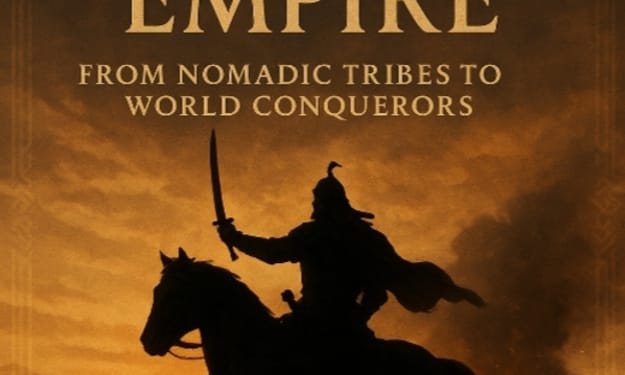
The Rise of Mongol Empire
In the vast and unforgiving steppes of Central Asia, where survival demanded strength, strategy, and unity, a storm was brewing that would alter the course of world history. This storm had a name—Temujin, a boy born in the harsh Mongolian wilderness in the year 1162. Abandoned by allies, hunted by enemies, and betrayed by kin, Temujin rose from obscurity to become Genghis Khan, the founder of the largest contiguous land empire the world has ever known: the Mongol Empire.
By Mati Henry 8 months ago in History
🏰Petra: The Lost Rose City of the Nabateans
🏰Petra: The Lost Rose City of the Nabateans 🌵The Ancient City Carved from Desert Stone If you ever find yourself in southern Jordan, standing at the mouth of a narrow canyon while the desert wind swirls red dust around your feet, you might have the sense that you’re on the edge of something extraordinary. And you’d be right. Just beyond that winding chasm lies Petra—a city carved straight into the rose-colored cliffs, a place that once bustled with life and now sits in silent, sun-baked grandeur. Petra isn’t just a monument to the past. It’s a labyrinth of stories, secrets, and stone, and its legacy is still unfolding.
By Kek Viktor8 months ago in History
✈️The Top 5 Warplanes of World War II
✈️The Top 5 Warplanes of World War II: Masters of the Skies World War II was as much a war of machines as it was of men. Among those machines, warplanes soared to unprecedented importance. They reshaped battlefields, changed tactics, and became symbols of national pride and technical prowess. From the early days of dogfights to massive bombing raids, the aircraft that dominated the skies played crucial roles in determining the fate of nations. Many planes flew in these skies, but a handful stood out for their design, performance, versatility, and impact on the war effort.
By Kek Viktor8 months ago in History
The Conneaut Giants: Unearthing the Forgotten Race of Titans
Whispers Beneath the Ohio Soil Long before concrete towns and railroad tracks stitched the American frontier together, the land spoke in whispers. Ancient forests blanketed the hills, rivers shimmered untouched, and secrets, deep, ancient secrets, lay hidden just beneath the surface. One such secret revealed itself in the early 1800s in Conneaut, Ohio.
By The Secret History Of The World8 months ago in History
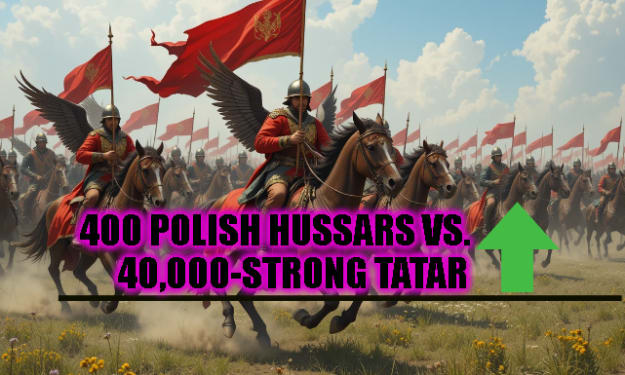
🛡️When 400 Polish hussars resisted a 40,000-strong Tatar force
The Battle of Hodów, fought in the summer of 1694, stands out as one of the most extraordinary confrontations in the history of the Polish-Lithuanian Commonwealth. This clash between a small detachment of approximately 400 Polish hussars and a massive Tatar raiding force, estimated at around 40,000 warriors, has become legendary as a symbol of valor, discipline, and tactical genius. Often called the “Polish Thermopylae,” the Battle of Hodów showcases how steadfast courage and military skill can defy overwhelming odds.
By Kek Viktor8 months ago in History