Narratives
SHUKRACHARYA
Shukracharya is respected mentor and spiritual guide of the demons (the Asuras) as per the Hindu mythology, he is an iconic figure whose knowledge and wisdom are still significant today. As the teacher of the Asuras, he conveyed his teachings that were pragmatic, emphasizing diplomacy, ethics, administration and warfare. Also, He was an advocate of forgiveness and compassion. His legacy and teachings, is scripted in the ancient Hindu scriptures, notably "Shukra Niti", a treatise on governance, statecraft, and politics.
By Yuvraj AtharavRaj Singh Yadav5 months ago in History
The Child Who Vanished — and the Man Who Came Back
The Night Everything Changed Saroo Brierley was born in Khandwa, Madhya Pradesh, India. Life was fragile. His father had abandoned the family, and his mother worked carrying stones to earn enough to feed her children. Saroo often begged or scavenged food alongside his older brother Guddu. Despite their hardships, the boys shared laughter, dreams, and the quiet understanding that they only had each other.
By Atif khurshaid5 months ago in History
Zipho Memela: A Tale of Two Careers. Content Warning.
The name Zipho Memela is associated with two different public personas, each having made a mark in their respective fields. While one is a former hip-hop artist from Durban, the other is an entrepreneur and author.
By Kin Mancook5 months ago in History
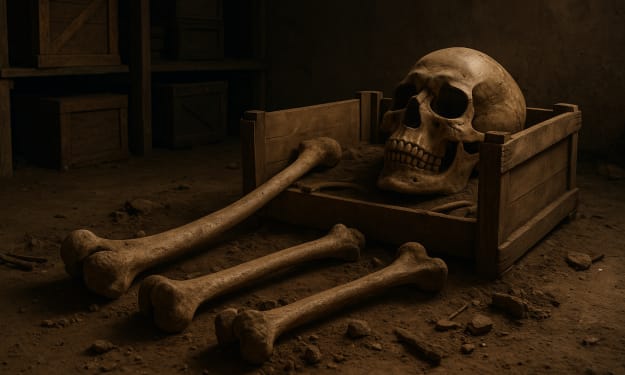
The Giants of North America, Bones, Headlines, and a Century of Silence
Behind The Scenes The story begins in quiet places, fields along river bends, hills that rise gently over the Midwest, burial mounds shaped by hands far older than the United States itself. In the late nineteenth and early twentieth centuries, farmers cut into those mounds, road crews leveled them for progress, and local papers reported discoveries that should have changed the way we tell history. They described skeletons of unusual size, skulls with features that did not match the average measurements of the day, long bones that drew crowds and curiosity in county seats from Ohio to Wisconsin. Reporters wrote in brisk, matter-of-fact tones, as if describing a sports score or a harvest tally. Then, almost as quickly, the words faded from view, leaving behind a mystery.
By The Secret History Of The World5 months ago in History
The Copper Scroll: Directions to Lost Treasure Beyond the Dead Sea
A Discovery Unlike Any Other In 1952, a significant discovery was made within the barren caves near Qumran, located near the Dead Sea. This find, unlike any other in the region, consisted of a pair of scrolls hammered out of copper. These scrolls, unlike the fragile manuscripts written on parchment or papyrus that were typically found, contained a record that read more like instructions, as though someone had left behind a coded guide to something immense.
By The Secret History Of The World5 months ago in History
"US Soldiers and the Gaza War: Could Washington Face War Crimes Charges?"
"US Soldiers and the Gaza War: Could Washington Face War Crimes Charges?" The war in Gaza has raged for nearly two years, leaving cities in ruins and civilians caught in relentless cycles of bombardment. While Israel has faced widespread condemnation for strikes that many experts call violations of international law, a new dimension of responsibility is now under the spotlight: the role of the United States.
By Wings of Time 5 months ago in History
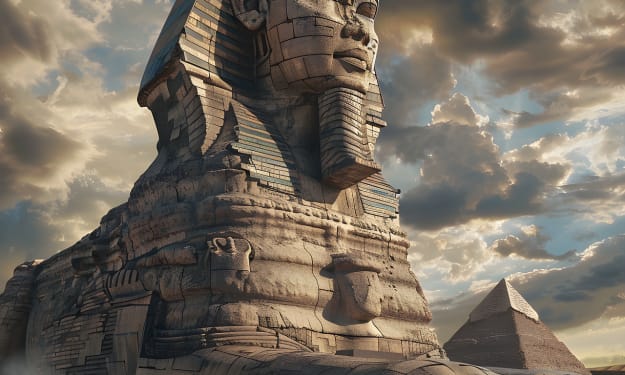
The Secret Blueprints of the Sphinx: Lost Evidence of a Forgotten Age?
Lost Evidence of a Forgotten Age? The Great Sphinx of Giza has long stood as one of the most mysterious monuments in human history. Half lion, half man, it watches over the Giza plateau, older than the pyramids and cloaked in mystery. While much attention has been given to the missing records of the Great Pyramid, the Sphinx holds its own puzzle: where are its blueprints, inscriptions, or records of construction?
By The Secret History Of The World5 months ago in History
Oddball Cemeteries of the U.S.: Where Americana Refuses to Stay Buried
America is famous for its highways, diners, neon signs, and baseball diamonds. But if you want a true look at the nation’s eccentric soul, don’t just look at where people lived, look at where they’re buried. From clowns and cowboys to frozen dead guys and epitaphs that double as comedy routines, cemeteries in the U.S. are less about quiet reflection and more about eternal Americana.
By The Iron Lighthouse5 months ago in History
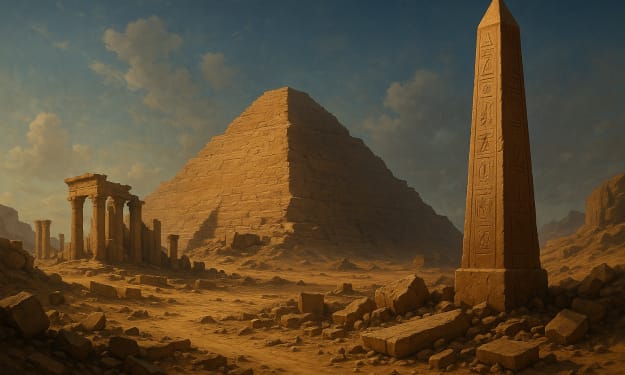
The Lost Archives of the Great Pyramid: Hidden Knowledge of a Forgotten Civilization?
Hidden Knowledge of a Forgotten Civilization? From the deserts of Giza rises the Great Pyramid, a monument that has endured for over 4,500 years. Yet one of the greatest mysteries remains unanswered: where are its architectural records? The ancient Egyptians documented nearly every aspect of life, from farming to astronomy, but not a single papyrus, tablet, or inscription exists that describes the construction of the most astonishing monument in human history.
By The Secret History Of The World5 months ago in History
Why Germany Did Not Develop the Atomic Bomb. AI-Generated.
The Second World War was not only a conflict of soldiers and armies but also a war of science, engineering, and technology. Among the most transformative developments of the twentieth century was the atomic bomb, whose successful construction by the United States under the Manhattan Project changed the course of history. Yet Germany, despite having some of the world’s leading physicists such as Werner Heisenberg, Max Planck, and others, failed to build the weapon. The question of why Nazi Germany did not develop an atomic bomb remains one of the most compelling debates in the history of science and war. To understand this failure, one must examine the interplay of political ideology, scientific challenges, resource limitations, and the role of individuals—especially Heisenberg—who stood at the center of the German nuclear program.
By INAM ULLAH5 months ago in History
Barisal’s Floating Guava Market: Rivers of Life, Heritage, and Tourism in Bangladesh
Southern Bangladesh is home to one of the country’s most enchanting and historically rich marketplaces: the Floating Guava Market of Barisal. Often called the “Venice of Bengal,” this centuries-old riverine market reflects the unique interplay between culture, economy, and natural waterways. Wooden boats laden with guavas—locally known as the “Apple of Bengal”—and other seasonal fruits traverse the Kirtankhola, Sugandha, and Bishkhali rivers, forming a living tapestry of human resilience and heritage.
By Tuhin sarwar5 months ago in History