
The Copper Scroll: Directions to Lost Treasure Beyond the Dead Sea
An ancient copper artifact inscribed with hidden instructions may point to lost riches and forgotten knowledge.

A Discovery Unlike Any Other
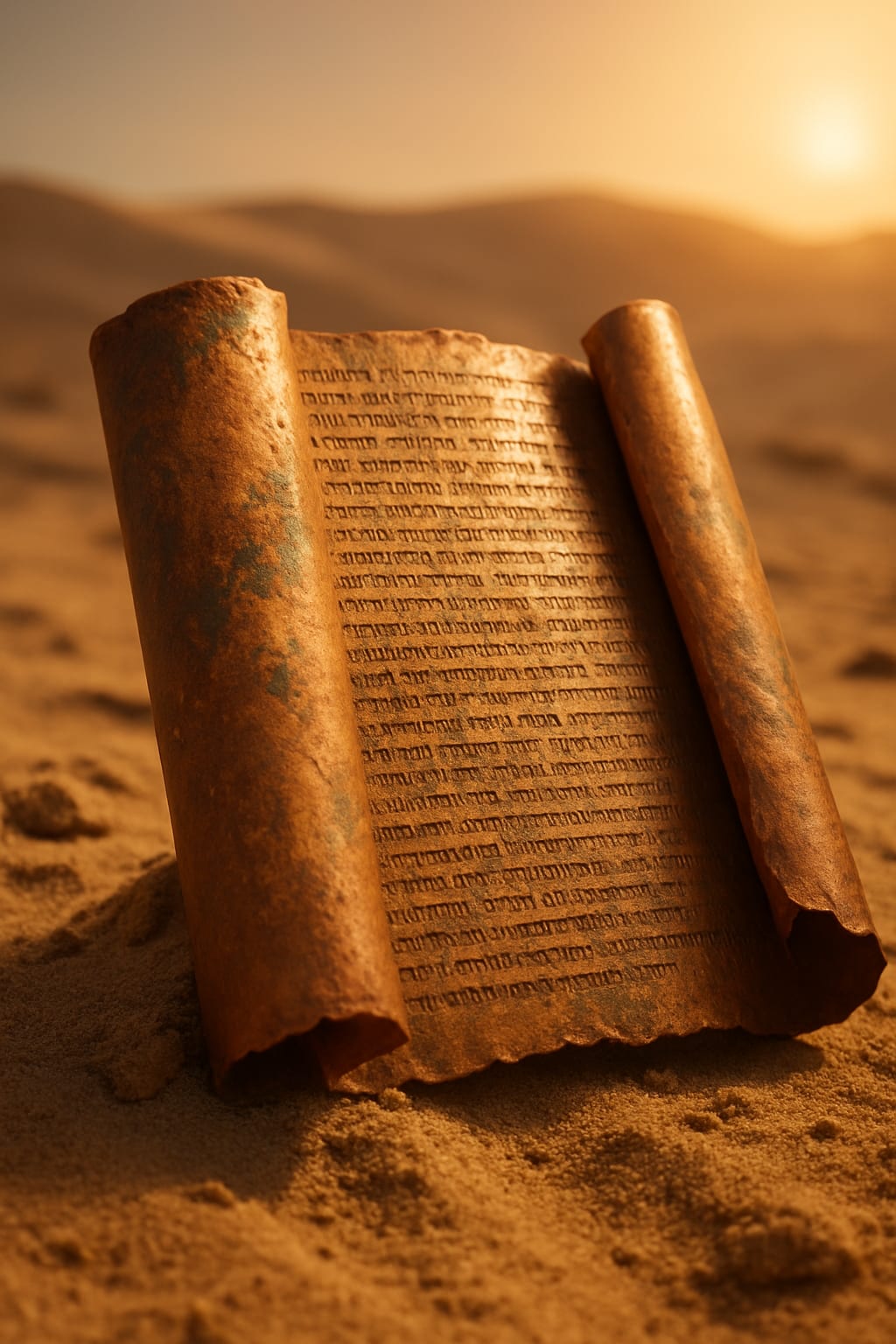
In 1952, a significant discovery was made within the barren caves near Qumran, located near the Dead Sea. This find, unlike any other in the region, consisted of a pair of scrolls hammered out of copper. These scrolls, unlike the fragile manuscripts written on parchment or papyrus that were typically found, contained a record that read more like instructions, as though someone had left behind a coded guide to something immense.
This strange artifact became known as the Copper Scroll. Instead of hymns or prophecies, it listed sites, measurements, and descriptions of hidden places. In each entry, treasures of gold and silver were described as lying beneath steps, sealed in caves, or buried near landmarks that once dotted the ancient land of Judea. It was written with the blunt clarity of a map, not the poetry of a myth. The question immediately arose: had those who inscribed the Copper Scroll hidden real treasures, or had they encoded something else entirely?
The Map of Secrets
The Copper Scroll names sixty-four hiding places, each with amounts of silver, gold, or sacred vessels supposedly stored for safekeeping. The combined wealth, if the words are literal, would equal billions today. The descriptions are striking in their precision, often giving distances, directions, and landmarks. This sets the scroll apart from parables, which deal in symbols. Here, the writers seemed intent on being practical, as though they expected the instructions to be followed by a future generation who could recognize the sites.
Theories about who created the scroll are as varied as the treasures it supposedly hides. Some suggest it was the work of the Essenes, the desert sect often connected to the Dead Sea Scrolls. Others argue that it may have been priests from the Temple in Jerusalem, determined to protect its treasures before the Roman destruction of 70 CE. There are even scholars who believe the scroll could preserve a memory older still, perhaps a remnant of pre-biblical custodians hiding sacred objects that no invader should possess. The mystery of its creators adds another layer of intrigue to the Copper Scroll's mystery.
Secrets Buried in Silence
What makes the Copper Scroll more mysterious is not only what it says, but how it has been handled. The fragile metal sheets had to be cut into pieces to be read, and translations have been released slowly, leaving many to suspect that parts of the text remain hidden. Stories circulate of quiet expeditions that set out to follow its clues, of artifacts unearthed and then quietly removed. If such treasures were ever recovered, they have never been made public, adding to the intrigue and secrecy that shrouds the Copper Scroll.
Why such secrecy? If the scroll lists only wealth, the silence could be explained by governments or private collectors. Yet some suggest the Copper Scroll was never about treasure alone. What it guarded were objects of power or knowledge, relics that could challenge established history. In that case, silence becomes understandable. Entire institutions might feel threatened if the scroll led to a discovery that rewrote the narrative of civilization, potentially altering our understanding of the past.
Why Copper?
Most ancient records were written on papyrus, parchment, or clay. Copper was costly, difficult to work with, and unusually durable. The decision to use copper speaks volumes. The writers must have known destruction was coming. Temples would be leveled, books would be burned, but copper would endure. The choice of metal is a statement, a way of saying that what is written here must outlast kingdoms and centuries.
Civilizations across time have used similar methods. Sumerians inscribed laws on stone, Egyptians carved secrets into temples, Mesoamerican priests encoded knowledge into codices, all in hopes that the record would survive when their cultures did not. The Copper Scroll belongs to that tradition: a message preserved in metal, intended to await the right eyes.
The Search for the Hidden
Expeditions inspired by the scroll have scoured the Judean desert. Some explorers claim to have found caves that match the descriptions, chambers sealed by rock, tunnels aligned with its words. In some cases, the resemblance to the scroll's instructions was uncanny, but official reports often described them as empty. Rumors persist that discoveries were made, but they were removed quietly before the public could learn about them.
Skeptics argue that natural disasters, looting, or erosion erased the landmarks centuries ago. Yet the persistence of these claims shows that the scroll has a gravity all its own. When words carved into copper speak of hidden riches, the human mind cannot help but search.
Why It Matters
The Copper Scroll challenges us to reconsider how history is told. Most ancient texts are allegorical, symbolic, or religious in nature. This one is practical, detailed, and strange. It is unlike any other ancient record, pointing to wealth or relics of spiritual or technological power. Its unique content and potential implications make it a significant and intriguing find.
What endures is not only the hope of discovery, but the possibility that the ancients hid far more than we are allowed to know. It stands as a reminder that civilizations leave behind messages for those who come later. Some are obvious, others are encoded, but all carry the same intent: to ensure that something survives the fall.
The Copper Scroll is not only about treasure. It is about the persistence of knowledge. Whether it guarded wealth, relics, or memory, it represents humanity's desire to leave behind truths that no conqueror can erase.
And that is the greatest treasure of all.
About the Creator
The Secret History Of The World
I have spent the last twenty years studying and learning about ancient history, religion, and mythology. I have a huge interest in this field and the paranormal. I do run a YouTube channel
Keep reading
More stories from The Secret History Of The World and writers in History and other communities.
Volume 7: After the Sky Opens: Life in the First Days of Disclosure
Life in the First Days of Disclosure The moment humanity has waited for will not arrive with fanfare or fireworks. It will come with silence broken by a collective gasp, a shockwave of realization that spreads not from governments or generals, but from the people who look to the sky and understand that everything has changed. Disclosure will not be the end of a mystery; it will be the beginning of a reckoning. And what follows in the days, weeks, and months after will test the very soul of humanity.
By The Secret History Of The WorldExclusive • 5 months ago
Frozen Ground
Silence meant the guns were cooling. It meant men were waiting. It meant something was about to break. We were dug in along a frozen stretch of road near the Imjin River, the kind of place that didn’t look important until history decided otherwise. The cold wasn’t just uncomfortable—it was personal. It crept into your boots, your bones, your thoughts. At night, I dreamed of heat: radiators, kitchens, the smell of coffee. I woke up with frost on my helmet.
By Gaofeng Wang5 days ago in History
Miss Persephone's Manual to a Seemingly Ordinary Life
Miss Persephone was found at the dining table, her blue eyes swollen, her tears arriving and retreating like the tides of the ocean. Earlier that day, her family had visited her in the retirement home where she had lived for eight years. It was her eightieth birthday.
By Imola Tótha day ago in Fiction




Comments
There are no comments for this story
Be the first to respond and start the conversation.